What is Prinsjesdag? Guide to Dutch September Traditions
Every year on the third Tuesday in September, the political heart of the Netherlands transforms into a vibrant spectacle of royal pomp, elaborate...
Read more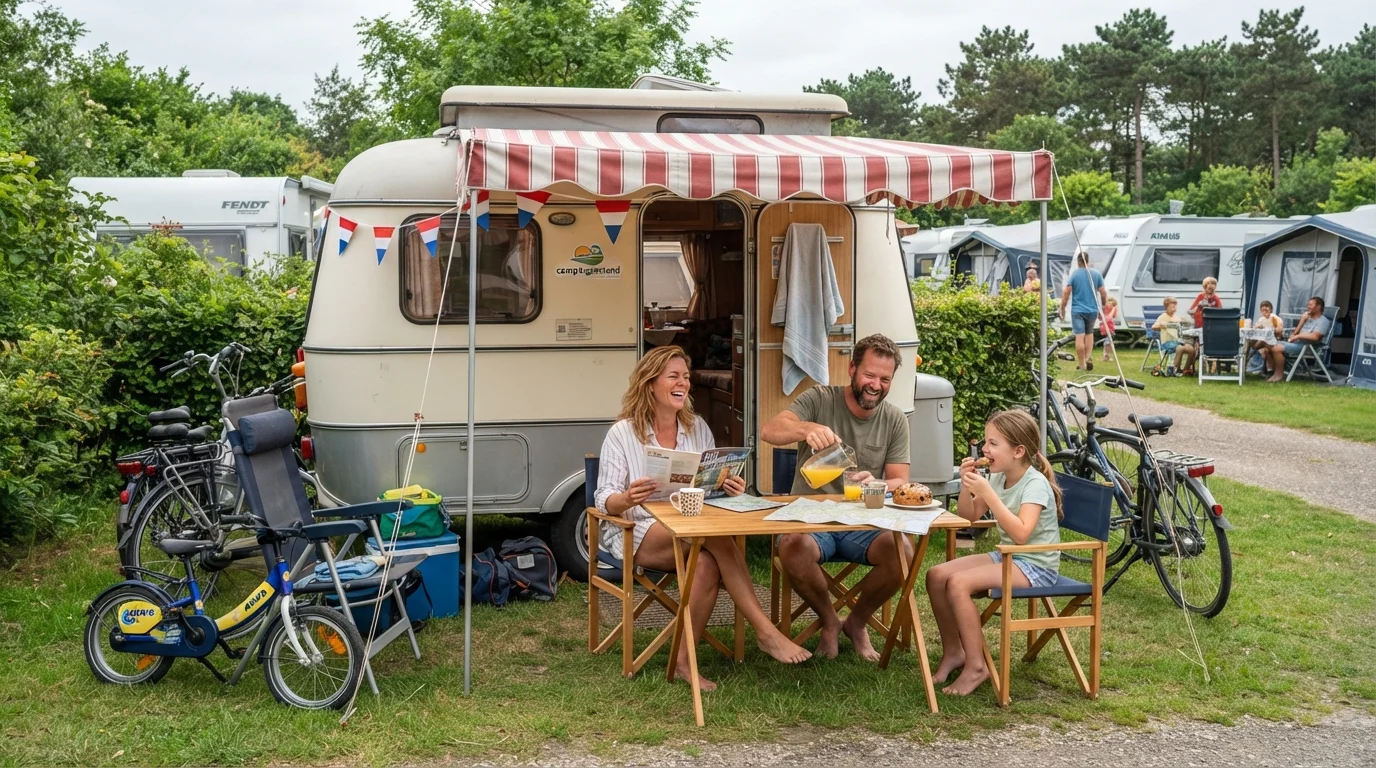
If you have ever driven down the Autoroute du Soleil in France or navigated a highway in Germany during July or August, you have undoubtedly witnessed a quintessential European summer sight: endless streams of yellow Dutch license plates hauling caravans. Affectionately nicknamed sleurhutten ('drag huts') in colloquial Dutch, these homes-on-wheels represent far more than just a preferred mode of travel. They are a deeply cherished cultural institution.
For expats, international students, and anyone learning the Dutch language, understanding the Dutch caravan phenomenon offers a fascinating window into the national mindset. It reveals core cultural values such as spaarzaamheid (frugality), gelijkheid (egalitarianism), and the legendary pursuit of gezelligheid (coziness and social connection). In this comprehensive guide, we will unpack the history, psychology, campsite rituals, and essential vocabulary behind the Dutch love affair with caravan holidays.
Every summer, hundreds of thousands of Dutch families pack up their belongings, hitch their caravans to their cars, and head south. The exodus is so massive and predictable that Dutch radio stations broadcast dedicated traffic updates (zwarte zaterdag or 'Black Saturday') specifically tracking holiday traffic jams across Western Europe.
This annual migration is deeply connected to broader Dutch summer holiday habits. While some travelers fly to tropical resorts, a massive portion of the population prefers the open road. Popular destinations include France (particularly the Dordogne and Provence), Spain, Italy's Lake Garda, and the sunlit coasts of Croatia. However, you do not even need to cross national borders to see this culture in action; Dutch campsites in Gelderland, Zeeland, and Texel fill to capacity months in advance.
The statistical evidence backing the Dutch love for camping is staggering. According to historical data from Statistics Netherlands (CBS) and European leisure associations, the Netherlands consistently boasts one of the highest numbers of caravans per capita in the world. With a population of around 18 million people, there are over 500,000 registered caravans and camper vans in the country.
Consider these striking facts about Dutch camping culture:
To the uninitiated, spending hours towing a heavy trailer along crowded motorways might not sound like a relaxing holiday. Why choose a caravan over a boutique hotel or an all-inclusive beach resort? The answers lie deep within the cultural DNA of the Netherlands.
Dutch culture places immense value on autonomy and self-reliance. Owning a caravan provides total freedom over one's vacation schedule. If rain hits Northern Europe, a family can simply hitch up the vehicle and drive south toward the sun. There are no flight schedules to manage, no hotel check-in times to meet, and no baggage limits to restrict what you can bring along.
It is no secret that the Dutch take pride in managing their finances wisely. Camping allows families to enjoy extended vacations without spending thousands of euros on airfare and restaurants. By bringing their own accommodation and cooking their own meals, vacationers can stretch a summer budget to cover three or four weeks of holiday rather than just one.
The caravan allows travelers to transport their domestic comfort zone anywhere in Europe. Dutch holidaymakers often bring their favorite items from home: their preferred brand of filter coffee, peanut butter (pindakaas), hagelslag, and even their own pillows. It combines the thrill of foreign landscapes with the reassuring comfort of familiar surroundings.
Dutch society heavily emphasizes equality and modest living, embodied by the famous phrase "Doe maar normaal, dan doe je al gek genoeg" (Just act normal, that's crazy enough). On a campsite, social hierarchies fade away. CEOs, school teachers, plumbers, and entrepreneurs all wear flip-flops, wash their dishes side by side at shared sinks, and sit outside in folding chairs. Camping represents the ultimate democratic holiday experience.
If you visit a Dutch campsite or take a caravan holiday yourself, you will quickly notice several iconic behaviors and unwritten rules that define the experience.
One of the most enduring symbols of Dutch camping culture is walking across the campsite carrying a toilet paper roll under your arm. While modern premium campsites provide toilet paper in communal bathrooms, traditional facilities required guests to bring their own roll from their caravan. It is a shared ritual that breaks down social barriers instantly—everyone knows where you are heading, and nobody thinks twice about it!
A Dutch caravan setup is incomplete without the voortent—a sturdy awning tent attached to the side of the caravan. The voortent effectively doubles the living space, serving as a dining room, lounge, storage space for bicycles, and shelter against unexpected summer rain showers. Setting up the awning is often a multi-person effort, frequently serving as an icebreaker where neighboring campers step in to offer assistance.
Around 4:00 PM or 5:00 PM, campsite activity shifts toward late-afternoon socializing. Families and neighbors set out their lightweight folding chairs (klapstoelen) to enjoy late afternoon snacks and drinks. This practice ties directly into outdoor borrel culture, where cold beers, wine, cheese cubes with mustard, and snack crackers are shared under the awning while chatting with neighbors about the day's excursions.
Even in culinary capitals like France or Italy, many Dutch campers love preparing their favorite comfort foods at their campsite kitchen setup. From boiling potatoes (aardappels koken) to grilling sausages on small portable gas stoves, food habits remain reassuringly familiar. To explore more about classic dishes enjoyed during warm months, check out our guide on traditional Dutch summer foods.
If you are planning to spend time around Dutch speakers during the summer, learning campsite terminology is a fantastic way to practice your language skills. Here is a handy vocabulary table to get you started:
| Dutch Term | Literal / Contextual Meaning | English Description |
|---|---|---|
| De caravan | Caravan / Camper trailer | The classic towed trailer home. |
| De sleurhut | "Drag hut" (slang) | Informal, humorous word for a caravan. |
| De voortent | Front tent / Awning | The fabric extension attached to the caravan. |
| De campingwinkel | Campsite shop | The small store on site selling fresh bread and essentials. |
| Het sanitairgebouw | Sanitary building | Communal block with showers, toilets, and washbasins. |
| De klapstoel | Folding chair | Essential lightweight camping furniture. |
| Caravan trekken | Towing a caravan | The act of driving with a trailer attached. |
| Sta-caravan | Static caravan / Mobile home | A semi-permanent holiday home parked at one site year-round. |
Building vocabulary around real-life cultural events is one of the most effective ways to retain new Dutch words. Apps like StroopTaal use spaced repetition and targeted vocabulary lessons to help you master contextual Dutch phrases, whether you are chatting with neighbors at a campsite or ordering fresh bread at a local bakery.
If you are an expat living in the Netherlands and want to experience this summer phenomenon firsthand, you do not need to purchase a brand-new caravan immediately. Here are actionable tips to help you test the waters:
Language learning is far more than memorizing grammar rules and verb conjugations—it is about connecting with people and understanding their way of life. When you understand why the Dutch love caravans, you gain insight into their values of communal warmth, open-air living, practical efficiency, and relaxation.
Experiencing summer in the Netherlands or traveling alongside Dutch vacationers offers countless opportunities for conversational practice. Whether you are chatting on a sun-drenched terrace or sharing travel stories, enjoying summer gezelligheid is easier when you can comfortably speak the language.
To feel confident starting conversations with native speakers, StroopTaal offers real-life Dutch conversation practice powered by AI, along with tailored cultural lessons from A0 to C1 level. You can practice real scenarios—like booking a campsite pitch, asking for directions, or chatting with neighbors—in a stress-free environment before applying your skills in the real world.
The Dutch caravan tradition is more than just a popular vacation choice; it is a vibrant reflection of Dutch society. From the friendly camaraderie of the communal washrooms to relaxed evenings under the awning with a cold beverage, camping showcases the very best of Dutch hospitality and unpretentious living.
Whether you rent a camper van for the weekend or simply enjoy observing the holiday rush from afar, understanding these traditions brings you one step closer to feeling right at home in the Netherlands. Pack your bags, practice your Dutch greetings, and get ready to enjoy an unforgettable summer season!
Share this article:
Every year on the third Tuesday in September, the political heart of the Netherlands transforms into a vibrant spectacle of royal pomp, elaborate...
Read moreMoving to the Netherlands is an exciting adventure, but stepping into a Dutch supermarket for the first time can be a surprising experience. Between...
Read moreStep Right Up: Discovering the Magic of the Dutch Kermis If you wander into almost any Dutch city, town, or village during late summer, you might be...
Read more