Celebrating 'Leidens Ontzet' and Late Summer Dutch Festivals
As the warm days of July and August fade into crisp late-summer afternoons, the Netherlands doesn't put away its party hats. In fact, September and...
Read more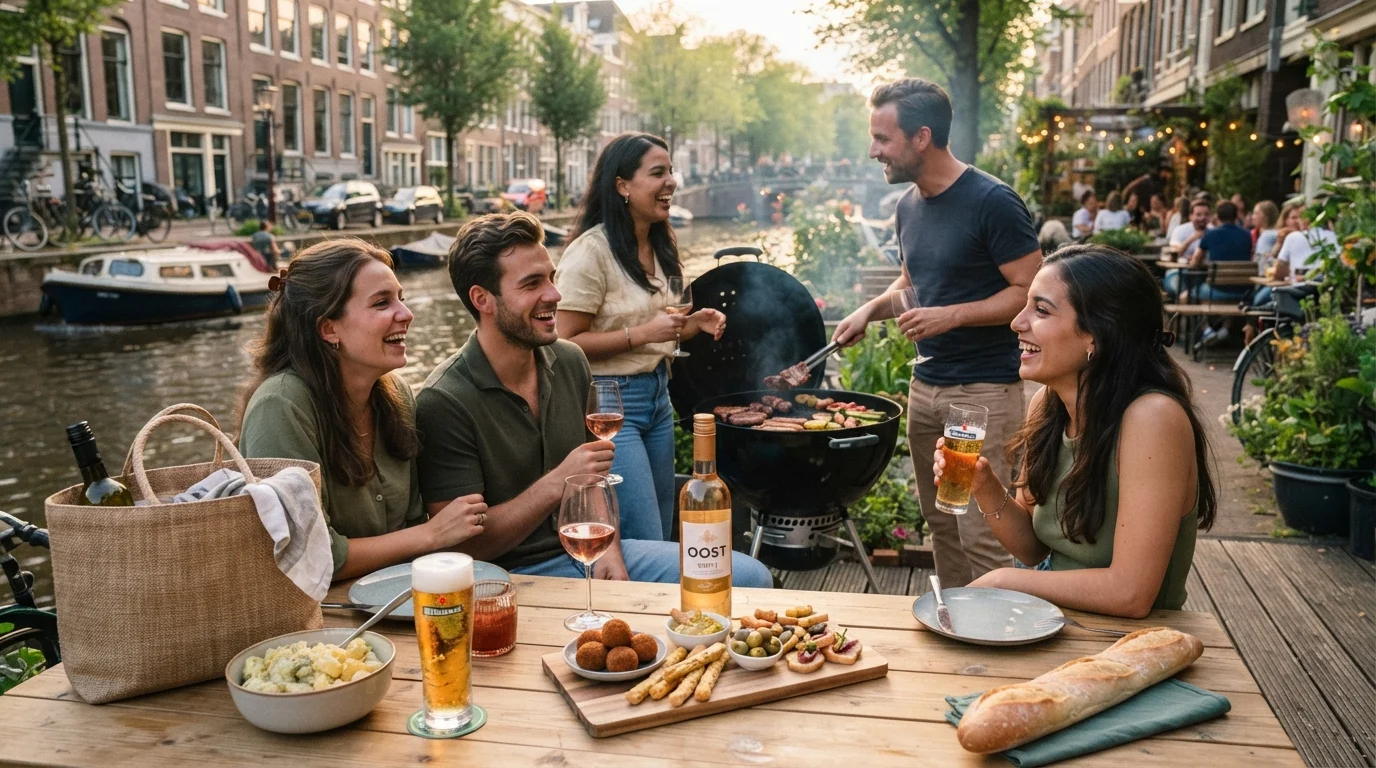
When the sun finally emerges in the Netherlands and temperatures cross the coveted 20°C mark, a collective shift happens across the country. Parks fill up, balconies are uncovered, and grates are dusted off. It is officially barbecue season. But if you are an expat or a newcomer learning the ropes of Dutch life, attending a local summer barbecue can present a subtle cultural maze.
To truly understand a Dutch barbecue, you must first master the concept of the borrel. A staple of social life in the Low Countries, the borrel is far more than just having a drink—it is a cultural institution built on conversation, informal snacking, and unmatched warmth. Integrating this tradition into sunny weather creates a unique social blend that every expat should experience.
In this comprehensive guide, we will break down what borrel culture looks like when combined with summer grilling, essential social etiquette, exactly what you should bring as a guest, and key Dutch vocabulary to help you chat confidently around the grill.
At its core, a borrel (pronounced roughly as bor-rel with a rolled or guttural 'r') is an informal gathering where people come together to enjoy drinks, savory bites, and easygoing conversation. While traditionally associated with Friday after-work drinks (vrijdagmiddagborrel or Vrijmibo), borrel culture expands exponentially in the summer months.
When combined with warm weather, a barbecue becomes an extended, open-air borrel. Understanding why the Dutch love borrelen is essential: it centers around gezelligheid—a quintessential Dutch term describing a cozy, friendly, and welcoming atmosphere. Unlike formal dinner parties in some other cultures, a Dutch summer barbecue borrel is relaxed, unpretentious, and usually lasts several hours late into the lingering summer evening.
Before packing your tote bag, it helps to know the unspoken social norms governing a summer gathering in the Netherlands. Dutch culture is famously egalitarian and direct, which extends straight to the dinner table.
While an informal outdoor gathering might suggest a flexible start time, Dutch hosts appreciate punctuality. If the invitation says 16:00, arriving between 16:00 and 16:15 is considered polite. Arriving an hour late without giving a heads-up might be viewed as slightly disrespectful.
When you arrive, greet everyone. Depending on how well you know the group, this could range from a general wave with a enthusiastic "Hoi allemaal!" to three alternating cheek kisses (right-left-right) or a handshake/hug for closer acquaintances. Don't worry if you get confused—a friendly smile and a warm greeting always work.
The Netherlands is an almost cashless society, and Dutch hosts are notoriously organized when splitting costs. If your host purchased all the meats, drinks, and charcoal beforehand, do not be surprised if you receive a Tikkie (a Dutch mobile payment request via WhatsApp) after the event. This is completely standard practice, regardless of income levels, and is not seen as rude or cheap—it simply keeps things fair and clear for everyone involved.
Unless the host specifically states that everything is provided, bringing a contribution to a Dutch barbecue is expected and appreciated. Here is a curated guide on what to bring to earn instant points with your host.
If there is one absolute requirement at a Dutch barbecue, it is stokbrood (baguette) paired with various dips and spreads. Long before the main meat or veggie items hit the grill, guests will happily nibble on sliced bread.
Bringing your own drinks or contributing to the communal cooler is standard practice. Here is what to pack:
Dutch hosts love sides that can be shared communal-style. Bringing a pre-made salad shows great effort:
Because grilling in the Netherlands can take time—often delayed by animated conversations around the fire—having pre-grill snacks on hand is vital for keeping hunger at bay. Crisps (paprika flavor is a Dutch national favorite!), nuts, cheese cubes with mustard, and olives are classic additions.
Impress your local host and fellow guests by speaking Dutch around the grill. Mastering a few practical phrases makes experiencing Dutch summer gezelligheid much richer.
Try using these phrases during your next summer borrel:
Pro Tip: If you struggle with social conversation in a foreign language, practicing daily with an app like StroopTaal can boost your confidence dramatically. StroopTaal's real-life Dutch conversation practice powered by AI lets you simulate informal party conversations, helping you master everyday vocabulary and natural responses long before you sit down by the grill.
To wrap up your transformation into the ideal Dutch barbecue guest, keep these final practical tips in mind:
Navigating social events in a new country can feel intimidating, but a Dutch summer barbecue borrel is one of the most welcoming environments you can encounter. Armed with a crisp baguette, some warm pindasaus, and a handful of friendly Dutch phrases, you are ready to jump right in and enjoy the sunshine.
Want to level up your conversational skills for summer events, integration exams, or casual conversations? The StroopTaal app offers interactive dialogue games, personalized bite-sized lessons, and cultural insights designed to make learning Dutch fun and natural. Download StroopTaal today and get ready to speak Dutch with confidence at your next borrel!
Share this article:
As the warm days of July and August fade into crisp late-summer afternoons, the Netherlands doesn't put away its party hats. In fact, September and...
Read moreIf you have ever visited a Dutch home, used the bathroom, and found yourself staring at a wall chart filled with names and dates, you are not alone....
Read moreImagine standing in a vast, emerald-green field under a dramatic, cloud-swept sky. In the distance, the colossal wooden sails of a traditional...
Read more