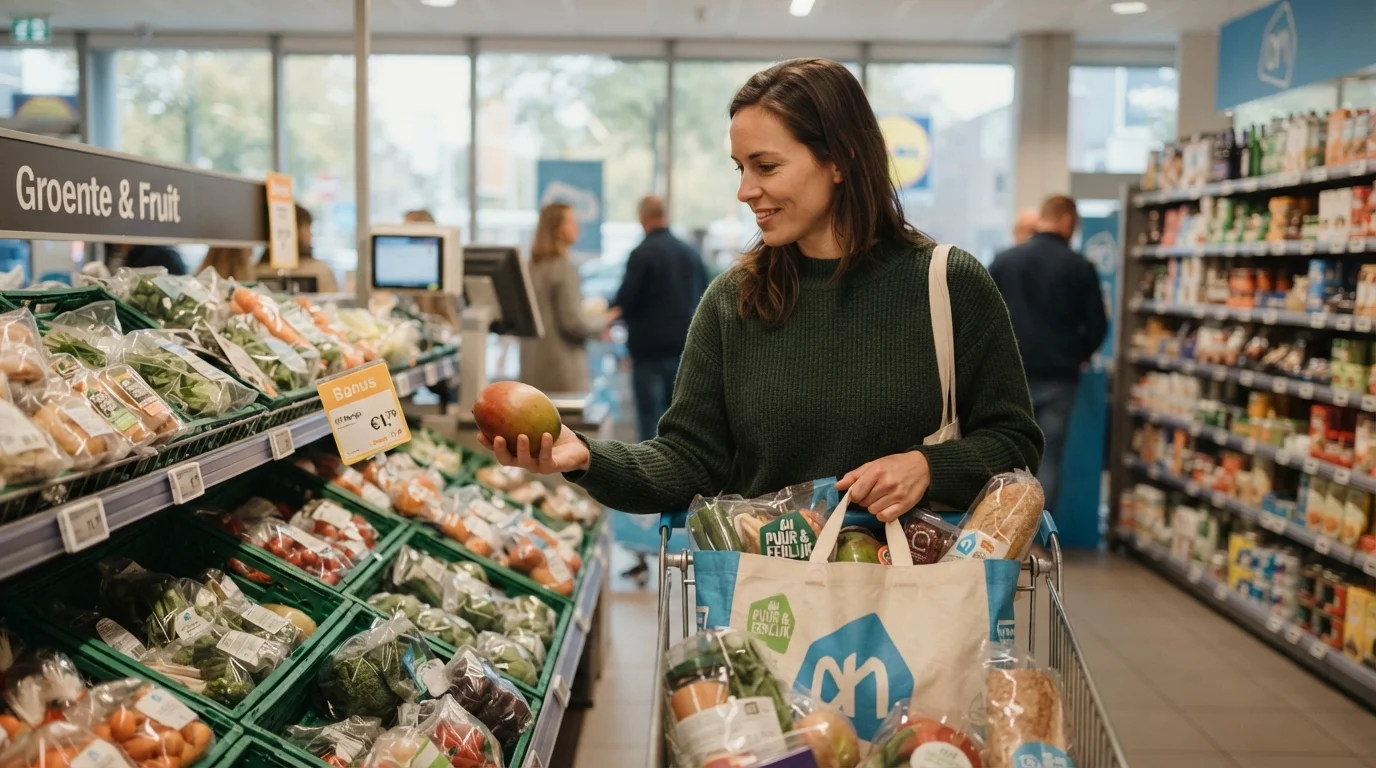
Dutch Supermarket Secrets: How to Save Money at Albert Heijn and Lidl
Moving to the Netherlands is an exciting adventure, but stepping into a Dutch supermarket for the first time can be a surprising experience. Between...
Read more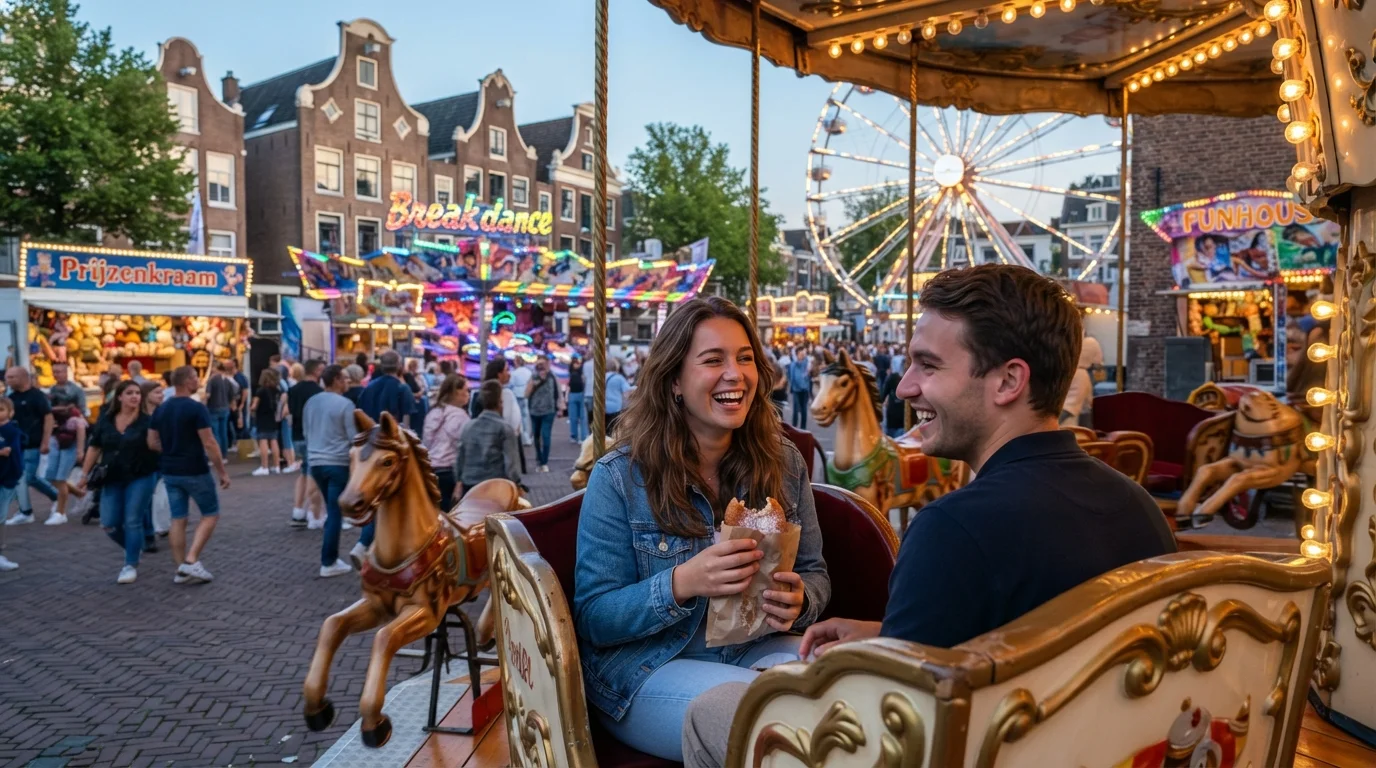
If you wander into almost any Dutch city, town, or village during late summer, you might be surprised to find the quiet, orderly cobbled square transformed overnight. High-octane rollercoasters loom over historic church steeples, flashing neon signs illuminate centuries-old facades, and the sweet scent of warm batter and spun sugar fills the warm evening breeze. Welcome to the Dutch kermis (funfair)—one of the country's most cherished and enduring late-summer traditions.
For expats, international students, and anyone learning Dutch, attending a local kermis in August is far more than just a fun day out with friends or family. It offers a fascinating window into authentic local culture, neighborhood community spirit, and real-world Dutch language practice. While many residents head south during the Dutch summer holidays, those who stay behind—along with thousands of day-trippers—flock to these vibrant traveling amusement parks.
In this guide, we will explore the deep historical roots of the kermis, what you can expect to see and taste, essential Dutch vocabulary to navigate the fairgrounds like a local, and how to make the most of your late-summer funfair experience.
The word kermis (or kermis in modern Dutch) has a surprisingly holy origin. It is a contraction of the Middle Dutch words kerk (church) and mis (mass). Originally, a kerkmis was an annual religious service held to commemorate the consecration of a local parish church or the feast day of its patron saint.
Following the solemn religious ceremony, villagers would gather outside the church to celebrate with market stalls, itinerant performers, jugglers, musicians, and feasts. Over centuries, the secular festivities expanded while the religious aspect gradually faded. By the 19th and 20th centuries, the kermis had evolved into a fully secular traveling funfair complete with mechanical rides, games of chance, and mobile food stands.
Today, the tradition is deeply ingrained in Dutch heritage. You can learn more about how traditional street festivals fit into the national calendar on Netherlands Tourism. From small rural gatherings (*dorpskermis*) to massive week-long urban spectacles, the fair remains an essential highlight of the August calendar.
Whether you visit a tiny village fair in Friesland or a massive urban event in North Holland, most Dutch funfairs share a familiar, bustling layout. Here is a breakdown of what you will encounter as you walk through the turnstiles or open square:
Dutch funfairs offer a unique blend of cutting-edge adrenaline rides and nostalgic classics. Common rides include:
No trip to the kermis is complete without testing your luck or skill at the game stalls (*grijpkramen* or *spelkramen*):
One of the absolute highlights of visiting a Dutch funfair is indulging in classic street foods. While you can sample many classic Dutch summer treats throughout the year, eating them outdoors surrounded by carnival lights hits differently!
These fluffy, mini buckwheat pancakes are cooked in specialized dimpled iron pans. Served hot in batches of ten or twelve, they are topped with a generous knob of melting butter and a heavy snowfall of powdered sugar (*poedersuiker*).
Although typically associated with New Year's Eve, summer kermis food stands (*gebakkramen*) often serve fresh *oliebollen* (deep-fried dough balls) and *gözleme* or churros. Getting a hot, crispy *oliebol* dusted with sugar is a quintessential fairground experience.
For those with a major sweet tooth, look out for suikerspin (cotton candy / candy floss) wrapped around massive wooden sticks, as well as zuurstokken (traditional hard candy sticks in flavours ranging from cherry to salty Dutch drop/liquorice).
Looking for something salty? You will find stalls serving *friet* (fries with mayonnaise), *kroketten*, *vis* (fried cod bites known as *lekkerbek* or *kibbeling*), and smoked sausage (*rookworst*).
Heading to the funfair provides an excellent opportunity to practice your spoken Dutch in a friendly, low-pressure environment. Here is a handy vocabulary table to help you order food, buy ride tickets, and ask questions:
| Dutch Word / Phrase | Pronunciation Guide | English Meaning |
|---|---|---|
| De kermis | deh KEHR-miss | The funfair / carnival |
| Het muntje / Het frootje | het MUNT-yuh | The ride token / ticket |
| Mag ik twee kaartjes? | mahg ik tway KAHRT-yuhs? | May I have two tickets? |
| Een portie poffertjes, alstublieft. | uhn POR-tsee POF-fer-tyuhs | A portion of poffertjes, please. |
| Hoeveel kost dit? | hoo-VAYL kost dit? | How much does this cost? |
| Mag ik pinnen? | mahg ik PIN-nen? | Can I pay by card? |
| De attractie | deh ah-TRAK-tsee | The amusement ride |
| Misselijk | MISS-uh-lik | Nauseous / motion sick |
Want to speak with confidence when ordering snacks or asking for ride tickets? With StroopTaal, you can practice real-life conversational dialogues with AI language partners. The app's instant feedback on pronunciation ensures you won't stumble when asking "Mag ik pinnen?" at a noisy food stall!
While almost every municipality hosts a kermis at some point during late summer, a few stand out for their incredible size, history, and atmosphere:
Though it starts in late July, the Tilburgse Kermis often runs into early August and holds the title of the largest funfair in the Benelux region. Stretching across more than 4 kilometers of city streets, it attracts over one million visitors annually. Highlights include "Roze Maandag" (Pink Monday), a massive LGBTQ+ celebration within the fair.
Held mid-August in the picturesque West-Friesland town of Hoorn, this ten-day event is one of the oldest funfairs in the country, dating back to 1446. The combination of historical harbor surroundings and modern high-tech rides makes it uniquely atmospheric. Read more about late summer events in our guide to late summer Dutch festivals and celebrations.
If you are living in or visiting the capital, Amsterdam hosts several summer funfairs across districts like Osdorp, NDSM-werf, and the iconic Dam Square (though Dam Square's fair often takes place in autumn/spring). Check local municipality listings (*gemeente*) for exact August dates.
Immerse yourself fully in Dutch local life by pairing your real-world adventures with structured learning. The StroopTaal app is specially designed for expats, integration exam candidates, and language enthusiasts who want to unlock practical language skills quickly.
StroopTaal offers AI-powered personalized learning plans, interactive dialogue games, bite-sized grammar modules from A0 to C1, and rich cultural lessons that explain why the Dutch do what they do. Whether you are learning vocabulary for the *kermis* or preparing for your *inburgeringsexamen*, StroopTaal makes learning engaging and effective.
Download StroopTaal today, head to your local August kermis, order your first fresh bag of *poffertjes* in fluent Dutch, and celebrate your progress!
Share this article:
Moving to the Netherlands is an exciting adventure, but stepping into a Dutch supermarket for the first time can be a surprising experience. Between...
Read moreAs the warm days of July and August fade into crisp late-summer afternoons, the Netherlands doesn't put away its party hats. In fact, September and...
Read moreWhen the sun finally emerges in the Netherlands and temperatures cross the coveted 20°C mark, a collective shift happens across the country. Parks...
Read more