How to Survive a Dutch Birthday Party: The Circle of Chairs Guide
The Ultimate Expat Guide to the Infamous Dutch Kringverjaardag Imagine this: You walk into a Dutch living room, expecting a lively,...
Read more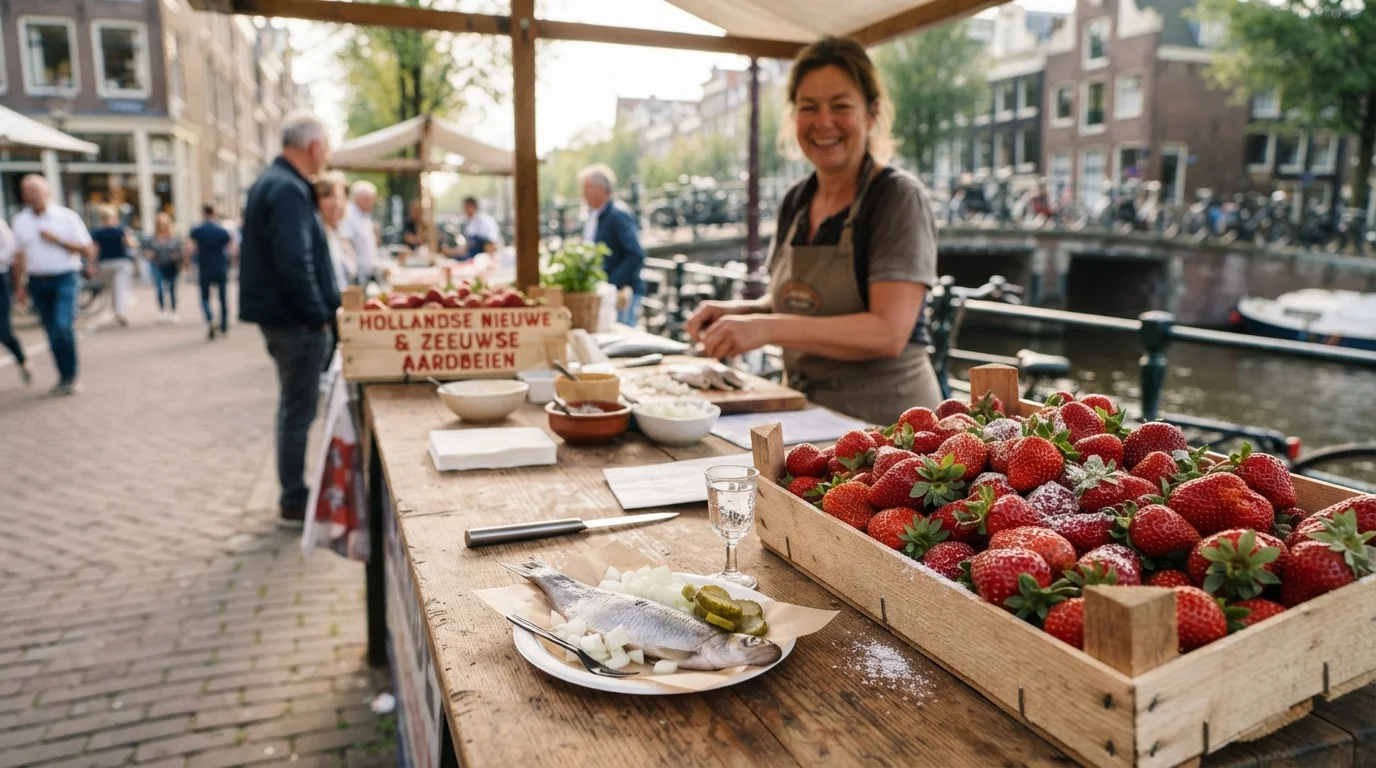
When summer arrives in the Netherlands, the entire country undergoes a vibrant transformation. The grey, rainy skies give way to long, golden afternoons, and the Dutch people waste no time heading outdoors. Terraces fill up, parks become lively social hubs, and the culinary landscape shifts from hearty, warming stews to fresh, light, and deeply traditional summer delicacies.
For expats, language learners, and anyone preparing for their integration exams, understanding Dutch food culture is just as important as mastering Dutch grammar. Food is a gateway to connection. Knowing what to order at a bustling market stall or a sunny terrace is a fantastic way to practice your speaking skills and integrate into local life.
In this comprehensive guide, we will explore the most iconic traditional Dutch summer foods, from the famous Hollandse Nieuwe herring to sweet zomerkoninkjes (strawberries). We will also share essential Dutch vocabulary, cultural insights, and practical tips on how to enjoy these seasonal treats like a true local.
No food is more synonymous with the start of the Dutch summer than Hollandse Nieuwe (Dutch New Herring). This is not just food; it is a cultural phenomenon. Every year, around early to mid-June, the arrival of the season's first catch is celebrated with immense enthusiasm, culminating in Vlaggetjesdag (Flag Day) in Scheveningen, a festival that historically marked the launch of the herring fishing fleet.
To be officially classified as Hollandse Nieuwe, the herring must meet strict traditional standards. It must be caught between May and July, contain a minimum fat content of 16%, and be prepared using a centuries-old preservation method called haringkaken (gibbing), where the fish is gutted but the pancreas is left intact. The natural enzymes from the pancreas help cure and mature the fish in brine, giving it its signature buttery, melt-in-your-mouth texture.
If you want to blend in with the locals at a viskraam (fish stall), you need to know the proper eating etiquette. There are two primary ways to enjoy this summer delicacy:
Whichever way you choose, trying raw herring is a rite of passage for anyone living in the Netherlands. It is salty, rich, healthy, and incredibly fresh.
While herring dominates the savory side of summer, zomerkoninkjes (literally "little summer kings") rule the sweet side. This is the charming Dutch nickname for fresh, locally grown strawberries. During the summer months, Dutch supermarkets, open-air markets, and roadside farm stands are flooded with these vibrant, sweet, and incredibly juicy berries.
The Dutch have a unique and delightful way of eating strawberries that often surprises expats. While they are delicious on their own or with a dollop of whipped cream (slagroom), the ultimate Dutch summer tradition is aardbeien op brood (strawberries on bread).
To prepare this classic treat, take a slice of soft white bread (or a round, crispy rusk known as a beschuit), spread a generous layer of butter over it, slice fresh strawberries to cover the surface, and sprinkle a light dusting of white sugar on top. The butter acts as a barrier to keep the bread from getting soggy, creating a perfect contrast of textures and flavors. It is a simple, nostalgic, and deeply satisfying summer breakfast or afternoon snack.
Though the season begins in late spring, witte asperges (white asparagus) remain a major culinary highlight well into the early summer. Known affectionately as het witte goud (the white gold), white asparagus is highly anticipated by food lovers across the country.
Unlike green asparagus, white asparagus grows entirely underground, covered by mounds of soil to prevent exposure to sunlight. This prevents photosynthesis, keeping the stalks pearly white and giving them a much milder, sweeter, and more delicate flavor than their green counterparts.
The traditional Dutch way to serve white asparagus is Asperges op z'n Vlaams (Flemish-style). The peeled and boiled asparagus stalks are served alongside:
The white asparagus season is notoriously short, traditionally ending strictly on June 24th (the feast of St. John). If you are in the Netherlands during May or June, make sure to visit a local restaurant or market to experience this seasonal masterpiece before it disappears for the year.
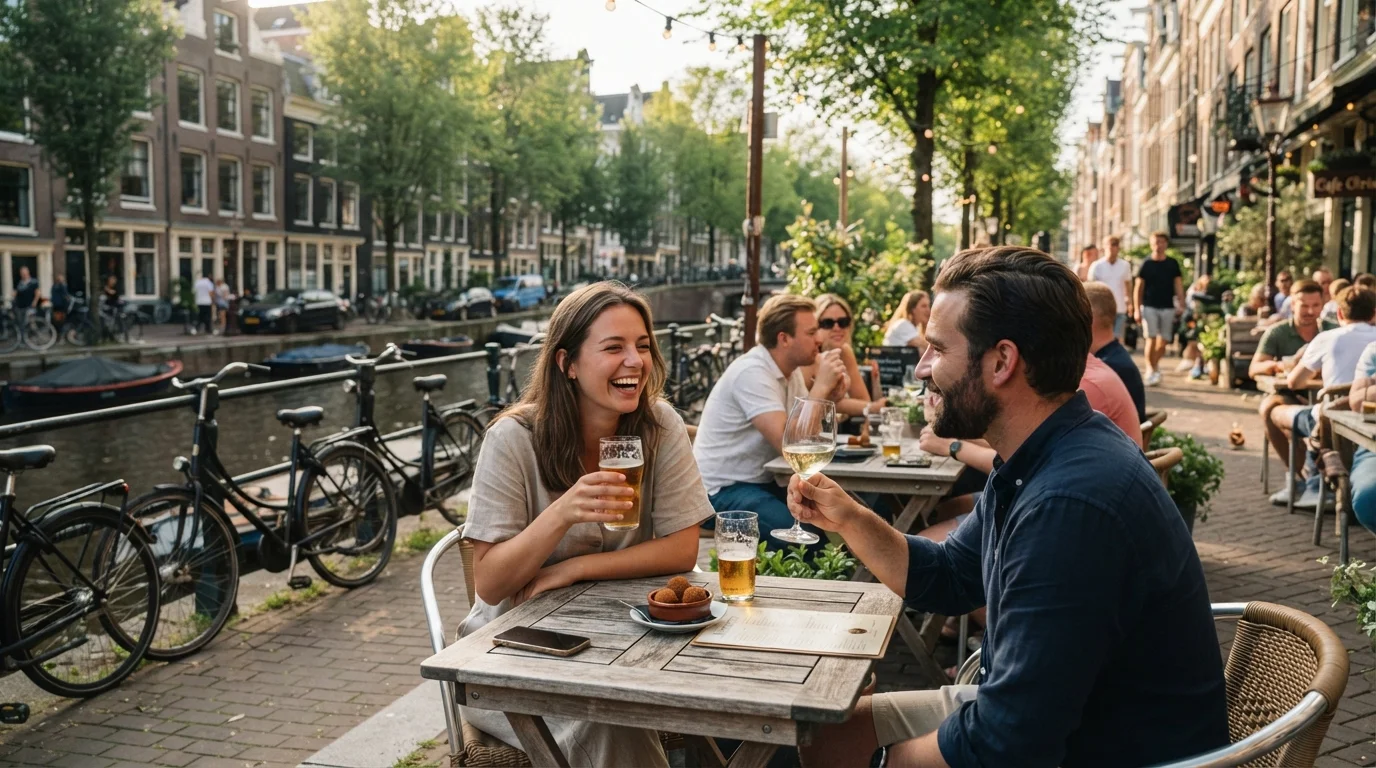
As the days grow longer, the Dutch transition from indoor living to the vibrant outdoor terrace culture. This is the prime season for borrelen—the beloved Dutch tradition of meeting friends for late-afternoon drinks and snacks. While deep-fried favorites like bitterballen remain popular year-round, summer brings a desire for lighter, more refreshing bites to accompany a cold glass of Dutch white beer (witbier) or a refreshing Radler.
If you want to fully immerse yourself in this aspect of Dutch social life, check out our guide on why the Dutch love borrelen. During the summer, you will often find terraces serving platters featuring:
Enjoying these light bites while sitting on a sun-drenched terrace is the epitome of summer in the Netherlands. To find the best spots to experience this, you can read our comprehensive Dutch Gezelligheid in Summer: Terraces and Parks Guide.
When the weather forecast predicts a warm, sunny evening, a collective urge washes over the Dutch population: it is time to barbecueën (BBQ). Dutch supermarkets immediately adjust their stock, filling shelves with pre-marinated meats, skewers, and pasta salads.
A traditional Dutch summer BBQ is a relaxed, informal affair, often held in backyards, balconies, or designated public parks. What makes the Dutch barbecue unique is its heavy culinary influence from Indonesia, a former Dutch colony. You will almost always find:
It is a delicious fusion of European grilling and Southeast Asian flavors that has become an essential part of the modern Dutch summer identity.
No summer day is complete without something sweet to cool you down. In the Netherlands, this role is perfectly filled by several beloved treats:
While artisanal gelato is widely available, the quintessential Dutch summer ice cream is softijs (soft-serve ice cream). Sold at snack bars, ice cream parlors, and specialized trucks, this creamy vanilla soft-serve is traditionally ordered in a cone and dipped in colorful sugar sprinkles (dip or spikkels) or a hard chocolate shell (chocodip).
Though eaten year-round, these fluffy, bite-sized mini pancakes are a favorite treat at summer street markets, funfairs, and beach pavilions. Served hot off a special copper griddle, a plate of poffertjes is topped with a generous slab of melting butter and a heavy dusting of powdered sugar (poedersuiker).
In recent years, the popularity of ijskoffie (iced coffee) has skyrocketed in the Netherlands. Whether you prefer a simple cold brew, a sweet iced latte, or an indulgent blended coffee drink topped with whipped cream, you will find locals sipping these refreshing beverages on terraces from Amsterdam to Maastricht.
If you are planning to spend your summer exploring the country, you might want to learn more about where the locals go to escape the heat. Take a look at our article on the Dutch summer holiday: where locals go and how to wish them well to get inspired for your own summer adventures.
To help you navigate the menus, markets, and terraces this summer, here is a handy list of essential Dutch food vocabulary. Practice these words to boost your confidence when ordering!
| Dutch Word | English Translation | Example Sentence |
|---|---|---|
| De haring | The herring | "Mag ik een broodje haring met uitjes, alstublieft?" (May I have a herring roll with onions, please?) |
| De aardbei | The strawberry | "Deze zomerkoninkjes zijn heerlijk zoet!" (These strawberries are deliciously sweet!) |
| De asperge | The asparagus | "Witte asperges zijn alleen in het voorjaar en de vroege zomer verkrijgbaar." (White asparagus is only available in spring and early summer.) |
| Het terrasje | The small terrace | "Zullen we een terrasje pakken?" (Shall we grab a spot on a terrace?) |
| De borrel | Drinks and snacks | "Kom je vanmiddag gezellig borrelen?" (Are you coming over for drinks and snacks this afternoon?) |
| Het ijsje | The ice cream | "Zullen we een ijsje halen bij de snackbar?" (Shall we get an ice cream at the snack bar?) |
Stepping up to a fish stall and ordering a broodje haring in fluent Dutch can feel intimidating, but practice makes perfect! That is where the StroopTaal app comes in. Designed specifically for expats, language learners, and those preparing for integration exams, StroopTaal makes learning Dutch engaging, practical, and highly effective.
With StroopTaal's vocabulary building features powered by spaced repetition, you can easily master food-related vocabulary, verbs for ordering, and common terrace phrases. The app also features interactive dialogue games that simulate real-life scenarios—such as ordering food at a busy market, buying ice cream, or chatting with friends at a summer BBQ. By practicing in a low-pressure environment, you will build the confidence needed to speak Dutch in real life.
Whether you are starting from absolute scratch (A0) or polishing your skills for advanced conversation (C1), StroopTaal offers personalized learning plans to help you reach your goals. Download StroopTaal today and start speaking Dutch with confidence this summer!
Food is one of the most delightful ways to experience a country's culture. By trying traditional Dutch summer foods like fresh herring, sweet zomerkoninkjes, and delicate white asparagus, you are not just feeding yourself—you are participating in shared cultural rituals that have brought the Dutch together for generations.
So, the next time the sun breaks through the clouds, head to your local market, find a cozy terrace, or fire up the barbecue. Order in Dutch, embrace the seasonal flavors, and enjoy the beautiful simplicity of a Dutch summer. Eet smakelijk! (Enjoy your meal!)
Share this article:
The Ultimate Expat Guide to the Infamous Dutch Kringverjaardag Imagine this: You walk into a Dutch living room, expecting a lively,...
Read moreIntroduction: The Magic of the Dutch Summer Ah, summer in the Netherlands! While the Dutch weather can be famously unpredictable, the moment the sun...
Read moreAs soon as the first rays of spring and summer sun pierce through the notoriously gray Dutch skies, a remarkable transformation occurs across the...
Read more