
How to Find an English-Speaking GP (Huisarts) in July
Navigating the Dutch Healthcare System as a New Resident Moving to a new country is an exciting adventure, but it also comes with a long checklist of...
Read more
This article was drafted by AI and edited by a person before it was published.
AI can get things wrong. For anything official, check the source it points to.
AI-generated image
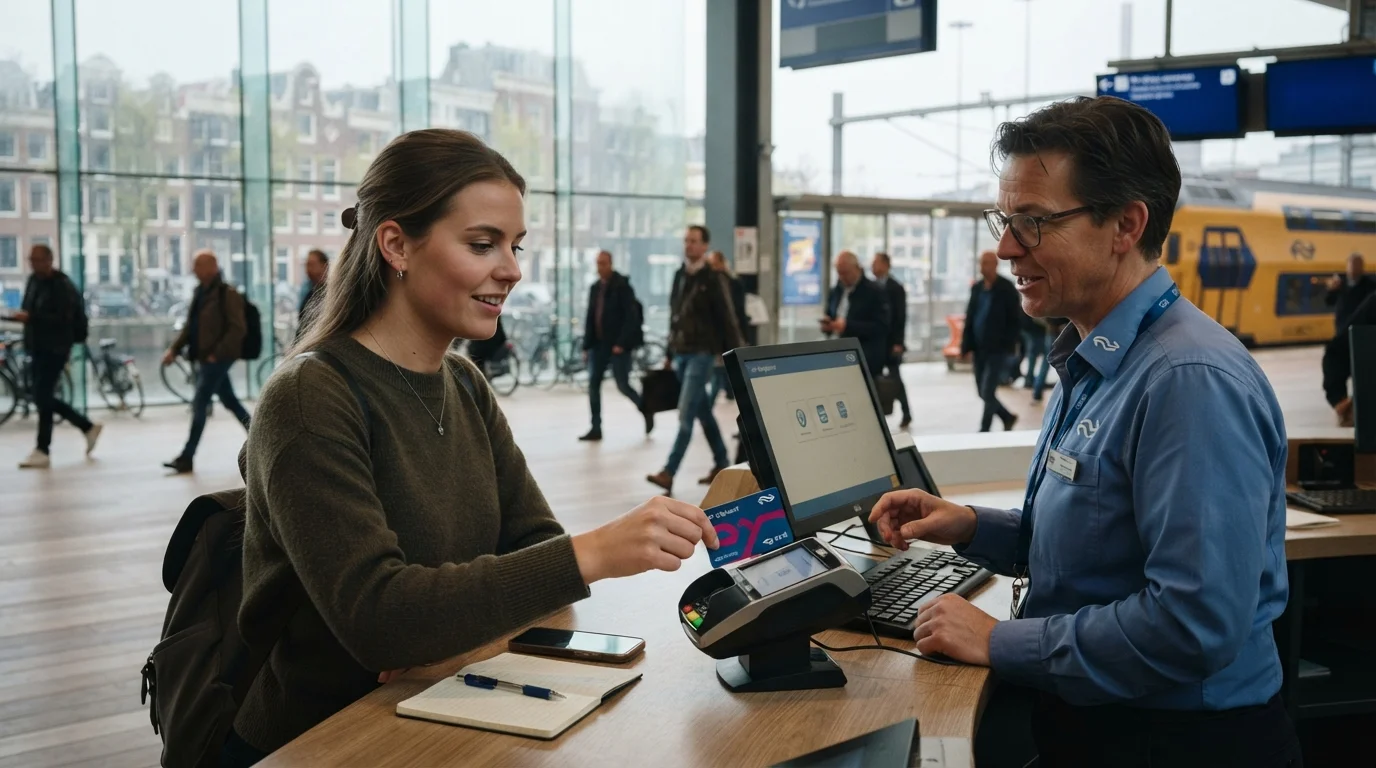
Moving to a new country brings a whirlwind of administrative tasks, from finding a home to figuring out how to get from point A to point B. Fortunately, the Netherlands boasts one of the most efficient, clean, and well-connected public transport networks in the world. Whether you want to catch a high-speed train from Amsterdam to Rotterdam, hop on a historic tram in The Hague, or take a scenic bus ride through the Dutch countryside, you can do it all with a single system.
At the heart of this seamless transit network is the OV-chipkaart (public transport smart card). While the country is transitioning to newer contactless payment methods, having a physical or personalized OV-chipkaart remains a crucial rite of passage for expats, students, and long-term residents. In this comprehensive guide, we will walk you through everything you need to know about setting up your OV-chipkaart, choosing the right subscription, avoiding common transit pitfalls, and learning the essential Dutch vocabulary to travel like a local.
The OV-chipkaart (short for openbaar vervoer chipkaart) is the universal ticket system used across the entire Netherlands. Instead of buying individual paper tickets for different transit operators—such as the national railway NS (Nederlandse Spoorwegen), or regional municipal operators like GVB in Amsterdam, RET in Rotterdam, and HTM in The Hague—you simply load credit or a subscription onto this plastic card and tap your way across the country.
When you arrive in the Netherlands, getting settled involves several key steps. Once you register at the municipality, you officially become a resident. This status unlocks your access to personalized public transport options, local bank accounts, and the digital identity systems required to manage your life in the Netherlands seamlessly.
An OV chipkaart is the national electronic transit card that allows travel across all Dutch trains, trams, buses, and metros by storing prepaid balance or travel subscriptions. The card uses RFID technology to calculate fares automatically based on the exact distance traveled between your check-in and check-out points, plus a standardized national base fare.
Both personal and anonymous versions of the card carry an initial purchase cost of €7.50 and have a validity period of five years from the production date printed on the card. To ensure smooth travel across the network, every passenger must maintain a mandatory minimum boarding deposit (instaptarief) on their card before passing through station gates or boarding buses: €20 for national railway journeys (NS and regional rail) on standard balances, and €4 for municipal buses, trams, and metros. When you check out at your destination, the system deducts the real journey cost and refunds the remainder of the boarding deposit automatically.
There are two primary types of physical OV-chipkaarts available. Choosing the right one depends on how long you plan to stay in the country and how frequently you intend to use public transport.
The anonymous card is bright blue and can be purchased over the counter at train stations, select supermarkets, and service desks. It costs a non-refundable one-time fee of €7.50.
The personal card is bright yellow and features your name, date of birth, and a passport-style photograph. It also costs €7.50 and is ordered online, requiring a Dutch residential address for delivery.
To order a personal card and set up convenient automatic reloading, you will need a local bank account. If you are a newcomer still waiting on your official paperwork, you can learn how to open a Dutch bank account without a BSN number to get your transit and financial life sorted as quickly as possible.
Setting up your card is straightforward if you follow these steps:
If you choose an anonymous card, simply walk up to an NS yellow ticket machine at any major train station, select "Buy OV-chipkaart," and pay with your debit or credit card. Your card will be dispensed immediately, ready to be loaded with credit.
If you choose a personal card, visit the official OV-chipkaart website. You will need to upload a digital passport photo, input your Dutch address, and pay the €7.50 fee using a Dutch bank account via iDEAL. Your card will typically arrive in your mailbox within three to five business days.
Once you have your card in hand, go to the official website and create a "Mijn OV-chipkaart" account. Here, you can track your travel history, print tax-compliant travel statements for your employer, request refunds for forgotten check-outs, and set up automatic reloading.
To manage your transit account and travel apps on your smartphone without roaming fees, getting a local mobile plan is recommended—see our Dutch SIM card guide: prepaid vs. contract options for expats for an easy setup.
If you are a student or qualify for specific municipal travel subsidies, you may need to link your transit profile to your digital government profile. Understanding how to use the DigiD app is essential for managing these administrative connections, as well as handling your taxes, healthcare, and municipal registrations.
If you plan to travel by train even once or twice a month, look into NS Flex subscriptions on the NS website. For just a few euros a month, subscriptions like NS Flex Dal Voordeel offer a 40% discount on train travel during off-peak hours (weekends and weekdays outside of 06:30-09:00 and 16:00-18:30). These subscriptions can be loaded directly onto your personal yellow OV-chipkaart at any yellow station machine.
An OV-chipkaart remains valid for exactly five years, after which the physical card expires and must be replaced to continue traveling with personal subscriptions or existing credit. You can check the expiration date printed on the front of your card or inside your Mijn OV-chipkaart dashboard.
When your personal card approaches expiration, the card issuer (Translink) will notify you by email or post approximately six weeks beforehand, offering a renewal procedure that automatically transfers any active travel products and remaining balance to your new card. If you change addresses during your stay in the Netherlands, ensure you update your details on both the OV-chipkaart portal and with your local gemeente; review our guide on moving within the Netherlands: how to report your address change to keep all your civic profiles aligned.
Using the Dutch transit system is incredibly simple, but there are a few golden rules you must follow to avoid receiving heavy administrative fines from transit inspectors.
You must always tap your card against the card reader at the start of your journey (inchecken) and tap it again at your destination (uitchecken). This applies to every single mode of transport: trains, buses, trams, and metros.
If you transfer from a train run by NS to a train run by another operator (such as Arriva, Keolis, or Connexxion), you must check out of the NS reader and check into the other operator's reader on the platform. Look closely at the logos on the readers; they are usually clearly color-coded.
Dutch trains have first-class (indicated by a large "1" on the outside and inside of the carriage) and second-class (indicated by a "2") seating. By default, your OV-chipkaart is configured for second class. If you sit in first class without changing your card's settings at a station ticket machine beforehand, you risk a hefty fine during ticket inspections.
The Dutch transit system has recently introduced OVpay, a modern system that allows you to check in and out using your contactless debit card, credit card, Apple Pay, or Google Pay. This system is incredibly convenient for tourists and occasional travelers because it eliminates the need to buy a physical card or load credit beforehand.
However, OVpay does not yet fully support regional or national travel subscriptions. If you want to use student travel products, employer-sponsored travel plans, or off-peak discount packages (like the NS Flex 40% discount), you still need to use a physical personal yellow OV-chipkaart. For most expats and regular commuters, the personal card remains the most cost-effective option.
While almost everyone in the Netherlands speaks excellent English, navigating transit stations can feel intimidating if you do not understand the signs or overhead announcements. Learning a few basic Dutch transit terms will boost your confidence and help you handle unexpected delays like a seasoned commuter.
Here are some essential words you will see and hear daily:
If you want to practice these scenarios risk-free, the StroopTaal app is an invaluable companion. With StroopTaal's interactive dialogue games, you can roleplay real-world Dutch scenarios, such as asking a station master for directions when your train is canceled, or buying a ticket at a service desk. StroopTaal’s vocabulary building tools with spaced repetition ensure that transit terms stick in your long-term memory, while its pronunciation training with instant feedback gives you the confidence to speak up on the platform.
Setting up your OV-chipkaart is one of the most empowering milestones of your Dutch integration journey. It grants you the freedom to explore historic windmills, bustling city centers, and tranquil national parks with a single tap. By choosing the right card, keeping your balance topped up, and remembering to check in and out, you will navigate the country like a true local in no time.
As you embark on your journeys, why not use your commute to master the Dutch language? Download the StroopTaal app today to access personalized learning plans, practice real-life Dutch conversations with AI, and turn your daily train ride into a fun, gamified language-learning experience. Safe travels! (Goede reis!)
Share this article:
Navigating the Dutch Healthcare System as a New Resident Moving to a new country is an exciting adventure, but it also comes with a long checklist of...
Read moreWelcome to Your New Digital Life in the Netherlands Moving to a new country is an exciting adventure, but it also comes with a mountain of...
Read moreIntroduction: Navigating the Dutch Housing Market as an Expat Buying a house is one of the most exciting milestones of your life. Doing so in a...
Read more