Dutch Utility Guide 2026: Water, Gas & Green Energy
Setting Up Your Home in the Netherlands: The 2026 Utility Roadmap Moving to a new country is an exhilarating adventure, but it also comes with a...
Read more
This article was drafted by AI and edited by a person before it was published.
AI can get things wrong. For anything official, check the source it points to.
AI-generated image
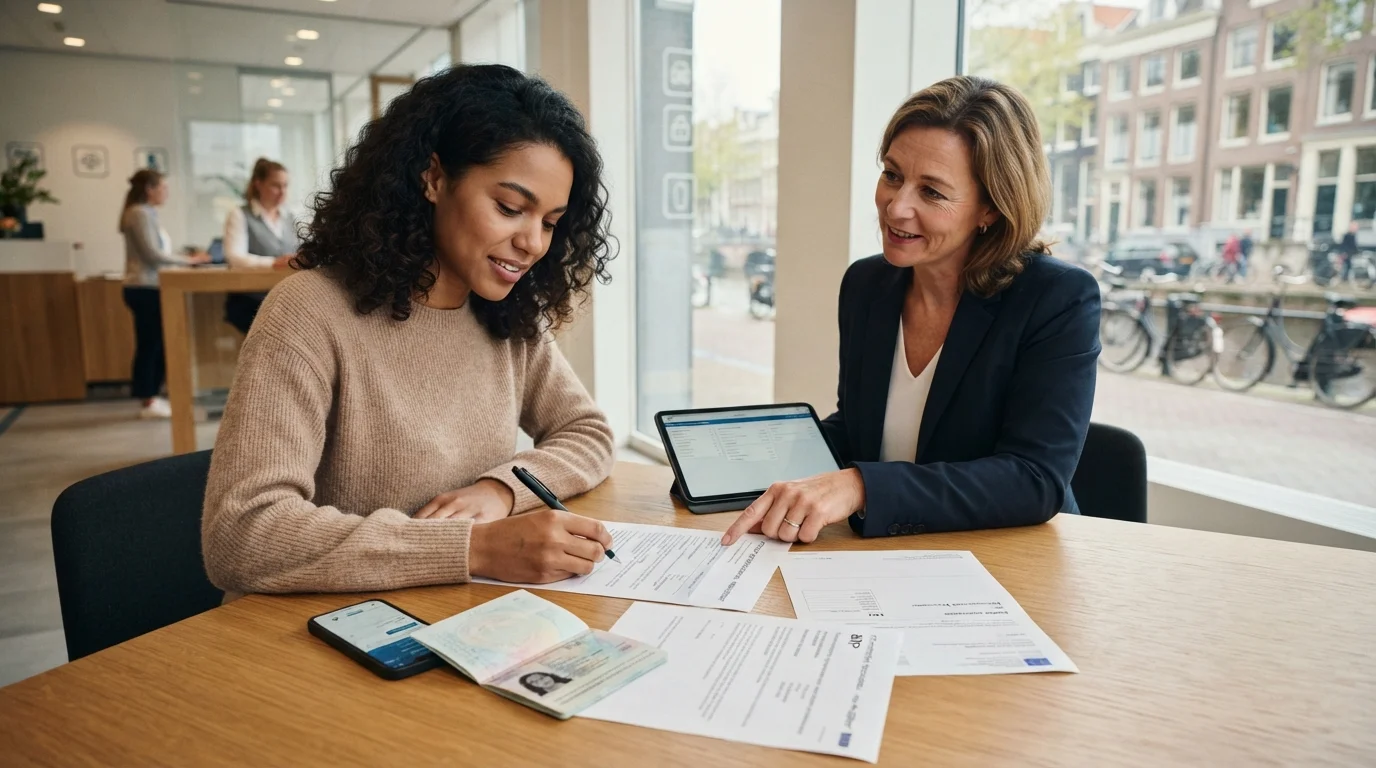
Moving to the Netherlands is an exciting adventure. You are likely dreaming of cycling along historic canals, tasting your first warm stroopwafel, and settling into a cozy new home. However, before you can fully enjoy Dutch life, you must navigate the infamous bureaucratic maze. One of the most common hurdles expats face is a classic chicken-and-egg problem: you need a Dutch bank account to pay for your rent, but you cannot open a bank account without a BSN (Burgerservicenummer). And to get a BSN, you usually need a registered address, which brings you right back to needing that bank account to secure finding an apartment in Amsterdam or another Dutch city.
If you find yourself stuck in this cycle, do not panic. While Dutch banks are strictly regulated, there are legitimate, legal pathways to open a Dutch bank account without a BSN number. This comprehensive guide will walk you through your options, the steps you need to take, and how to transition smoothly into the Dutch financial system.
A Burgerservicenummer (BSN) is a unique citizen service number issued to everyone registered in the Personal Records Database (BRP) of the Netherlands. Think of it as a social security or national insurance number. It is essential for working, paying taxes, accessing healthcare, and receiving government benefits.
Under European and Dutch anti-money laundering (AML) and Know Your Customer (KYC) regulations, financial institutions are legally required to verify the identity and tax status of their customers. Because the BSN acts as your tax identification number in the Netherlands, banks use it to report financial data to the Dutch Tax Authority (Belastingdienst). You can read more about the legal framework of the citizen service number on the official Dutch government portal.
Fortunately, both Dutch regulators and banks understand that newcomers cannot obtain a BSN instantly upon arrival. Therefore, several banking solutions have been designed to accommodate expats during their transition phase.
To get a Dutch bank account without BSN, your primary options are opening an account through a digital bank that offers an onboarding grace period, applying at traditional Dutch banks via their international newcomer desks, or registering for an RNI number. Choosing the right method depends on how quickly you need a local NL IBAN and whether you require in-person branch assistance.
Here is a side-by-side comparison of the leading banking solutions available to newcomers prior to municipal registration:
| Banking Provider | BSN Required Upfront? | Grace Period | IBAN Type | Best For |
|---|---|---|---|---|
| Bunq | No | 90 days | Dutch (NL) IBAN | Immediate online setup upon arrival |
| ABN AMRO | No (International Desk) | Up to 90 days | Dutch (NL) IBAN | Traditional full-service banking and loans |
| ING | No (In-person appointment) | 30–90 days | Dutch (NL) IBAN | Branch access and student packages |
| Revolut / Wise | No | N/A (Uses tax ID from home country) | LT / BE / Global IBAN | Initial currency exchange and global spending |
Before initiating your application, make sure you secure a working phone number to handle two-factor security codes. Check out our guide to Dutch SIM card options to set up a prepaid or contract SIM immediately after landing.
In recent years, financial technology (FinTech) has revolutionized the Dutch banking landscape. Several digital-first banks, often referred to as challenger banks, allow you to open a fully functional Dutch bank account (complete with a Dutch IBAN) without requiring a BSN immediately.
Bunq is a fully licensed Dutch bank that operates entirely online. It is highly popular among expats because of its flexible onboarding process.
While Revolut and Wise are not traditional Dutch banks, they offer multi-currency accounts that provide European IBANs. They do not require a Dutch BSN to sign up, making them excellent temporary tools to pay for initial expenses, receive foreign transfers, or hold Euros while you complete your official registering at the local municipality.
If you plan to stay in the Netherlands for less than four months, or if you need a BSN immediately before finding permanent housing, you can register in the Registratie Niet-Ingezetenen (RNI), which translates to the Non-Residents Records Database.
By registering as a non-resident, you will receive a valid BSN on the spot. Here is how to do it:
Once you have your RNI-issued BSN, you can walk into almost any traditional Dutch bank and open a standard account, even if you do not yet have a permanent registered address in the Netherlands.
If you prefer a traditional brick-and-mortar bank with physical branches, you can still open an account without a BSN, though the process is slightly more rigorous than using a mobile bank.
The three major Dutch banks—ABN AMRO, ING, and Rabobank—all offer specialized expat packages. They allow you to open an account under the condition that you provide your BSN within a specific timeframe (usually 30 to 90 days).
ABN AMRO is widely considered one of the most expat-friendly traditional banks in the Netherlands. They offer a fully English app, English customer support, and an online application portal specifically for international newcomers. You can apply with your foreign address and passport, and you will be given a grace period to submit your BSN once you are officially registered.
ING also allows expats to open a bank account without a BSN, but you will typically need to visit an ING branch in person with your employment contract, passport, and proof of your temporary Dutch address. Like ABN AMRO, they will give you a deadline to return and update your file with your BSN.
When you receive your BSN from your local municipality or through the RNI, you must upload it to your bank app or present it at your branch before your grace period expires. Failing to update your bank within the allotted window may result in temporary account restrictions or blocked outgoing transactions due to compliance rules.
Once your BSN is confirmed, your Dutch bank account is permanently verified. You will also be ready to handle other key public and financial administrative services, including how to set up your DigiD with SMS verification for easy online tax filings and municipal services.
To ensure a smooth application process, gather the following documents before you begin your application, whether online or in person:
While most Dutch banks offer services, apps, and customer support in English, you will inevitably encounter Dutch financial terminology. From receiving letters from the tax office (Belastingdienst) to understanding transaction descriptions on your bank statements, knowing basic Dutch financial vocabulary is incredibly empowering.
Terms like betaalrekening (checking account), spaarrekening (savings account), geldopname (cash withdrawal), and afschrijving (debit/charge) will pop up constantly. This is where StroopTaal can make your transition to Dutch life infinitely easier.
With StroopTaal's interactive dialogue games, you can practice real-life Dutch conversation scenarios, such as talking to a bank clerk, registering at the town hall, or asking for help with a payment. Combined with personalized learning plans and vocabulary building utilizing spaced repetition, StroopTaal helps you build the confidence to handle your administrative and financial tasks in Dutch from day one.
If you are arriving in the Netherlands and need to set up your financial life quickly, follow this simple action plan:
Ready to master the Dutch language and conquer your expat journey? Download StroopTaal today and start speaking Dutch with confidence!
Share this article:
Setting Up Your Home in the Netherlands: The 2026 Utility Roadmap Moving to a new country is an exhilarating adventure, but it also comes with a...
Read moreWelcome to the Dutch Healthcare Maze Moving to the Netherlands is an exciting adventure. From cycling along historic canals to tasting your first...
Read moreThe Summer Rental Rush: Surviving Amsterdam's July Peak Amsterdam is a city of canals, historic charm, and unparalleled quality of life. It's no...
Read more