Understanding Dutch Taxes: How to File Your First Return
Conquering the Blauwe Envelop: A Guide to Dutch Income Tax For expats and new arrivals in the Netherlands, few things trigger as much mild panic as...
Read more
This article was drafted by AI and edited by a person before it was published.
AI can get things wrong. For anything official, check the source it points to.
AI-generated image
Moving to a new country is an exhilarating adventure. You are likely dreaming of cycling along historic canals, tasting your first warm stroopwafel, and settling into your new Dutch home. However, before you can fully immerse yourself in the local lifestyle, there is one essential administrative hurdle you must clear: registering at the local municipality, known in Dutch as the gemeente.
Municipal registration is the cornerstone of your new life in the Netherlands. It is not just a formal legal requirement; it is the master key that unlocks almost every essential service you will need, from getting paid by your employer to setting up your utilities. In this comprehensive guide, we will walk you through everything you need to know about registering at the gemeente, obtaining your Citizen Service Number (BSN), and navigating the process with confidence.
By Dutch law, anyone planning to live in the Netherlands for more than four months must register with their local municipality within five days of arrival. This registration enters your details into the Basisregistratie Personen (BRP), which is the personal records database of the Dutch government.
The primary benefit of registering is obtaining your Burgerservicenummer (BSN). Your BSN is a unique identification number used by all government agencies, tax authorities, and healthcare providers. Without a BSN, you cannot:
Failure to register can result in administrative fines and significant delays in settling your affairs. Therefore, prioritizing your gemeente appointment is highly recommended the moment you arrive.
Gemeente registration is the mandatory procedure where all residents staying in the Netherlands for longer than four months record their residential address in the municipal personal database (BRP) to receive a BSN. This fundamental step ensures that municipal services, emergency assistance, and local taxes are accurately allocated to your household.
Whether you are moving into a studio in Rotterdam, a family home in Utrecht, or a central apartment in Amsterdam, completing your gemeente registration validates your legal residency in your specific municipality. If you relocate within the country later, ensure you follow the steps for moving within the Netherlands to report your address change so your BRP record remains up to date.
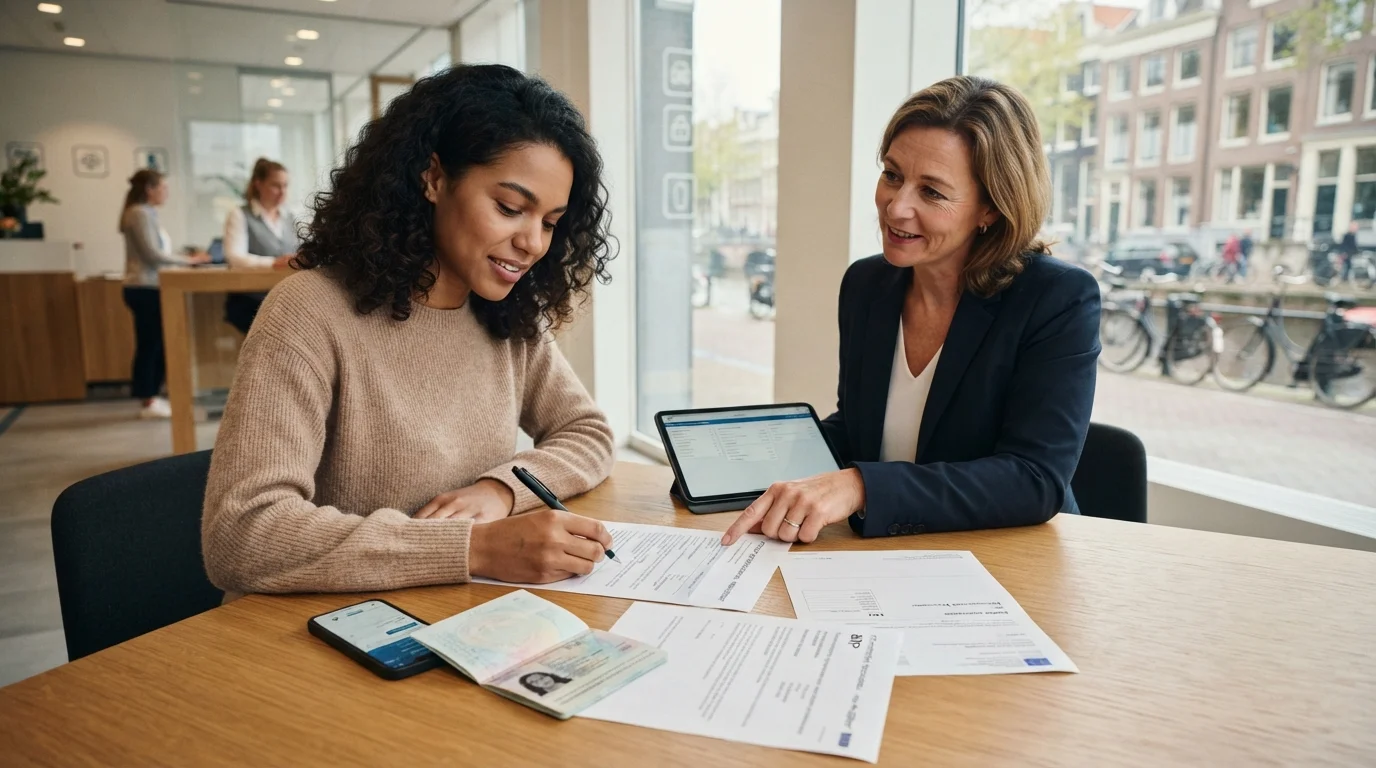
To register successfully, you must present a specific set of documents at your municipal office. Requirements can vary slightly depending on the specific municipality, so it is always wise to double-check their official website. However, the standard checklist for a new expat includes:
You must bring a valid passport or a national identity card (if you are an EU/EEA citizen). A driver's license is generally not accepted as primary proof of identity for registration purposes.
The municipality needs to know exactly where you are living. You can prove this by providing a signed rental contract or a home purchase agreement. If you are temporarily staying with a friend or relative, you must bring a signed permission form from the main tenant or homeowner, along with a copy of their ID. If you are still searching for a permanent place, you might want to look at our guide on finding an apartment in Amsterdam to help speed up your search.
This is where many expats run into delays. You must present an official, legalized birth certificate. If you are moving with a spouse or children, you will also need legalized marriage and birth certificates. Legalization (often via an Apostille stamp) proves to the Dutch government that your foreign documents are authentic. If these documents are not in Dutch, English, French, or German, they must be translated by a certified translator.
If you are a non-EU/EEA citizen, you must prove you have the legal right to reside in the country. This usually means presenting your residence permit card from the Immigration and Naturalisation Service (IND), or a valid entry visa (MVV) alongside your IND appointment confirmation.
A registratie gemeente expat process allows international workers, students, and family members to officially record their Dutch residence with local authorities upon entering the country. Highly skilled migrants and foreign employees often follow simplified or accelerated registration tracks tailored specifically for foreign nationals.
Many Dutch cities partner with specialized international desks to manage registratie gemeente expat appointments efficiently. Through these dedicated channels, expats can handle background checks, document verification, and initial registration without navigating standard municipal lines. Check with your hiring company or HR department to determine if your employer qualifies for expedited expat onboarding.
Navigating the actual registration process is straightforward if you follow these steps:
Do not wait until you arrive in the Netherlands to book your appointment. In major cities like Amsterdam, Rotterdam, Utrecht, and The Hague, appointment slots can book out weeks in advance. You can easily schedule an appointment online via your local municipality's website (e.g., Amsterdam.nl or DenHaag.nl) even before you leave your home country.
Keep all your paperwork in a dedicated folder. Ensure your birth certificate has the correct stamps and translations. If you are missing a document, the municipality may still register you temporarily, but you will be required to return within a strict timeframe to present the missing paperwork.
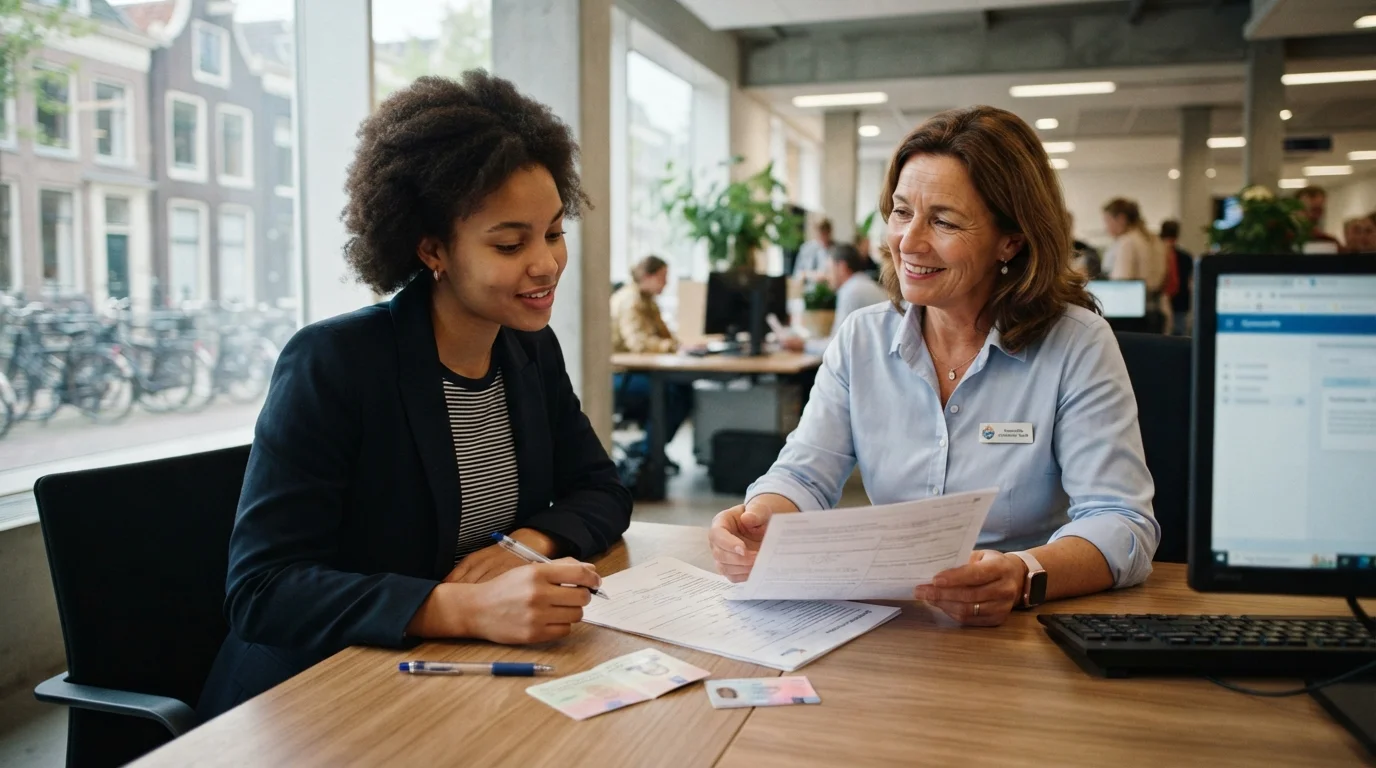
On the day of your appointment, arrive at the municipal office (gemeentehuis or stadskantoor) a few minutes early. Most offices operate with a ticketing system. When your number is called, you will meet with a municipal officer who will verify your identity, scan your documents, and register your address in the BRP system.
In many municipalities, you will receive your BSN on the spot at the end of your appointment. In other cases, or if your documents require further verification, it will be mailed to your registered address within a few business days.
Expat center amsterdam registration provides a fast-track, combined appointment service at IN Amsterdam for international employees and their families to finalize municipal BRP enrollment and IND formalities simultaneously. Located at the World Trade Center (WTC) in Amsterdam Zuid, this specialized center streamlines the entire onboarding path into a single visit.
During an expat center amsterdam registration session, qualifying highly skilled migrants, scientific researchers, and corporate transferees present their residence contracts and identification to receive their BSN immediately. Once registered, you can immediately begin setting up your DigiD with SMS verification to access Dutch online administrative portals.
Den haag municipality registration requires all international residents moving to The Hague to book an entry appointment at the Central City Hall (Stadhuis) or Leyweg office, or through The Hague International Centre if sponsored by an accredited employer. The Hague hosts numerous international organizations, embassies, and NGOs, making municipal registration a routine service tailored for global citizens.
When completing your Den Haag municipality registration, bring your rental agreement, valid passport, and legalized vital documents. Standard appointments take place at the Stadhuis in the city center, while international staff and diplomats often make use of specialized appointment slots at The Hague International Centre located inside City Hall.
While most municipal workers in the Netherlands speak excellent English, making an effort to speak some Dutch can go a long way in making your transition smoother. Here are some essential Dutch words and phrases you might encounter during your registration:
If you want to feel completely confident when walking into the city hall, practicing these terms beforehand is incredibly helpful. With the StroopTaal app, you can use interactive dialogue games and real-life Dutch conversation practice with AI to simulate exactly what to say to the municipal officer. Practicing phrases like "Ik wil me graag inschrijven" (I would like to register) will give you a major confidence boost before your big day.
Congratulations! Once you have registered and received your BSN, you are officially a resident of your new Dutch town. Here are the immediate next steps you should take:
Your DigiD (Digital Identity) is your secure login for all Dutch government services, tax portals, and pension funds. Once you have your BSN, you can apply for a DigiD online. A physical activation code will be mailed to your registered address within a few days to complete the setup.
Every resident of the Netherlands is legally required to take out basic Dutch health insurance within four months of registering. You can read our comprehensive guide on setting up Dutch healthcare insurance to understand how the system works, what packages are available, and how the mandatory deductible works.
Now that you have an official address and a bank account linked to your BSN, you can easily set up your electricity, heating, water, and internet. Ensure you get the best rates by researching your options early.
Registering at the gemeente is the official beginning of your exciting journey as an expat in the Netherlands. While navigating foreign bureaucracy can feel intimidating at first, the Dutch municipal system is highly efficient, organized, and welcoming to newcomers. By preparing your documents in advance, booking your appointment early, and learning a few basic Dutch phrases, you will breeze through the process.
As you settle into your new neighborhood, learning the local language is the absolute best way to truly feel at home. From understanding your mail to chatting with your neighbors, speaking Dutch opens doors. Download the StroopTaal app today to access personalized learning plans, build your vocabulary with spaced repetition, and master the language at your own pace from level A0 to C1. Your Dutch adventure starts now!
Share this article:
Conquering the Blauwe Envelop: A Guide to Dutch Income Tax For expats and new arrivals in the Netherlands, few things trigger as much mild panic as...
Read moreSetting Up Your Home in the Netherlands: The 2026 Utility Roadmap Moving to a new country is an exhilarating adventure, but it also comes with a...
Read moreThe Expat Catch-22: Opening a Bank Account Without a BSN Moving to the Netherlands is an exciting adventure. You are likely dreaming of cycling along...
Read more