How to Set Up Your DigiD with SMS Verification: Step-by-Step Guide
Navigating life in the Netherlands comes with many perks: world-class public transport, beautiful canals, and an exceptionally efficient digital...
Read more
This article was written by AI and published by StroopTaal.
AI can get things wrong. For anything official, check the source it points to.
AI-generated image
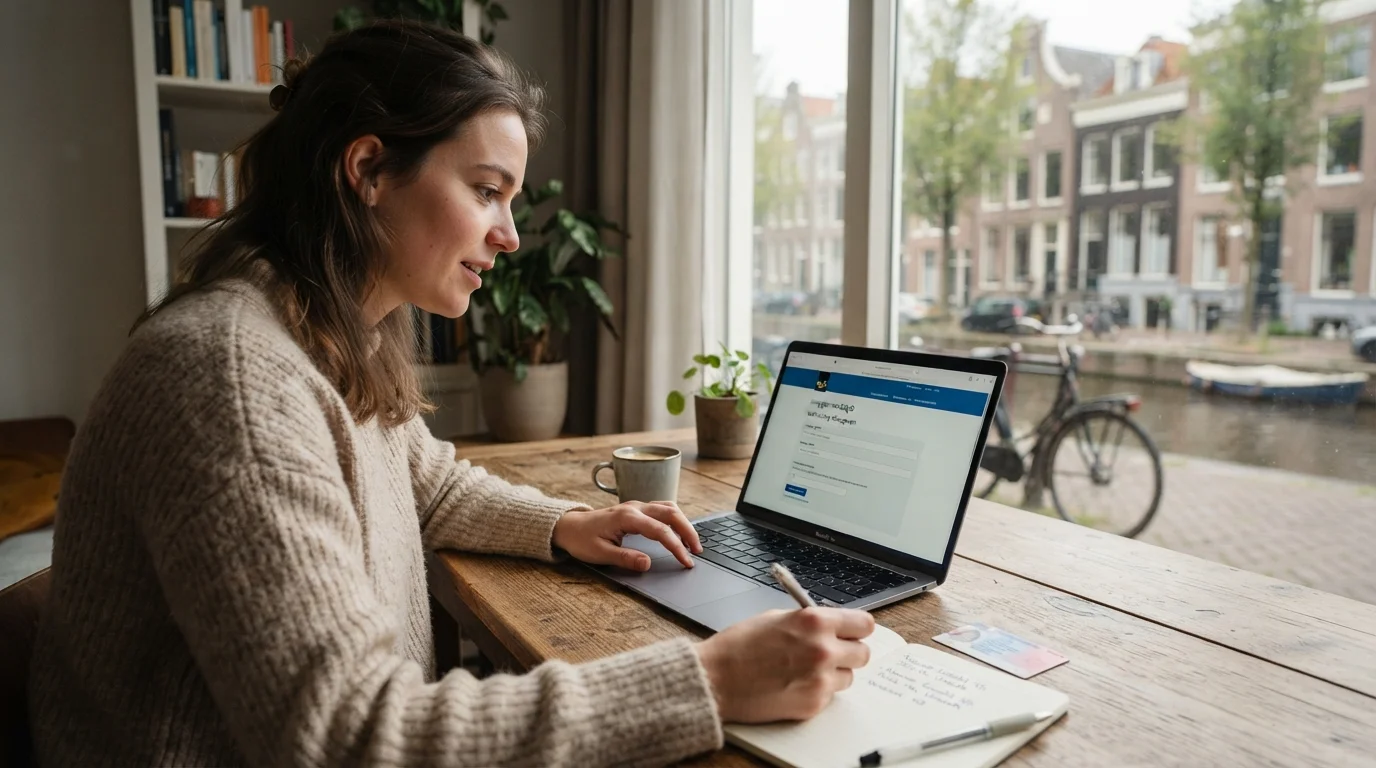
Relocating to a new home is an exciting milestone, whether you are upgrading to a spacious apartment in Utrecht, moving closer to work in Amsterdam, or settling into a quiet suburban neighborhood. However, after you have unpacked the final moving box and toasted to your new living space, one critical administrative task remains: notifying the local council of your new address.
In the Netherlands, address registration is strictly regulated through the Personal Records Database (Basisregistratie Personen or BRP). Failing to report your move within the legal timeframe can lead to unexpected administrative headaches, issues with your health insurance, tax complications, and even hefty fines. Whether you are an expat, international student, or working professional preparing for your Dutch civic integration exam (inburgeringsexamen), understanding how to navigate this process efficiently is essential.
In this comprehensive guide, we will walk you through the entire process of reporting your address change (verhuizing doorgeven) to the gemeente (municipality), step by step.
Under Dutch law, every resident registered in the BRP must keep their residential information up to date. The municipality uses BRP data to manage public registers, organize local elections, calculate municipal taxes, and determine eligibility for government benefits.
When you update your details with the local council, the BRP automatically notifies various governmental organizations. These include:
If you fail to register your new location promptly, you risk missing important government correspondence, losing entitlement to subsidies—such as when applying for housing allowance (huurtoeslag)—or receiving inaccurate municipal tax assessments. Additionally, the municipality has the authority to issue an administrative fine (bestuurlijke boete) of up to €325 if you intentionally provide incorrect information or fail to report your move on time.
Timing is everything when updating your administrative records in the Netherlands. Official regulations set precise windows for when your declaration must be submitted:
If you submit your notification within this timeframe, your registration date in the BRP will reflect the actual date you moved in (or the date recorded on your tenancy agreement). If you report your move later than 5 days after moving, the municipality will process your registration based on the date they received your notification, which could create a gap in your address history.
Dutch municipalities offer multiple channels to update your registration details. Depending on your current credentials and circumstances, you can choose the option that best suits your situation.
The vast majority of residents report their address changes online. If you possess a DigiD (Digital Identification) account, the process takes less than ten minutes.
Here is how to do it:
amsterdam.nl, utrecht.nl, or denhaag.nl).If you do not yet have a DigiD, or if your specific living situation requires additional verification, you can schedule an appointment to visit your local town hall in person.
Before visiting, check your local council's online portal to make an appointment (afspraak maken). Bring your physical identification document, proof of address, and any required authorization forms with you.
Although less common today, most municipalities still allow residents to submit address changes by mail. You must download the relocation declaration form (aangifte van verhuizing) from the municipal website, print and sign it, and post it alongside photocopies of your identity document and housing proof.
To prevent processing delays, ensure you have gathered all required paperwork before submitting your declaration. According to official guidelines on Government.nl, standard documentation includes:
Many expats wonder whether they need to cancel their registration in their former town before moving to a new one. Fortunately, the BRP system is fully integrated across the entire Netherlands.
If you are relocating from one street to another within the same council boundaries, you simply submit your address update directly to your current council. Your record updates smoothly without changing municipal administrative domains.
If you are relocating to a completely new city—for instance, settling down as part of the growing community of expats in Utrecht—you only need to report your move to your new municipality. Your new council will automatically notify your previous town hall, and your administrative profile will be transferred electronically behind the scenes. You do not need to manually deregister from your old address.
Navigating official municipal websites (gemeentelijke websites) and forms requires familiarity with specific Dutch administrative terms. Here is a handy vocabulary table to help you master the process:
| Dutch Term | English Meaning |
|---|---|
| Verhuizing doorgeven | To report a change of address / move |
| Basisregistratie Personen (BRP) | Personal Records Database |
| Gemeente | Municipality / Local council |
| Inschrijven / Inschrijving | To register / Registration |
| Uittreksel BRP | Official BRP database extract / certificate |
| Huurcontract | Tenancy / Rental contract |
| Hoofdbewoner | Primary resident / Main occupant |
| Toestemmingsverklaring | Declaration of consent / Permission form |
| Aangifte van verhuizing | Official notification of relocation |
If you want to build confidence when corresponding with local municipal officials or reading government portals, using StroopTaal can give you a significant edge. With StroopTaal's AI-powered conversation practice and bite-sized vocabulary lessons, you can easily master civic Dutch terminology from A0 to C1 level, ensuring you feel totally empowered during official tasks.
While updating your status in the BRP covers all public institutions and government agencies automatically, private institutions and service providers must be contacted separately. Make a checklist to notify the following entities of your move:
Your local general practitioner (huisarts), general dental clinic, and pharmacy need your new home details. If you move to a new district or city, you may need to register with a new local practice altogether.
Update your address directly via your online banking app. Don't forget your non-life insurance providers (liability insurance, contents insurance, household goods coverage), as moving to a new address might adjust your monthly premium risk calculations.
You must notify energy suppliers (electricity, gas, heating), water suppliers (which are region-dependent), and internet or mobile service providers. Moving to a new home is also a good opportunity to evaluate regional utility costs or municipal obligations like understanding Dutch municipal taxes like afvalstoffenheffing.
Ensure your HR department has your latest home location for payroll, travel allowance updates (reiskostenvergoeding), and emergency contact records.
To make sure nothing slips through the cracks during your move, follow this simple checklist:
Navigating municipal regulations, reading Dutch contracts, and managing official administration can feel intimidating when you are still building your language skills. Fortunately, language learning doesn't have to be overwhelming.
With StroopTaal, you can prepare for real-world practical scenarios in the Netherlands. Featuring interactive dialogue games, AI-driven real-life conversation practice, and tailored grammar lessons, StroopTaal turns complex administrative Dutch into manageable, everyday vocabulary. Whether you are preparing for your civic integration exam or simply looking to feel more at home in your new neighborhood, StroopTaal supports your journey every step of the way.
Share this article:
Navigating life in the Netherlands comes with many perks: world-class public transport, beautiful canals, and an exceptionally efficient digital...
Read moreIntroduction: Bringing New Life into the Netherlands Becoming a parent is one of life's most exciting milestones, but navigating maternity care and...
Read moreWelcome to Utrecht: The Gem of the Netherlands With its picturesque wharf cellars along the Oudegracht, soaring Dom Tower, and bustling bicycle...
Read more