30 Essential KNM Exam Terms: Dutch Society and Politics
Preparing for the Dutch civic integration exam (inburgeringsexamen) can feel like a dual challenge: you are not just learning a language, you are...
Read more
This article was drafted by AI and edited by a person before it was published.
AI can get things wrong. For anything official, check the source it points to.
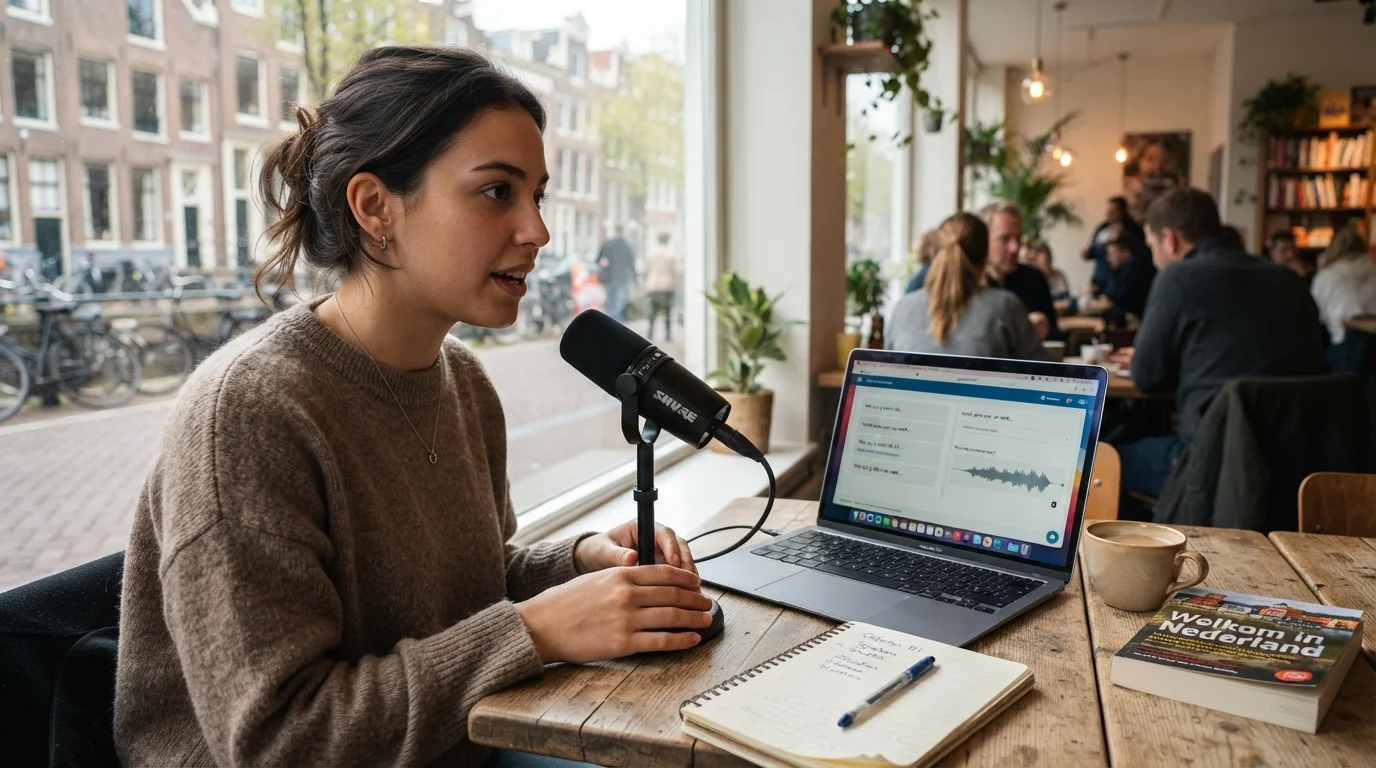
AI-generated image

If you are planning to settle down, apply for permanent residency, or become a Dutch citizen, you have almost certainly encountered the civic integration exam (inburgeringsexamen). However, navigating the Dutch integration landscape in 2026 can feel like trying to decipher an encrypted message. With ongoing legislative changes, shifting naturalisation criteria, and distinct legal frameworks running simultaneously, one burning question tops every expat forum: Should you aim for the A2 or the B1 Dutch integration exam in 2026?
Choosing the wrong level can cost you months of unnecessary study or, worse, leave you holding a diploma that does not meet the legal threshold for your long-term immigration goals. In this comprehensive guide, we will break down the legal rules governing civic integration in the Netherlands, examine the linguistic differences between A2 and B1, and help you determine the exact path you should take in 2026.
To understand which exam level applies to you, you must first understand the legal system under which your integration obligation falls. The Dutch government introduced major overhauls under the Wet inburgering 2021, but older obligations still operate under the Wet inburgering 2013.
To confirm your specific obligation date, you should log into your personal portal via DUO Inburgeren. If you are preparing to book your exam sessions, make sure to read our detailed guide on how to register for inburgering exams on Mijn Inburgering step-by-step.
A widespread source of confusion stems from the difference between mandatory integration (DUO) and voluntary application for permanent residence or Dutch citizenship (IND). Many highly skilled migrants, EU spouses, and expat workers do not have a mandatory integration obligation from DUO, but they choose to take the exams voluntarily to qualify for an indefinite residence permit or naturalisation through the Immigration and Naturalisation Service (IND).
For years, the Dutch parliament debated raising the minimum language threshold for citizenship and permanent residency from A2 to B1 across the board. In 2026, the status depends heavily on formal statutory enactment dates and individual visa categories. If you are exempt from mandatory civic integration but taking exams purely for permanent residency or naturalisation, you must check the prevailing IND requirements at the moment you submit your application.
However, immigration lawyers and language educators consistently advise: If you have the time and capability, aim for B1. Preparing for B1 guarantees that future legislative changes will not invalidate your progress, and it grants you far greater linguistic independence in Dutch society.
The Common European Framework of Reference for Languages (CEFR) defines language ability across six standardized levels (A1 to C2). The jump from A2 (Waystage) to B1 (Threshold) is often described as the most significant milestone in a language learner\'s journey.
At level A2, you possess basic transactional Dutch. You can:
At level B1, you transition from basic transactional communication to genuine conversational autonomy. You can:
Both A2 and B1 civic integration exams assess four core language skills, plus knowledge of Dutch society (KNM). Let us examine how the demands differ across each component.
A2 Reading: Involves short, everyday texts such as supermarket flyers, brief emails from a school or landlord, public transport timetables, and short informational notices. The questions are multiple-choice and directly test your ability to locate explicit factual information.
B1 Reading: Involves longer, multi-paragraph articles from newspapers, detailed workplace policies, official government correspondence, and consumer reviews. The test evaluates not only explicit facts but also implied meaning, tone, and the writer\'s underlying intent. If you are preparing for this section, review our guide on how to pass the inburgering reading exam with B1 practice.
A2 Listening: Audio clips feature slow, clearly articulated Dutch spoken by professional voice actors. Topics include voicemail messages, train station announcements, and brief conversations between neighbors.
B1 Listening: The audio tracks feature natural conversational speed, background ambient noise, multiple speakers with subtle regional accents, and authentic workplace meetings or radio interviews. You must filter out distractors and understand abstract arguments.
A2 Writing: You are asked to write four short assignments: filling out a basic registration form, writing a 3-sentence note to a colleague, and responding to two brief emails (approx. 30-50 words each) using simple grammar.
B1 Writing: You must write structured letters, formal complaints, job applications, or opinion essays (100-150 words). You are evaluated on cohesion, linking words (daardoor, echter, tenzij), vocabulary diversity, and correct word order in subordinate clauses.
A2 Speaking: A computer-administered test where you watch short video prompts and provide brief, formulaic answers (e.g., "I prefer cycling because it is healthy").
B1 Speaking: Requires spontaneous, continuous speech. You must explain your viewpoint on societal topics (e.g., working from home vs. office), weigh pros and cons, and resolve nuanced problems during extended dialogues.
Here is a quick reference breakdown of the two exam levels:
Still unsure which path to choose? Use the following decision matrix to determine your best move:
For an overarching view of all mandatory requirements, refer to the ultimate checklist for the Dutch civic integration exam (2026).
If you decide to tackle B1, you might worry about the increased workload. Moving from A2 to B1 is not about memorizing more isolated word lists; it is about building conversational fluency and structural intuition.
Here are proven techniques to bridge the gap:
Whether you choose the A2 or B1 exam in 2026, understanding your legal obligations and personal goals is the key to passing on your first attempt. While A2 remains the faster checkpoint for those legally eligible under older regulations, B1 is the undisputed gold standard for anyone seeking long-term integration, professional mobility, and future-proof peace of mind.
Start your preparation today by auditing your current CEFR level, establishing a daily study routine, and utilizing smart learning tools like StroopTaal to master Dutch grammar, vocabulary, and real-world conversation.
Share this article:
Preparing for the Dutch civic integration exam (inburgeringsexamen) can feel like a dual challenge: you are not just learning a language, you are...
Read morePreparing for the Dutch civic integration exam (inburgeringsexamen) can feel intimidating, particularly when stepping up to the CEFR B1 level. Unlike...
Read moreFor expats, international professionals, and newcomers making the Netherlands their long-term home, the Dutch civic integration exam...
Read more