30 Essential KNM Exam Terms: Dutch Society and Politics
Preparing for the Dutch civic integration exam (inburgeringsexamen) can feel like a dual challenge: you are not just learning a language, you are...
Read more
This article was drafted by AI and edited by a person before it was published.
AI can get things wrong. For anything official, check the source it points to.
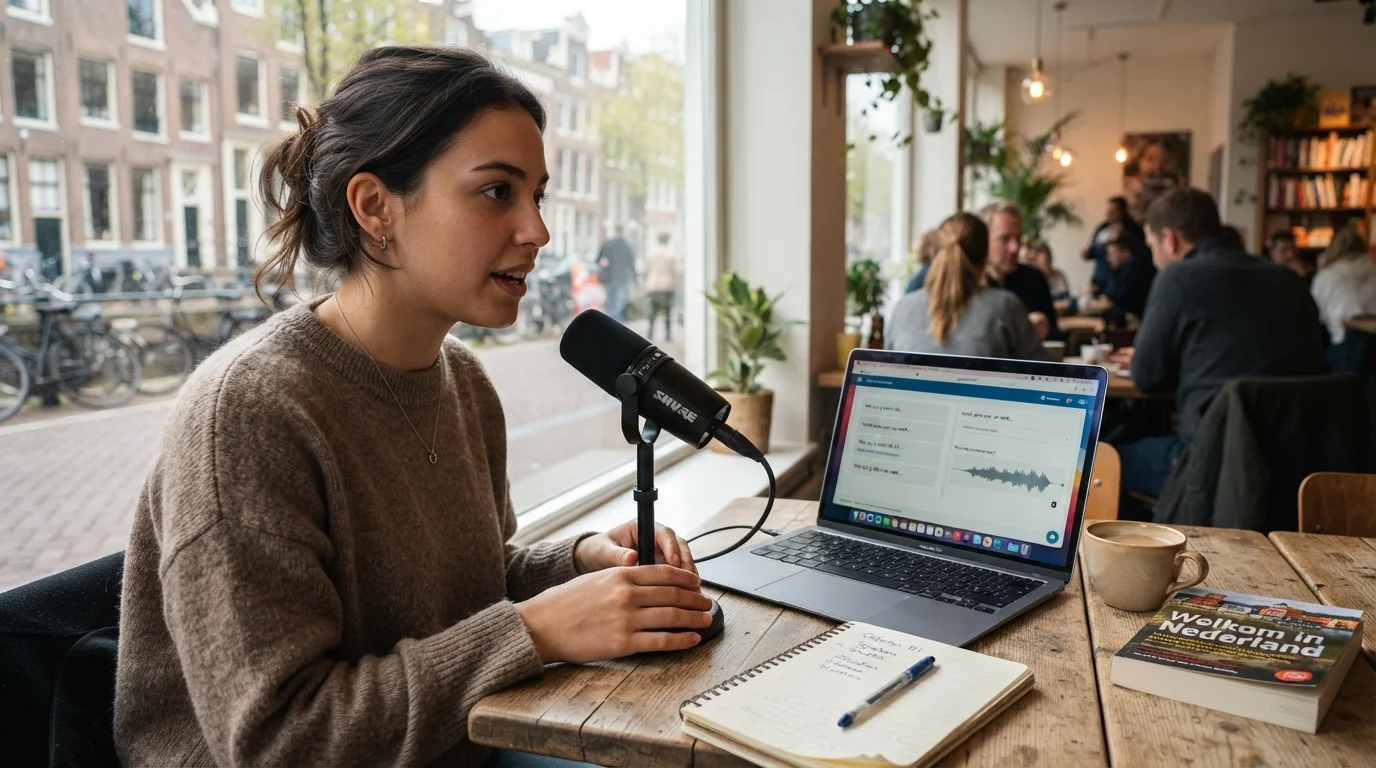
AI-generated image

Stepping up to the Inburgering B1 Reading exam (Lezen B1) can feel daunting. Unlike the straightforward A2 level, B1 texts are denser, vocabulary is broader, and questions frequently test nuance, tone, and implied meaning rather than simple word-matching. Whether you are aiming for permanent residency or Dutch citizenship, mastering the reading component is crucial.
The good news? With targeted strategies and realistic practice, reading in Dutch transforms from a slow, dictionary-heavy chore into an intuitive skill. If you are balancing exam prep alongside a busy schedule, learning how to study for the inburgering exam while working full-time is essential to keep your momentum high.
In this guide, we break down the structure of the DUO B1 Reading test, provide high-yield reading strategies, walk through full practice exercises with detailed explanations, and share proven methods to guarantee a passing score on exam day.
The reading exam is administered on a computer at an official test center managed by DUO (Dienst Uitvoering Onderwijs). Before diving into mock tests, it helps to understand what the official examiners evaluate at the B1 level according to the Common European Framework of Reference (CEFR).
You can check official exam schedules and rules directly on the Inburgeren.nl official portal. For a broader overview of the entire integration journey, make sure to review our ultimate checklist for the Dutch civic integration exam.
Passing the B1 reading exam is as much about test-taking strategy as it is about vocabulary. Here are four foundational strategies you should apply to every practice session:
Never read the entire passage first. Always read the question and the multiple-choice options (A, B, C, D) before tackling the text. This primes your brain to scan for specific keywords, dates, names, or concepts, saving precious minutes.
At B1 level, questions often hinge on transitions, contrasts, and conditions. Recognizing signaalwoorden instantly helps you understand text hierarchy and author intention:
Many exam questions ask: "Wat is het doel van deze tekst?" (What is the purpose of this text?) or "Wat is de hoofdgedachte?" (What is the main idea?). Be careful: incorrect answer options frequently state a true detail mentioned in the text, but that detail is not the central message.
DUO test designers know that beginners look for exact word matches. At B1 level, if an answer choice uses the exact same rare phrase as the text, double-check it carefully. Often, the correct answer uses a synonym or paraphrases the idea.
Let\'s put these strategies into action. Read each authentic Dutch text below, answer the accompanying questions, and review the detailed rationales.
Lees de onderstaande tekst en beantwoord de vragen.
Gemeente Utrecht – Vervanging van de groene containers
Geachte bewoner,
In de week van 14 april start de gemeente Utrecht met het gefaseerd vervangen van alle groene gft-containers (groente-, fruit- en tuinafval). Uit recent onderzoek is gebleken dat ruim 40% van de huidige bakken beschadigd is of niet meer voldoet aan de moderne veiligheidsnormen voor onze vuilniswagens.
Wat betekent dit voor u?
U hoeft uw oude container niet zelf in te leveren. Wij vragen u vriendelijk om uw huidige groene bak op dinsdag 15 april vóór 07:30 uur leeg aan de straat te zetten, ook als deze nog niet vol is. Onze medewerkers nemen de oude bak mee en plaatsen direct een nieuw exemplaar met een ingebouwde microchip voor uw deur.
Bent u op die dag niet thuis? Vraag dan aan een van uw buren of zij uw bak willen buitenzetten. Mocht uw container op de genoemde datum niet zijn omgewisseld, dan kunt u tot uiterlijk 1 mei via onze website kosteloos een nieuwe afspraak inplannen. Na deze datum worden voor een nalevering administratiekosten van €17,50 in rekening gebracht.
Met vriendelijke groet,
Afdeling Afvalinzameling Gemeente Utrecht
Lees de onderstaande interne memo en beantwoord de vragen.
Interne Mededeling: Nieuw beleid rondom beeldschermwerk en thuiswerken
Beste collega\'s,
Sinds de introductie van het hybride werken merken we een toename van fysieke klachten onder medewerkers, met name aan nek, schouders en polsen. Om langdurig verzuim tegen te gaan, stelt de directie vanaf volgende maand een eenmalig ergonomisch budget van €450,- beschikbaar voor iedere werknemer met een vast contract of een tijdelijk contract van minimaal één jaar.
Dit budget is uitsluitend bestemd voor goedgekeurde ergonomische hulpmiddelen, zoals een verstelbare bureaustoel, een los toetsenbord of een extern beeldscherm. Declaraties dienen vóór het einde van het kwartaal ingediend te worden via het HR-portaal, vergezeld van een officieel aankoopbewijs. Let op: bureau-accessoires zoals planten, lampen of koptelefoons vallen uitdrukkelijk buiten deze regeling.
Daarnaast adviseren we iedereen met klem om de "20-20-2"-regel toe te passen: kijk na elke 20 minuten beeldschermtijd 20 seconden in de verte en beweeg minstens 2 minuten per uur. Heb je ondanks een goede werkplek toch aanhoudende pijnklachten? Neem dan direct contact op met onze bedrijfsfysiotherapeut. Een verwijzing van de huisarts is hiervoor niet vereist.
Lees het onderstaande artikel en beantwoord de vraag.
Zijn slimme thermostaten wel echt zo zuinig?
Fabrikanten van slimme thermostaten beloven gouden bergen: een energiebesparing tot wel 25% door geavanceerde algoritmes die uw dagelijkse routines leren kennen. Maar uit recent onderzoek van de Consumentenbond blijkt de werkelijkheid een stuk genuanceerder te liggen.
In huishoudens waar bewoners al een regelmatig leefpatroon hebben en zelf consistent de verwarming omlaag draaien voor vertrek of bij het slapengaan, levert een slim apparaat nauwelijks extra besparing op. Soms verbruikt het systeem zelfs meer energie, doordat het te vroeg begint met voorverwarmen op basis van foutieve aannames over uw thuiskomst.
Alleen bij gezinnen met sterk wisselende werktijden of vergeetachtige bewoners blijkt de slimme thermostaat een significante winst op te leveren. De conclusie? Een slimme thermostaat betaalt zichzelf pas terug als uw eigen stookgedrag voorheen inefficiënt was. Het blindelings aanschaffen van dure techniek garandeert geenszins een lagere energierekening.
To pass B1 Lezen comfortably, you need an active and passive vocabulary of roughly 3,000 to 4,500 words. Encountering unknown words is normal, but missing key academic and administrative terminology will cost you points.
A proven strategy is using targeted digital tools that reinforce vocabulary in real-world contexts. You can learn how to use StroopTaal to build B1 Dutch exam vocabulary using smart spaced repetition systems and context-based reading challenges. By seeing high-frequency civic exam words repeatedly across spaced intervals, you learn to recognize them more quickly—giving you more time to analyze complex questions on exam day.
Students who fail the B1 reading exam rarely do so because they cannot read Dutch; they fail due to specific test traps:
To ensure you walk into the exam room with absolute confidence, follow this 4-week step-by-step roadmap:
The Inburgering B1 Reading exam does not test whether you are a native speaker; it tests whether you can independently navigate life, work, and bureaucracy in the Netherlands. By mastering signaalwoorden, scanning strategically, and practicing with authentic texts, you can conquer this exam on your first attempt.
Ready to level up your Dutch? Practice daily with StroopTaal to train your reading comprehension, master essential vocabulary, and prepare for every component of the civic integration exam with interactive, AI-powered exercises.
Share this article:
Preparing for the Dutch civic integration exam (inburgeringsexamen) can feel like a dual challenge: you are not just learning a language, you are...
Read morePreparing for the Dutch civic integration exam (inburgeringsexamen) can feel intimidating, particularly when stepping up to the CEFR B1 level. Unlike...
Read moreFor expats, international professionals, and newcomers making the Netherlands their long-term home, the Dutch civic integration exam...
Read more