The Ultimate Checklist for the Dutch Civic Integration Exam (2026)

This article was written by AI and published by StroopTaal.

AI can get things wrong. For anything official, check the source it points to.

How StroopTaal uses AI

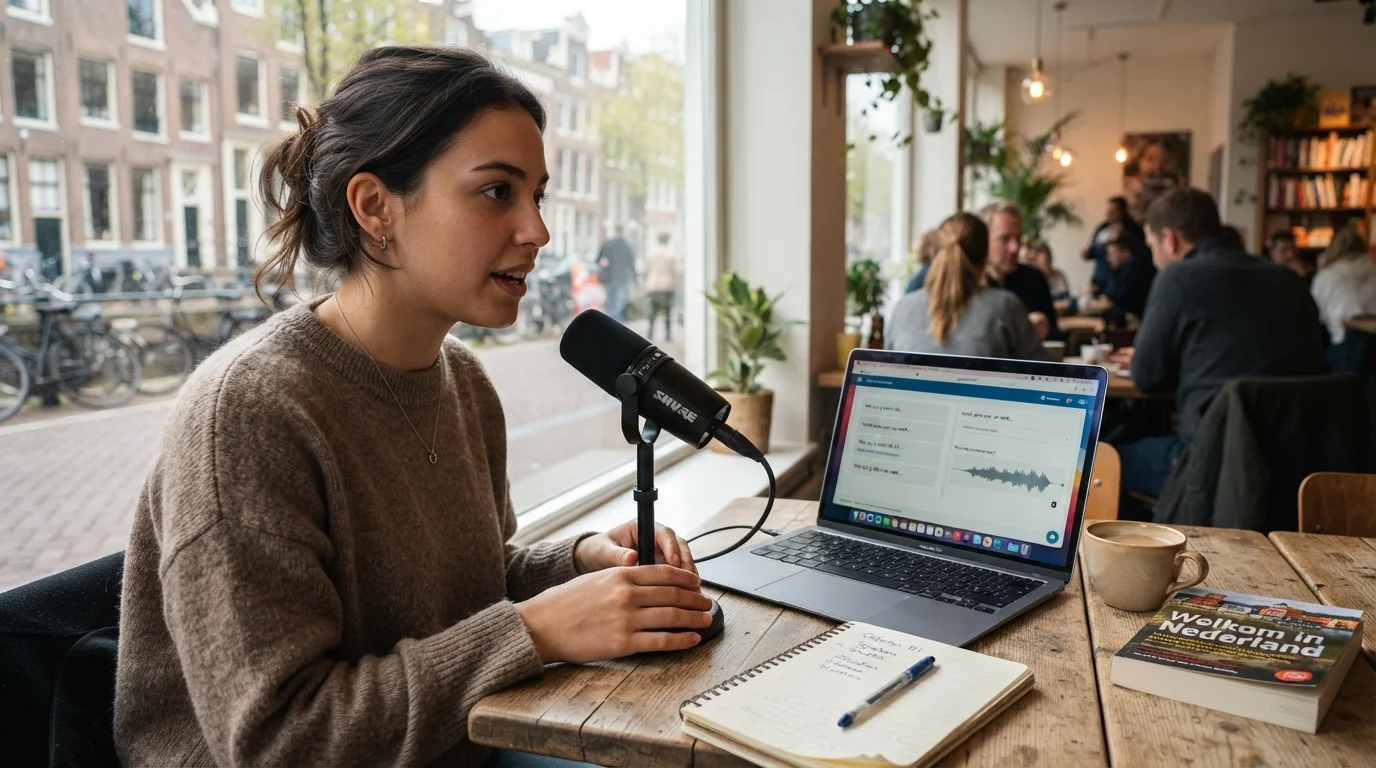
AI-generated image

The Ultimate Checklist for the Dutch Civic Integration Exam (2026)

Passing the Dutch Civic Integration Exam (inburgeringsexamen) is a monumental milestone for expats, permanent residents, and prospective Dutch citizens. Whether your goal is securing a permanent residence permit or obtaining Dutch citizenship, passing your integration exams is non-negotiable.

With ongoing developments in the civic integration law (Wet inburgering), preparing strategically is more important than ever. From balancing language requirements to mastering Dutch societal norms, having a clear roadmap will save you months of stress. This ultimate 2026 checklist walks you step-by-step through the requirements, components, timeline, and study habits needed to pass your Dutch integration exam on your first attempt.

Understanding the Dutch Civic Integration Exam in 2026

Before diving into flashcards and practice tests, it is essential to understand how your civic integration pathway is structured. Under the current integration system administered by DUO (Dienst Uitvoering Onderwijs) and your local municipality (gemeente), candidates are typically assigned to one of three integration routes:

  • The B1/Language Route (B1-route): Aimed at achieving Dutch proficiency at the B1 level alongside volunteer or professional work.
  • The Education Route (Onderwijsroute): Focused on young adults preparing for Dutch vocational (MBO) or higher education (HBO/WO), generally targeting the B1 or B2 level.
  • The Self-Reliance Route (Z-route): Designed for individuals who face significant barriers to reaching B1, focusing on practical language use at the A1 level.

Note: If you are an expat taking voluntary inburgering for permanent residency or naturalization through the IND (Immigration and Naturalisation Service), verify whether your requirement is A2 or B1 based on when your civic integration obligation was triggered or when you registered.

The 2026 Inburgering Exam Components

The standard integration exam consists of multiple distinct sections. To earn your diploma, you must pass each required component:

  • Reading (Lezen): Multiple-choice questions assessing your comprehension of letters, flyers, emails, advertisements, and newspaper articles.
  • Listening (Luisteren): Audio and video prompts featuring everyday conversations, workplace discussions, and announcements.
  • Speaking (Spreken): Computer-based spoken prompts where you answer questions, respond to short video scenarios, and explain daily situations.
  • Writing (Schrijven): Open-ended written tasks including filling out formal forms, writing short emails, and replying to complaints or invitations.
  • Knowledge of Dutch Society (Kennis van de Nederlandse Maatschappij - KNM): A multiple-choice exam testing practical knowledge of Dutch history, healthcare, schooling, housing, taxes, and social etiquette.
  • Participation Statement Process (Participatieverklaringstraject - PVT): A workshop and signed declaration regarding Dutch values and constitutional rights.
  • Labor Market and Participation Module (MAP) / Work Portfolio (ONA): Practical preparation and documentation aimed at entering the Dutch job market.

The Master Checklist: Your Timeline to Exam Success

Treat your exam preparation as a structured project. Follow this phase-by-phase checklist to stay organized.

Phase 1: 6 to 12 Months Before the Exam

  • Log into Mijn Inburgering: Check your official integration deadline, assigned route, and required exam components via DigiD.
  • Assess your baseline level: Identify whether you are starting from complete beginner (A0) or already conversational (A2/B1).
  • Establish a daily study routine: Consistency trumps cramming. Dedicate 20 to 45 minutes daily rather than hours only on weekends. If you have a busy career, look into strategies for studying for the inburgering exam while working full-time.
  • Set up structured vocabulary learning: Start building targeted exam vocabulary using spaced repetition systems (SRS) so words stick in your long-term memory.
  • Complete municipal intake sessions: If mandatory for your route, attend your municipality interviews to confirm your Personalized Integration and Participation Plan (PIP).

Phase 2: 3 to 6 Months Before the Exam

  • Book your exam slots: Exam centers in cities like Amsterdam, Utrecht, Rotterdam, and Zwolle fill up quickly. Schedule your test dates early through Mijn Inburgering.
  • Target your active language skills: While reading and listening are receptive skills, speaking and writing require active practice. Practice structured Dutch sentence construction (especially inversion and subclause word order: omdat, dat, als).
  • Use AI tools for speaking confidence: One of the biggest hurdles for learners is speaking anxiety. With the StroopTaal app, you can practice real-life Dutch conversations with AI and receive instant pronunciation feedback without fear of making mistakes.
  • Study for the KNM section: Read up on how the Dutch healthcare system (huisarts referrals), government structure (Tweede Kamer), and recycling rules function. Review essential vocabulary for the KNM exam to ensure unfamiliar civic terms do not trip you up.
  • Draft formal correspondence: Practice writing short emails (formal and informal), paying strict attention to standard openings (Geachte heer/mevrouw, Beste...) and closings (Met vriendelijke groet).

Phase 3: 1 Month Before the Exam

  • Complete official DUO practice tests: Take all available sample exams on the official DUO website under timed conditions.
  • Simulate computer-based speaking: Because the speaking exam uses a headset and computer screen with strict timers, practice speaking clearly into a microphone within 30-second time limits.
  • Audit your writing errors: Review common pitfalls, such as omitting verb endings (-t, -en), mixing up de/het articles, or incorrect adjective endings.
  • Confirm administrative details: Check your exam confirmations, location addresses, and session times.

Phase 4: 24 Hours Before & Exam Day

  • Pack valid identification: You must bring your valid passport, ID card, or Dutch residence permit. A digital copy or driver's license is not accepted.
  • Bring your official convocation letter: Keep your DUO invitation letter handy (printed or accessible on your phone).
  • Arrive 30 minutes early: Exam centers enforce strict security. Arriving late can forfeit your exam slot and registration fee.
  • Manage exam pacing: On multiple-choice sections (Lezen, Luisteren, KNM), eliminate clearly wrong answers first. If you are unsure, pick the most plausible option and move on; there is no penalty for guessing.

Section-by-Section Practical Tips

1. Reading (Lezen)

Do not read the full text word-for-word first. Read the question and answer choices first to understand what detail you are searching for (e.g., a date, a condition, a price, or an author's opinion). Pay close attention to qualifying words like nooit (never), altijd (always), soms (sometimes), and alleen (only).

2. Listening (Luisteren)

During the listening exam, use the preparatory seconds before each clip to scan the questions. Listen for conversational transitions like maar (but), echter (however), and daarom (therefore), which often signal the correct answer after an initial distractor.

3. Speaking (Spreken)

Keep your sentences short, direct, and grammatically correct rather than overly complex. Answer exactly what is asked. If the prompt asks what time you arrive at work, state the time clearly before adding any brief context. Pronunciation matters: practice vowel pairs (ui, eu, ij/ei, oe) with tools like StroopTaal's real-time pronunciation feedback.

4. Writing (Schrijven)

Always address every bullet point mentioned in the prompt. If the task asks you to provide three reasons for a schedule change, you will lose points if you only write two. Keep your handwriting neat or review your typing carefully if doing a digital written format.

5. Knowledge of Dutch Society (KNM)

KNM is not just a language test; it is a test of practical logic in Dutch daily life. Remember the core principles: equality, personal responsibility, open dialogue, compromise (the poldermodel), and strict adherence to appointments and registrations.

What to Do After the Exam

Once you finish your tests, DUO typically takes up to 8 weeks to process and publish your scores. You can track your progress by checking your inburgering exam results directly on the Mijn Inburgering portal.

Once all sections show a passing grade (6 or higher), DUO will issue your official Inburgeringsdiploma. You can then submit your diploma to the IND when applying for permanent residency or Dutch naturalization.

Final Thoughts: Start Your Preparation Today

Passing the Dutch Civic Integration Exam is entirely achievable with structured planning, deliberate practice, and the right learning tools. By following this comprehensive 2026 checklist, you turn an intimidating government requirement into a clear, manageable step-by-step process.

Ready to level up your Dutch? Incorporate StroopTaal into your daily routine to master essential vocabulary, polish your grammar, and practice interactive speaking scenarios anytime, anywhere.

Frequently Asked Questions

What is the passing score for the Dutch civic integration exams?
The passing grade for all inburgering exam components (Reading, Listening, Speaking, Writing, and KNM) is a 6 out of 10, meaning you need approximately 60% correct answers to pass.
How long does it take to receive inburgering exam results?
DUO officially states that results can take up to 8 weeks to be published on the Mijn Inburgering portal, though computer-scored sections like Reading and Listening often appear sooner.
What is the difference between the A2 and B1 Inburgering levels?
A2 covers basic social interactions and straightforward everyday communication, while B1 requires greater independence, comprehension of complex topics, and the ability to express opinions and professional arguments.