30 Essential KNM Exam Terms: Dutch Society and Politics
Preparing for the Dutch civic integration exam (inburgeringsexamen) can feel like a dual challenge: you are not just learning a language, you are...
Read more
This article was written by AI and published by StroopTaal.
AI can get things wrong. For anything official, check the source it points to.
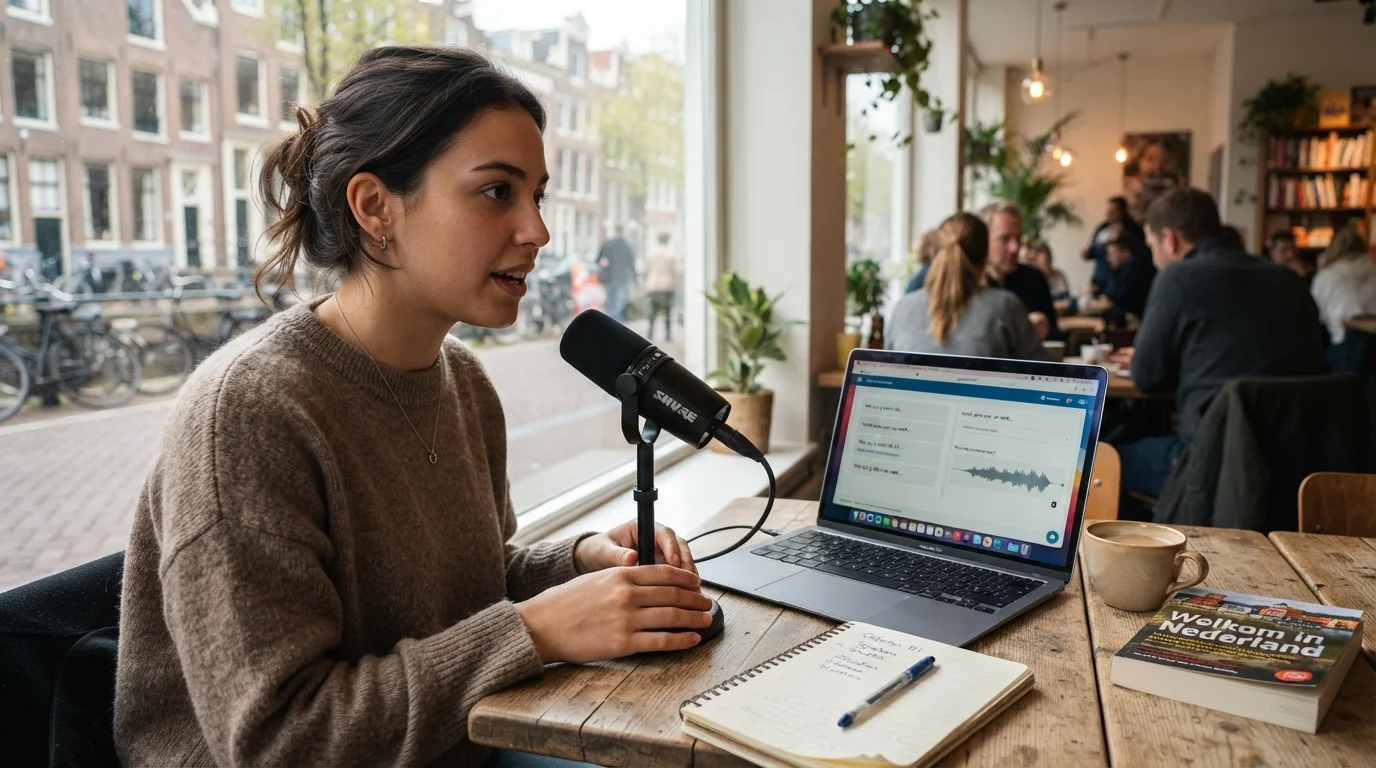
AI-generated image

For expats, international professionals, and newcomers making the Netherlands their long-term home, the Dutch civic integration exam (inburgeringsexamen) is one of the most critical milestones on the path to permanent residency or Dutch citizenship. Over the past few years, the integration framework has undergone a massive transition. As we navigate 2026, the shift from the traditional A2 language standard to the more challenging B1 level is actively impacting tens of thousands of residents.
Whether you recently received a formal notification letter from DUO (Dienst Uitvoering Onderwijs) or you are proactively planning your permanent residency application, understanding the nuances of the 2026 inburgering landscape is vital. Moving from basic conversational Dutch (A2) to independent Dutch (B1) is not simply about learning a few extra words; it requires a genuine leap in language fluency, grammar mastery, and communicative agility.
In this guide, we break down what has changed, who is affected under the 2026 regulations, how the B1 exam components work, and how you can prepare efficiently to meet the Dutch language requirements of daily life, work, and integration.
To understand the 2026 landscape, you first need to understand the legal framework under which you fall. The Dutch integration system is primarily split between two major legislative acts:
Why is 2026 such a pivotal year? Under the Wi2021 rules, candidates are granted a standard three-year integration term (inburgeringstermijn) to complete their exams. Those who became integration-duty (inburgeringsplichtig) during 2022 and early 2023 are reaching the end of their three-year deadlines in 2026. This means the very first major waves of candidates subject to the B1 standards are now taking their final tests in high volumes.
If you are confused about which set of rules applies to your individual residency permit, reading our detailed comparison on comparing A2 and B1 integration requirements can help clarify your personal trajectory before you book any test dates.
One of the most frequently asked questions among highly skilled migrants and EU family members is: "If I am exempt from mandatory civic integration, do I still need B1 for citizenship or permanent residence?"
According to updates and guidelines provided by the Immigration and Naturalisation Service (IND), the rules depend strictly on your legal status:
Failing to finalize your integration portfolio within the statutory timeframe can trigger administrative fines or complications with your residence status. You can read more about the repercussions of missing your deadline in our guide on missing your inburgering deadline under 2026 rules.
Many language learners underestimate the gap between A2 and B1. In the Common European Framework of Reference for Languages (CEFR), Level A2 represents a "basic user," whereas Level B1 signifies an "independent user."
Here is what that contrast looks like across common exam scenarios:
At A2, you can pass by using simple main clauses: "Ik woon in Utrecht en ik werk op kantoor." At B1, examiners expect you to manipulate subclauses (bijzinnen), relative clauses, and coordinating conjunctions with confidence. You must demonstrate that verbs move smoothly to the end of the clause after words like omdat, hoewel, zodat, and toen.
At A2, listening and reading passages are literal. If a text mentions a library opening at 09:00, the corresponding multiple-choice question directly asks for the time. At B1, texts contain nuance, tone, opinions, and implied meaning. You will be expected to identify why someone disagrees with a municipal proposal, what a speaker's hesitation suggests, or which counterargument an author presents.
An A2 vocabulary requires roughly 1,500 to 2,000 words focusing on immediate survival needs: groceries, basic directions, doctor appointments, and simple housing transactions. Level B1 demands an active vocabulary closer to 3,500 to 4,500 words, including professional terminology, civic phrasing, idiomatic prepositions, and abstract expressions.
The formal B1 inburgering exam suite evaluates candidates across five distinct components. To earn your diploma, you must pass all of them.
The B1 reading exam tests your capacity to understand authentic texts from daily life in the Netherlands: formal letters from the municipality (gemeente), news snippets, workplace safety guidelines, employee manuals, and rental contracts. You have 110 minutes to review several texts and answer multiple-choice questions requiring contextual interpretation and inference.
During the listening exam (approximately 45 minutes), you will listen to audio clips through headphones and answer multiple-choice questions. Audio tracks reflect realistic Dutch situations: formal telephone calls, train station announcements, public discussions, and workplace dialogues. At B1, speakers speak at a natural pace, using authentic Dutch intonation and background noise.
The writing exam takes around 80 minutes and requires you to produce short, coherent texts. Typical prompts include writing a formal complaint to an online retailer, an email to your landlord detailing a maintenance issue, a note to your child's school explaining an absence, or filling in a multi-part feedback form. Accurate spelling, conjugation tables, and sentence structures are strictly assessed.
Conducted via a computer terminal with a headset, the speaking exam consists of two parts. In part one, you watch short video clips and answer questions out loud. In part two, you express opinions or explain solutions to practical problems. Your answers are recorded and assessed on vocabulary choice, grammatical correctness, fluency, and Dutch pronunciation.
The Kennis van de Nederlandse Maatschappij exam evaluates whether you understand how the Netherlands functions. Topics range from the Dutch healthcare and education systems to the constitution, labor market, and emergency services. Understanding this content requires solid reading comprehension. Explore our breakdown on mastering the Dutch KNM exam for a targeted overview of what this test entails.
Preparing for B1 requires shifting away from passive memorization and adopting deliberate daily routines. Here are proven steps to build your confidence and language skills:
Because B1 demands practical comprehension, integrate Dutch into your daily life. Change your phone's operating system language to Dutch. Read Dutch news websites like Government.nl or NOS Nieuws in Makkelijke Taal. Listen to Dutch radio while commuting, and try to speak Dutch during small interactions at your local market or bakery.
Grammar errors at B1 are penalized more heavily than at A2. Spend dedicated time reviewing irregular past-tense verbs (onvoltooid verleden tijd) and the perfect tense (voltooid tegenwoordige tijd). Make flashcards focusing on conjunctions that alter sentence order (e.g., terwijl, aangezien, tenzij) and practice forming complex sentences out loud.
Maintaining study consistency alongside a demanding work schedule is one of the hardest parts of exam preparation. This is where modern mobile apps can provide structured support.
For instance, StroopTaal teaches the Dutch of daily life, work, and exams, from complete beginner to C1. Its curriculum is mapped directly to the CEFR levels, offering a path of short lessons covering grammar tips, conjugation tables, and real-life conversational dialogues. StroopTaal's spaced repetition system ensures that difficult words and past mistakes return just as they begin to fade.
For targeted exam prep, StroopTaal Premium includes dedicated exam practice for the inburgering exam at both A2 and B1 (covering reading, writing, listening, speaking, and KNM), as well as the Staatsexamen NT2. You can practice each part of the exam individually with a timer, receive AI feedback on your writing and speaking responses, and monitor your readiness score for each section as your test date approaches.
Many candidates fail the speaking exam not because their vocabulary is lacking, but because speaking out loud under exam pressure causes hesitation. You must get comfortable vocalizing Dutch phrases. Practice summarizing what you did today or narrating routine tasks while cooking dinner.
If you lack speaking partners, StroopTaal's AI conversation partner, Taalmaatje, lets Premium users practice vocalizing Dutch out loud across real-world topics or mock scenarios (such as an interview or a doctor's visit). The app includes pronunciation scoring that pinpoints areas for improvement, helping you build confidence before stepping into the exam room.
The changes under the 2026 inburgering landscape highlight the Dutch government's clear emphasis on functional, independent language skills. While jumping from A2 to B1 requires a bigger commitment, reaching B1 unlocks a far richer life in the Netherlands—enabling you to converse effortlessly with colleagues, participate in parent-teacher meetings, understand municipal correspondence without translation tools, and truly feel at home.
Check your formal letters from DUO, clarify your required exam level, establish a daily study habit, and start your exam preparation early. With focused effort and regular practice, you can approach your B1 integration exams with clarity and confidence.
Share this article:
Preparing for the Dutch civic integration exam (inburgeringsexamen) can feel like a dual challenge: you are not just learning a language, you are...
Read morePreparing for the Dutch civic integration exam (inburgeringsexamen) can feel intimidating, particularly when stepping up to the CEFR B1 level. Unlike...
Read moreMoving to the Netherlands and embarking on your civic integration journey (inburgering) is an exciting milestone, but the financial reality can...
Read more