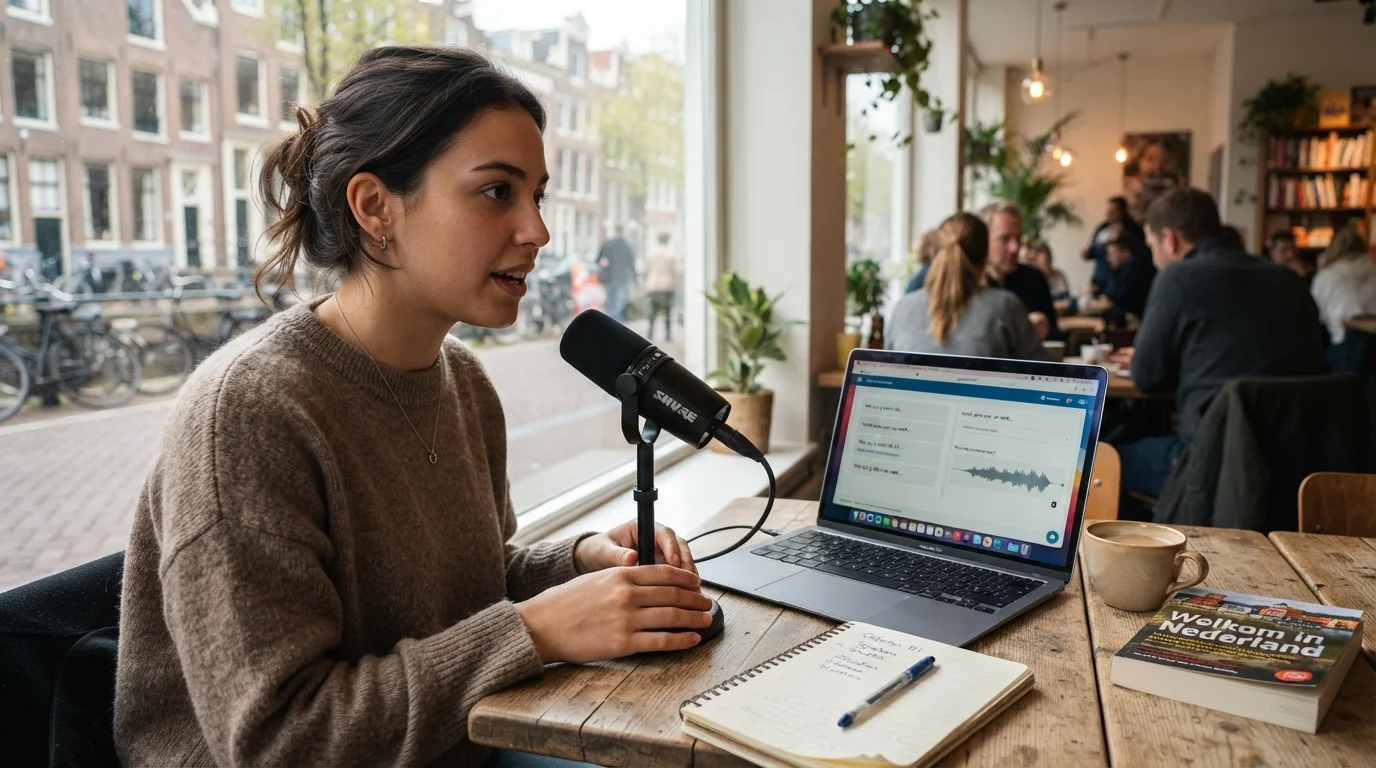
How to Ace the Inburgering B1 Speaking Exam: Practice Prompts
Preparing for the Dutch civic integration exam (inburgeringsexamen) can feel intimidating, particularly when stepping up to the CEFR B1 level. Unlike...
Read more
This article was written by AI and published by StroopTaal.
AI can get things wrong. For anything official, check the source it points to.
AI-generated image

Preparing for the Dutch civic integration exam (inburgeringsexamen) can feel like a dual challenge: you are not just learning a language, you are learning how an entire society functions. For many expats and newcomers, the Kennis van de Nederlandse Maatschappij (KNM) exam presents a unique hurdle. Unlike the pure language modules, KNM tests your understanding of practical life, constitutional values, healthcare, employment, and political systems in the Netherlands.
While KNM questions are written at the A2 language level, they routinely use specific civic, administrative, and legal vocabulary. If you do not recognize terms like wethouder, eigen risico, or grondwet, a simple question can quickly become confusing. Learning these essential terms in advance saves valuable exam time and gives you confidence when evaluating real-life scenario questions.
Before diving into the terms, it is helpful to make sure you know which level to take for your inburgering, as rules can differ based on when you received your integration notice. Once you know your requirements, mastering this core vocabulary is one of the most effective ways to study.
The KNM exam consists of multiple-choice questions based on short texts, scenarios, and video clips. The exam does not expect you to be a political scientist or a constitutional scholar; rather, it assesses whether you know how Dutch institutions operate and how citizens interact with each other and the state.
Common pitfalls on the exam often stem from subtle linguistic differences: confusing a burgemeester (mayor) with a minister-president (prime minister), or misunderstanding what an uitkering covers versus a toeslag. Familiarizing yourself with these 30 foundational terms will give you a clear framework for navigating every topic on the test.
The Netherlands is a parliamentary constitutional monarchy. Understanding the branches of government and how decisions are made is a core pillar of the KNM curriculum. Official information on Dutch state institutions can also be explored in depth on Government.nl.
Definition: The fundamental law of the Netherlands, laying out democratic principles, human rights, and the organization of state power.
KNM Context: Article 1 (Artikel 1 van de Grondwet) is frequently tested. It guarantees equal treatment and prohibits discrimination based on religion, belief, political opinion, race, gender, or any other grounds.
Example: In Nederland staat in de Grondwet dat iedereen gelijk behandeld moet worden. (In the Netherlands, the Constitution states that everyone must be treated equally.)
Definition: The main legislative body of the Dutch parliament, consisting of 150 directly elected members.
KNM Context: The Tweede Kamer debates new bills, votes on legislation, and holds the government accountable. Members are elected every four years during national elections.
Example: De Tweede Kamer controleert de ministers en keurt nieuwe wetten goed. (The Tweede Kamer oversees the ministers and approves new laws.)
Definition: The upper house of parliament, comprising 75 members elected indirectly by the Provincial Councils (Provinciale Staten).
KNM Context: The Eerste Kamer cannot draft or alter laws; it can only approve or reject legislation passed by the Tweede Kamer.
Example: De Eerste Kamer stemt over wetten die al door de Tweede Kamer zijn aangenomen. (The Senate votes on laws that have already been passed by the House of Representatives.)
Definition: The Prime Minister, all other ministers, and the state secretaries (staatssecretarissen).
KNM Context: Distinguish between het kabinet (ministers and state secretaries) and de regering (ministers plus the King). The cabinet proposes laws and runs government departments.
Example: Het kabinet maakt plannen voor het land en voert wetten uit. (The cabinet makes plans for the country and executes laws.)
Definition: The head of the Dutch government and chair of the Council of Ministers.
KNM Context: Unlike in presidential systems, the Dutch Prime Minister is not head of state (the monarch is), but the political leader of the ruling coalition.
Example: De minister-president leidt de vergaderingen van het kabinet. (The Prime Minister leads cabinet meetings.)
Definition: The royal house of Orange-Nassau, headed by the King (de Koning).
KNM Context: The Netherlands is a constitutional monarchy. The King has a largely ceremonial role, signs laws alongside ministers, and delivers the annual Troonrede on Budget Day (Prinsjesdag).
Example: De koning heeft geen politieke macht, maar vertegenwoordigt het land. (The King has no political power, but represents the country.)
Definition: The right of citizens to cast a ballot in elections.
KNM Context: Dutch citizens aged 18 and older have active voting rights for national elections. Non-Dutch residents can vote in municipal elections after meeting legal residence requirements.
Example: Alle Nederlandse burgers van 18 jaar en ouder mogen stemmen. (All Dutch citizens aged 18 and older are permitted to vote.)
Definition: An alliance of multiple political parties joining forces to form a government majority.
KNM Context: Because no single party wins an outright majority in the Dutch proportional representation system, governments are always coalitions formed through compromise (the polder model).
Example: Omdat geen enkele partij de meerderheid heeft, moeten partijen een coalitie vormen. (Because no single party has a majority, parties must form a coalition.)
Most day-to-day administrative matters in the Netherlands happen at the municipal level. Understanding local authorities is essential for both your exam and daily life.
Definition: The lowest administrative tier of government, responsible for local public services.
KNM Context: Your local municipality handles civil registration, passports, driving licenses, waste management, social assistance, and civic integration support.
Example: Je moet je verhuizing binnen vijf dagen doorgeven aan de gemeente. (You must report your change of address to the municipality within five days.)
Definition: The chairperson of the municipal executive and the municipal council.
KNM Context: In the Netherlands, mayors are not directly elected by citizens; they are formally appointed by royal decree upon recommendation by the municipal council.
Example: De burgemeester is verantwoordelijk voor de openbare orde en veiligheid in de stad. (The mayor is responsible for public order and safety in the city.)
Definition: An elected or appointed official who, alongside the mayor, forms the executive board of a municipality (College van B&W).
KNM Context: Wethouders manage specific local portfolios, such as education, housing, transport, or finance, similar to local ministers.
Example: De wethouder voor onderwijs bezoekt basisscholen in de wijk. (The municipal executive for education visits primary schools in the neighborhood.)
Definition: The intermediate administrative layer between central government and municipalities. The Netherlands has 12 provinces.
KNM Context: Provinces handle regional infrastructure, environmental planning, and nature preservation.
Example: De provincie zorgt voor het openbaar vervoer in de regio en beschermt de natuur. (The province manages regional public transit and protects nature.)
Definition: Regional democratic bodies responsible for flood protection, water quality, and groundwater levels.
KNM Context: Water boards are the oldest democratic institutions in the Netherlands. Residents pay dedicated water taxes and vote in water board elections.
Example: Het waterschap controleert de dijken en zorgt voor schoon drinkwater. (The water board inspects the dikes and ensures clean water.)
Definition: The general term for elected bodies representing citizens at national, provincial, or municipal levels.
KNM Context: This includes the Tweede Kamer, Provinciale Staten, and the gemeenteraad.
Example: De gemeenteraad is de volksvertegenwoordiging van de stad. (The municipal council is the representative assembly of the city.)
The KNM exam places strong emphasis on social norms, rights, obligations, and the rule of law (de rechtsstaat). Knowing these terms clarifies common scenario questions regarding civil liberties and the limits of the law.
Definition: The right to express opinions without censorship from the state.
KNM Context: While freedom of speech is protected, it has legal boundaries: hate speech, defamation, and incitement to violence are prohibited by Dutch law.
Example: Vrijheid van meningsuiting betekent dat je je mening mag geven, maar je mag niet discrimineren of aanzetten tot haat. (Freedom of speech means you may state your opinion, but you cannot discriminate or incite hatred.)
Definition: The right to choose, practice, or change one's religion or belief freely, or to adhere to none.
KNM Context: Practicing religion cannot conflict with Dutch criminal law or infringe on the constitutional rights of others.
Example: Iedereen in Nederland mag zelf kiezen welk geloof hij of zij heeft. (Everyone in the Netherlands is free to choose what faith they follow.)
Definition: The legal ban on treating individuals unfairly based on characteristics such as origin, gender, sexual orientation, disability, or faith.
KNM Context: Often tested via workplace scenarios—for example, employers refusing to hire someone due to wearing a headscarf or based on sexual orientation.
Example: Volgens het discriminatieverbod mag een werkgever niemand afwijzen vanwege afkomst of geaardheid. (According to the non-discrimination ban, an employer cannot reject anyone due to origin or sexual orientation.)
Definition: The principle that religious institutions and government bodies operate independently from one another.
KNM Context: Religious rules do not supersede Dutch law; religious leaders cannot dictate political or legal rulings.
Example: De scheiding van kerk en staat zorgt ervoor dat religieuze regels de wet niet kunnen vervangen. (The separation of church and state ensures that religious rules cannot override the law.)
Definition: The independent court system and judicial officers responsible for interpreting and applying the law.
KNM Context: The Netherlands maintains an independent judiciary. Judges are appointed for life and do not take instructions from politicians or the police.
Example: De rechter beslist onafhankelijk of iemand schuldig is en welke straf passend is. (The judge decides independently whether someone is guilty and which penalty is appropriate.)
Definition: Municipal enforcement officers (BOAs) who monitor local order, parking, waste disposal, and noise nuisances.
KNM Context: Questions often ask who to contact for parking violations or littering. Handhavers handle local municipal ordinances (APV), while the police handle criminal offenses.
Example: Handhavers controleren op straat of mensen hun afval op de juiste dag buitenzetten. (Enforcement officers check on the street whether people put their trash out on the correct day.)
Navigating the Dutch welfare state requires specific terminology. These terms frequently appear in exam scenarios about illness, budgeting, and state support.
Definition: Mandatory health insurance that all residents in the Netherlands must purchase.
KNM Context: Basic insurance (basisverzekering) is compulsory. If you do not register within four months of arrival, you face financial penalties.
Example: Iedereen die in Nederland woont of werkt, is verplicht een basiszorgverzekering af te sluiten. (Everyone who lives or works in the Netherlands is required to take out basic health insurance.)
Definition: The annual amount an adult must pay out of pocket for certain medical costs before the insurer pays the rest.
KNM Context: Visits to your GP (huisarts) are exempt from the eigen risico, but hospital visits, specialist care, and certain prescription medicines are covered by it.
Example: Een bezoek aan de huisarts kost niets en valt buiten het eigen risico. (A visit to the general practitioner costs nothing and falls outside the deductible.)
Definition: The primary care physician who acts as the gatekeeper (poortwachter) to the Dutch healthcare system.
KNM Context: You cannot visit a specialist or go to a hospital for non-emergency care without a referral letter (verwijsbrief) from your GP.
Example: Voor een afspraak in het ziekenhuis heb je eerst een verwijsbrief van je huisarts nodig. (For an appointment at the hospital, you first need a referral from your GP.)
Definition: Financial support from the government for individuals who cannot earn an income due to unemployment, illness, or disability.
KNM Context: Includes bijstand (social assistance from the municipality) and WW-uitkering (unemployment benefit administered by UWV).
Example: Als je ontslagen wordt, kun je mogelijk een WW-uitkering aanvragen bij het UWV. (If you are laid off, you may be eligible to apply for unemployment benefits through the UWV.)
Definition: Means-tested financial contributions from the tax authority (Toeslagen) to help lower-income households pay for essential expenses.
KNM Context: Major types include zorgtoeslag (healthcare subsidy), huurtoeslag (rent subsidy), and kinderopvangtoeslag (childcare subsidy).
Example: Mensen met een laag inkomen kunnen zorgtoeslag aanvragen om hun zorgverzekering te betalen. (People with a low income can apply for healthcare allowance to help pay their insurance.)
Definition: The national government agency responsible for collecting taxes and distributing benefits.
KNM Context: Citizens file an annual income tax return (belastingaangifte) and must notify the Belastingdienst of household income changes that affect allowances.
Example: Elk voorjaar doen burgers hun belastingaangifte bij de Belastingdienst. (Every spring, citizens file their tax returns with the Tax and Customs Administration.)
The Dutch education system and labor market rely on distinctive rules that integrate into several KNM exam questions.
Definition: The legal obligation for children living in the Netherlands to attend school.
KNM Context: Full-time school attendance is compulsory from age 5 until age 16. Between 16 and 18, youth are subject to the kwalificatieplicht (they must stay in school until obtaining a basic qualification). Taking children out of school for holidays outside official breaks is illegal.
Example: Kinderen vallen vanaf 5 jaar onder de leerplicht en mogen niet zomaar buiten schoolvakanties wegblijven. (Children are subject to compulsory education from age 5 and may not miss school outside designated breaks.)
Definition: The two fundamental tiers of compulsory schooling.
KNM Context: Primary school (basisschool) runs from group 1 to group 8 (ages 4 to 12). Afterward, students transition to secondary tracks: VMBO, HAVO, or VWO based on school advice.
Example: Na groep 8 van het basisonderwijs stromen leerlingen door naar het voortgezet onderwijs. (After group 8 of primary school, students move on to secondary education.)
Definition: Collective Labor Agreement negotiated between employers and labor unions representing an entire sector or company.
KNM Context: A CAO sets standards for wages, working hours, leave, overtime, and notice periods that are often more generous than basic statutory labor law.
Example: In de CAO staat precies hoeveel vakantiedagen en loonsverhoging werknemers in een sector krijgen. (The CAO states exactly how many vacation days and wage increases workers in a sector receive.)
Definition: The legally mandated floor on hourly earnings that employers must pay workers.
KNM Context: The Netherlands enforces a statutory statutory minimum hourly wage for workers aged 21 and older, with scaled rates for younger employees.
Example: Een werkgever mag je nooit minder betalen dan het wettelijk minimumloon. (An employer is never allowed to pay you less than the statutory minimum wage.)
Memorizing isolated word lists can only take you so far. To make these concepts stick for exam day, consider these practical techniques:
If you are looking for structured practice on your phone or tablet, StroopTaal offers dedicated exam practice for the inburgering exam at A2 and B1, covering reading, writing, listening, speaking, and KNM (knowledge of Dutch society). With StroopTaal Premium, you can practise each part of the exam on its own with a timer, track your past results, and view a readiness score for each exam section. The app also features a Words tab with spaced-out reviews, flashcards, and word puzzles that help keep these 30 terms fresh.
Once you feel comfortable with KNM terminology and Dutch civic concepts, make sure your administrative roadmap is clear. Check our step-by-step guide to register for inburgering exams on Mijn Inburgering so you can secure a test slot in your preferred testing location.
Consistently reviewing civic vocabulary turns ambiguous test questions into straightforward scenarios. Dedicate ten to fifteen minutes every day to testing yourself on these terms, and you will build a solid foundation for both the KNM exam and your life in the Netherlands.
Share this article:
Preparing for the Dutch civic integration exam (inburgeringsexamen) can feel intimidating, particularly when stepping up to the CEFR B1 level. Unlike...
Read moreFor expats, international professionals, and newcomers making the Netherlands their long-term home, the Dutch civic integration exam...
Read moreMoving to the Netherlands and embarking on your civic integration journey (inburgering) is an exciting milestone, but the financial reality can...
Read more