
Navigating DUO Loans for Dutch Language Courses: 2026 Guide
Introduction: Financing Your Dutch Language Journey in 2026 Moving to the Netherlands brings an exciting array of opportunities, from vibrant...
Read more
This article was drafted by AI and edited by a person before it was published.
AI can get things wrong. For anything official, check the source it points to.
AI-generated image
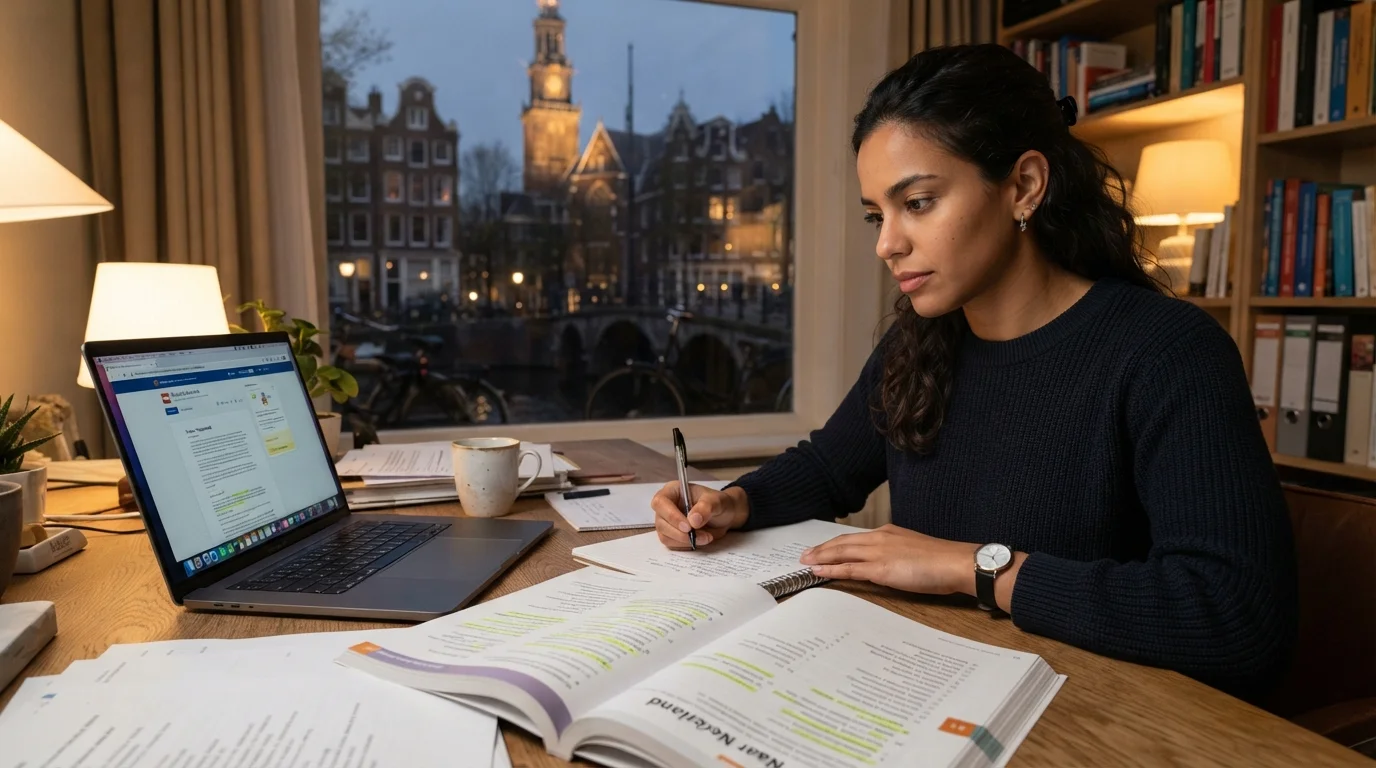
Moving to the Netherlands and building a career here is an exciting milestone. However, once the initial settling-in phase passes, many expats and international professionals face a massive hurdle: passing the Dutch Civic Integration Exam (Inburgeringsexamen). If you are already working 40 hours a week, handling household chores, and trying to maintain a social life, adding 10 to 15 hours of Dutch study can feel nearly impossible.
When you come home at 6:30 PM after a long day of meetings, opening a dry grammar textbook is usually the last thing you want to do. Brain fatigue is real, and traditional language schools often require rigid evening classes that clash with work travel, overtime, or sheer exhaustion. But here is the good news: thousands of working professionals pass their exam every single year without burning out or quitting their jobs.
The secret is not studying more—it is studying smarter. In this comprehensive guide, we will break down actionable strategies, time-management techniques, and modern tools designed specifically for busy professionals who need to master the exam while maintaining a demanding career.
To craft an effective study plan, you first need to understand why preparing for the exam while working full-time is uniquely challenging. The exam tests several distinct language components: Reading (Lezen), Listening (Luisteren), Speaking (Spreken), Writing (Schrijven), and Knowledge of Dutch Society (Kennis van de Nederlandse Maatschappij or KNM). Depending on your integration track under the official DUO guidelines, you may need to demonstrate either A2 or B1 language proficiency.
When you work in an English-speaking corporate environment—common in hubs like Amsterdam, Rotterdam, and Eindhoven—you face two specific obstacles:
Overcoming these obstacles requires shifting your mindset from block learning (long, heavy study sessions) to micro-learning combined with passive integration.
If you cannot find a uninterrupted two-hour block during your weekdays, stop looking for one. Instead, look for micro-pockets of time—10 to 15 minutes—that already exist throughout your daily routine. This technique, known as time-stacking, attaches Dutch study to habits you already perform automatically.
Whether you ride the train, take the tram, or ride your bicycle to work, your daily commute is prime learning time. If you use public transit, dedicate this time to active input: review vocabulary flashcards or work through interactive exercises on your phone. If you cycle or drive, listen to basic Dutch podcasts or audio practice prompts.
Instead of scrolling through news or social media while drinking your morning coffee, complete one short lesson or vocabulary drill. Starting your morning with a 10-minute Dutch win sets a positive tone for the day and guarantees you have accomplished at least some study before work demands take over your focus.
Take 15 minutes of your lunch break to practice active recall. To maximize retention without adding stress, use bite-sized interactive apps like StroopTaal. The app's spaced repetition vocabulary drills and article mastery games are tailored for short bursts, helping you solidify critical Dutch words during a brief mid-day break.
By combining these three micro-sessions, you accumulate 40 to 45 minutes of deliberate Dutch practice daily—adding up to over four hours of quality prep per week—without ever opening a book at night.
When time is your most scarce resource, you must focus exclusively on high-yield activities that yield maximum points on the exam format.
Language comprehension relies heavily on lexical breadth. If you do not recognize key verbs and signal words, you will struggle across reading, listening, and writing sections. Prioritize high-frequency vocabulary specific to civic integration scenarios (healthcare, housing, work, education, and municipal administrative tasks). You can accelerate this process by learning how to build B1 Dutch exam vocabulary using targeted thematic word lists.
The Inburgering exam does not evaluate elegant, poetic Dutch; it tests standardized, functional language skills. Knowing how the automated scoring system works for speaking and writing can save you dozens of hours of unnecessary grammar drills.
If you work in the Netherlands, your workplace is a rich, real-world language laboratory. Even if your company's official operating language is English, Dutch is happening all around you.
Make a personal rule to interact with cafeteria staff, facilities team members, or receptionists entirely in Dutch. Keep it simple: "Mag ik een cappuccino, alstublieft?" or "Fijne werkdag nog!" These micro-interactions build practical speaking confidence faster than solo textbook study.
In many Dutch offices, international workers group together during lunch while native Dutch colleagues sit nearby. Challenge yourself to sit at the Dutch table once or twice a week. You do not have to lead complex conversations; simply listen passively to get accustomed to natural speech speeds, common idioms, and workplace jargon.
If your integration path includes mandatory modules like ONA (Oriëntatie op de Nederlandse Arbeidsmarkt), you can align your work life with your studies. Preparing your professional documents provides practical practice—see our guide on documenting Dutch work experience for ONA to complete this requirement efficiently.
Traditional language tutors are wonderful, but scheduling sessions around a demanding work calendar can be frustrating. Late meetings or sudden overtime often force you to cancel paid lessons. This is where modern AI-driven language tools bridge the gap.
With StroopTaal, you get on-demand practice whenever your schedule allows—whether that is 6:00 AM before a flight or 10:30 PM after a late shift. Key features designed for busy working learners include:
To help you organize your weeks effectively, here is a realistic 8-week study plan tailored specifically for working professionals targeting 45-60 minutes of total study per day.
When you balance a full-time job with exam preparation, consistency is vastly more important than intensity. Missing a single day of study is completely normal; missing a week can break your momentum.
To keep your motivation high:
Passing the Inburgering exam while working full-time is completely doable when you swap exhausting cram sessions for structured micro-learning and smart tools. By dedicating small daily pockets of time, leveraging your work environment, and using high-yield techniques, you can achieve passing scores without sacrificing your career or well-being.
Ready to fast-track your Dutch exam preparation on your own schedule? Start practicing today with StroopTaal, the AI-powered app built to help expats master Dutch speaking, writing, and vocabulary in bite-sized daily lessons.
Share this article:
Introduction: Financing Your Dutch Language Journey in 2026 Moving to the Netherlands brings an exciting array of opportunities, from vibrant...
Read moreIntroduction: Facing a Setback on Your Integration Journey Opening your score letter on the official DUO portal only to find an 'unvoldoende'...
Read moreTaking the Dutch civic integration exam (inburgeringsexamen) is a monumental milestone in your journey as an expat, foreign resident, or newcomer in...
Read more