30 Essential KNM Exam Terms: Dutch Society and Politics
Preparing for the Dutch civic integration exam (inburgeringsexamen) can feel like a dual challenge: you are not just learning a language, you are...
Read more
This article was drafted by AI and edited by a person before it was published.
AI can get things wrong. For anything official, check the source it points to.
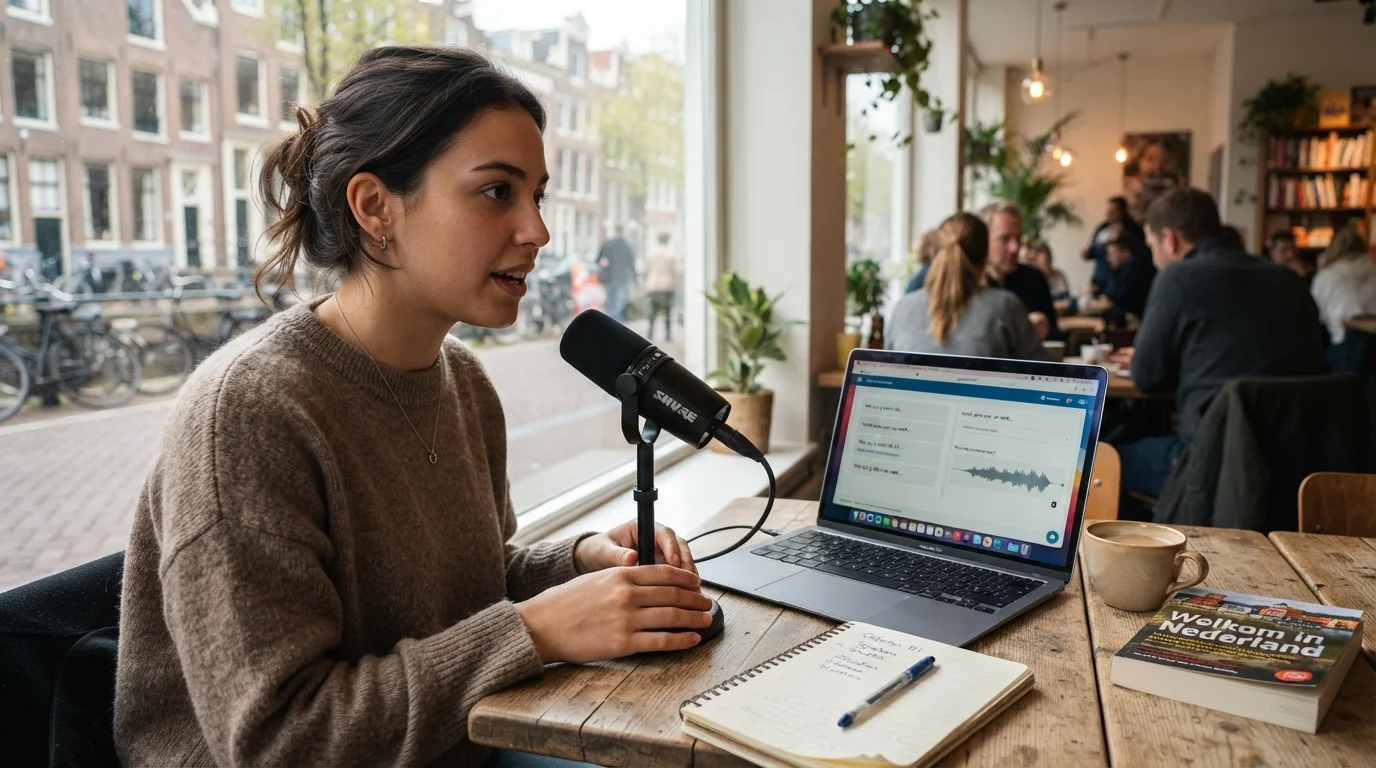
AI-generated image

Moving to the Netherlands involves mastering bike paths, surviving rainy commutes, and deciphering bureaucratic blue envelopes. But if you are on the journey toward permanent residency or citizenship, there is another major milestone to conquer: the Kennis van de Nederlandse Maatschappij (KNM) exam, officially known as Maatschappijoriëntatie.
Many newcomers underestimate this exam, assuming it is just a trivia quiz about Dutch windmills, Rembrandt, and King Willem-Alexander. In reality, the KNM exam is a practical, scenario-based evaluation designed to test whether you can independently navigate life, work, health, and civic responsibilities in the Netherlands.
Whether you are mapping out your study schedule alongside our comprehensive integration exam checklist or just beginning your inburgering journey, understanding the structure and nuances of this test is essential. Here are the 10 crucial facts you need to know to pass the KNM exam with confidence.
One of the biggest misconceptions about the KNM exam is that it requires memorizing lists of Dutch prime ministers or medieval battle dates. While you will encounter basic historical and geographical milestones (such as the Delta Works, the Golden Age, and the provinces), the vast majority of questions focus on real-world situations.
You are far more likely to be asked:
The Dutch government uses the KNM exam to ensure newcomers understand how Dutch institutions function and how citizens resolve everyday challenges independently.
Even though the topic is civic society, the exam is simultaneously an assessment of your Dutch language reading and listening comprehension. The official language requirement for the KNM exam is set at the A2 language level under the Common European Framework of Reference (CEFR).
All questions, answers, and accompanying video vignettes are presented strictly in Dutch. This means you do not merely need to know Dutch social concepts; you must also recognize key institutional vocabulary such as verzekering (insurance), vergunning (permit), leerplicht (compulsory education), and medezeggenschapsraad (participation council).
The Dutch Education Executive Agency (DUO (Dienst Uitvoering Onderwijs)) structures the KNM syllabus around eight defined thematic areas. To pass, you must demonstrate a balanced understanding across all eight modules:
The KNM exam is a digital, computer-based exam taken at an official DUO test center (located in cities like Amsterdam, Utrecht, Rotterdam, Eindhoven, and Zwolle). Here is the technical breakdown of the test environment:
Because the test is computer-timed, pacing yourself is vital. You have roughly one minute per question, which leaves enough time to watch the short clips twice if necessary.
A significant portion of the KNM exam touches on modern Dutch values such as direct communication, autonomy, gender equality, and tolerance. Many exam questions describe a social dilemma and ask what the appropriate, legally grounded Dutch response would be.
For example, you might see a scenario where two neighbors disagree on a lifestyle choice or where an employee expresses an opinion to a supervisor. The correct answer in Dutch civic terms almost always emphasizes open dialogue (overleg), mutual respect, legal equality, and seeking compromise (polderen) rather than escalation or authoritarian decision-making.
Even if your conversational Dutch is strong, the KNM exam uses specific civil terms that rarely come up in casual coffee chat. Candidates often lose points not because they misunderstand the concept, but because they mix up government agencies and terminology.
Make sure you clearly distinguish between:
If you are balancing your preparation with a busy work schedule, check out our guide on studying for integration exams while working full-time to build structured, bite-sized study habits.
Because the KNM exam sits at the intersection of language fluency and cultural literacy, traditional vocabulary drills alone are often insufficient. You need to understand how vocabulary is applied in everyday civic contexts.
This is where StroopTaal provides a decisive advantage. StroopTaal's AI-powered learning plans incorporate real-world dialogue practice and cultural modules specifically tailored to Dutch civic life. By interacting with AI-driven everyday scenarios—such as making an appointment at the gemeente, discussing workplace safety, or interacting with a school teacher—you build everyday vocabulary and cultural knowledge that is also useful for the KNM exam while naturally building your A2/B1 Dutch listening and reading skills.
To pass the KNM exam, you generally need to answer approximately 60% to 65% of questions correctly (the exact cutoff can vary slightly depending on DUO's standardized psychometric test weightings). DUO grades the exam on a scale from 1 to 10, where a score of 6 or higher represents a pass (Voldoende).
Results are not provided instantly at the test center. DUO typically processes and publishes your official score within 4 to 8 weeks. Once graded, you can verify your results by logging into the government portal with your DigiD, as detailed in our step-by-step walkthrough on checking your official exam scores on Mijn Inburgering.
Depending on when you became subject to the civic integration requirement (inburgeringsplichtig), the rules governing your integration pathway vary:
Certain university degree holders, secondary education graduates taught in Dutch, or holders of the Staatsexamen NT2 may qualify for exemptions. Always check your official personal profile on Government.nl or DUO before scheduling your tests.
The single best way to avoid test-day surprises is to sit through official mock exams under realistic conditions. DUO provides free official practice tests on the Inburgeren.nl portal.
When practicing:
| Feature | Details |
|---|---|
| Full Name | Kennis van de Nederlandse Maatschappij (Maatschappijoriëntatie) |
| Language Level | A2 CEFR |
| Exam Format | Computer-based, multiple-choice with video/audio vignettes |
| Duration | 45 minutes |
| Number of Items | Approx. 40-45 questions |
| Passing Score | 6 / 10 (approx. 60-65% correct) |
| Registration Cost | Approx. €50 (subject to regular DUO updates) |
The KNM exam might seem like just another bureaucratic hurdle, but it is actually one of the most useful components of civic integration. The concepts you learn—how your taxes work, how to advocate for your rights in the workplace, and how to communicate effectively in your neighborhood—will serve you every single day you spend in the Netherlands.
By pairing official mock tests with the StroopTaal app, you can reinforce essential civic vocabulary, sharpen your Dutch listening comprehension, and practice authentic conversations anytime, anywhere. Start building your knowledge today, book your exam well in advance, and take another confident step toward calling the Netherlands your permanent home.
Share this article:
Preparing for the Dutch civic integration exam (inburgeringsexamen) can feel like a dual challenge: you are not just learning a language, you are...
Read morePreparing for the Dutch civic integration exam (inburgeringsexamen) can feel intimidating, particularly when stepping up to the CEFR B1 level. Unlike...
Read moreFor expats, international professionals, and newcomers making the Netherlands their long-term home, the Dutch civic integration exam...
Read more