30 Essential KNM Exam Terms: Dutch Society and Politics
Preparing for the Dutch civic integration exam (inburgeringsexamen) can feel like a dual challenge: you are not just learning a language, you are...
Read more
This article was drafted by AI and edited by a person before it was published.
AI can get things wrong. For anything official, check the source it points to.
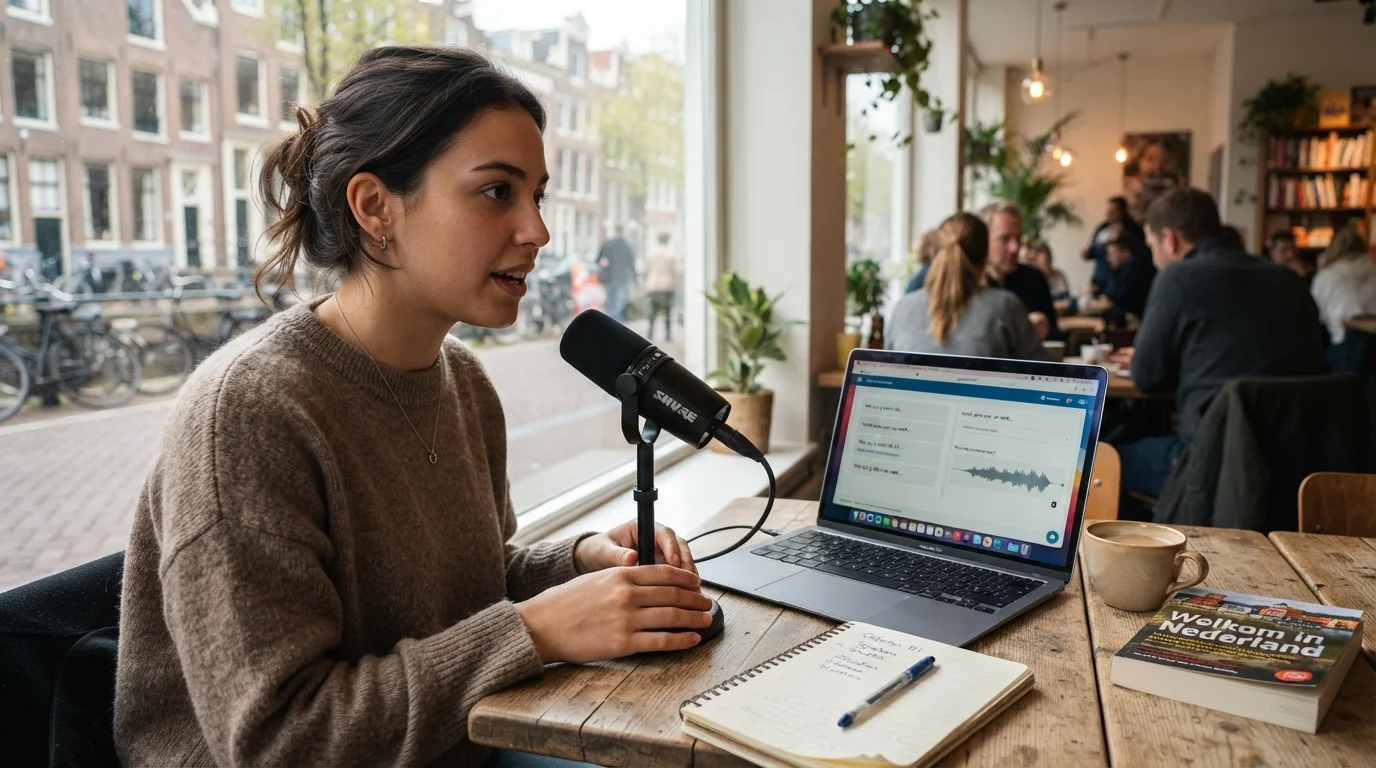
AI-generated image

Preparing for the Dutch civic integration exam (Inburgeringsexamen) can feel like standing at the base of a linguistic mountain. Whether you are aiming for the A2 or the B1 language level under the integration act, one major obstacle consistently stands in the way of success: vocabulary.
Without a strong lexicon, reading official letters from the municipality feels cryptic, listening recordings sound like a blur of vowels, and constructing written sentences becomes an exercise in frustration. Fortunately, passing the exam is not about memorizing the entire Van Dale dictionary. It is about strategically mastering high-yield, domain-specific vocabulary and knowing how to activate those words when sitting in the test center.
In this guide, we break down the core vocabulary domains tested in the integration exam, explain why traditional flashcards fall short, and show you how to leverage StroopTaal to build, retain, and actively use essential Inburgering vocabulary.
When studying for civic integration, many learners fall into the trap of passive recognition. You might see a word like toeslag (allowance/subsidy) or vergunning (permit) and vaguely recognize what it means in context. However, the exam tests two distinct capabilities:
If you only memorize words from a flat list, you will struggle to activate them during the timed speaking prompts or when composing formal emails in the writing test.
The Dutch integration exams administered by the Education Executive Agency (DUO) revolve around practical, everyday life in the Netherlands. To study efficiently, organize your vocabulary acquisition around these five fundamental domains.
Employment is one of the most heavily tested themes across all exam components. You need vocabulary to discuss job searches, workplace culture, labor rights, and contracts.
Questions regarding finding housing, dealing with municipal waste, talking to neighbors, and renting apartments appear frequently.
Navigating the Dutch healthcare system is a core life skill that DUO tests rigorously. Understanding how appointments, prescriptions, and insurance work is crucial.
Even if you do not have children, the exam frequently features dialogues about primary education, school meetings, and report cards.
This theme overlaps directly with the Knowledge of Dutch Society (KNM) exam. For a comprehensive overview of this subject, review our analysis of essential facts about the Dutch KNM exam.
Many candidates spend months highlighting textbook glossaries or flipping physical index cards, only to freeze during the actual exam. Traditional rote memorization falls short for three key reasons:
StroopTaal combines cognitive science principles with adaptive AI technology to turn passive vocabulary lists into confident, active Dutch fluency. Here is a step-by-step approach to utilizing the app for exam preparation.
StroopTaal utilizes an intelligent spaced repetition system (SRS) that schedules vocabulary reviews based on your personal retention strength. If you easily recognize de burgerlijke staat (marital status), the app increases the interval before showing it again. Conversely, if you hesitate on de verblijfsvergunning (residence permit), the word re-enters your daily queue quickly until it becomes second nature.
Guessing whether a word is de or het will undermine your scores in the writing and speaking sections. StroopTaal incorporates targeted article mastery games designed to build automatic recognition. By associating colors, sounds, and rapid feedback with noun genders, you establish intuitive muscle memory for tricky words like het overleg, het formulier, and de instantie.
Flashcards help you recognize words, but conversation practice forces you to retrieve them under realistic conversational pressure. StroopTaal features interactive AI-powered dialogue scenarios specifically tailored to civic life in the Netherlands:
During these sessions, you get immediate feedback on sentence structure, word choice, and pronunciation, allowing you to safely make mistakes and refine your phrasing before exam day.
In the Inburgering speaking test (Spreken), clarity and phonetic accuracy are critical scoring criteria. StroopTaal's AI pronunciation trainer analyzes your spoken audio and highlights specific phonetic discrepancies—such as differentiating between Dutch diphthongs like ui, ei/ij, and eu—giving you immediate, actionable feedback.
Consistency outperforms binge-studying. To build a solid lexicon step by step, adopt this structured daily routine using StroopTaal:
| Time Commitment | Activity | Learning Objective |
|---|---|---|
| Minutes 1–5 | SRS Flashcard Queue | Clear daily spaced repetition reviews to reinforce long-term memory. |
| Minutes 5–10 | Article Mastery & Grammar Drills | Solidify de/het associations and practice adjective inflection rules. |
| Minutes 10–20 | AI Conversation / Interactive Dialogue | Apply the target domain's vocabulary in an interactive roleplay scenario. |
Acquiring the necessary vocabulary for the Dutch Inburgering exam does not have to be an overwhelming chore. By organizing your study around the core themes tested by DUO and using active, spaced learning methods, you will build both the comprehension needed for reading and listening, and the confidence required for speaking and writing.
Start applying these strategies today. With deliberate practice, contextual learning, and the smart features available in StroopTaal, you can turn exam anxiety into confident practice and take a real step toward your integration exams.
Share this article:
Preparing for the Dutch civic integration exam (inburgeringsexamen) can feel like a dual challenge: you are not just learning a language, you are...
Read morePreparing for the Dutch civic integration exam (inburgeringsexamen) can feel intimidating, particularly when stepping up to the CEFR B1 level. Unlike...
Read moreFor expats, international professionals, and newcomers making the Netherlands their long-term home, the Dutch civic integration exam...
Read more