30 Essential KNM Exam Terms: Dutch Society and Politics
Preparing for the Dutch civic integration exam (inburgeringsexamen) can feel like a dual challenge: you are not just learning a language, you are...
Read more
This article was written by AI and published by StroopTaal.
AI can get things wrong. For anything official, check the source it points to.
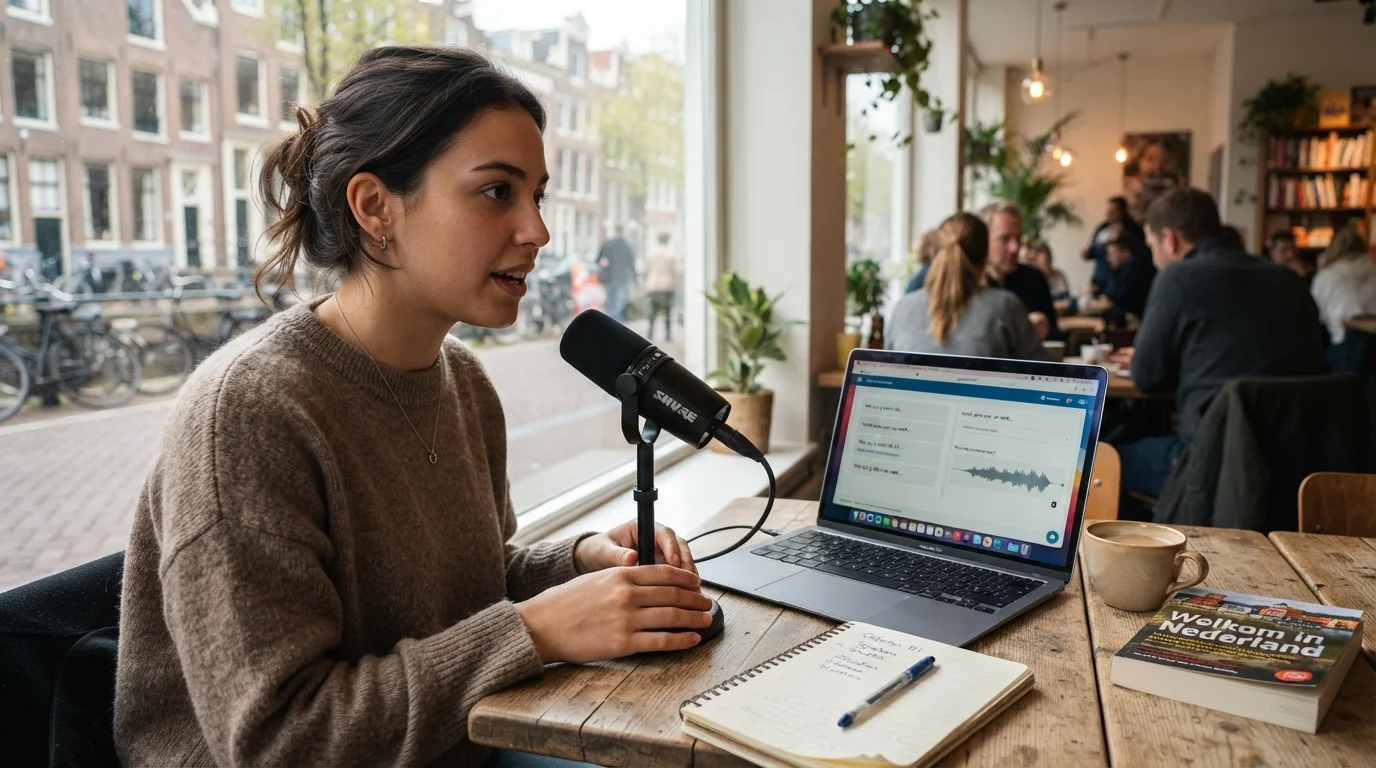
AI-generated image

Sitting down for the Dutch Civic Integration writing exam (Schrijven) can feel daunting. Whether you are aiming for the A2 level or tackling the more demanding B1 threshold, staring at a blank answer sheet with a ticking clock makes even familiar Dutch words vanish from memory. However, passing the writing exam is not about writing literary masterpieces; it is fundamentally about clarity, task fulfillment, and rigid structural discipline.
DUO (Dienst Uitvoering Onderwijs) assessors evaluate your writing using strict, standardized rubrics. If you know exactly how to structure your answers—from casual notes to formal complaint letters—you can secure passing marks even with a modest vocabulary. In this guide, we break down the proven structural formulas, essential linking words, common pitfalls, and practical templates you need to pass the Inburgering writing exam with confidence.
Before you begin structuring your answers, you must know what the exam looks like. The writing exam is typically administered on paper or via computer depending on your specific integration path. According to official guidelines on DUO's Inburgeren portal, the writing exam assesses your ability to communicate effectively in everyday Dutch life scenarios.
The exam generally consists of 4 distinct tasks to be completed within 35 to 40 minutes:
If you are reviewing your complete preparation roadmap, checking off your requirements with our comprehensive integration checklist will help you align your writing practice with the other exam components.
The single most common reason candidates fail the writing component is not poor grammar—it is omitting required information. DUO prompts almost always contain 3 to 4 specific bullet points that tell you exactly what must be in your text.
For example, a prompt might state:
Schrijf een e-mail naar uw docent. In de e-mail vertelt u:
- Waarom u morgen niet naar de les kunt komen;
- Wat u thuis gaat doen om de les in te halen;
- Welke vraag u heeft over het huiswerk.
If you write a grammatically flawless email explaining your illness, but forget to explain how you will catch up on homework, the examiner is required to deduct major points from your "Task Completion" (Taakuitvoering) score. Treat each bullet point as a dedicated paragraph or sentence in your structural plan.
Whether writing to your landlord, a municipality clerk, or a Dutch friend, organizing your writing into four clearly defined sections ensures you cover all requirements without rambling.
Setting the correct tone from the very first line establishes a solid impression. Match your greeting to the recipient:
Dutch communication culture values directness. Get straight to the point in your first sentence. Avoid vague introductions like "How are you doing with the weather?" unless it is a purely personal letter.
Dedicate one clear sentence (or a pair of short sentences) to each bullet point from the prompt. Keep your sentence structure clean and manageable. Do not try to merge three complex thoughts into one 40-word sentence.
To ensure high marks, use linking words between your points rather than simply writing disconnected fragments.
Always end with a polite closing statement followed by a formal or informal sign-off:
Examiners look for cohesion. Sentences connected with appropriate linking words show that you can build logical arguments rather than just stringing A1-level clauses together. Mastering these connectors is also crucial when training for the reading component of the exam.
| Connector | Meaning | Word Order Rule | Example Sentence |
|---|---|---|---|
| want | because (coordinating) | Normal word order (Subject + Verb) | Ik kom niet, want ik ben ziek. |
| omdat | because (subordinating) | Verb moves to the end | Ik kom niet, omdat ik ziek ben. |
| daarom | therefore / that's why | Inversion (Verb + Subject) | Ik ben ziek, daarom kom ik niet. |
| maar | but | Normal word order | Ik wil komen, maar ik heb geen tijd. |
| ten eerste / ten slotte | firstly / finally | Inversion (Verb + Subject) | Ten eerste vind ik het belangrijk. |
Pro Tip: If you are nervous about Dutch subordinate clause word order (placing all conjugated verbs at the end of the clause with omdat), stick to want! Want uses standard main clause word order (Subject + Verb + Rest), minimizing grammatical slip-ups under stress.
Let's look at an actual sample task and how to break it down using our structured approach.
Geachte heer, mevrouw,
Ik schrijf deze e-mail over mijn wasmachine. Ik heb de wasmachine vorige maand in uw winkel gekocht.
Sinds gisteren is de machine helaas kapot. Het apparaat maakt veel lawaai en het water loopt niet weg. Daardoor kan ik mijn kleding niet wassen.
Ik heb nog garantie op dit product. Daarom wil ik graag dat er deze week een monteur langskomt om de machine te repareren. Als dat niet kan, ontvang ik graag een nieuwe wasmachine.
Alvast hartelijk dank voor uw reactie.
Met vriendelijke groet,
Alexandre Silva
In the first section of the writing exam, you might encounter fill-in-the-blank sentences or short forms where you must complete a prompt logically. Candidates frequently lose quick points here due to missing punctuation or incorrect verb conjugations.
Balancing grammar practice alongside your daily responsibilities can be tough. If you have a busy schedule, explore our guide on studying for Inburgering while working full-time to build an efficient daily routine.
Always budget 5 minutes at the end of the writing session to review your text. Never hand in your exam early without running through this strict checklist:
Writing accurately in Dutch requires regular, targeted feedback. With the StroopTaal app, you can practice Dutch grammar lessons from A0 to C1 and master tricky sentence order rules with ease. StroopTaal's AI-powered learning plans adapt to your weaknesses, helping you practice real-life writing and conversation scenarios while reinforcing essential vocabulary with spaced repetition.
Structuring your writing for the Inburgering exam is a learnable skill that requires formulaic practice rather than spontaneous creativity. Stick to the 4-part email structure, use reliable conjunctions like want and daarom, systematically tick off every bullet point, and proofread carefully before submitting. By following these structural blueprints, you will turn the writing exam into one of your highest-scoring components.
Share this article:
Preparing for the Dutch civic integration exam (inburgeringsexamen) can feel like a dual challenge: you are not just learning a language, you are...
Read morePreparing for the Dutch civic integration exam (inburgeringsexamen) can feel intimidating, particularly when stepping up to the CEFR B1 level. Unlike...
Read moreFor expats, international professionals, and newcomers making the Netherlands their long-term home, the Dutch civic integration exam...
Read more