Dutch Windmills: History, Culture, and Visiting Guide
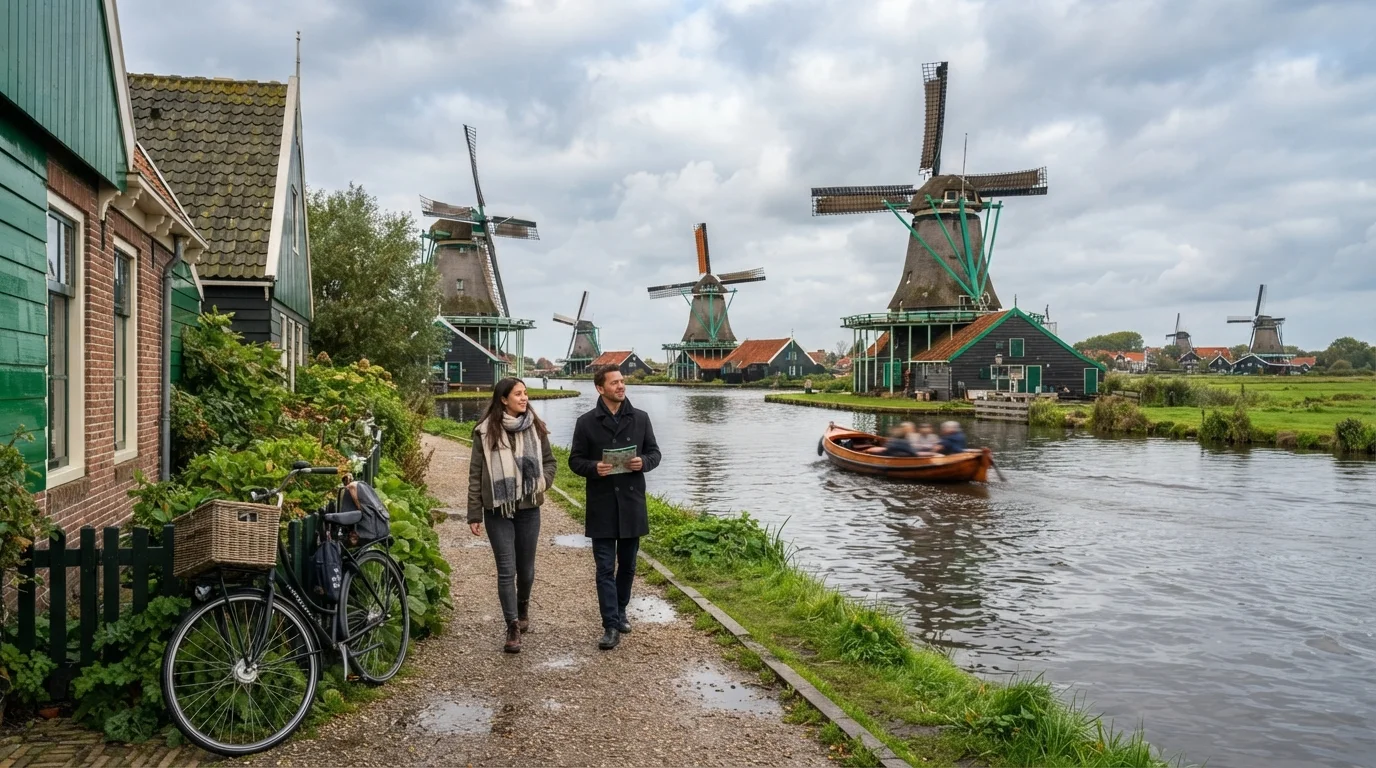
Imagine standing in a vast, emerald-green field under a dramatic, cloud-swept sky. In the distance, the colossal wooden sails of a traditional...
Read more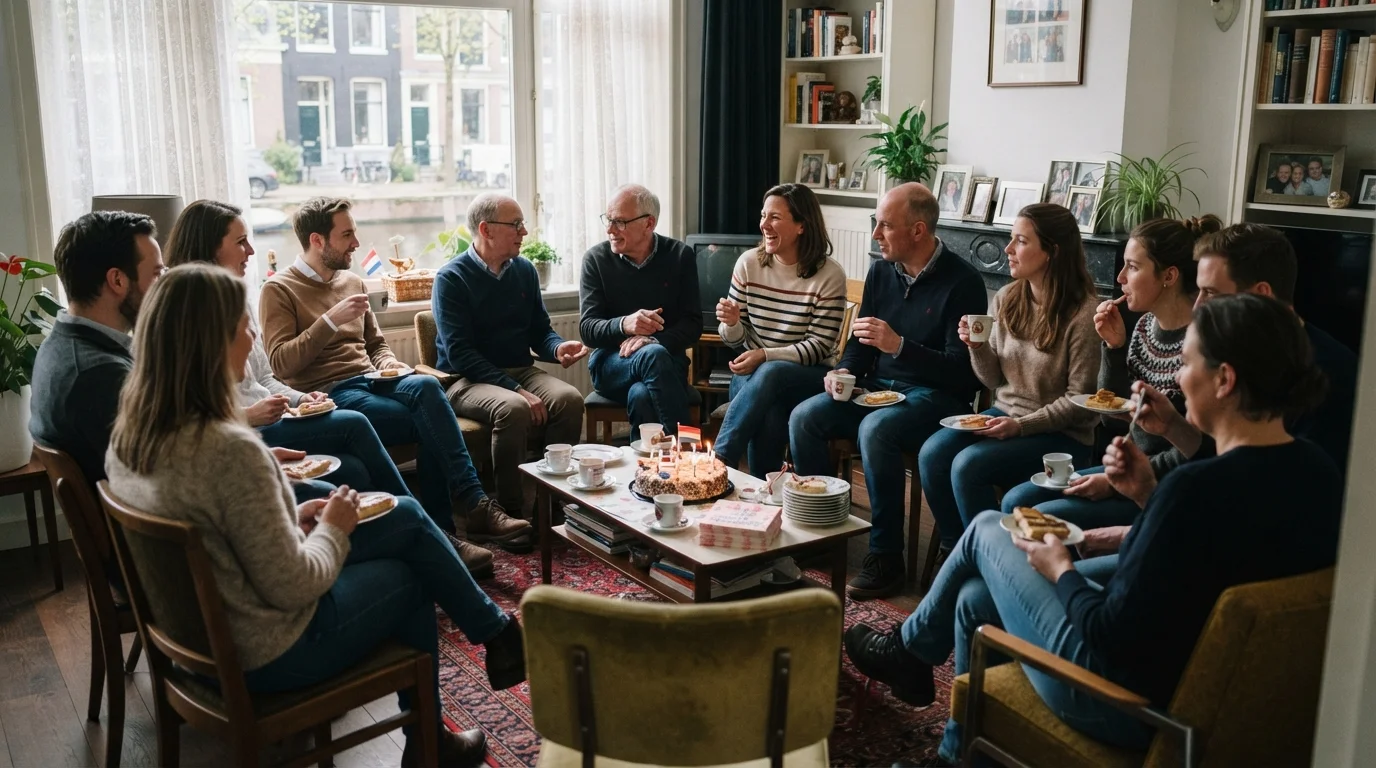
Imagine this: You walk into a Dutch living room, expecting a lively, standing-room-only party with upbeat music, dancing, and guests mingling freely. Instead, you are met with a sight that strikes fear into the hearts of expats nationwide. It is a silent, perfectly formed circle of chairs. Every guest is already seated, facing inward, staring at the empty space in the middle. Welcome to the kringverjaardag—the legendary Dutch circle birthday party.
To the uninitiated, this setup feels like a cross between a group therapy session and a high-stakes corporate meeting. But to the Dutch, it is the absolute pinnacle of gezelligheid (that untranslatable word for cozy togetherness). If you live in the Netherlands, you cannot avoid the circle forever. Eventually, a colleague, neighbor, or partner will invite you to a verjaardag (birthday).
Don't panic. Surviving a Dutch birthday party is a rite of passage, and with the right strategy, you can transition from an awkward outsider to a seasoned pro. This comprehensive guide will teach you the unwritten rules, the essential Dutch vocabulary, and how to conquer the infamous circle of chairs with confidence.
The kringverjaardag (literally 'circle birthday') is a deeply ingrained cultural phenomenon in the Netherlands. While younger generations in urban hubs like Amsterdam might opt for a casual bar gathering, the circle of chairs remains the default setting for family gatherings, regional celebrations, and traditional households across the country.
The setup is simple: before the guests arrive, the host clears the living room and arranges sofas, armchairs, and extra dining chairs into one giant, unbroken circle. The goal is simple: everyone should be able to see and talk to everyone else. In Dutch culture, standing up or breaking off into private, whispered conversations is often seen as exclusive or impolite. The circle ensures a democratic, collective experience where everyone participates in the same mega-conversation.
This collective atmosphere is a core pillar of Dutch gezelligheid. It is about shared warmth, equality, and connection. However, for expats accustomed to fluid social dynamics where you can easily slip away from an awkward conversation, the circle can feel like a psychological trap. Once you sit down, you are committed to your neighbors on the left and right, as well as the gaze of the entire room.
To survive the circle, you must understand the highly structured timeline of a Dutch birthday party. It is not an informal 'drop by whenever' event; it is a carefully choreographed ritual. Let's break down the steps to navigate it flawlessly.
When you walk through the door, do not expect to slip in unnoticed. You must greet everyone. Yes, everyone. This is where most expats make their first mistake. You do not just congratulate the birthday person; you must congratulate their spouse, their parents, their siblings, their friends, and even the stranger sitting in the corner.
As you make your way around the circle, shake hands (or give three cheek kisses—left, right, left—if you know them well) and say: 'Gefeliciteerd met [Name]!' (Congratulations on [Name]’s birthday!). If you are congratulating the actual host, you say: 'Gefeliciteerd met je verjaardag!' It is a dizzying, repetitive process, but failing to do this is considered a major social gaffe.
Once the greeting marathon is complete, the host will point you toward an empty chair. Choose wisely. If you sit next to the loud uncle, you will be subjected to intense Dutch political debates or questions about your integration. If you sit next to the quiet cousin, you might have to carry the conversation yourself.
As soon as you sit down, the host will offer you coffee or tea, accompanied by the legendary gebakje (cake or pastry). Here is the golden rule: You only get one piece of cake. Do not look around for seconds. The host has calculated exactly one pastry per guest, purchased from the local bakker. Enjoy your single slice of apple pie (appeltaart) or whipped cream cake (slagroomtaart), because that is all the sweet fuel you will get.
Once the coffee cups are cleared, the atmosphere shifts. The host will ask what you want to drink. This is the transition to the borrel phase. You will be offered beer, wine, or soft drinks, accompanied by a parade of classic Dutch party snacks.
Expect to see the classic 'Dutch tapas' platter make its rounds. This typically consists of:
Sharing these simple, comforting snacks is a fundamental part of why the Dutch love to engage in borrel culture. The snacks are passed around the circle, and it is polite to take one or two and pass the plate along to your neighbor. Do not hoard the plate!
To truly feel comfortable in the circle, you need to speak at least a little bit of the language. While many Dutch people speak excellent English, the collective conversation in a family circle will almost certainly be in Dutch. Showing that you are trying to learn is highly appreciated.
Here are some survival phrases to keep in your back pocket:
If the prospect of speaking Dutch in front of a whole circle of native speakers sounds terrifying, you are not alone. Practicing conversational flow in a low-stakes environment is key. Using StroopTaal's smart micro-learning platform can help you build the vocabulary and confidence you need in just a few minutes a day. The app's real-life dialogue games are specifically designed to help expats handle practical social scenarios—like surviving a family verjaardag—without the stage fright.
To avoid any awkward cultural misunderstandings, keep these unwritten rules in mind:
How do Dutch people remember everyone's birthday without relying entirely on digital notifications? The secret lies in the bathroom. Almost every Dutch household has a verjaardagskalender (birthday calendar) hanging next to the toilet. It is a strict cultural rule that this calendar is never, ever updated with years—just names and dates—and it must live in the restroom. Do not be surprised if you find your own name written there after a few months of friendship! You can read more about unique Dutch domestic traditions on historical resource sites like Wikipedia's guide to Dutch culture.
Do not overthink the gift. The Dutch value practicality and modesty. A nice bouquet of flowers, a bottle of wine, a book, or a gift card (cadeaubon) from a store like HEMA or bol.com is perfectly acceptable. It is customary to open the gift immediately in front of the giver and thank them warmly.
If the invitation says the party starts at 14:00 and ends at 17:00, respect those times. Do not show up at 15:30 expecting a wild party that goes late into the night. When 17:00 rolls around, the host will likely start cleaning up or say, 'Zo...' (So...), which is the universal Dutch signal that the event is over and it is time to go home.
While the circle of chairs is easy to poke fun at, it actually reflects some of the finest aspects of Dutch society: egalitarianism, inclusivity, and open communication.
In a kringverjaardag, there is no VIP section. The CEO of a company sits next to a university student, and everyone eats the same block of cheese and the same slice of cake. It forces people of different generations and backgrounds to look each other in the eye and talk. Once you get past the initial awkwardness, you might find yourself having a surprisingly deep, heartwarming conversation with someone you would never normally meet.
The Dutch birthday party is a unique cultural experience that every expat should experience at least once. By understanding the etiquette of the kringverjaardag, learning a few key phrases, and embracing the shared gezelligheid, you will not just survive the circle—you might actually enjoy it.
Ready to take your Dutch social skills to the next level? Don't let language barriers keep you on the outer edge of the circle. Download the StroopTaal app today to practice real-life Dutch conversations, master essential vocabulary, and build the confidence to chat with native speakers. With personalized, gamified lessons, you'll be speaking like a local in no time. Gefeliciteerd in advance!
Share this article:
Imagine standing in a vast, emerald-green field under a dramatic, cloud-swept sky. In the distance, the colossal wooden sails of a traditional...
Read moreWhen summer arrives in the Netherlands, the entire country undergoes a vibrant transformation. The grey, rainy skies give way to long, golden...
Read moreIntroduction: The Magic of the Dutch Summer Ah, summer in the Netherlands! While the Dutch weather can be famously unpredictable, the moment the sun...
Read more