Dutch Gezelligheid in Summer: Terraces and Parks Guide
As soon as the first rays of spring and summer sun pierce through the notoriously gray Dutch skies, a remarkable transformation occurs across the...
Read more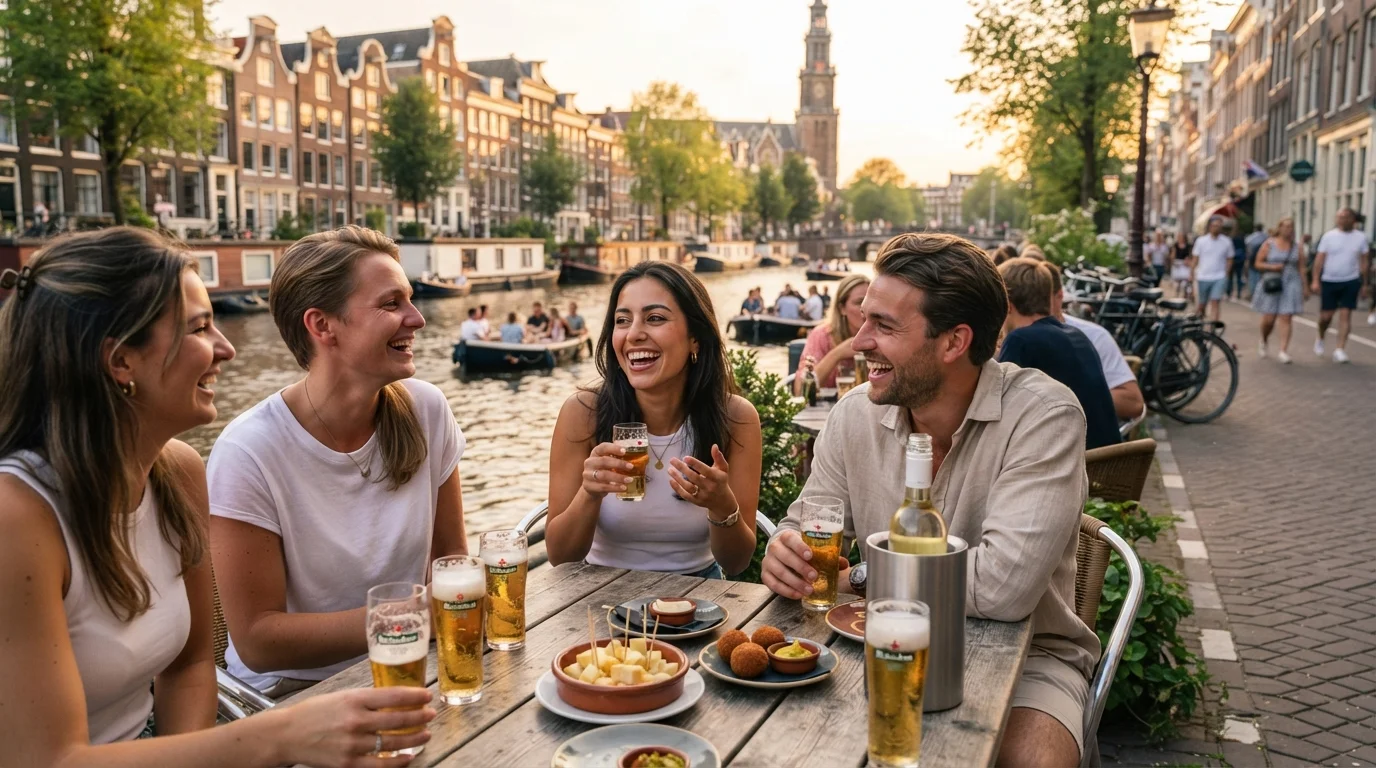
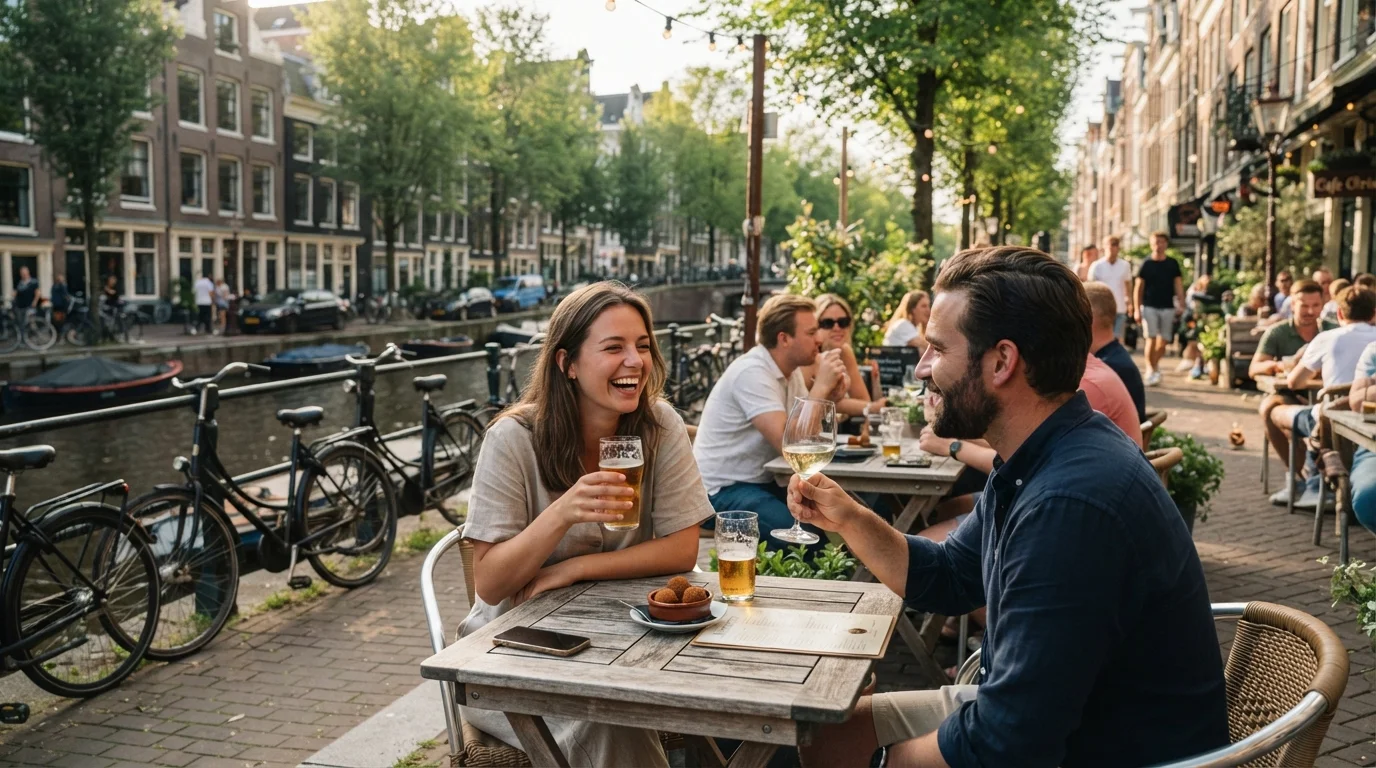
Imagine this: It is a warm Friday afternoon in July. The sun is shining bright over the canals of Amsterdam, Utrecht, or Leiden. The clock strikes 16:00, and almost instantly, office buildings empty out while outdoor terraces (terrasjes) fill to maximum capacity. The air is alive with the sound of clinking glasses, laughter, and the irresistible aroma of deep-fried snacks. You have just stepped into the heart of one of the Netherlands' most beloved cultural institutions: the borrel.
For expats, international students, and anyone preparing for their integration exams, understanding the concept of borrelen (the verb form of borrel) is crucial. It is not just an activity; it is a way of life, a social ritual, and the ultimate expression of the legendary Dutch concept of gezelligheid (coziness or social warmth). In this comprehensive guide, we will dive deep into the origins of the summer borrel, decode the unspoken rules of the borrelplank, arm you with essential Dutch vocabulary, and show you how to navigate this social phenomenon like a seasoned local.
At its most basic level, a borrel is a social gathering that involves drinks and snacks, typically taking place in the late afternoon or early evening. However, translating "borrel" simply as "drinks" or "happy hour" does it a massive disservice. A happy hour is often about cheap drinks; a borrel is about connection, relaxation, and transitioning from the productive working day into a relaxed evening.
Historically, the word "borrel" referred to a small glass of Dutch gin (jenever). Over the decades, the term expanded to encompass the entire social gathering built around having a drink. A borrel can happen in many contexts:
Unlike dinner parties, which require extensive planning and formal invitations, a borrel is inherently casual. People drop in, stand around, chat with different groups, and leave when they please. It is the perfect low-pressure environment to practice your conversational skills.
While a winter borrel is cozy, dark, and warm, a summer borrel is vibrant, breezy, and energetic. When the Dutch summer sun finally emerges, the entire nation undergoes a collective mood boost. To experience a true summer borrel, three key elements must align: the location, the drinks, and the legendary snacks.
The ultimate summer borrel location is the outdoor terrace (het terras). The moment the temperature hits 18 degrees Celsius, the hunt for a free table begins. This is known as een terrasje pakken (grabbing a terrace spot). If the terraces are full, the Dutch head to the nearest park (like the Vondelpark in Amsterdam or the Wilhelminapark in Utrecht) with picnic blankets, or they pile onto small boats (sloepjes) to float along the canals with a cooler full of drinks.
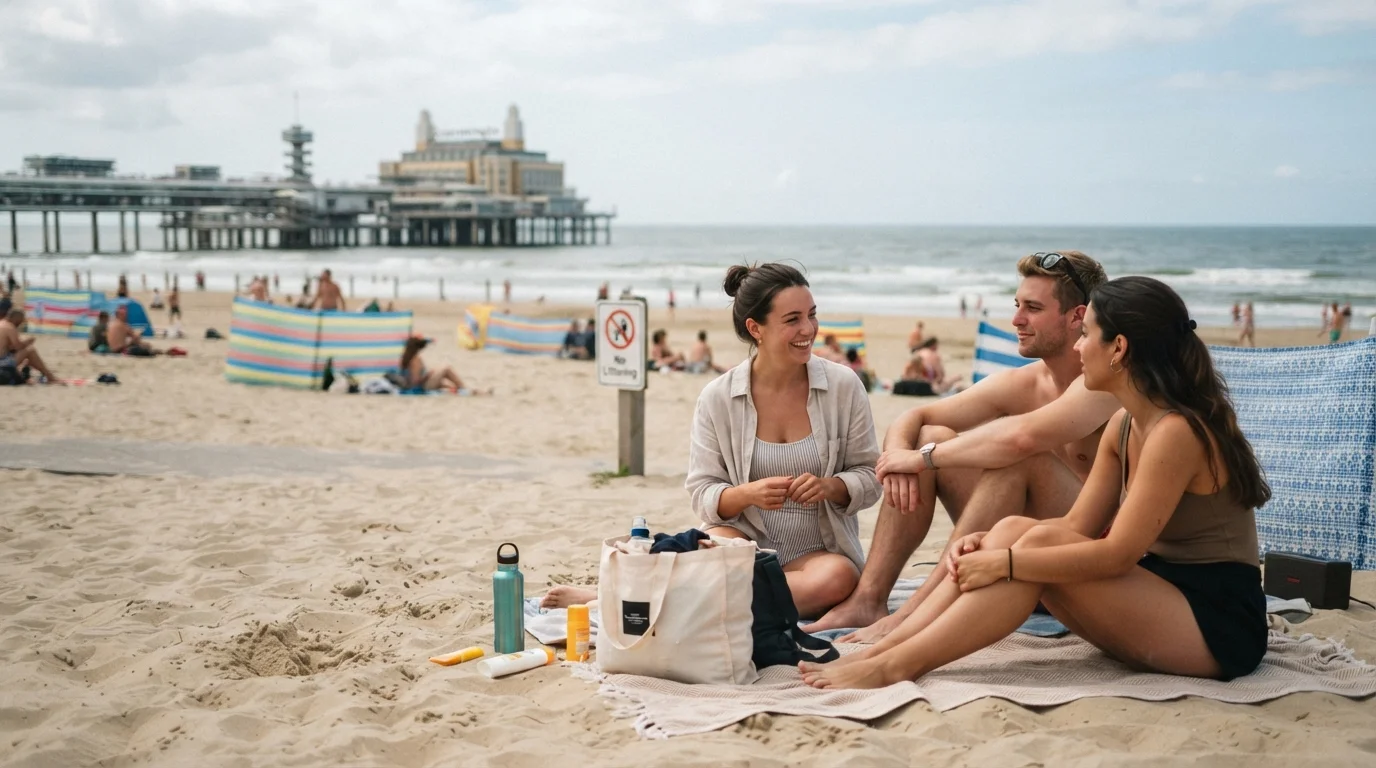
If you are planning a day out near the coast before your evening drinks, make sure to read our guide on Dutch Beach Etiquette: Scheveningen Guide for Expats to seamlessly transition from beach relaxation to beachside borrelen.
What are people drinking? While a cold, crisp draft beer (een fluitje or een vaasje of pilsner) is the traditional choice, summer brings out a wider variety of beverages. White wine (droge witte wijn), rosé, and Aperol Spritz are incredibly popular. Non-alcoholic options, known as alcoholvrij or 0.0 beers, have also exploded in popularity in recent years, offering the same refreshing taste without the morning-after headache.
You cannot have a borrel without food. The centerpiece of any gathering is the borrelplank (serving board). A classic Dutch borrelplank is a masterclass in savory, salty, and deep-fried delights designed to complement cold drinks. Here is what you will typically find:
The Dutch are famous for their directness, efficiency, and love for structured agendas. However, the summer borrel is the beautiful exception to this rule. When the sun shines, calendars are happily cleared. The rigid boundary between work life and personal life softens, and you will find managers clinking glasses with interns, sharing stories that have nothing to do with deadlines.
This cultural shift is the perfect opportunity for expats to break the ice. It can sometimes feel challenging to make local Dutch friends, as their social circles are often established early in life. The relaxed, open atmosphere of a summer borrel lowers social barriers, making it much easier to initiate a casual conversation.
To truly feel confident at a borrel, you need to know the lingo. While many Dutch people speak excellent English, making an effort to speak Dutch during social hours is highly appreciated and will immediately make you feel more integrated.
Here are some essential words and phrases to memorize:
For busy expats, finding the time to sit down and study these terms can be tough. That is where modern language tools come in. Utilizing StroopTaal's micro-learning approach can help you master social vocabulary in just five minutes a day, fitting perfectly into your commute so you are fully prepared before the next Friday afternoon rolls around.
To avoid any awkward cultural misunderstandings, keep these simple guidelines in mind when attending a Dutch borrel:
At a casual borrel, it is common for one person to go to the bar and buy a round of drinks (een rondje) for the group. If someone buys you a drink, it is expected that you will buy a round later in the evening. If the group is too large, people will often use a mobile payment app like Tikkie to split the bill later, but pay attention to how your group is handling it.
A borrel is not dinner. While the snacks can be filling, they are meant to tide you over, not replace a meal. A typical borrel ends around 19:30 or 20:00, at which point people either head home to cook or transition to a restaurant. Do not arrive starving expecting a three-course feast unless it is explicitly billed as a borreldiner.
While the Dutch are open to discussing many topics, a borrel is generally a time for lighthearted banter, sharing weekend plans, and laughing. Avoid diving into heavy political debates or complaining excessively about work unless you are in a very close circle of friends.
It is easy to default to English, but the informal setting of a bar or park is the absolute best place to practice your speaking skills. If you are worried about your accent or ordering food, practicing beforehand with interactive tools can boost your confidence significantly. Using AI-powered apps to practice Dutch pronunciation and speaking, such as StroopTaal, allows you to practice ordering a draft beer, asking for the bill, or requesting a plate of bitterballen with real-time feedback before you do it in front of your colleagues.
Want to impress your Dutch colleagues, neighbors, or fellow expats? Hosting your own summer borrel is surprisingly easy and highly rewarding. Here is a quick checklist to get you started:
The Dutch summer borrel is more than just an excuse to enjoy a cold drink in the sunshine; it is a gateway to understanding the Dutch mindset. It shows that despite their structured calendars and hard-working nature, the Dutch deeply value community, relaxation, and the simple joy of sharing a good conversation over a plate of hot snacks.
By learning the language of the borrel and understanding its simple etiquette, you will find yourself transitioning from an observing expat to an active participant in Dutch life. So, next time you hear the word "Borrelen?", do not hesitate. Say "Ja, gezellig!", grab a cold drink, and enjoy the beautiful Dutch summer.
Ready to boost your Dutch conversation skills and sound like a local at your next summer borrel? Download StroopTaal today to access bite-sized grammar lessons, interactive dialogue games, and AI-powered pronunciation training tailored to real-life social scenarios.
Share this article:
As soon as the first rays of spring and summer sun pierce through the notoriously gray Dutch skies, a remarkable transformation occurs across the...
Read moreAs the temperatures rise and the rare Dutch sun makes its glorious appearance, there is one destination that calls to almost everyone in the...
Read moreImagine sitting in a lush Dutch park or on a canal-side deck at 10:30 PM. The sky isn't dark; instead, it is painted in deep shades of violet, amber,...
Read more