Dutch Summer Barbecue Guide: Borrel Culture & What to Bring
When the sun finally emerges in the Netherlands and temperatures cross the coveted 20°C mark, a collective shift happens across the country. Parks...
Read more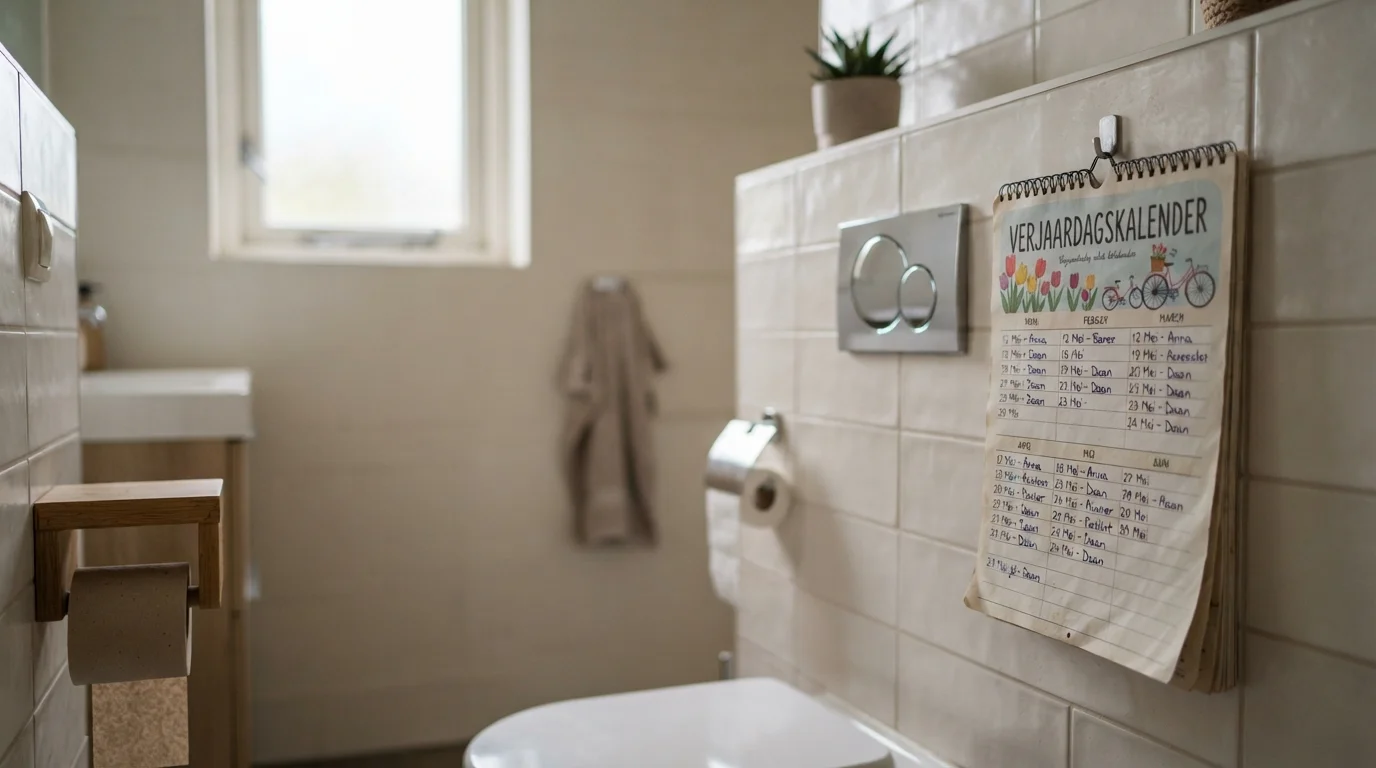
If you have ever visited a Dutch home, used the bathroom, and found yourself staring at a wall chart filled with names and dates, you are not alone. For expats and newcomers to the Netherlands, discovering the Dutch birthday calendar (known locally as the verjaardagskalender) hanging right beside the toilet paper holder is a rite of passage. It is one of the most intriguing, quirky, and fiercely protected cultural traditions in Dutch society.
At first glance, hanging a calendar in the toilet seems bizarre, if not downright unsanitary. Why would a nation famous for high living standards, crisp organizational skills, and progressive design place their most treasured family reminders in the smallest room of the house? As it turns out, this phenomenon is a masterclass in Dutch pragmatism, social dynamics, and cultural efficiency.
In this article, we will unpack the fascinating world of the verjaardagskalender, explore why it strictly belongs in the bathroom, explain the unwritten rules of calendar ownership, and share practical Dutch language tips so you can navigate birthdays like a true local.
To understand the location of the calendar, you first need to understand what a Dutch birthday calendar actually is. Unlike standard wall calendars, a traditional verjaardagskalender is perpetual. It does not list days of the week (Monday, Tuesday, etc.) or specific year numbers. Instead, it simply lists the twelve months, each with days 1 through 30 or 31.
Because it lacks year numbers and weekdays, a Dutch birthday calendar never expires. It is purchased once and maintained for decades. When someone is born, married, or enters your social circle, their name is written next to their date. When someone passes away—or, in some cases, falls dramatically out of favor—their name might be quietly erased or struck through.
According to cultural studies documented by research organizations like the Meertens Institute, the practice of maintaining household family ledgers dates back centuries. However, the physical placement of these calendars in the toilet emerged during the mid-20th century as home layouts evolved and indoor plumbing became standard across Dutch households.
Why did the toilet become the default headquarters for birthday planning in the Netherlands? The answer lies at the intersection of psychology, daily routine, and classic Dutch values.
The Dutch are famously practical. In a busy modern world, remembering dozens of birthdays—including those of aunts, cousins, neighbors, and colleagues—requires a reliable system. Where is the one place in the house where every single family member is guaranteed to sit down, uninterrupted, at least once a day?
The toilet offers a captive audience. Without the distraction of television, cooking, or computer screens, those few quiet moments provide the perfect opportunity to glance up, check the month of July, and realize that Tante Anja's birthday is coming up in three days.
There is a famous Dutch proverb: "Doe maar gewoon, dan doe je al gek genoeg" (Just act normal, that is crazy enough). Dutch culture heavily emphasizes humility, equality, and avoiding boastful behavior. Displaying a calendar in the living room or kitchen might feel like an overt demand for attention—as if saying to guests, "Look at all my friends, and by the way, do not forget my birthday!"
Placing the calendar in the toilet keeps it functional rather than decorative. It is viewed as a personal memory aid rather than a trophy board of your social circle.
While the toilet is a private space, it is also the one room in a Dutch home that nearly every visitor will enter at some point. When friends or relatives use your bathroom, they might spot their own name on your verjaardagskalender. Seeing your name written on someone's toilet calendar is a subtle, comforting confirmation that you are officially part of their inner circle.
The concept of Dutch gezelligheid refers to a cozy, warm, and comforting atmosphere. But gezelligheid also relies on peace of mind and strict organization. Dutch people dislike surprise social obligations. Forgetting a birthday is considered quite rude. By keeping the calendar in plain sight during daily bathroom visits, the Dutch ensure their social obligations are managed with flawless precision.
For expats integrated into Dutch life, navigating the bathroom calendar comes with a unique set of social rules. Violating these norms can lead to awkward moments or humorous misunderstandings.
Once the verjaardagskalender alerts a local that your special day has arrived, a very specific set of cultural traditions kicks off. If you are preparing for civic integration (inburgering) or simply living in the Netherlands, understanding these customs is essential.
In many Anglo-Saxon or South American cultures, your coworkers or friends organize a cake for your birthday. In the Netherlands, the exact opposite happens. The person celebrating their birthday is expected to bring pastries (taart or gebak) to the office, school, or social group. This practice is known as trakteren.
If you turn up to a Dutch office on your birthday empty-handed, your colleagues might be quietly disappointed! Popular treats include appeltaart (Dutch apple pie) or regional specialties like Limburgse vlaai.
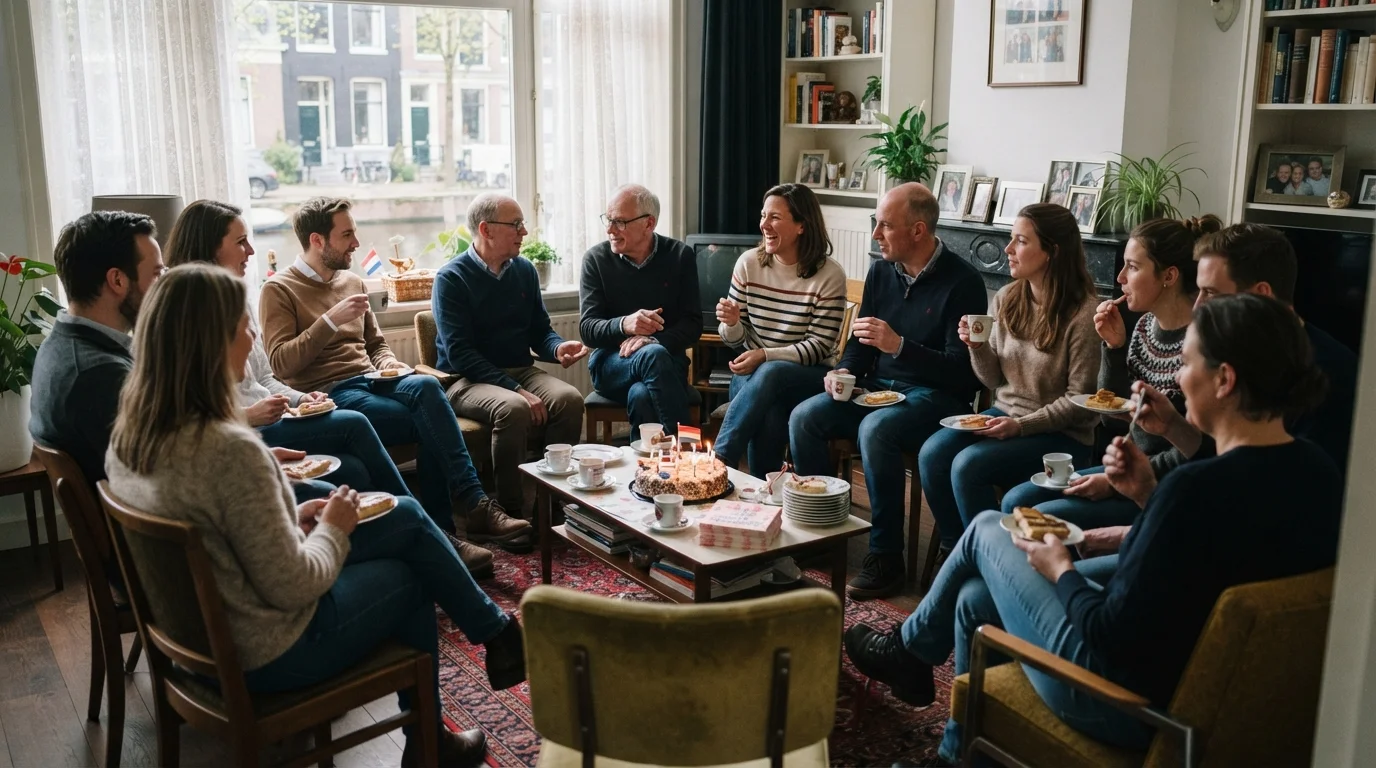
If you are invited to a home birthday celebration, prepare yourself for one of the most talked-about phenomena in expat life. Instead of a standing party with dancing or mixing, guests sit in a massive circle in the living room. For a detailed survival strategy, check out our guide on surviving a Dutch birthday party.
When you walk into the room, etiquette dictates that you do not just congratulate the birthday person. You must walk around the entire circle, shake hands or give three cheek kisses, and congratulate everyone else in the room on the birthday person's special day!
To impress your Dutch friends, neighbors, and colleagues, you need more than just a simple "Happy Birthday." Here are the most essential Dutch birthday expressions you should master:
Mastering the pronunciation of words like gefeliciteerd can be tricky for non-native speakers due to the hard Dutch "g" sound. Using dedicated tools like the StroopTaal app allows you to practice pronunciation training with instant AI feedback, ensuring you sound natural and confident when congratulating your friends.
The toilet birthday calendar is not an isolated eccentricity—it reflects a broader cultural commitment to social connection and structured hospitality. The Dutch place immense value on keeping commitments, showing up on time, and celebrating life's simple milestones together.
Whether you are gathering for informal drinks during Dutch borrel culture or sitting around a birthday coffee table eating cake, knowing how to interact warmly in Dutch builds deep bonds with locals.
When learning Dutch, understanding these cultural habits is just as important as memorizing vocabulary lists or verb conjugations. Language does not exist in a vacuum; it is woven directly into everyday life—from street markets and cafes right down to the wall beside the toilet!
Navigating life in the Netherlands involves far more than passing written grammar tests. It requires understanding nuances, humor, daily routines, and social etiquette. That is where StroopTaal makes a difference.
StroopTaal is an AI-powered Dutch language learning app built specifically for expats, international students, and learners preparing for state integration exams (NT2 / Inburgering). Here is how StroopTaal helps you bridge the gap between textbook Dutch and real-world living:
The next time you step into a Dutch bathroom and see a calendar filled with handwriting hanging on the wall, smile! You are witnessing one of the most authentic, clever, and enduring traditions in the Netherlands. It represents a practical blend of order, thoughtfulness, and no-nonsense charm.
If you want to feel truly at home in the Netherlands, buy yourself a verjaardagskalender, hang it in your toilet, and start filling in the dates of your friends and family. And when their special day arrives, do not forget to wish them a warm "Van harte gefeliciteerd!"
Ready to take your Dutch language skills and cultural understanding to the next level? Download StroopTaal today and start practicing real-life conversations with your personal AI language coach!
Share this article:
When the sun finally emerges in the Netherlands and temperatures cross the coveted 20°C mark, a collective shift happens across the country. Parks...
Read moreImagine standing in a vast, emerald-green field under a dramatic, cloud-swept sky. In the distance, the colossal wooden sails of a traditional...
Read moreThe Ultimate Expat Guide to the Infamous Dutch Kringverjaardag Imagine this: You walk into a Dutch living room, expecting a lively,...
Read more