The Dutch Kermis Tradition: What to Expect at Local Funfairs in August
Step Right Up: Discovering the Magic of the Dutch Kermis If you wander into almost any Dutch city, town, or village during late summer, you might be...
Read more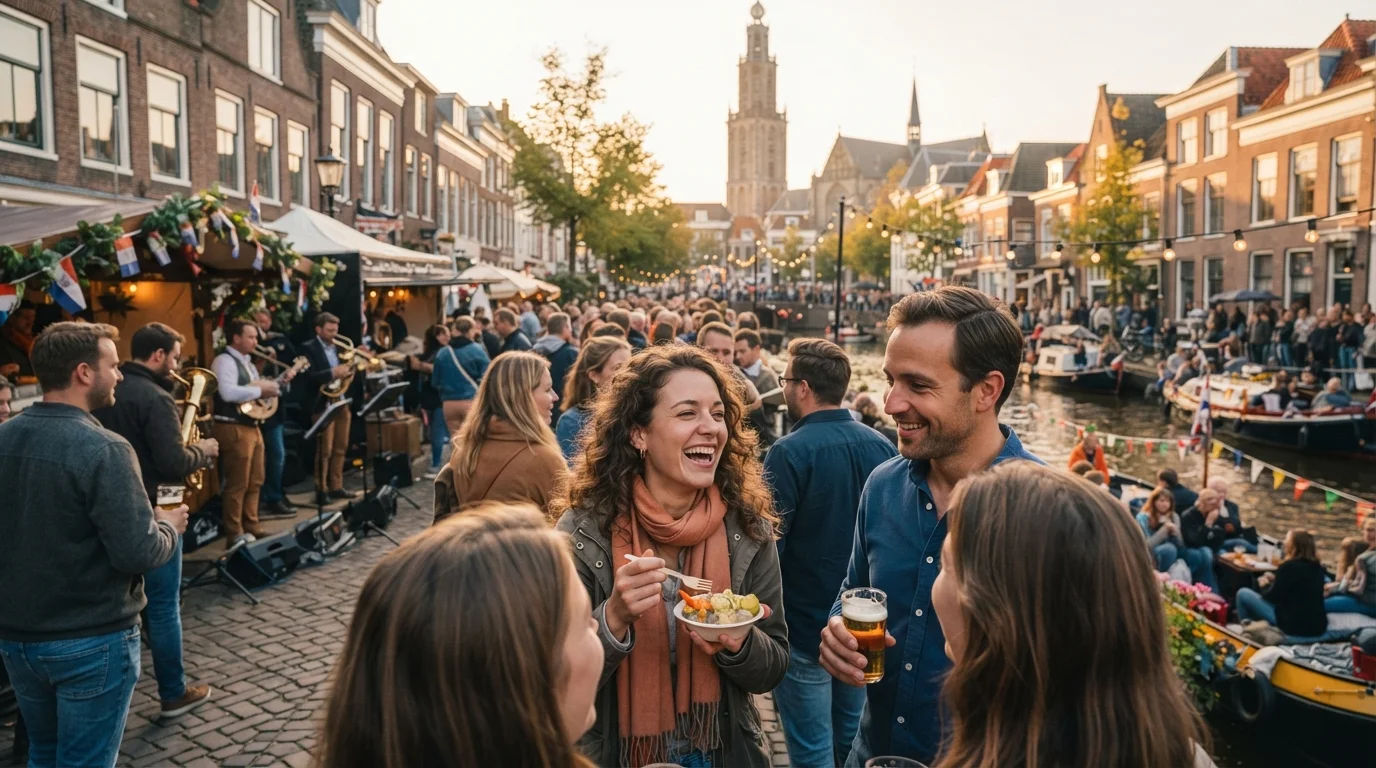
As the warm days of July and August fade into crisp late-summer afternoons, the Netherlands doesn't put away its party hats. In fact, September and October host some of the most historic, vibrant, and culturally rich celebrations in the entire country. While summer in Holland is famous for beach days and terrace lounging, late summer and early autumn bring a unique transition. The festive energy shifts toward historical commemorations, harvest celebrations, spectacular parades, and deeply ingrained civic pride.
For expats, international students, and anyone learning Dutch, attending these late-summer festivals is more than just a fun weekend activity—it is a front-row seat to authentic Dutch culture and history. Standing shoulder-to-shoulder with locals in Leiden while singing historic songs, or watching majestic flower parades in September, offers an unforgettable immersion into experiencing true Dutch gezelligheid as the seasons change.
In this comprehensive guide, we will dive deep into the crown jewel of Dutch autumn celebrations—Leidens Ontzet (the Relief of Leiden)—and explore other captivating late summer festivals across the Netherlands. Plus, we will arm you with essential Dutch vocabulary and practical tips to navigate these cultural milestones like a seasoned local.
If you live near South Holland, you will inevitably hear about the 3rd of October (3 oktober). To an outsider, October 3rd might seem like an ordinary autumn Monday or Tuesday. But to the citizens of Leiden (and anyone familiar with Dutch history), it is one of the most important days on the regional calendar. Leidens Ontzet, which translates to the Relief of Leiden, commemorates the lifting of the Spanish siege of the city in 1574 during the Eighty Years' War.
To truly appreciate the festivities, one must understand the dramatic events of 1574. The Spanish army had surrounded Leiden for months, aiming to starve the city into submission. Food ran out, disease spread, and thousands of residents perished. Despite immense suffering, the city refused to surrender to the Spanish Crown.
The turning point arrived when William of Orange (Willem van Oranje) took a drastic step: he ordered the dikes along the rivers to be cut open, flooding the countryside. This allowed the Watergeuzen (Sea Beggars—rebel Dutch privateers) to sail their shallow-draft ships across the flooded fields directly toward the besieged city. Terrified by the rising waters and the approaching rebel fleet, the Spanish troops fled in panic on the night of October 2nd, leaving behind their military encampments.
On the morning of October 3, 1574, the rebels entered Leiden, delivering food to the starving population. According to legend, a young orphan boy named Cornelis Joppenszoon crept into the abandoned Spanish camp and discovered a cooking pot still warm on the fire. Inside was a rich stew of carrots, onions, and meat—the origin of the famous Dutch dish hutspot.
If you would like to read more detailed historical context, you can explore the official history of the Siege of Leiden on Wikipedia.
Today, the entire city of Leiden transforms into a giant red-and-white street festival (the official colors of Leiden). If you plan to attend 3 Oktober, here are the iconic traditions you will witness and participate in:
Early on the morning of October 3rd, thousands of Leiden residents gather at the historic Waag (Weigh House) to claim their free herring and white bread. This tradition directly honors the provisions brought into the city by the Sea Beggars in 1574. Local bakers and fishmongers prepare thousands of loaves and fresh herring for the occasion.
Even if raw herring isn't your usual snack, trying a bite wrapped in soft white bread with chopped onions is an essential rite of passage. If you enjoy learning about culinary heritage, check out our guide to traditional Dutch seasonal foods to understand why fish holds such a prized place in Dutch gastronomy.
On October 2nd and 3rd, virtually every home, restaurant, and communal tent in Leiden serves hutspot. Modern hutspot is a hearty mash of potatoes, carrots, and onions, usually served with klapstuk (slow-cooked braised beef). The bright orange color of the mashed carrots conveniently doubles as a nod to the Royal House of Orange!
The main day starts early. At 7:00 AM sharp, the Reveille brass band plays across the city to wake everyone up. Shortly after, locals gather at the Van der Werf Park for the Koraalzang (Choral Singing), where traditional historical patriotic songs are performed in unison. The emotional energy during these morning songs is palpable.
In the afternoon, a massive historical parade winds through the medieval city center, featuring elaborate floats, historical reenactors in 16th-century costume, brass bands, and performance artists. Parallel to the historical events, Leiden hosts one of the largest mega-fairs (kermis) in the country, packed with modern carnival rides, street food stalls, and music stages that party late into the night.
While Leidens Ontzet is a standout cultural highlight, late summer in the Netherlands is packed with exceptional regional events across September and October. Here are three other major festivals you shouldn't miss:
Held during the first weekend of September, the World Port Days celebrate Europe's largest port city. Rotterdam's waterfront comes alive with maritime displays, ship tours, spectacular water shows, naval demonstrations, and evening fireworks over the Erasmus Bridge. It’s an incredible opportunity to see modern maritime technology up close and explore how trade shapes the Dutch economy.
Taking place on the third Tuesday of September, Prinsjesdag marks the official opening of the Dutch parliamentary year. The reigning monarch (King Willem-Alexander) travels through the streets of The Hague in a royal horse-drawn carriage to deliver the Speech from the Throne (Troonrede), outlining the government's budget and policies for the upcoming year. For expats preparing for their civic integration exam (inburgeringsexamen), following Prinsjesdag is a fantastic way to learn about the country's political system and governance.
To learn more about Dutch constitutional monarchies and parliamentary procedures, you can visit the official portal of the Dutch Government.
In early September, the town of Zundert hosts the world's largest flower parade (Bloemencorso Zundert). Entire villages build gigantic, multi-story sculptures constructed exclusively out of dahlia flowers. The artistic craftsmanship, community competition, and sheer scale of these floral floats attract visitors from all over the globe. Similar flower parades occur across various regions in September, marking the vibrant end of the blooming season.
Throughout late September and October, orchards in regions like the Betuwe open their gates for public apple-picking days (Appelplukdagen). Families gather to harvest fresh Elstar and Jonagold apples, sample fresh cider, and enjoy rural food markets. Afterwards, locals often gather at outdoor village cafes, connecting over drinks and immersing themselves in the vibrant Dutch borrel culture before winter sets in.
Attending a Dutch festival is far more rewarding when you understand the local jargon. Here is a handy vocabulary guide to help you read signs, order food, and chat with locals during festival season:
Mastering thematic vocabulary like this before stepping out into a crowd makes a huge difference in your confidence. This is where StroopTaal comes in handy. With StroopTaal's AI-powered personalized learning plans and targeted vocabulary builder using spaced repetition, you can quickly learn topic-specific words before attending cultural events across the Netherlands.
If you're attending Leidens Ontzet or any late-summer Dutch street festival for the first time, keep these practical, field-tested tips in mind:
Late summer weather in the Netherlands is notoriously unpredictable. A sunny 20°C afternoon can swiftly turn into a rainy 12°C autumn breeze. Always wear comfortable walking shoes and bring a lightweight waterproof jacket or poncho. Download a local weather radar app like Buienradar to track rain showers in real time.
If you want to receive official herring and white bread during Leidens Ontzet, take note: you often need to register online or collect a token in advance through the 3 Oktober Vereeniging. Check the official event guidelines a few weeks beforehand so you don't miss out!
City centers during major festivals like Leidens Ontzet or Prinsjesdag are closed to vehicle traffic, and parking is almost impossible. Dutch Railways (NS) usually operates extra trains to accommodating event crowds. Take the train or bus, and make sure your OV-chipkaart or debit card is loaded for seamless travel.
Festival crowds in Holland are known for being relaxed, friendly, and welcoming. Ordering food at a stall, asking for directions, or chatting with neighbors in Dutch will be warmly appreciated. If you feel nervous about speaking on the spot, you can use StroopTaal’s real-life Dutch conversation practice with AI to rehearse real-world dialogue scenarios—like ordering food at a busy market stall or making casual conversation—before heading into the crowd!
Late summer and early autumn festivals offer an unmatched window into the heart of Dutch culture. From the patriotic resilience celebrated during Leidens Ontzet to the awe-inspiring floats of the Bloemencorso and the political traditions of Prinsjesdag, these events reveal the stories, foods, and values that define life in the Netherlands.
As you step out into the colorful crowds this autumn, don't just watch from the sidelines—participate! Sample the hutspot, cheer at the parades, and practice your Dutch with the people around you. Every conversation you have brings you one step closer to feeling truly at home in the Netherlands.
Ready to boost your Dutch conversation skills and dive deeper into Dutch culture? Download StroopTaal today to access interactive dialogue games, interactive grammar modules, and AI-driven conversation practice designed specifically for real-world life in Holland!
Share this article:
Step Right Up: Discovering the Magic of the Dutch Kermis If you wander into almost any Dutch city, town, or village during late summer, you might be...
Read moreWhen the sun finally emerges in the Netherlands and temperatures cross the coveted 20°C mark, a collective shift happens across the country. Parks...
Read moreIf you have ever visited a Dutch home, used the bathroom, and found yourself staring at a wall chart filled with names and dates, you are not alone....
Read more