Navigating Dutch Public Transport: Beyond the OV-Chipkaart
Welcome to the Grid: The Dutch Public Transport System Welcome to the Netherlands! As a newly arrived expat, one of the very first things you will...
Read more
This article was drafted by AI and edited by a person before it was published.
AI can get things wrong. For anything official, check the source it points to.
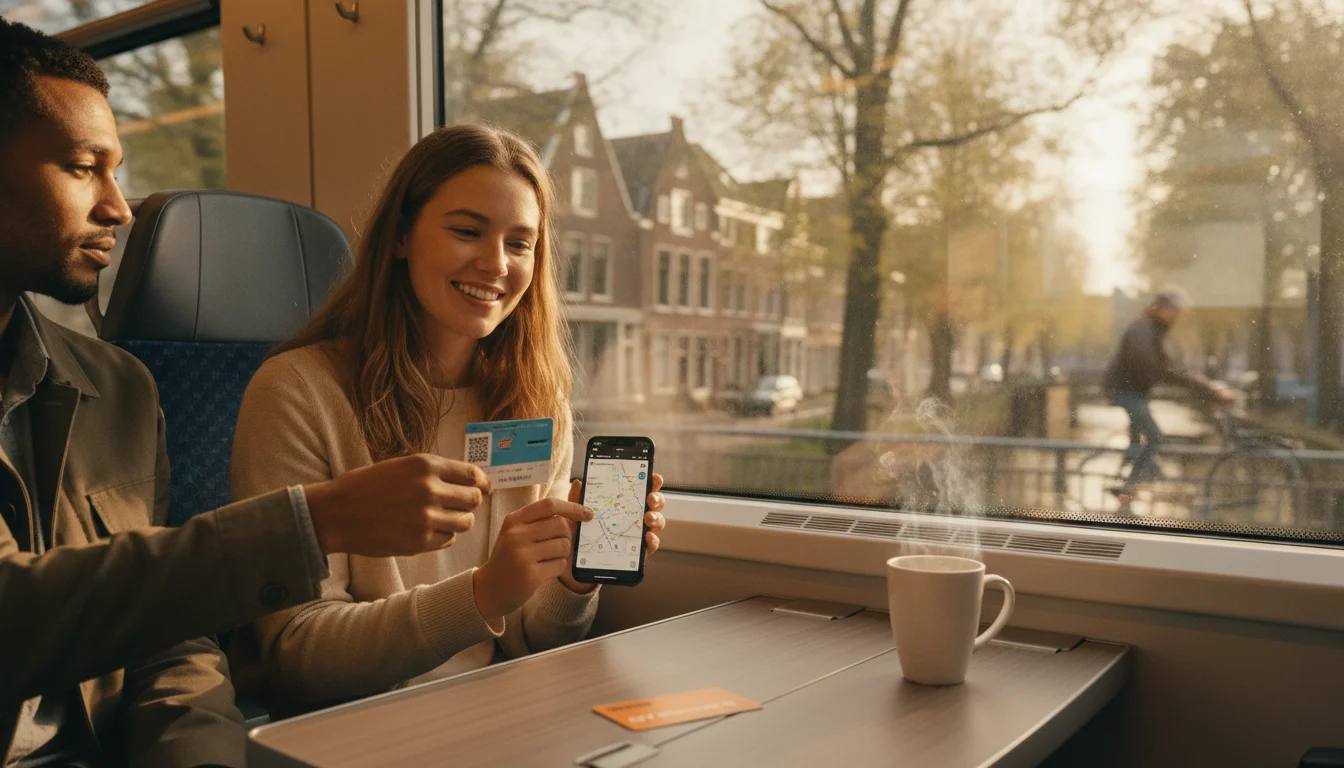
AI-generated image

Moving to the Netherlands is an exciting adventure. You are likely anticipating cycling along historic canals, tasting your first warm stroopwafel, and navigating the efficient public transport system. However, before you can fully settle into your new Dutch life, there is some essential admin to sort out. High on your priority list should be opening a local bank account.
The Netherlands is famously a cashless society. From open-air market stalls to high-end restaurants, the phrase "Alleen PIN" (Card Only) is ubiquitous. While you might be used to relying on a credit card or a fee-free basic checking account in your home country, the Dutch banking ecosystem operates a bit differently. Here, the local debit card (traditionally called a pinpas) and the national payment system, iDEAL, reign supreme. Without a Dutch bank account, simple tasks like paying your rent, setting up utility contracts, or buying a train ticket can become surprisingly complicated.
As you begin researching your options, you might experience a bit of sticker shock: Dutch banks charge monthly maintenance fees. Unlike many countries where basic banking is free if you maintain a minimum balance, in the Netherlands, everyone pays for their bank account. If you are currently planning your relocation budget, understanding these costs is a great step toward managing your finances in the Netherlands. This comprehensive guide will break down the fee structures of the major Dutch banks, compare traditional institutions with modern digital neobanks, and help you choose the best account for your expat journey.
If you come from a country where free banking is the norm, paying €3 to €10 a month just to keep your money in a bank might feel like a raw deal. However, there are several structural reasons why Dutch banks charge these fees:
Ultimately, the monthly fee is a package deal that covers your digital banking environment, your debit card, customer support, and access to secure payment networks.
One fee banking refers to an account structure where customers pay a single, fixed monthly maintenance fee that covers all essential daily services rather than paying individual charges per transaction. In the Netherlands, almost all major banks utilize this model to cover payment processing, card issuing, and digital app maintenance in one predictable package.
In the Dutch banking system, very few banks offer flexible fee waivers for standard adult checking accounts, as flat monthly fees are standard across the board. However, major banks like ING, ABN AMRO, and Rabobank do offer complete fee waivers for full-time students and young adults under 18 to 25 years old. If you do not qualify for a student account, choosing a basic tier with a digital neobank is usually the only way to avoid monthly payments.
The Dutch banking sector is dominated by three major traditional institutions: ABN AMRO, ING, and Rabobank. These banks offer physical branches, robust mobile apps, and comprehensive financial services ranging from savings accounts to mortgages. Let's look at how they compare for expats.
ABN AMRO is widely considered the most expat-friendly of the traditional Dutch banks. They have a long history of catering to international clients, and their entire onboarding process, mobile app, online banking portal, and customer service are fully available in English.
Recognizable by its bright orange lion logo, ING is the largest retail bank in the Netherlands. It is highly popular among young professionals and students due to its cutting-edge mobile app, which is consistently rated as one of the best in Europe.
Originally a cooperative agricultural bank, Rabobank is a deeply trusted institution with a strong community focus. While they have modernized significantly, they tend to appeal to a slightly more traditional demographic, though they still offer excellent services for expats.
When comparing regional banks vs national banks pros and cons in Netherlands, national banks provide comprehensive English support and nationwide digital features, whereas regional banks offer highly personalized in-person service but limited English tools. Major national banks like ING or ABN AMRO make online setup simple for expats across the country, whereas smaller regional or municipal cooperative options require strong Dutch language skills and rarely feature English mobile apps.
If you prefer a purely digital experience and want to avoid physical paperwork, neobanks are an excellent alternative. These banks operate entirely online and often offer highly competitive fee structures and multi-currency features that are perfect for international citizens.
Bunq is a licensed Dutch digital bank founded in Amsterdam. It is highly innovative and explicitly tailored to expats, digital nomads, and international travelers. Bunq allows you to open an account in minutes using an international phone number and passport.
While Revolut (licensed in Lithuania) and N26 (licensed in Germany) are not Dutch banks, they are widely used in the Netherlands. They offer free basic accounts, making them highly attractive for budget-conscious expats.
The best bank with no fees in the Netherlands for basic checking is Revolut or N26, as both provide zero-maintenance digital accounts with basic debit features. While these free options work well for daily card payments and travel, traditional Dutch retail banks do not offer permanent fee-free accounts to working adults.
When choosing an account, don't just look at the monthly package fee. Keep an eye out for these potential hidden costs:
Standard ATM fees associated with various checking account options in the Netherlands range from €0 per transaction at Geldmaat ATMs for major national bank customers to €0.90–€2.00 per withdrawal on digital neobank plans after reaching monthly free limits. Traditional accounts from ABN AMRO, ING, and Rabobank generally cover unlimited Geldmaat withdrawals, while digital providers restrict free cash access to 4 or 5 uses per month.
To open a traditional Dutch bank account, you will typically need to provide the following documentation:
If you are still waiting for your BSN but need an account immediately to receive your salary, digital banks like Bunq or traditional options like ABN AMRO's international client desk are your best bet, as they offer grace periods to submit your tax number.
To open a Dutch bank account, you must select a provider, complete an online or app-based application, verify your identity with a valid passport, and present proof of address along with your citizen service number (BSN). Having an active local account makes setting up essential services easier, such as learning how to set up home internet and TV in the Netherlands when you first move in.
You can open a Dutch bank account without BSN by choosing digital banks like Bunq or international desks at traditional institutions like ABN AMRO, both of which provide a 90-day grace period to submit your tax number. This feature is invaluable for new arrivals who need to pay security deposits quickly to avoid housing scams in the Dutch rental market before their municipal registration appointment.
Once you open your account, you will start receiving emails, app notifications, and bank statements. Even if your banking app is set to English, official financial correspondence, tax forms, and direct debit requests will almost certainly arrive in Dutch. Dealing with terms like automatische incasso (direct debit), dagafschrift (daily statement), or rekeninghouder (account holder) can feel daunting.
This is where navigating Dutch bureaucracy and official letters becomes much easier when you have a grasp of the local language. To build your confidence and master the vocabulary of daily life in the Netherlands, try using the StroopTaal app.
StroopTaal helps expats bridge the language gap through AI-powered personalized learning plans and vocabulary building tools. You can practice real-life Dutch conversation with AI, simulating scenarios like calling your bank's customer service or asking a shopkeeper if they accept credit cards. With StroopTaal's interactive dialogue games and structured grammar lessons spanning A0 to C1 levels, you'll quickly master the financial terms you need to manage your money with confidence.
The best bank account for you ultimately depends on your personal priorities and lifestyle:
The overall best bank in Netherlands for expats is ABN AMRO due to complete English-language support, while ING is widely considered the best bank for checking accounts because of its top-rated mobile app and user experience. Depending on whether you prioritize zero fees, multi-currency features, or branch access, choosing between traditional giants and digital neobanks will ensure your financial setup in the Netherlands is smooth.
For more details on managing your money, setting up utilities, and living comfortably in the Netherlands, check out the official Dutch government website for reliable regulatory information.
Ready to take control of your expat journey? Start mastering the Dutch language today. Download StroopTaal and unlock the vocabulary, cultural insights, and conversational skills you need to feel truly at home in the Netherlands. Succes!
Share this article:
Welcome to the Grid: The Dutch Public Transport System Welcome to the Netherlands! As a newly arrived expat, one of the very first things you will...
Read moreIntroduction: Your Golden Key to Life in the Netherlands Moving to the land of windmills, tulips, and bicycles is an exciting adventure. However,...
Read moreEmbracing the Dutch Summer: Why June 2026 is Your Time to Shine When you think of the Netherlands, your mind might instantly conjure up images of...
Read more