
Finding Childcare in the Netherlands: Crèches, Gastouders, and BSO
Starting a new life in a foreign country is an exhilarating adventure, but for expat parents, it also comes with a unique set of administrative and...
Read more
This article was drafted by AI and edited by a person before it was published.
AI can get things wrong. For anything official, check the source it points to.
AI-generated image
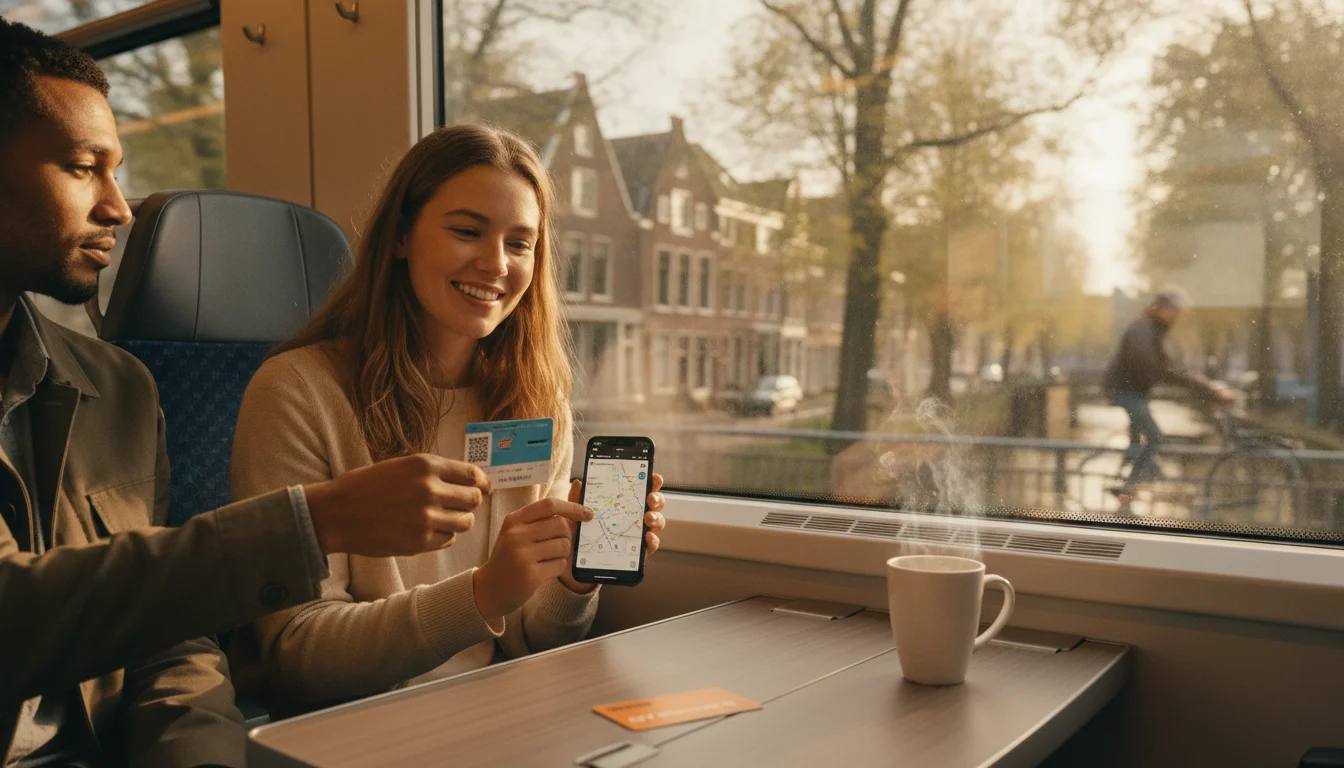
Welcome to the Netherlands! As a newly arrived expat, one of the very first things you will notice is the incredible efficiency of the Dutch infrastructure. From the iconic yellow-and-blue trains of the Nederlandse Spoorwegen (NS) to the sleek trams, clean metros, and punctual buses traversing every major city, the Dutch public transport system—locally known as Openbaar Vervoer (OV)—is a marvel of modern engineering.
For years, the golden key to this network was the plastic OV-chipkaart. But as the country transitions into a cashless, digital-first future, navigating transit in the Netherlands has evolved far beyond simply tapping a yellow card. Today, expats have access to contactless payment revolutions, smart subscription models, integrated bicycle sharing, and localized mobile apps that make commuting seamless. However, without a clear roadmap, the sheer variety of options, fare structures, and unwritten cultural rules can feel overwhelming.
Whether you are commuting to your new office in Amsterdam, heading out to explore summer in the Netherlands, or traveling to a quiet village in the countryside, this comprehensive guide will help you master the Dutch transit system like a local.
If you have recently arrived in the Netherlands, you might not even need to purchase a traditional physical transit card. The biggest change to the Dutch transit landscape in recent years is the nationwide rollout of OVpay. This innovative system allows passengers to check in and out of all public transport—trains, buses, trams, and metros—using their contactless debit card, credit card, or mobile wallet (Apple Pay or Google Wallet).
Using OVpay is incredibly straightforward. You simply tap your card or phone against the card reader at the station gates or onboard the bus/tram when boarding, and tap again when exiting. The system calculates your journey fare automatically, and the total cost of your day's travel is deducted from your bank account in a single transaction overnight.
While OVpay is incredibly convenient for tourists, occasional travelers, or expats waiting for their permanent bank accounts, it does have limitations. Currently, you cannot link personal travel discount subscriptions to your standard debit card via OVpay. Therefore, if you plan to commute regularly or travel during off-peak hours, you will want to look into more cost-effective, customized options to keep your monthly expenses low while managing finances in NL.
Despite the rise of OVpay, the physical OV-chipkaart remains a staple for long-term residents. There are two main types of cards you can obtain, and understanding the difference is crucial for choosing the right one for your lifestyle.
This is a bright blue plastic card that you can purchase for a small one-time fee at station ticket machines, service desks, and supermarkets. It is not tied to your identity, meaning you can share it with family members or visiting friends. To travel by train, an anonymous card requires a minimum pre-loaded balance of €20 (or €4 for buses and trams). This can tie up a significant amount of your cash on a card you might not use daily.
For expats, the yellow personal card is highly recommended. It features your photo, name, and date of birth, and is linked directly to your Dutch bank account. This card offers several key advantages:
To order a personal OV-chipkaart, you will need a Dutch address and a Dutch bank account. If you are still setting up your administrative life, check out our guide on how to get a BSN number as an expat to ensure your transition goes smoothly.
If you plan to use the train network even once or twice a month, signing up for an NS Flex subscription on your personal OV-chipkaart is an absolute game-changer. NS Flex is a post-paid subscription model, meaning you do not need to pre-load any balance onto your card. Instead, you are billed monthly for the journeys you actually took, alongside a fixed subscription fee if you choose a discount tier.
The beauty of NS Flex lies in its flexibility. You can change, upgrade, or downgrade your subscription tier once a month via the NS app. Here are the most popular NS Flex tiers for expats:
To view official guidelines on public transport regulations and consumer rights, you can consult the Dutch Government official website.
In the Netherlands, public transport does not stop when you exit the train station. The final leg of your journey is almost always completed on two wheels. This is where the OV-fiets (public transport bicycle) comes in.
At almost every train station in the country, you will find underground storage facilities filled with thousands of blue-and-yellow bicycles. For a very low daily rate (currently around €4.55 per 24 hours), you can rent one of these sturdy, back-pedal or hand-brake bikes using your personal OV-chipkaart. There are no complicated rental contracts or deposits; you simply scan your card at the automated key dispenser or have an attendant scan it, and ride away.
The OV-fiets is the ultimate way to bridge the gap between suburban residential areas, office parks, and city centers. It is a fantastic alternative to buying a second bike to leave at your destination station. However, if you are looking to purchase your own dedicated set of wheels for your daily neighborhood commute, make sure to read our comprehensive guide on buying a reliable Dutch bicycle.
To navigate the Dutch transit system efficiently, your smartphone is your best friend. You should download these three essential apps immediately upon arrival:
While most Dutch transit workers speak impeccable English, automated announcements, station signs, and emergency updates during service disruptions (known as storingen) are almost exclusively delivered in Dutch. Understanding a few key transit terms can mean the difference between getting home on time or standing stranded on a cold platform wondering what went wrong.
Here is a quick reference table of essential Dutch transit terms:
| Dutch Term | English Meaning |
|---|---|
| Spoor | Platform / Track |
| Vertraging | Delay |
| Overstappen | To transfer / change trains |
| Werkzaamheden | Maintenance / Engineering works |
| Wisselstoring | Switch / Points malfunction (a very common delay cause!) |
Want to turn these stressful moments into language-learning opportunities? The StroopTaal app can help you build your confidence with practical, real-life Dutch conversation practice and interactive dialogue games designed specifically for real-world scenarios like asking for directions, buying transit tickets, and understanding public announcements. With StroopTaal's daily streaks and personalized learning plans, you can work step by step toward chatting with conductors and fellow commuters.
To truly blend in as an expat, you must understand the cultural nuances of Dutch commuting. Here are the golden rules of etiquette:
Navigating the Dutch public transport system is an empowering milestone in your expat journey. By moving beyond the basic anonymous OV-chipkaart and embracing modern solutions like OVpay, custom NS Flex subscriptions, and the ubiquitous OV-fiets, you will unlock unparalleled freedom to explore your new home safely, cheaply, and sustainably.
Of course, your transit adventures will be infinitely smoother if you can read the signs, understand the announcements, and speak with the staff. Download the StroopTaal app today to master essential Dutch transit vocabulary, practice conversational scenarios with our AI-powered dialogue games, and fast-track your integration into Dutch daily life. Safe travels—or as the locals say, Goede reis!
Share this article:
Starting a new life in a foreign country is an exhilarating adventure, but for expat parents, it also comes with a unique set of administrative and...
Read moreWelcome to the Cashless Kingdom: An Introduction to Dutch Banking Moving to the Netherlands is an exciting adventure. You are likely anticipating...
Read moreIntroduction: Your Golden Key to Life in the Netherlands Moving to the land of windmills, tulips, and bicycles is an exciting adventure. However,...
Read more