Making Friends in the Netherlands: A Guide for Expats
The Dutch Paradox: Friendly People, Hard-to-Enter CirclesYou've arrived in the Netherlands, a country famous for its tulips, windmills, and...
Read more
Moving to the Netherlands is an exhilarating adventure. You're picturing picturesque canals, fields of tulips, and cozy evenings in a 'bruin café'. But amidst the excitement, a practical question looms large: How do you manage your finances in a new country? The Dutch have a reputation for being direct, practical, and famously frugal. Understanding their approach to money is key to not just surviving, but thriving as an expat.
This comprehensive guide will walk you through everything you need to know about budgeting, saving, and managing your finances in the Netherlands. We'll break down the costs, share insider tips, and help you build a budget that allows you to enjoy everything this beautiful country has to offer without financial stress. Let's get your 'financiën' in order!
Before diving into your budget, it's essential to understand the local financial environment. The Netherlands is a highly digitized and efficient country, and its banking system reflects that.
Getting a Dutch bank account is one of the first and most important steps to settling in. It simplifies everything from receiving your salary to paying rent. For a deep dive into the process and understanding the key terms, check out our guide to Dutch banking for expats.
Creating a budget isn't about restriction; it's about empowerment. It gives you a clear picture of your financial health and helps you make informed decisions. Let's build your Dutch budget from the ground up.
When you receive a job offer in the Netherlands, your salary will be quoted as a 'bruto' (gross) amount. Your 'netto' (net) salary, the amount that actually hits your bank account, will be significantly lower after deductions for income tax, social security contributions, and pension. Use an online Dutch income tax calculator to get a realistic estimate of your take-home pay.
Also, investigate if you're eligible for the 30% ruling. This is a tax advantage for highly skilled migrants, allowing your employer to grant you a tax-free allowance equivalent to 30% of your gross salary. This can make a huge difference to your monthly income.
These are the non-negotiable costs you'll face every month. They form the foundation of your budget.
1. Housing (Huur & Vaste Lasten): This will likely be your biggest expense. It includes:
2. Mandatory Health Insurance (Zorgverzekering): Every resident in the Netherlands is legally required to have at least a basic Dutch health insurance package ('basisverzekering'). This costs, on average, €130-€150 per month. You also have an annual deductible ('eigen risico') of at least €385 (in 2024). You can opt for supplementary insurance ('aanvullende verzekering') to cover things like dental care or physiotherapy.
3. Groceries (Boodschappen): Food costs can vary depending on your habits. Supermarket chains range from budget-friendly (Lidl, Aldi) to mid-range (Jumbo, Dirk) to more premium (Albert Heijn, Ekoplaza). Shopping at local outdoor markets for fresh produce is often a great way to save money and enjoy local culture.
Once the essentials are covered, you can budget for everything else.
Now for the fun part: how to save money without sacrificing your quality of life. Embracing a bit of Dutch frugality ('zuinigheid') can go a long way.
The Dutch love a good deal. Always ask for or look for 'korting'.
The Dutch government offers several allowances to help people with lower incomes manage essential costs. As an expat, you might be eligible depending on your income and situation.
Eligibility is based on strict income thresholds. You can find more information and check your eligibility on the official website of the Dutch Tax and Customs Administration (Belastingdienst).
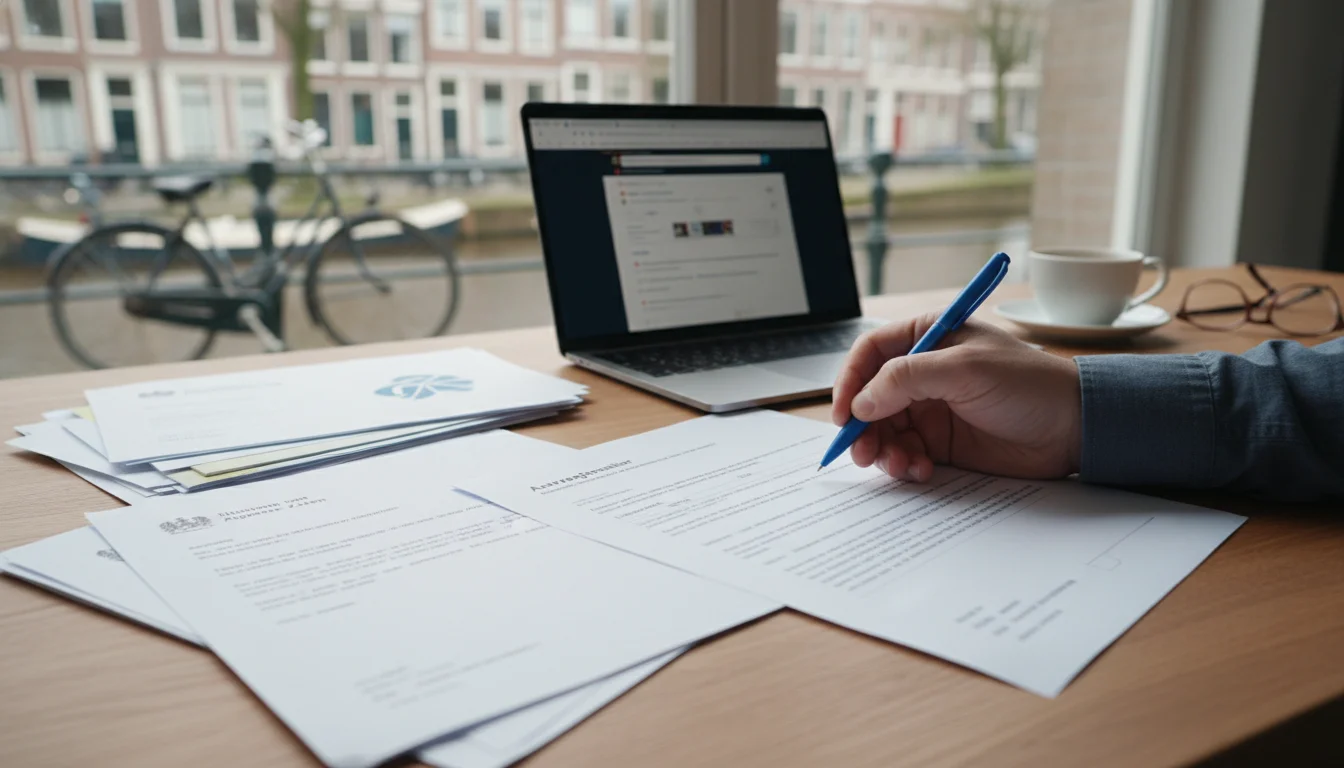
One of the biggest hurdles for expats is dealing with official letters. Bills from your energy supplier, tax documents from the Belastingdienst, and letters from your municipality will all be in Dutch. While online translators can help, they often miss the nuances of formal language, which can lead to costly misunderstandings.
This is where building your Dutch language skills becomes a financial tool. Being able to decipher a bill or understand a contract gives you control and confidence. The StroopTaal app is designed for exactly these real-world scenarios. Our AI-powered conversation practice can simulate a phone call with a utility company, and our grammar lessons help you understand the structure of official sentences. Moving from confusion to clarity with your Dutch paperwork is a huge step towards feeling truly at home.
Managing your finances as an expat in the Netherlands doesn't have to be daunting. By understanding the local financial landscape, building a detailed budget, and embracing smart, Dutch-style saving strategies, you can achieve financial peace of mind. Remember that your budget is a living document—review and adjust it regularly as your circumstances change.
Feeling confident with your finances is intertwined with feeling confident in your new environment. As you master your budget, why not master the language too? A solid grasp of Dutch will unlock a deeper connection to the culture and make every aspect of life here—from reading your mail to chatting with neighbours—richer and easier.
Ready to build your confidence? Download the StroopTaal app and start your personalized Dutch learning plan today. Begin your journey to financial and linguistic fluency in the Netherlands!
Share this article:
The Dutch Paradox: Friendly People, Hard-to-Enter CirclesYou've arrived in the Netherlands, a country famous for its tulips, windmills, and...
Read moreYour Guide to the 'Wijkagent': The Friendly Face of Dutch Policing You’ve just moved into your new Dutch neighborhood. You’re learning to...
Read moreWelcome to the Netherlands! Now, About That Blue Envelope... You’ve done it. You’ve moved to the land of windmills, canals, and stroopwafels....
Read more