The Dutch Wijkagent: Your Community Police Officer Guide
Your Guide to the 'Wijkagent': The Friendly Face of Dutch Policing You’ve just moved into your new Dutch neighborhood. You’re learning to...
Read more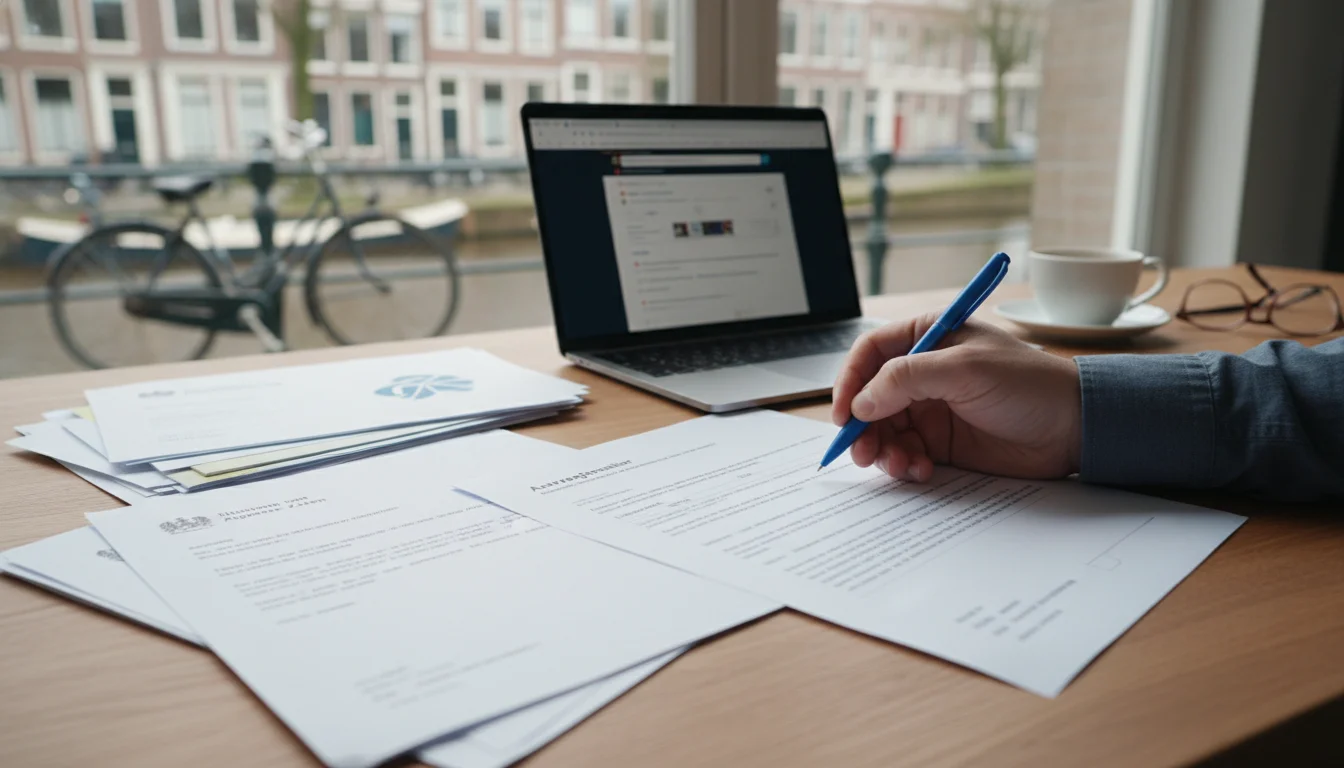
You’ve done it. You’ve moved to the land of windmills, canals, and stroopwafels. You’re settling in, maybe you've even figured out how to buy a Dutch bike. Then, it arrives. A crisp, official-looking envelope, often a distinct shade of blue, lands on your doormat. Your heart skips a beat. Welcome to your official introduction to Dutch bureaucracy.
For many expats, navigating the administrative side of life in the Netherlands can feel like a daunting task. The language is formal, the stakes feel high, and the system, while efficient, is notoriously rigid. But fear not! Understanding the system is the first step to mastering it. This comprehensive guide will walk you through dealing with official letters and forms, demystifying the key players and providing actionable tips to help you handle your paperwork with confidence.
Before you can tackle the paperwork, you need to know who is sending it. Several key government bodies will likely be in touch with you at some point. Here are the main ones:
This is your local city or town council and often your first official point of contact. You must register with your local gemeente within five days of arriving in the Netherlands if you plan to stay for more than four months. This is where you get your all-important Burgerservicenummer (BSN), or Citizen Service Number. You'll need a valid address and proof of occupancy, such as securing a rental contract. The gemeente also handles things like local taxes (e.g., waste disposal tax), parking permits, and registering life events like births or marriages.
This is the Dutch tax office, and the sender of the infamous blue envelopes. They handle everything related to taxes, including income tax, VAT (BTW), and road tax. They are also responsible for paying out benefits or allowances, known as toeslagen (e.g., healthcare allowance, rent benefit, childcare benefit). Their communications are notoriously formal and full of specific jargon, so paying close attention is key.
The Immigration and Naturalisation Service is the authority for all matters concerning residency. If you're a non-EU citizen, you'll deal with the IND for your residence permit, work permit, and eventually, permanent residency or citizenship. Their decisions and requests are time-sensitive, so prompt action is always required.
An official letter can look intimidating, but it follows a standard structure. Knowing what to look for can help you quickly identify its purpose and the action required.
You'll encounter a lot of formal Dutch (ambtelijke taal). Here are a few key terms to learn:
Building this specific vocabulary is crucial, and using a tool with spaced repetition, like the vocabulary builder in the StroopTaal app, can make these formal terms stick and remove some of the anxiety around official mail.
Whether it’s online or on paper, filling out forms accurately is non-negotiable. A small mistake can lead to significant delays.
First things first: get a DigiD. DigiD stands for Digital Identity and is your personal online login for almost all government agencies in the Netherlands. It allows you to file taxes, apply for benefits, and check your details securely online. You can apply for one at the official DigiD website as soon as you are registered at your gemeente and have your BSN.
Sometimes, you'll need to write to a government agency yourself—to ask a question, provide extra information, or file an objection. Clarity, formality, and directness are your best friends here.
Here is a basic structure you can adapt:
[Your Name]
[Your Address]
[Your Postal Code and City]
[Your Email / Phone Number]
[Name of the Agency]
[Department, if known]
[Address of the Agency]
[Postal Code and City of the Agency]
[Place, Date (e.g., Utrecht, 23 oktober 2026)]
Betreft: [Subject of your letter, e.g., Bezwaar parkeerboete, kenmerk 12345]
Geachte heer, mevrouw,
[Paragraph 1: State your reason for writing immediately. Refer to their previous letter using the 'kenmerk' (reference number) and date.]
Naar aanleiding van uw brief van [Date of their letter] met kenmerk [Their reference number], schrijf ik u over [topic].
[Paragraph 2: Explain your situation clearly and concisely. Provide facts, dates, and any relevant details. Avoid emotion.]
De situatie is als volgt: [Explain your situation here].
[Paragraph 3: State what you want to happen. Do you need information? Are you requesting an extension? Are you appealing a decision?]
Daarom verzoek ik u om [state your request].
Ik zie uw reactie graag tegemoet.
Met vriendelijke groet,
[Your Signature]
[Your Typed Name]
Practicing how to phrase your requests clearly can be a lifesaver. With StroopTaal's AI-powered conversation practice, you can simulate these scenarios, helping you find the right words and build the confidence to communicate effectively with official bodies.
Even with the best preparation, you might find yourself in a situation that is too complex to handle alone. Don't hesitate to seek help.
Dutch bureaucracy may seem like an insurmountable mountain at first, but it's a logical, process-driven system. By staying organized, understanding the key players, learning the essential vocabulary, and never being afraid to ask for help, you can navigate it successfully. Keep a dedicated folder for all official documents, pay close attention to deadlines, and always keep copies of everything you send.
Mastering the system is a huge step toward feeling truly at home in the Netherlands. And building your language confidence with a tool like StroopTaal, which offers everything from grammar lessons to personalized learning plans, will make the entire process smoother and less stressful. So take a deep breath, open that envelope, and get ready to conquer the paperwork.
Share this article:
Your Guide to the 'Wijkagent': The Friendly Face of Dutch Policing You’ve just moved into your new Dutch neighborhood. You’re learning to...
Read moreWelcome to The Hague! Now, Let's Find You a Home So, you're moving to The Hague! Congratulations. You've chosen a city that beautifully blends royal...
Read moreWelcome to the Netherlands: Your Cycling Adventure Begins There are a few things that scream 'I live in the Netherlands' more than owning a bicycle....
Read more