How to Apply for Rent Benefit (Huurtoeslag) in the Netherlands (2026)
Navigating Dutch Housing Allowances as an Expat Finding an apartment in the Netherlands can feel like winning the lottery. Once you have secured a...
Read more
This article was written by AI and published by StroopTaal.
AI can get things wrong. For anything official, check the source it points to.
AI-generated image
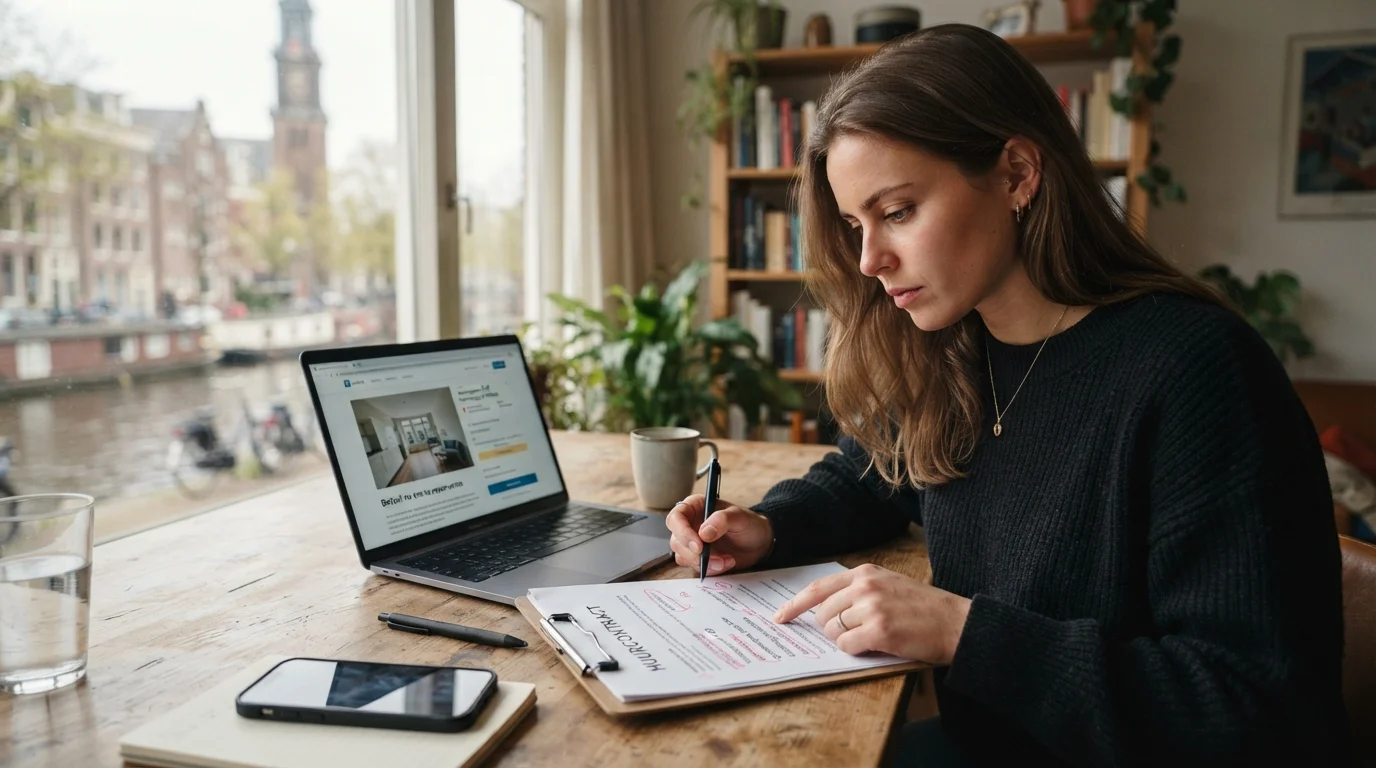
Finding a home in the Netherlands can feel like a race. Affordable rooms and apartments disappear within minutes, landlords may ask for documents immediately, and unfamiliar Dutch rental terms can make it difficult to know whether an offer is genuine. Unfortunately, scammers take advantage of this pressure, especially when targeting international students, expats, newcomers, and people who do not yet speak Dutch confidently.
Learning how the Dutch rental market works is one of the best ways to protect yourself. In this guide, you will learn how to spot common housing scams, check a landlord or rental agent, understand important Dutch rental vocabulary, avoid illegal fees, and take action if something goes wrong. These skills are useful not only for finding a safe home, but also for daily life in the Netherlands and integration exams.
The Netherlands has a serious shortage of affordable rental housing, particularly in Amsterdam, Rotterdam, Utrecht, The Hague, Eindhoven, Groningen, and other popular cities. Demand is high, waiting lists are long, and many prospective tenants are under time pressure. A scammer may create a convincing advertisement, copy photographs from a real listing, and promise a property to the first person who transfers money.
International renters can be especially vulnerable. You may be searching from abroad, have limited knowledge of Dutch law, or believe that paying quickly is the only way to secure a room. Scammers often use this uncertainty to request a deposit before you have viewed the property or signed a proper agreement.
There are also legitimate differences between Dutch rental arrangements. A property may be gemeubileerd (furnished), gestoffeerd (partly furnished, usually with flooring and window coverings), or kaal (unfurnished). A listing may advertise kale huur, meaning basic rent, while service charges, utilities, and municipal taxes are added separately. Understanding these terms helps you compare offers and recognize vague or misleading advertisements.
In this classic scam, someone advertises a beautiful apartment at an unusually low price. The person claims to be abroad, unavailable for a viewing, or working through a platform that does not actually exist. They ask you to transfer a deposit, first month’s rent, or key fee before sending the keys. Once you pay, communication stops.
A low price is not automatically proof of fraud, but it is a warning sign when combined with urgency, poor communication, or an impossible viewing process. Compare the rent with similar properties in the same neighborhood and check whether the photographs appear elsewhere online.
Scammers sometimes copy a genuine advertisement from a housing website and replace the contact details with their own. They may use a real address and authentic photographs, making the listing look trustworthy. Ask who legally owns or manages the property and verify that information independently rather than relying only on documents sent by the advertiser.
Be cautious if you are asked to pay any amount before seeing the property, meeting the landlord, or receiving a verifiable rental contract. A landlord can request a deposit as part of a legitimate rental agreement, but payment should normally come after you have confirmed the property, the parties involved, and the contract terms.
Never send money through gift cards, cryptocurrency, anonymous payment services, or an international transfer to an unrelated name. These payment methods can make it difficult to recover your funds.
A rental agent may charge a fee for acting on behalf of a landlord, but tenants should be careful when an agency appears to represent both sides. In the Netherlands, a professional intermediary generally cannot charge the tenant mediation costs if the intermediary is also acting for the landlord. A fee described as administration, contract, reservation, or key money may still be an illegal agency charge if it is really a mediation fee.
Ask for a written explanation of every charge. If the fee is unclear, do not pay it simply because the agent says it is standard practice. Consumer information from the Dutch government about renting a home can help you compare your situation with official guidance.
Some tenants advertise a room without having permission from the property owner. You might pay them, move in, and later discover that the main tenant was not allowed to sublet the room. You could then lose your home and have difficulty recovering your deposit.
Ask whether subletting is permitted and request evidence when appropriate. If you need to register at the address, confirm that registration is possible before signing. Registration with the municipality, known as inschrijven bij de gemeente, is often essential for official correspondence, healthcare, benefits, and immigration administration.
Whenever possible, visit the property in person. Check the entrance, shared areas, room size, windows, locks, heating, appliances, signs of damp, and the condition of the bathroom and kitchen. If you cannot travel to the Netherlands, ask a trusted friend or relocation professional to attend for you. A live video tour is better than photographs, but it is still not a complete substitute for an independent viewing.
During the visit, ask practical questions in Dutch or English:
Knowing useful housing vocabulary makes it easier to ask precise questions. If you are also arranging utilities after moving, this guide to setting up home internet and television explains common services and terminology.
Search the address online and compare the listing with public information. Use a reverse-image search to see whether the photographs were copied from another website. Look for inconsistent details, such as a listing that describes a studio but shows a shared apartment, or photographs that appear to come from different properties.
Be careful with listings that use only a social media profile, a free email address, or a phone number from another country. These details do not prove a scam, but legitimate landlords and agencies should be willing to identify themselves and explain their relationship to the property.
Ask for the landlord’s full name, business address, telephone number, and, if relevant, the company’s Dutch Chamber of Commerce registration number, known as a KvK-nummer. You can search the official Dutch Business Register to check whether a company exists. However, remember that scammers may impersonate a real business, so contact the company using details found independently rather than only the information in the advertisement.
For an apartment in a larger building, ask whether the advertiser can demonstrate ownership or authorization to rent it. You do not need to demand sensitive personal information, but you should be able to establish that the person has the right to offer the property.
A proper rental contract should identify the landlord and tenant, property address, start date, rental period, basic rent, service charges, deposit, payment date, and rules about termination. It should also explain which utilities are included and how advance payments will be settled.
Read the contract before transferring money. Do not sign blank pages or accept a contract that differs from the advertisement without an explanation. Keep the listing, emails, messages, photographs, payment records, and signed agreement in one folder. If the contract is in Dutch and you do not understand it, ask a qualified housing adviser or legal professional to explain it.
A security deposit, or waarborgsom, is common in the Netherlands. The amount should be stated in the contract and should not be treated as a surprise charge. Since July 2023, Dutch rental rules generally limit a new security deposit to a maximum of two months of basic rent. The landlord must also return the deposit within the legally applicable period after the tenancy ends, except when there are valid deductions such as unpaid rent or documented damage.
Ask for a written inventory and take dated photographs when you move in. Record existing damage, stains, broken appliances, and defects. This evidence can prevent a landlord from claiming that you caused damage that was already present.
Understand the difference between:
Do not assume that a low advertised rent is the complete monthly cost. Ask for an itemized estimate and clarify whether service charges are calculated as an advance payment or a fixed amount. After moving, you may also receive municipal bills; our explanation of Dutch municipal waste taxes and afvalstoffenheffing covers one common example.
One warning sign may have an innocent explanation, but several together should make you walk away. Treat the following combination as a serious risk:
Trust your judgment. A genuine landlord may be busy, but they should not object to reasonable questions about identity, ownership, contracts, deposits, and registration.
Rental applications often require proof of identity, income, and residence. Share only what is necessary and use a secure method. If you send a copy of your passport or identity card, consider using the Dutch government’s KopieID app or a watermark stating the purpose and date, such as Only for rental application at [company], [date]. Do not send your citizen service number, or BSN, unless there is a clear legal reason to do so.
Use a bank account in your own name and pay only after the contract and property have been verified. Request a receipt for every payment. Never let urgency pressure you into transferring money to an unfamiliar personal account.
It is also wise to use reputable housing platforms, local housing associations, registered agencies, and recommendations from established universities or employers. No platform can guarantee that every listing is safe, so conduct your own checks even when an advertisement appears on a well-known website.
Stop communicating and do not send additional money or documents. Save screenshots of the advertisement, profile, contract, bank details, emails, WhatsApp messages, and payment confirmations. These records may be important evidence.
If you have already paid, contact your bank immediately and ask whether the transfer can be cancelled or recalled. Report suspected fraud to the Dutch police through the appropriate non-emergency channels and consider reporting the listing to the website where you found it. You can also seek guidance from the Juridisch Loket, a housing advice service, your municipality, or a tenants’ organization such as the Huurcommissie for disputes within its area of authority.
If the scam involves immigration documents or threatens your legal status, contact the Immigration and Naturalisation Service through its official IND website. A housing scam does not automatically mean that your residence application is at risk, but you should obtain reliable advice rather than relying on the scammer’s claims.
Do not feel embarrassed about reporting the incident. Scammers depend on victims staying silent, and your report may protect other newcomers. If someone threatens you, demands more money, or has obtained identity documents, contact the police and seek immediate legal assistance.
Learning a few key words can help you understand advertisements and communicate confidently with landlords:
Practise these words in complete sentences rather than memorizing them in isolation. StroopTaal can support this process with personalized learning plans, spaced-repetition vocabulary practice, and real-life AI conversations based on situations such as viewing a room, asking about a deposit, or discussing a rental contract. Pronunciation feedback can also help you feel more confident when speaking with a landlord or municipality employee.
Before paying or signing, use this quick checklist:
If you cannot answer several of these questions, pause the process. A genuine opportunity should withstand careful verification.
Navigating the Dutch rental market can be stressful, but you do not have to choose between acting quickly and staying safe. Compare prices, arrange a real viewing, verify the landlord, read the rental contract, question unexplained fees, and never transfer money simply because someone creates artificial urgency.
For newcomers, Dutch language skills are part of rental safety. Understanding words such as waarborgsom, servicekosten, and inschrijving helps you identify important details and ask better questions. Make a personal safety checklist, practise the essential phrases, and seek independent advice whenever an offer feels unclear. Start building the Dutch vocabulary and confidence you need for real housing conversations with StroopTaal, and take your next rental step with knowledge rather than pressure.
Share this article:
Navigating Dutch Housing Allowances as an Expat Finding an apartment in the Netherlands can feel like winning the lottery. Once you have secured a...
Read moreWo in Dutch: Meaning, Usage, and Example Sentences In Dutch, wo means “where” and is used to ask about a location, place, or position. You will...
Read moreMoving to the Netherlands often means learning a new vocabulary for everyday life: gemeente, belastingaanslag, afvalstoffenheffing, and rioolheffing....
Read more