
Why Gamified Language Apps Like StroopTaal Make Dutch Learning Addictive
The Psychology of the Streak: Why You Can't Put the App Down Have you ever sat down intending to study Dutch for five minutes, only to find yourself...
Read more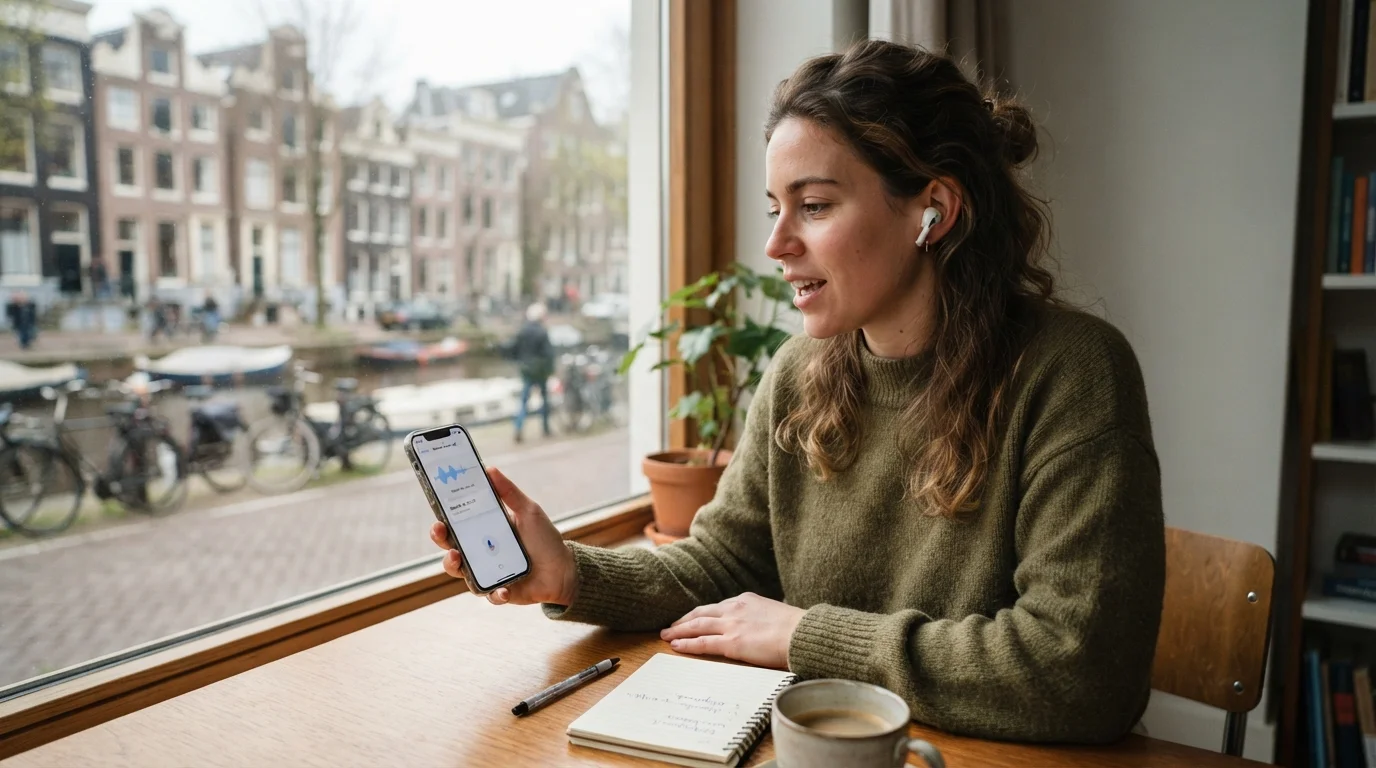
Imagine this scenario: You walk into a cozy Amsterdam café, determined to order your morning coffee in Dutch. You rehearse the phrase in your head: "Mag ik een koffie verkeerd, alstublieft?" You take a deep breath, deliver the line with confidence, and wait. The barista smiles warmly and replies in flawless, accentless English: "Sure, that will be three euros fifty. Would you like anything else with that?"
If you have lived in the Netherlands for more than a week, you have likely experienced this. It can feel incredibly discouraging, but it is rarely a reflection of your grammar or vocabulary. Most of the time, it comes down to a tiny slip in pronunciation. The Dutch ear is highly sensitive to non-native accents, and because the average Dutch person speaks excellent English, they will instinctively switch languages to make the conversation faster and easier for you.
Mastering Dutch pronunciation is notoriously difficult for English speakers and other language learners. The language is packed with sounds that do not exist in English. The infamous throat-clearing "g" (both the hard northern 'g' and the softer southern version), the tricky diphthongs like "ui" (as in huis), "eu" (as in keuken), and "oe" (as in boek), and the subtle differences between long and short vowels (like man versus maan) present a massive hurdle. To understand the linguistic science behind these sounds, you can read more about Dutch phonology on Wikipedia.
Fortunately, the language learning landscape has evolved. You no longer need to hire an expensive private tutor or feel embarrassed practicing in front of strangers. Artificial Intelligence (AI) has revolutionized pronunciation training, offering instant, judgment-free, and highly accurate feedback. In this comprehensive guide, we will explore the top AI-powered apps to practice Dutch pronunciation and speaking, helping you sound more like a native speaker and build the confidence to keep conversations in Dutch.
Traditionally, language learning apps focused on passive skills: vocabulary matching, reading comprehension, and basic grammar fill-in-the-blanks. While these methods are useful for building a foundation, they do very little for your speaking confidence. You cannot learn to swim by reading a book, and you cannot learn to speak Dutch fluently without opening your mouth.
AI speech recognition technology has changed everything. Modern language apps use advanced Automatic Speech Recognition (ASR) trained specifically on language learners' accents. These systems analyze your speech in real-time, comparing your pronunciation, intonation, and rhythm to native speakers. They can pinpoint exactly where you went wrong—whether you mispronounced the "ch" in schrijven or shortened the vowel in boot.
By using these tools, you can practice speaking in a safe, low-stakes environment. You can repeat a word fifty times until you get it right, without worrying about wasting anyone's time or feeling self-conscious. Let's dive into the best AI-powered apps available today to help you master spoken Dutch.
If you are looking for an app designed specifically to bridge the gap between textbook Dutch and real-world conversation, StroopTaal stands out as a premier choice. Unlike generic language apps that treat all languages the same, StroopTaal is custom-built for the unique challenges of learning Dutch.
StroopTaal uses cutting-edge AI to provide a highly interactive, immersive speaking experience. Here is how StroopTaal transforms your pronunciation and speaking skills:
StroopTaal goes beyond simple repetition by helping you understand the rhythm and flow of natural spoken Dutch. It is the perfect tool for expats who want to stop being answered in English and start building genuine connections with Dutch locals.
TalkPal is a general AI language tutor powered by GPT technology. It allows users to chat about various topics, engage in roleplays, and receive immediate corrections on their spoken Dutch. TalkPal is highly interactive and excellent for intermediate learners who want to practice spontaneous speech without the anxiety of talking to a real person.
Almost everyone starting their Dutch journey downloads Duolingo or Babbel. Both apps have integrated basic AI speech recognition into their daily lessons. When a speaking prompt appears, you hold down the microphone button and repeat the sentence on the screen. The app then green-lights your attempt or asks you to try again.
While these platforms are fantastic for absolute beginners (A0 to A1), they have significant limitations when it comes to developing true speaking fluency. The speech recognition is often quite forgiving, sometimes passing pronunciations that a native speaker would struggle to understand. Furthermore, repeating isolated sentences does not prepare you for the unpredictable nature of real conversations. If you want to move past simple vocabulary matching, it is worth looking into building real-world Dutch fluency through more robust, speaking-focused methods.
Speechling is a non-profit platform dedicated entirely to helping language learners improve their speaking skills. It combines AI-powered voice recognition with feedback from real human coaches. You listen to a native Dutch speaker say a phrase, record yourself saying the same phrase, and upload it. Within 24 hours, a professional coach provides feedback on your pronunciation, intonation, and rhythm.
For many expats living in the Netherlands, learning Dutch is not just a hobby—it is a legal requirement. To obtain permanent residency or Dutch citizenship, you must pass the Civic Integration Exam (Inburgeringsexamen). The speaking component of this exam requires you to respond to various prompts, complete sentences, and answer questions clearly under timed conditions.
According to the official Government.nl integration guidelines, the required language level is shifting toward B1. This means simple memorization will no longer cut it; you need to demonstrate genuine conversational competence and clear pronunciation.
AI apps are invaluable tools for exam preparation. By practicing with interactive dialogue games and AI conversation partners, you can simulate the exam environment. You can practice responding to unexpected questions quickly, refining your word order, and ensuring your pronunciation is clear enough to pass the automated and human grading systems. If you are preparing for this milestone, explore the best Dutch learning apps for B1 level preparation to design a study plan that guarantees success.
To get the most out of your chosen AI language apps, combine your digital practice with these practical, real-world pronunciation techniques:
The journey to mastering Dutch pronunciation can feel daunting, but you do not have to walk it alone. Traditional textbooks and passive vocabulary apps can only take you so far. To truly break the cycle of being answered in English, you must practice speaking actively, consistently, and with the right feedback.
AI-powered apps have democratized language learning, giving you access to personal tutoring and instant pronunciation feedback right in your pocket. By incorporating tools like StroopTaal into your daily routine, you can build your confidence, perfect your accent, and unlock a whole new level of integration and connection in the Netherlands.
Ready to sound like a local? Download StroopTaal today, start your daily streak, and take your Dutch speaking skills from hesitant to fluent!
Share this article:
The Psychology of the Streak: Why You Can't Put the App Down Have you ever sat down intending to study Dutch for five minutes, only to find yourself...
Read moreThe Ultimate Dutch Learner's Dilemma: De vs. Het Ask any expat living in Amsterdam, Rotterdam, or Utrecht about their biggest hurdle in learning...
Read moreThe Dutch Vocabulary Mountain: Why Traditional Memorization Fails Have you ever spent hours staring at a list of Dutch vocabulary, committing words...
Read more