
Spring in the Netherlands: Best Flower Parades & Markets in March
The Awakening of the Dutch Spring After months of gray skies, biting winds, and endless rain, there is a magical shift that happens in the...
Read more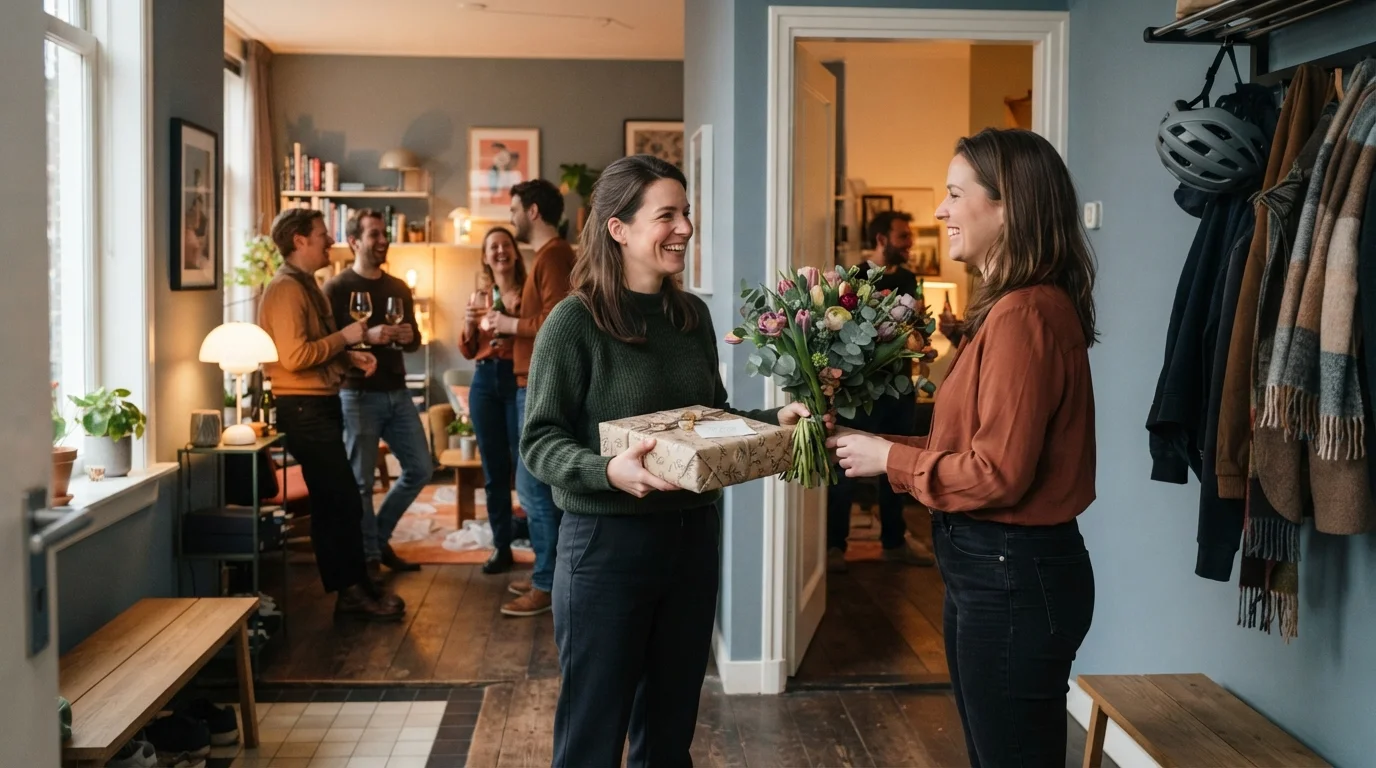
Congratulations! You have officially received an invitation to a Dutch housewarming party (often simply called a housewarming or huisfeestje). Whether your friends have just purchased their first home after navigating the notoriously competitive Dutch housing market, or they have simply moved into a new rental apartment in the city center, being invited to celebrate their new space is a wonderful milestone.
But as an expat or someone new to the Netherlands, this invitation might immediately trigger a wave of cultural anxiety. What are you supposed to bring? Is a bottle of wine enough? Will they expect an expensive gift? Do you need to bring your own drinks? And most importantly, how do you navigate the social dynamics of a Dutch party?
Understanding the social norms of the Netherlands is crucial for integration—in fact, understanding local customs is a key component of the KNM (Kennis van de Nederlandse Maatschappij) exams for those preparing for their inburgering. In this comprehensive guide, we will dive deep into Dutch housewarming gift etiquette, what to expect, what to avoid, and the essential Dutch phrases you will need to survive and thrive at the party.
Knowing what to bring to housewarming events depends on understanding local host expectations, but practical household items, houseplants, and modest food or drink items are universally accepted. Guests often worry about overspending or picking the wrong aesthetic, but adhering to fundamental housewarming norms prevents awkward social moments. Whether you are attending a casual drinks gathering in a city apartment or a formal open house in a suburban neighborhood, focus on items that add value to the host's daily routine without imposing heavy maintenance or taking up limited floor space.
If you are figuring out what to bring to a housewarming, a simple budget-friendly present paired with drinks or snacks for the party is the most practical choice. In social settings across Western Europe, bringing a modest contribution that can be enjoyed immediately or easily integrated into the new home shows gratitude for the invitation. You can rarely go wrong with culinary gifts, stylish utility items, or something that fits Dutch borrel culture and party food traditions. Key choices include:
Before we look at specific gift ideas, it is essential to understand the underlying philosophy of Dutch gift-giving. The culture of the Netherlands is deeply rooted in Calvinist traditions, which emphasize modesty, egalitarianism, and practicality. You have likely heard the famous Dutch phrase: "Doe maar normaal, dan doe je al gek genoeg" (Just act normal, that's crazy enough).
This philosophy extends directly to how the Dutch give and receive gifts. Here are the golden rules you need to keep in mind:
In many cultures, bringing a lavish, expensive gift to a housewarming is a sign of respect and generosity. In the Netherlands, an overly expensive gift can actually make the host feel uncomfortable or obligated. The goal is to bring something thoughtful, practical, and reasonably priced. A typical budget for a Dutch housewarming gift from a single person or a couple ranges between €10 and €25. If you are part of a larger friend group, it is very common to pool your money together (often organized via a WhatsApp group and a Tikkie) to buy one larger, higher-quality item, such as a nice coffee maker or a piece of furniture they specifically asked for.
If you hand a wrapped gift to a Dutch person, expect them to tear into the wrapping paper immediately. Unlike some cultures where it is considered polite to set the gift aside and open it privately later, the Dutch will open your gift right in front of you, inspect it, and offer their immediate thanks. This directness is a sign of appreciation. Make sure your gift is nicely wrapped—most Dutch stores will ask "Is het een cadeautje?" (Is it a gift?) and wrap it beautifully for you at the checkout counter for free.
The Dutch are incredibly pragmatic. It is completely normal for a host to include a link to an online wishlist (like lijstje.nl) on their party invitation. If they provide a list, use it. Do not try to be overly creative if they have specifically asked for a green watering can or a specific set of matching towels. Buying from the list guarantees you are giving them something they actually need for their new home, eliminating waste and clutter.
Selecting the ideal housewarming gift Netherlands locals prefer comes down to balancing modesty, practicality, and personal host preferences, with typical budgets ranging between €10 and €25. Dutch residents heavily favor functionality and clean design over expensive luxury displays, meaning an affordable, well-chosen item will be received far more warmly than an extravagant gesture. Furthermore, because urban Dutch living spaces can be relatively cozy, compact gifts that store easily or get consumed during social gatherings are considered especially polite and practical.
The most popular housewarming gifts Netherlands hosts love to receive include low-maintenance indoor plants, department store gift vouchers, specialty food boards, and high-quality fresh flowers. Gifts that help transform a newly rented or purchased house into a warm, comfortable space directly support the Dutch ideal of gezelligheid. If you want to feel confident presenting your present and chatting with other guests in Dutch, doing a quick practice session on StroopTaal ahead of time helps you master common small talk phrases and greeting rules.
If the host hasn't provided a wishlist, you are left to your own devices. Fortunately, there are several foolproof gift categories that are guaranteed to be well-received at any Dutch housewarming.
You cannot go wrong with a beautiful houseplant. Dutch homes are famous for their large, street-facing windows, and filling those windowsills with greenery is a national pastime. A low-maintenance plant like a Monstera, a Pilea (pannenkoekenplant), or a stylish Calathea in a nice ceramic pot is the ultimate housewarming gift. It breathes life into a new space and lasts much longer than cut flowers.
If you prefer traditional blooms, flowers are deeply ingrained in Dutch culture. You can pick up a stunning bouquet from a local florist, or even rely on the high-quality options available at local grocery stores. If you are curious about why flowers are so central to life here, you can read more about picking up a beautiful bouquet of Dutch flowers and the fascinating history behind them. Just remember to bring them already arranged, or hand them over with a smile—but note that handing a host flowers without a vase when they are busy running a party can sometimes be a slight hassle, so a plant in a pot is often the safer bet.
In some countries, giving a gift card is seen as impersonal or lazy. In the Netherlands, it is highly appreciated. Moving is expensive, and new homeowners always have a list of small things they still need to buy. Popular gift cards include:
Consumables are always a great idea because they don't take up permanent space in the house. A nice bottle of wine, a selection of local Dutch craft beers (like those from Brouwerij 't IJ or Jopen), or a luxury borrelplank (snack board) assortment with artisanal cheeses, fancy crackers, and dips will be happily received. It also contributes to the overall vibe of the evening, perfectly aligning with understanding the core concept of gezelligheid that every Dutch host strives to create.
Just as there are foolproof gifts, there are also a few things you should generally avoid bringing to a Dutch housewarming:
So, you have your perfectly wrapped, reasonably priced, highly practical gift. You arrive at the house. What happens next?
The absolute most important ritual of a Dutch housewarming is de rondleiding (the tour). When you arrive, after greeting the host and handing over your gift, you will almost certainly be taken on a guided tour of the entire house. Yes, the entire house—including the bedrooms, the bathroom, and the tiny balcony.
Your job during de rondleiding is to be enthusiastically complimentary. You must admire the amount of natural light ("Wat een prachtig licht!"), the choice of flooring, and the clever use of space. This is a proud moment for the host, so be generous with your praise.
Unlike a dinner party, a housewarming is usually a borrel. This means drinks and snacks. You will likely be offered beer, wine, or soft drinks, accompanied by an endless parade of snacks: bitterballen (if they have an airfryer or deep fryer set up), blocks of Gouda cheese with mustard, slices of cucumber, cherry tomatoes, and various dips. Housewarmings are typically casual, standing-room affairs where people mingle. It is also an excellent networking opportunity and a great chance for getting to know your local community and Dutch neighbors who might have also been invited.
Want to impress your Dutch friends and show off your integration efforts? Here are some essential phrases you should practice before the party:
If you feel nervous about your pronunciation or stringing these sentences together, this is exactly where StroopTaal can help. Our app features AI-powered personalized learning plans and real-life Dutch conversation practice. You can actually simulate a housewarming party scenario with our interactive dialogue games, allowing you to practice your small talk and get instant feedback on your pronunciation before you ever step foot in the new house!
Attending a Dutch housewarming party doesn't have to be a stressful cultural minefield. By remembering to keep your gift modest, practical, and tailored to the host's actual needs, you will fit right in. Embrace the directness, enjoy the guided tour of the new home, eat your weight in cheese blocks and bitterballen, and focus on the most important aspect of any Dutch gathering: creating a warm, welcoming, and gezellig atmosphere.
Learning the language is the ultimate key to feeling at home in the Netherlands. Whether you are preparing for your inburgering exams or just want to chat naturally with your new Dutch neighbors, StroopTaal provides the grammar lessons, vocabulary building, and cultural insights you need to succeed. Download the StroopTaal app today, start your daily streak, and get ready to impress at your next Dutch social event!
Share this article:
The Awakening of the Dutch Spring After months of gray skies, biting winds, and endless rain, there is a magical shift that happens in the...
Read moreThe Everyday Luxury of Dutch Supermarket Flowers If you have recently moved to the Netherlands, one of the first things you likely noticed upon...
Read moreIntroduction to the Dutch Consensus Culture If you have recently moved to the Netherlands or started working for a Dutch company, you might have...
Read more