What to Bring to a Dutch Housewarming Party: Gift Etiquette
Navigating the Dutch Housewarming: An Expat's GuideCongratulations! You have officially received an invitation to a Dutch housewarming party (often...
Read more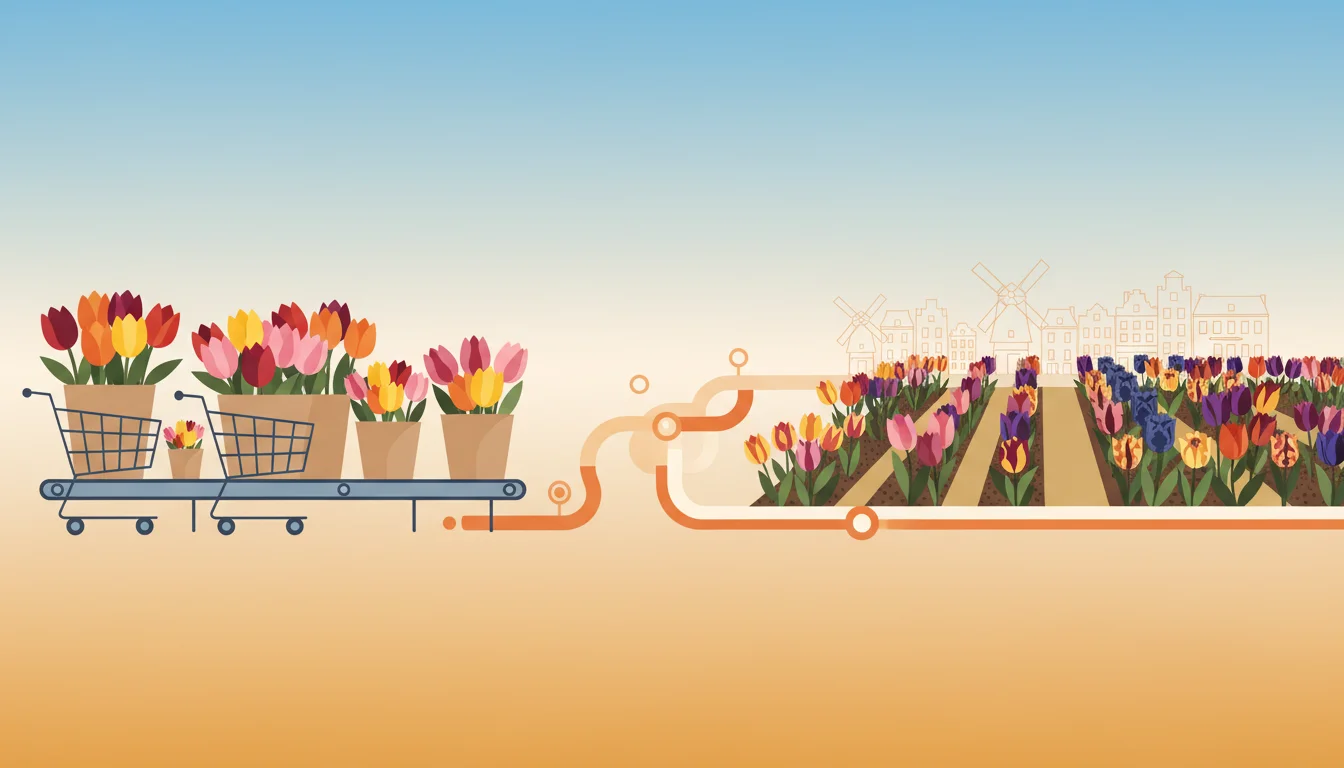
If you have recently moved to the Netherlands, one of the first things you likely noticed upon entering your local Albert Heijn, Jumbo, or Dirk van den Broek is the spectacular wall of fresh flowers greeting you at the entrance. For expats coming from countries where fresh-cut flowers are an expensive luxury reserved for Valentine's Day, Mother's Day, or apologies, the Dutch supermarket flower section is nothing short of a revelation.
For just three to five euros, you can pick up a vibrant, fresh bouquet of tulips, roses, or seasonal blooms. This accessibility isn't just a clever retail strategy; it is a deeply ingrained cultural phenomenon. In the Netherlands, buying flowers is as routine as picking up a loaf of bread or a carton of milk. But how did this small, rain-swept country bordering the North Sea become the undisputed flower shop of the world? And more specifically, how did the tulip become the ultimate symbol of Dutch identity?
Understanding the history of tulips in the Netherlands and the modern culture of Dutch supermarket flowers is essential for any expat looking to integrate. It is a story of exotic origins, economic bubbles, agricultural mastery, and a deep-seated cultural desire for warmth and color.
Despite being the national symbol of the Netherlands, tulips are not native to Dutch soil. Their story begins thousands of miles away in the rugged Tien Shan mountain ranges of Central Asia. Nomadic tribes admired these resilient wildflowers, and eventually, the bulbs made their way to the gardens of the Ottoman Empire (modern-day Turkey).
By the 16th century, tulips were highly cultivated in Constantinople. The word "tulip" itself is thought to derive from the Persian word dulband (turban), due to the flower's shape resembling the headwear worn by Ottoman men. The flowers caught the eye of Ogier Ghiselin de Busbecq, an ambassador for the Holy Roman Emperor, who sent tulip bulbs and seeds back to Vienna.
The crucial moment for Dutch history occurred when the famed botanist Carolus Clusius was appointed director of the Hortus Botanicus at Leiden University in 1593. Clusius planted the first tulip bulbs in Dutch soil. He quickly discovered that the harsh climate and the sandy soil behind the Dutch dunes were surprisingly perfect for cultivating tulips. Clusius was fiercely protective of his rare flowers, refusing to sell them. In true entrepreneurial spirit, local Dutchmen broke into his garden and stole the bulbs, inadvertently launching the Dutch tulip trade.
As the 17th century dawned, the Netherlands entered its Golden Age. Amsterdam became a hub of global trade, and the newly wealthy merchant class sought ways to display their affluence. The tulip, with its intense, saturated colors that were unlike any other flower in Europe at the time, became the ultimate status symbol.
This obsession culminated in Tulip Mania (Tulpenmanie) between 1634 and 1637. The most prized tulips were those afflicted by the "tulip breaking virus," which caused spectacular, flaming streaks of contrasting colors on the petals. The most famous of these was the Semper Augustus, a striking red and white flower.
The demand for these rare bulbs skyrocketed, leading to the creation of the world's first futures market. Bulbs were traded in local taverns, often changing hands multiple times a day on paper before they had even bloomed. At the peak of the frenzy in the winter of 1636-1637, a single rare tulip bulb could sell for the equivalent of a grand canal house in Amsterdam, or ten times the annual salary of a skilled craftsman.
Inevitably, the bubble burst in February 1637. Buyers refused to attend routine bulb auctions in Haarlem, panic ensued, and prices plummeted overnight. While the economic devastation was largely confined to a small group of speculators, Tulip Mania left an indelible mark on Dutch history and culture, serving as a cautionary tale of greed and speculative excess.
Today, the wild speculation is gone, but the Dutch love for flowers remains stronger than ever. This affection is intimately tied to the untranslatable Dutch concept of gezelligheid. While often translated as "coziness," it encompasses a feeling of warmth, belonging, and an inviting atmosphere. Bringing fresh supermarket flowers into the home is one of the easiest and most common ways of creating a sense of gezelligheid in a Dutch household, especially during the long, gray winters.
The Netherlands currently produces billions of tulip bulbs annually, exporting the vast majority. The epicenter of this global trade is Royal FloraHolland in Aalsmeer. It is the largest floral market in the world, housed in one of the largest footprint buildings on the planet. Millions of flowers and plants are auctioned off here every single morning in a high-tech, fast-paced "Dutch auction" (where the price starts high and drops until a buyer bids).
This incredibly efficient logistical network is the reason you can buy a bunch of ten tulips at your local supermarket for less than the price of a cappuccino. The flowers are cut, transported, auctioned, and delivered to stores within 24 to 48 hours, ensuring maximum freshness for the consumer.
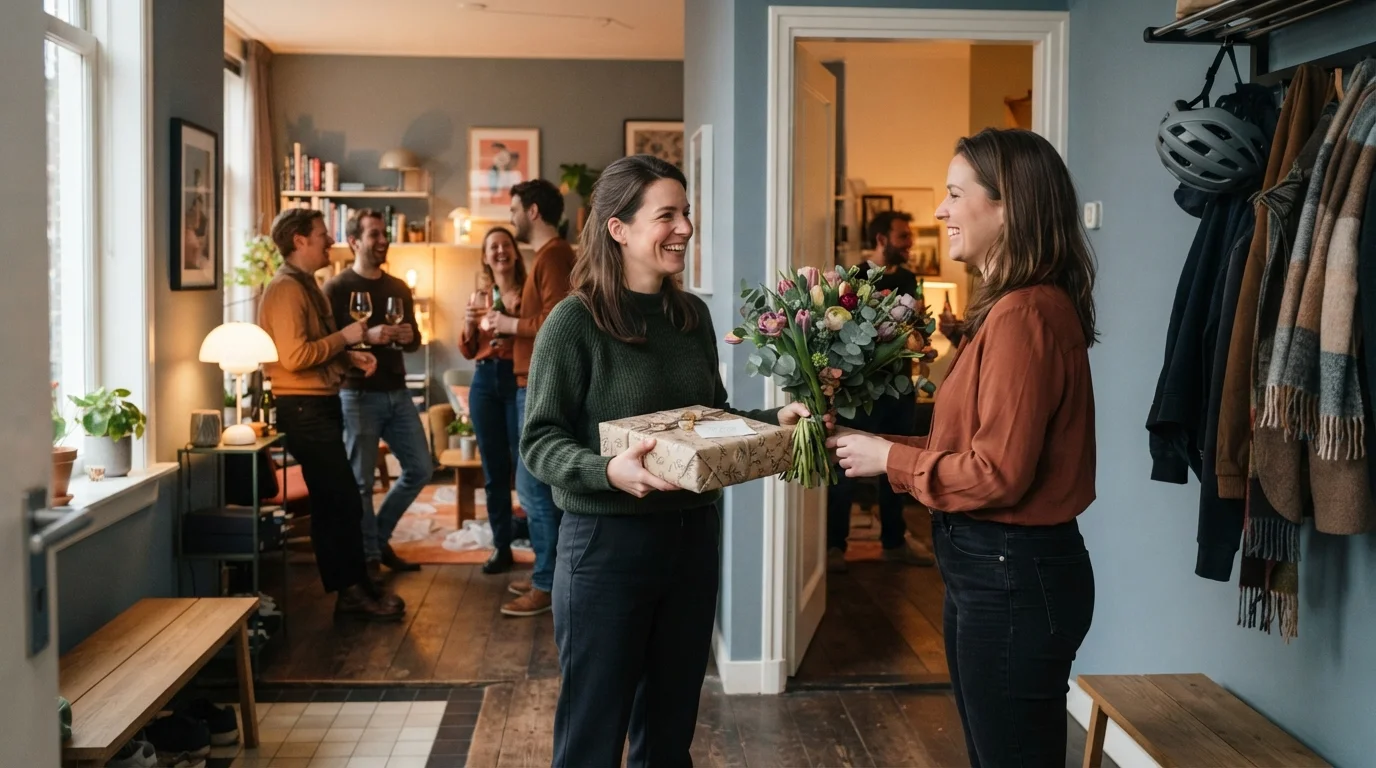
As an expat, understanding the unwritten rules of flower-giving can save you from minor cultural faux pas. Flowers are the go-to gift in the Netherlands for almost any occasion: dinner parties, birthdays, housewarmings, or simply visiting your neighbors for a cup of coffee.
If you are preparing for your Inburgering exams or simply want to feel more at home, mastering some basic flower-related vocabulary is a great step. Navigating the florist (de bloemist) or the market stall is a perfect opportunity to practice your Dutch.
Memorizing which words use "de" and which use "het" can be tricky for expats. This is where the StroopTaal app comes in incredibly handy. With our specialized De/Het article mastery games and vocabulary building with spaced repetition, you can train yourself to remember that it is de tulp and het boeket. Plus, you can use StroopTaal's real-life AI conversation practice to simulate buying flowers at an Amsterdam street market before you actually do it, so you feel more confident when you do.
While supermarket flowers are a year-round delight (with tulips specifically available from December to May), seeing tulips blooming in the wild or in curated gardens is a bucket-list experience for anyone living in or visiting the Netherlands.
Known as the "Garden of Europe," Keukenhof and the surrounding Dutch tulip fields in Lisse are world-famous. Open only for about eight weeks in spring (usually late March to mid-May), the park features over 7 million spring-flowering bulbs. It is a spectacular display of Dutch horticultural prowess.
If you prefer avoiding the massive crowds at Keukenhof, rent a bicycle and ride through the Bollenstreek. The fields of vibrant pinks, yellows, and reds stretching to the horizon look like a patchwork quilt from above. Remember the golden rule of the tulip fields: take as many photos as you want, but never walk into the flower fields. It damages the bulbs and ruins the livelihood of the farmers.
To officially kick off the tulip season, the Netherlands celebrates National Tulip Day (Nationale Tulpendag) on the third Saturday of January. Dutch tulip growers build a massive temporary garden in Amsterdam (traditionally on Dam Square or Museumplein) featuring around 200,000 tulips. The best part? Everyone is invited to come and pick a free bouquet to take home!
Understanding the history of the tulip and the modern culture of supermarket flowers is a beautiful way to connect with your new home. It is these cultural nuances—knowing why a bunch of tulips costs €3, why you must unwrap them before gifting, and understanding the historical weight of Tulip Mania—that truly transform an expat into a local.
Integration is about more than just passing the Inburgering exam; it is about understanding the soul of the country. The StroopTaal app is designed with exactly this in mind. Beyond our A0 to C1 grammar lessons and pronunciation training, StroopTaal offers deep cultural lessons about Dutch life, customs, and history. Our AI-powered personalized learning plans ensure that you are not just memorizing vocabulary, but actively engaging with the culture you live in.
Next time you are at the supermarket, grab a bunch of colorful tulips, put them in a vase to create some instant gezelligheid, and open up your StroopTaal app to practice your Dutch. You can build up your Dutch—and your understanding of the culture—one practice session at a time.
Share this article:
Navigating the Dutch Housewarming: An Expat's GuideCongratulations! You have officially received an invitation to a Dutch housewarming party (often...
Read moreIntroduction to the Dutch Consensus Culture If you have recently moved to the Netherlands or started working for a Dutch company, you might have...
Read moreIntroduction to the Beloved Dutch Pannenkoek When you think of the Netherlands, your mind might immediately wander to windmills, tulips, bicycles,...
Read more