How to Prepare for King's Day 2026: A Guide for Expats in Amsterdam
The Ultimate Expat Guide to King's Day 2026 in Amsterdam If you are an expat living in the Netherlands, you have probably heard whispers of the...
Read more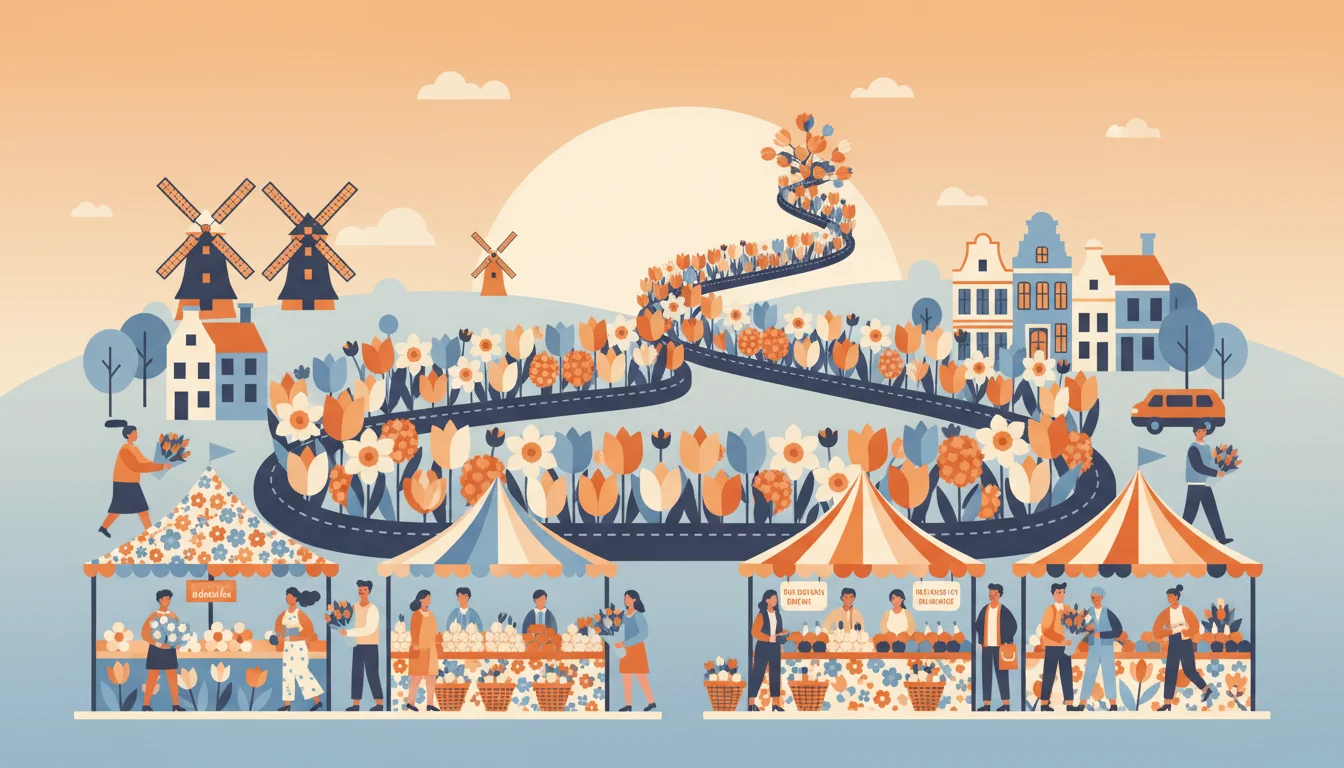
After months of gray skies, biting winds, and endless rain, there is a magical shift that happens in the Netherlands in March. The first rays of sunshine break through the clouds, the Dutch immediately drag their chairs outside to sit on terraces in 12-degree weather, and most importantly, the country erupts in a spectacular display of color. Spring in the Netherlands is not just a season; it is a cultural phenomenon deeply rooted in the nation's history, economy, and daily life.
For expats, international students, and anyone learning the Dutch language, experiencing the Dutch spring is a rite of passage. It is the time when the famous bollenstreek (bulb region) comes alive, flower markets overflow with fresh blooms, and preparations for world-renowned flower parades begin. Understanding this floral obsession is also a fantastic way to immerse yourself in the culture, which is highly beneficial if you are preparing for your inburgering (civic integration) exams.
In this comprehensive guide, we will explore the best flower parades, markets, and botanical events kicking off in March, along with essential practical tips and Dutch vocabulary to help you navigate the season like a true local.
To truly appreciate the springtime floral explosion, you have to understand that flowers are more than just pretty decorations in the Netherlands—they are a cornerstone of the Dutch identity. The country is the commercial capital of the world's floral industry, accounting for a massive percentage of global flower exports. But the local love for blooms is equally strong. You will rarely step into a Dutch living room without seeing a fresh bouquet on the dining table.
This deep-rooted passion dates back centuries to the Dutch Golden Age, culminating in the famous Tulpenmanie (Tulip Mania) of the 1630s, where single tulip bulbs sold for the price of a canal house. If you are curious about how this national obsession started and evolved, dive into the fascinating history of Dutch tulips. Today, that legacy lives on in the form of sprawling flower fields, world-class botanical gardens, and community-driven flower parades.
When you think of spring in the Netherlands, you think of Keukenhof. Located in the town of Lisse, Keukenhof is widely known as the Garden of Europe. It officially opens its doors in late March, marking the unofficial start of the Dutch tourist season.
Every year, over 7 million flower bulbs are planted by hand in the autumn to bloom in spring. Across 32 hectares, you will find a breathtaking, meticulously designed landscape of tulips, daffodils, hyacinths, and crocuses. While the tulips might not reach their absolute peak until mid-April, visiting in late March offers a unique, quieter experience. You will see the early bloomers, stunning indoor flower shows in the various pavilions (such as the Willem-Alexander and Oranje Nassau pavilions), and you will avoid the overwhelming crowds of late April.
The Bloemencorso (flower parade) is a quintessential Dutch tradition that has been recognized as UNESCO Intangible Cultural Heritage. While there are dozens of flower parades throughout the year in different regions, the most famous spring parade is the Bloemencorso Bollenstreek.
Although the main parade usually rolls from Noordwijk to Haarlem in late April, the excitement, preparation, and smaller local events begin in March. Entire communities come together to design and build massive floats made completely out of spring flowers—primarily hyacinths, tulips, and daffodils. The scent of millions of hyacinths wafting through the air as a 10-meter-tall floral dragon or windmill floats by is something you have to experience firsthand.
For expats, attending a Bloemencorso is a fantastic way to witness Dutch community spirit. It is a perfect example of gezelligheid (a feeling of coziness and togetherness). As the days get longer, the Dutch transition out of their cozy winter hibernation and the lively celebrations of surviving Dutch Carnaval into a vibrant season of outdoor floral festivals.
If you cannot make it to the grand gardens or parades, you can still bring the Dutch spring into your home by visiting one of the country's iconic flower markets. March is the perfect time to buy fresh spring bouquets or pick up summer-blooming bulbs for your garden or balcony.
The world's only floating flower market, located on the Singel canal in Amsterdam, is a must-see. Historically, merchants would sail up the canals and sell flowers directly from their boats. Today, the stalls are fixed on permanent barges. While it has become quite tourist-heavy in recent years, it remains a picturesque spot to buy wooden tulips, souvenirs, and a wide variety of bulbs. Expat Tip: If you are buying bulbs to send to family abroad, ensure they have the official customs clearance stamp on the packaging, or they will be confiscated at the border.
For a more authentic, local experience, head to Utrecht. Every Saturday, the historic Janskerkhof square transforms into a massive, vibrant flower and plant market. It is significantly cheaper than Amsterdam and is where the locals actually shop. In March, you will find the square flooded with potted daffodils, colorful primroses, and massive bundles of fresh tulips. Grab a coffee, stroll through the stalls, and practice your Dutch with the vendors!
If you are up north, Leeuwarden hosts an incredibly long flower market right on Ascension Day (usually May, but preparations and smaller spring markets start in late March). It is one of the longest markets in the country and a wonderful excuse to explore the province of Friesland.
As an expat or visitor, taking a photo in a sprawling field of bright yellow or red tulips is a bucket-list item. However, there is a very strict, unspoken (and often distinctly spoken) rule in the Netherlands: Do not walk into the flower fields.
These fields are not public parks; they are private agricultural land. The farmers grow these flowers primarily for the bulbs, not the petals. When tourists walk into the fields to take selfies, they accidentally trample the flowers, crush the precious bulbs beneath the soil, and carry diseases on their shoes from one field to another, which can wipe out an entire crop.
To be a respectful resident:
Learning the local language is the key to truly feeling at home in the Netherlands. Spring provides a wonderful opportunity to learn new vocabulary and engage in small talk with your neighbors. If you want to confidently chat about blooming gardens and the changing seasons, the StroopTaal app offers real-life Dutch conversation practice with AI, perfect for mastering these exact seasonal small-talk scenarios.
Here are some essential words to get you started this March:
Useful phrase: "Wat een heerlijk weertje, hè?" (What lovely weather, right?) - Use this the moment the sun comes out and the temperature hits 15 degrees. The Dutch will love you for it.
If you are currently preparing for your Dutch civic integration (inburgering) exams, particularly the Knowledge of Dutch Society (KNM) section, understanding Dutch geography, agriculture, and traditions is crucial. The flower industry is a massive part of the Dutch economy, centered around regions like Aalsmeer (home to the Royal FloraHolland flower auction) and the Bollenstreek.
Knowing the cultural importance of events like the Bloemencorso, understanding the landscape of the polders where these flowers grow, and recognizing how the Dutch interact with their environment are all elements that build your cultural competency. StroopTaal's AI-powered personalized learning plans include dedicated cultural lessons about Dutch life and customs, helping you seamlessly absorb this knowledge while you improve your grammar and vocabulary.
March's floral events are just the warm-up act for the massive outdoor street parties and festivals to come. As the weather warms up, the country gears up for upcoming national holidays like King's Day in April and Liberation Day in May. Buying a fresh bouquet of orange tulips in March is a great way to start getting into the patriotic spirit!
Whether you are cycling past vibrant fields of crocuses, buying a bunch of hyacinths at the Janskerkhof, or marveling at the sheer scale of Keukenhof, March is a month of renewal and beauty in the Netherlands. Embrace the unpredictable weather, grab your raincoat and sunglasses, and get out there to experience the magic of the Dutch spring.
Spring in the Netherlands is an experience like no other. From the world-famous Keukenhof gardens to the charming local flower markets and the spectacular Bloemencorso parades, March sets the stage for a season of color, community, and joy. For expats and language learners, it is the perfect time to step outside, explore the country, and practice your Dutch with the locals.
Ready to take your Dutch to the next level this spring? Download the StroopTaal app today. With our interactive dialogue games, pronunciation training with instant feedback, and specialized cultural lessons, you can build up to chatting confidently with flower vendors and neighbors. Start your daily streak today and watch your Dutch bloom alongside the tulips!
Share this article:
The Ultimate Expat Guide to King's Day 2026 in Amsterdam If you are an expat living in the Netherlands, you have probably heard whispers of the...
Read moreNavigating the Dutch Housewarming: An Expat's GuideCongratulations! You have officially received an invitation to a Dutch housewarming party (often...
Read moreThe Everyday Luxury of Dutch Supermarket Flowers If you have recently moved to the Netherlands, one of the first things you likely noticed upon...
Read more