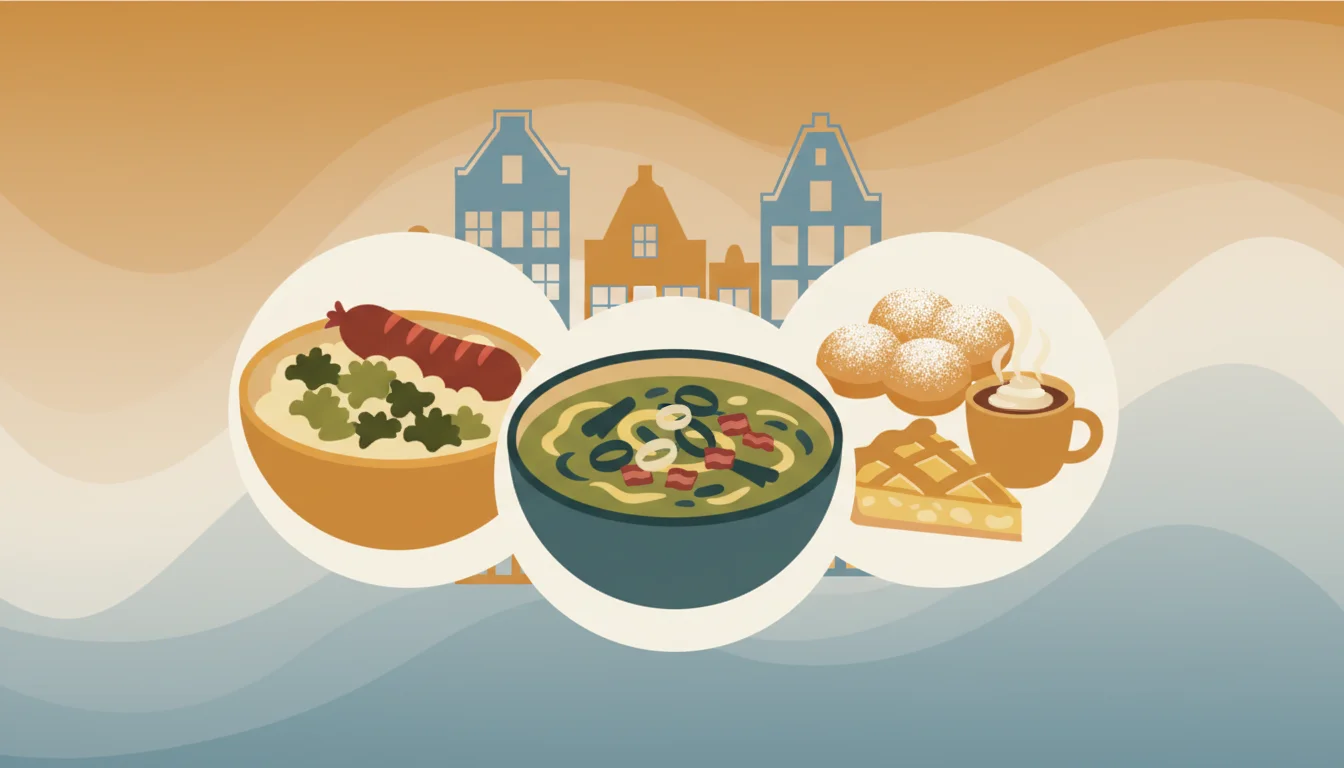
A Guide to Dutch Winter Comfort Foods: Stamppot, Snert & More
Surviving the Dutch Winter with Gezelligheid and Calories If you have spent more than a few days in the Netherlands during the winter months, you...
Read more
If you have spent more than a few days in the Netherlands, you have undoubtedly heard the word. It is uttered in cafés, whispered in living rooms, shouted at parties, and used to describe everything from a grandmother’s living room to a chaotic music festival. That word is gezelligheid.
For expats and those learning Dutch, this concept is often the first major cultural hurdle. It is widely considered untranslatable, yet it is the absolute cornerstone of Dutch social life. Understanding gezelligheid is just as important as learning your grammar or mastering the pronunciation of the guttural 'G'. In fact, you cannot truly integrate into Dutch society without feeling it.
So, what exactly is it? Is it cozy? Is it fun? Is it convivial? Let’s dive deep into the heart of Dutch culture to uncover the true meaning of gezelligheid.
When English speakers reach for a translation, they often land on "cozy." While gezellig certainly overlaps with cozy, the English word focuses primarily on physical comfort—think warm blankets, a fireplace, and a book. The Danish concept of Hygge is a close cousin, but even that doesn't quite capture the Dutch essence of gezelligheid.
Gezelligheid is distinct because it is fundamentally social. You can be cozy alone, but it is very difficult to experience gezelligheid without other people. It encompasses:
A quiet night with a partner is gezellig. A loud, crowded pub with friends is also gezellig. Even a phone call with your mother can be gezellig.
To truly understand how to replicate this feeling (and pass your inburgering exams with cultural flair), you need to recognize the three pillars that construct a gezellig scenario.
The Dutch are masters of interior design for a reason. To create gezelligheid, the setting must be inviting. This is why you will see candles burning in Dutch windows even in the middle of the day. It is why the "Brown Café" (Bruine Kroeg)—with its wood-paneled walls, Persian rugs on the tables, and dim lighting—is a national institution. It feels lived-in and unpretentious.
The activity usually involves connection. Watching a movie in silence might be fun, but playing a board game, sharing a meal, or having a borrel (drinks and snacks) is gezellig. It implies active participation in the social bond.
You cannot force gezelligheid with people you dislike. It requires a lack of awkwardness. If the conversation flows naturally and everyone feels at ease, you have achieved it.
Before you can claim it, you have to say it. The word is pronounced roughly as he-zel-ick-hide. That first sound is the infamous scraping Dutch 'G'.
If you are struggling to get that sound right without hurting your throat, this is where technology can help. The StroopTaal app features pronunciation training with instant feedback, allowing you to practice the word gezellig repeatedly in the privacy of your own home until you sound like a local. It’s a safe way to build confidence before you try it out at your next social gathering.
To understand the light, you must understand the dark. Ongezellig is the opposite, and it is a harsh critique in the Netherlands.
Examples of Ongezellig situations:
If you are an expat living in the Netherlands or planning to move, embracing this concept will help you make friends and feel at home. Here is how to do it:
The borrel is an essential Dutch tradition—drinks and savory snacks (like bitterballen) enjoyed around 5:00 PM. Organizing a borrel for your colleagues or neighbors is the fastest way to integrate. It signals that you value their company and want to create a relaxed atmosphere.
Invest in warm lamps and candles. If you invite Dutch friends over for dinner and turn on the "big light" (ceiling light), the vibe will instantly die. Keep it dim and warm.
Using the word correctly earns you major points. Here are a few phrases to add to your vocabulary:
If you aren't sure how to use these in a sentence naturally, try the interactive dialogue games in StroopTaal. They simulate real-life scenarios—like meeting friends at a café or visiting a Dutch birthday party—so you can practice using cultural concepts like gezelligheid in context without the pressure of a real audience.
Believe it or not, understanding this concept helps with your civic integration exams. The Kennis van de Nederlandse Maatschappij (KNM) exam tests your knowledge of how Dutch people interact. Knowing that Dutch culture values modesty, consensus, and a cozy social atmosphere helps you answer questions about social norms and etiquette. For those looking to stay long-term, it is as essential as understanding Dutch work contracts when building a life here.
Ultimately, gezelligheid is about taking time to appreciate the moment and the people you are sharing it with. It is the antidote to the rush of modern life. It is the reason the Dutch are consistently ranked among the happiest people in the world, despite the frequent rain.
So, light a candle, grab a stroopwafel, invite a friend over, and embrace the Dutch way of life. That is truly gezellig.
Ready to speak Dutch like a local and master the culture? Download StroopTaal today for AI-powered lessons, culture guides, and real-life conversation practice.
Share this article:
Surviving the Dutch Winter with Gezelligheid and Calories If you have spent more than a few days in the Netherlands during the winter months, you...
Read moreIf you have recently moved to the Netherlands, you have likely heard the whispers. Other expats might have warned you with a look of terror in their...
Read moreFrom Business Suits to Bananas: Welcome to the Madness If you live in the Netherlands, you might know the Dutch as organized, punctual, and generally...
Read more