
How to Enroll Your Child in a Dutch Primary School
Moving to the Netherlands with children can feel exciting, but enrolling your child in a Dutch primary school in August requires planning. You may...
Read more
This article was written by AI and published by StroopTaal.
AI can get things wrong. For anything official, check the source it points to.
AI-generated image
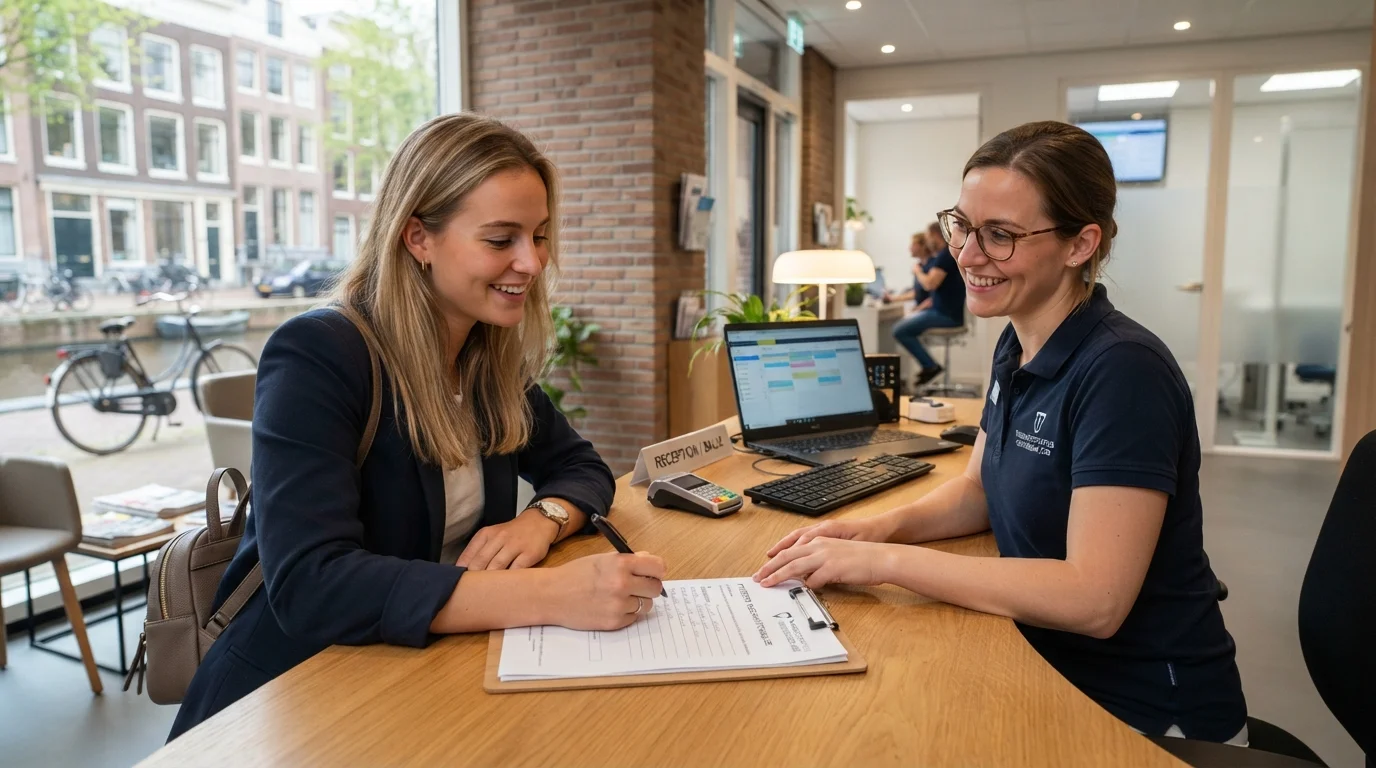
Moving to a new country involves a long checklist of administrative to-dos. Once you have unpacked your boxes, set up your utilities, and sorted out your basic health coverage, there is another essential healthcare task to check off: finding a Dutch dentist (tandarts). Navigating dental care in the Netherlands can feel confusing for expats, especially when dealing with unique insurance structures, Dutch-only web portals, and specialized medical terminology.
Whether you need a routine checkup, want to continue an ongoing orthodontic treatment, or are suddenly dealing with a severe toothache, knowing how the Dutch dental system works will save you time, stress, and unexpected expenses. In this comprehensive guide, we will walk you through everything you need to know about registering with a dentist in the Netherlands, understanding insurance and costs, preparing for your first appointment, and mastering essential Dutch dental terms.
The healthcare system in the Netherlands is renowned for its high standard of care, and dentistry is no exception. However, dental care operates somewhat independently from primary care services like your family doctor. While you need a doctor for general health concerns—and you can read our guide on finding an English-speaking GP in the Netherlands for more on that—you do not need a referral from a doctor to see a dentist.
In the Netherlands, dental practices are private practices, but their prices are strictly regulated by the government. The primary professionals you will encounter at a Dutch dental clinic include:
One of the biggest surprises for expats moving to the Netherlands is that adult dental care is not covered by standard basic health insurance (basisverzekering). If you are 18 or older, routine dental procedures, cleanings, and emergency visits must either be paid out of pocket or covered through supplementary insurance.
If you have children under the age of 18, there is great news: almost all basic dental care is 100% covered by the mandatory basic health insurance package. This includes annual checkups, cavity fillings, fluoride treatments, cleanings, and X-rays. Orthodontics (braces), however, is an exception and usually requires additional coverage.
To avoid paying full price out of pocket as an adult, you can purchase supplementary dental insurance from your health insurer. Here are key points to consider when choosing a policy:
Even though dental care is private, Dutch dentists cannot set arbitrary prices. The Dutch government and the Dutch Healthcare Authority (Nederlandse Zorgautoriteit or NZA) establish standardized nationwide rates every year. Every code on your dental invoice (such as C002 for a periodic checkup or V91 for a filling) has a fixed max cost across the entire country. You can verify current official rates directly on the NZA website or through professional bodies like the KNMT (Royal Dutch Dental Association).
Registering with a dental clinic in the Netherlands is straightforward, but finding a practice accepting new patients in larger cities like Amsterdam, Utrecht, or Rotterdam can sometimes take effort.
Before registering with medical providers, make sure you have completed your registration at your municipality. You will need your Citizen Service Number (BSN) for healthcare enrollment. Check our step-by-step guides on registering at your local municipality (gemeente) and using your DigiD app for healthcare portals to ensure your paperwork is in order.
To search for dental practices near your neighborhood:
Look on the practice's homepage for the phrase "Nieuwe patiënten welkom" (New patients welcome) or "Wachtlijst" (Waiting list). If a practice displays "Patiëntenstop", they are currently at full capacity and not taking new registrations. If you live in a high-density area, call the receptionist directly—sometimes they have openings that are not updated online.
Once you locate an open practice, complete their online registration form (inschrijfformulier). You will need to provide:
Your initial appointment at a Dutch dental clinic is typically structured as an intake consultation (intakegesprek). Here is what usually happens:
While almost all Dutch dentists speak fluent English, understanding key Dutch words can help you navigate online booking forms, read your dental invoices, and feel more confident when describing your symptoms. If you are learning Dutch or preparing for civic integration exams, mastering domain-specific vocabulary is a great way to boost your practical language skills.
Here are essential terms to know:
To feel fully comfortable during your visit, practicing interactive dialogues in Dutch can build your confidence rapidly. Using the StroopTaal app, you can use AI-powered real-life conversation practice to simulate dental appointments and healthcare visits in Dutch. StroopTaal's vocabulary building feature uses spaced repetition to help you easily retain health-related terms like kiespijn and verdoving long before you sit in the dentist chair.
Dental emergencies rarely happen during comfortable office hours. If you suffer from acute toothache, trauma, severe infection, or uncontrolled bleeding outside regular practice hours (evenings, weekends, or public holidays), do not head straight to an emergency room (SEH) at a hospital. Hospitals in NL generally do not have dentists on staff.
Instead, follow these steps for emergency care:
Unlike standard medical visits in some countries where payment is processed instantly at the front desk, Dutch dental invoicing often goes through specialized healthcare billing companies like Infomedics or Anders Medical Factuur.
Here is how the billing cycle works:
Registering with a Dutch dentist is one of the most proactive health decisions you can make as an expat in the Netherlands. By taking time to select a local practice, understanding how supplementary insurance fits into your personal healthcare budget, and learning a few basic medical terms, you can approach every dental visit with total confidence.
Looking to build your vocabulary and get comfortable communicating in Dutch for healthcare, municipal appointments, and daily life? Download the StroopTaal app today. With personalized AI learning plans, interactive dialogue games for practical real-world scenarios, and bite-sized grammar lessons, StroopTaal helps you speak Dutch naturally and stress-free!
Share this article:
Moving to the Netherlands with children can feel exciting, but enrolling your child in a Dutch primary school in August requires planning. You may...
Read moreNavigating the Dutch Unemployment System as an Expat Losing your job is a stressful experience, but when you are an expat living in a foreign...
Read moreIntroduction Moving to the Netherlands or simply relocating within the country often means one important practical question: how do you set up home...
Read more