Dutch Municipal Taxes: Afvalstoffenheffing Explained
Moving to the Netherlands often means learning a new vocabulary for everyday life: gemeente, belastingaanslag, afvalstoffenheffing, and rioolheffing....
Read more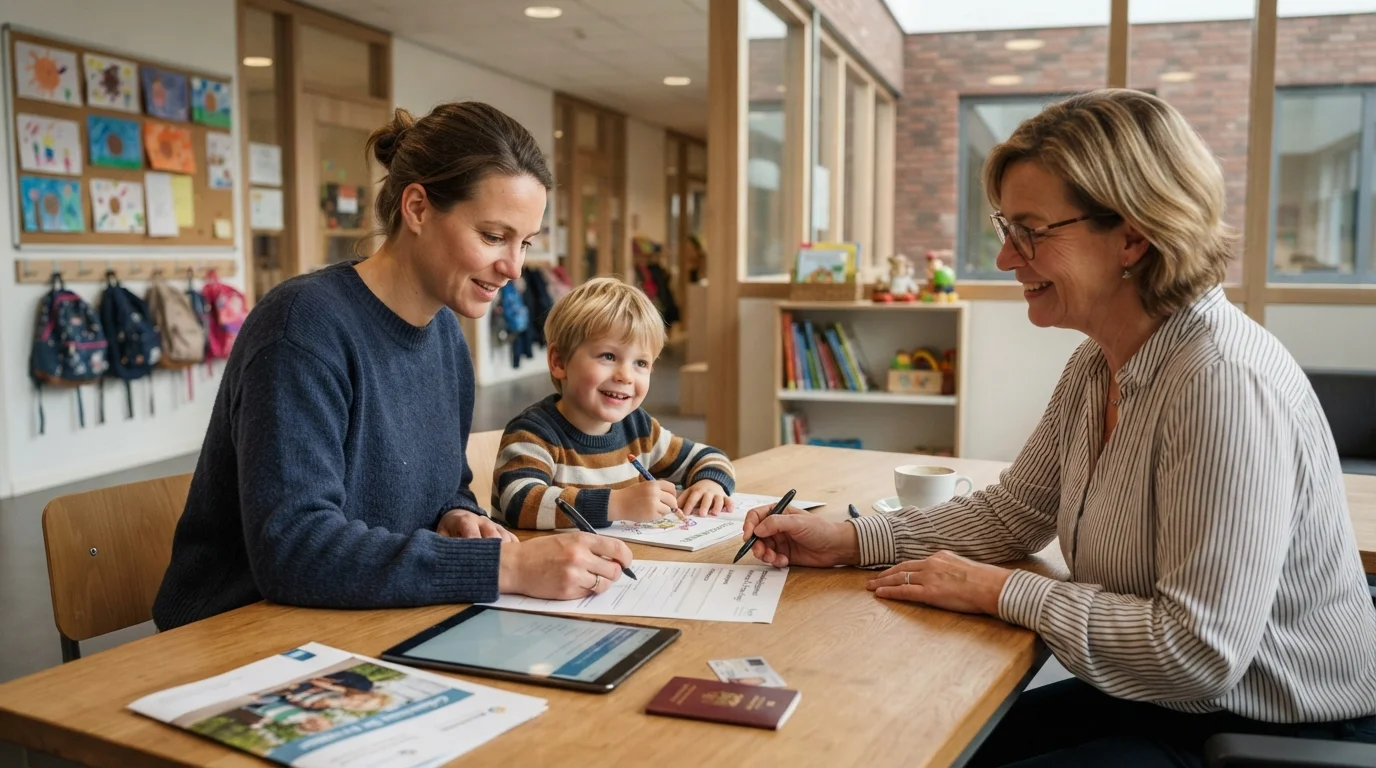
Moving to the Netherlands with children can feel exciting, but enrolling your child in a Dutch primary school in August requires planning. You may need to understand unfamiliar terms such as basisschool, inschrijving, gemeente, and onderwijsachterstand while making important decisions about your child’s education. The good news is that the Dutch school system is well organised, and with the right documents and a clear timeline, the process is manageable.
This practical guide explains how to enroll your child in a Dutch primary school for the August start of the academic year. It covers school types, registration rules, documents, language support, waiting lists, school visits, and what to do if you arrive in the Netherlands during the summer. It is also useful for expats, international families, and people learning Dutch or preparing for an integration exam.
Primary school in the Netherlands is called de basisschool. Children usually attend primary school from approximately age four until age twelve. Compulsory education generally begins on the first school day of the month after a child turns five, but most children start school on or shortly after their fourth birthday.
The eight years of primary education are known as groep 1 through groep 8. Groups 1 and 2 are similar to kindergarten, while groups 3 to 8 focus increasingly on reading, writing, mathematics, world orientation, and other subjects. At the end of groep 8, children receive advice about the next stage of education, such as vmbo, havo, or vwo.
There are several kinds of basisscholen. Public schools, called openbare scholen, are not based on a particular religion. Catholic and Protestant schools are common, and many schools have a specific educational philosophy. Examples include Montessori, Dalton, Jenaplan, and Vrije School education.
All officially recognised primary schools must meet national quality requirements, but their teaching methods, religious identity, school hours, and approach to parents can differ. Read each school’s website carefully and ask about its schoolgids, or school guide. This document explains the school’s educational vision, daily schedule, holidays, behaviour policy, and practical arrangements.
If your child will start in August, begin researching schools as early as possible. Ideally, start six to twelve months before the intended start date. Popular schools in large cities such as Amsterdam, Rotterdam, The Hague, Utrecht, and Eindhoven may have limited places or local priority rules.
Some municipalities use a central registration system, while others ask parents to contact schools directly. A school may accept registrations only during a specific period, or it may ask families to register several months before the child’s fourth birthday. Do not assume that living nearby guarantees a place.
If you are moving to the Netherlands at short notice, contact several schools immediately. Explain your arrival date, your child’s age, previous education, and home address. Ask whether they have a place in the appropriate group and whether they can support a child who speaks little or no Dutch.
Choosing a basisschool is about more than distance. Your child may spend eight important years there, so consider the school’s atmosphere, teaching style, language support, and communication with families.
During a visit, observe how teachers speak to children and how pupils interact with one another. Ask to see a classroom and playground if possible. A friendly school with clear communication can make a major difference during your child’s transition.
Location is also important. A school within walking or cycling distance can help your child build independence and make local friends. It may also make daily life easier for parents who need to combine school with work, appointments, and childcare. If you are still organising your new home, you may also find this guide to setting up internet and television in the Netherlands useful for preparing your family’s move.
Once you have identified suitable schools, check the exact registration procedure. Search for the school’s website using terms such as basisschool inschrijven, aanmelden basisschool, and the name of your municipality. You can also contact the local education department or municipality for information about school places.
In some places, families can register with one preferred school. In others, parents list several choices and receive an offer through a central allocation system. Some municipalities give priority to children who live in a specific neighbourhood, have a sibling already at the school, or meet another local criterion. Priority rules must be explained by the school or municipality, so ask for them in writing.
It is useful to understand the difference between aanmelden and inschrijven. Aanmelden means that you express interest or apply for a place. Inschrijven usually means that your child is officially registered after the school has confirmed admission and received the necessary information.
Submitting a form does not always mean that your child has a confirmed place. Ask the school for written confirmation that includes the start date, group, and any conditions. If the school is full, ask whether your child can join a waiting list and request contact details for other nearby schools.
Schools generally cannot refuse a child simply because the child has a disability or needs additional support without considering their legal duty of care. If your child has special educational needs, tell the school early and provide relevant reports. The school may consult a regional support organisation to determine what help is appropriate.
Each school may request slightly different information, but the following documents are commonly useful when enrolling a child in a Dutch primary school in August:
If you have recently arrived and do not yet have every document, do not delay contacting schools. Explain which documents are missing and ask what alternatives they accept. A school may be able to begin the process while you complete municipal registration or obtain a BSN.
Make digital scans of important documents and keep paper copies as well. If documents are not in Dutch, English, German, or another language accepted by the school, ask whether a certified translation is necessary. Never send original identity documents by post unless the school specifically explains a secure procedure.
Many children adapt quickly to a Dutch-speaking classroom, especially when they are young. However, learning basic Dutch before the first school day can reduce anxiety and help your child participate. Practise everyday words such as jas (coat), tas (bag), potlood (pencil), toilet, drinken (drinking), and helpen (help).
Role-play common school situations at home. You can practise saying, Mag ik naar de wc? (May I go to the toilet?), Ik begrijp het niet (I do not understand), and Kun je me helpen? (Can you help me?). Keep practice short and positive rather than turning it into a test.
Parents can also use children’s books, songs, cartoons, and simple Dutch games. Try labelling objects around the house and discussing colours, numbers, clothing, and school routines. For parents who are also learning Dutch, StroopTaal can provide personalised practice, pronunciation feedback, and interactive dialogues based on practical situations such as meeting a teacher or speaking with another parent.
Ask the school whether it recommends a newcomer programme. Some children first attend a taalklas or specialised language school before transferring to a regular basisschool. Others join a regular class immediately and receive additional Dutch support. The best option depends on age, previous education, language level, and the municipality’s available services.
Once your child has a place, request the school calendar and read all communications carefully. Dutch primary schools often have a fixed daily schedule, but exact hours vary. Some schools finish early on Wednesday or Friday, and many close for teacher training days. Save these dates in your calendar before arranging work or childcare.
Ask what your child should bring. Many Dutch schools expect children to bring a lunch box and a drink bottle. Some schools follow a healthy food policy and may limit sweets. Children usually play outside every day, so provide weather-appropriate clothing, comfortable shoes, and a labelled raincoat.
Some schools supply pencils, notebooks, and other classroom materials, while others ask parents to purchase specific items. Do not buy a large amount of equipment until you receive the school’s list. Label coats, lunch boxes, bags, and sports clothing because children’s belongings can look alike.
Practise the route several times before August. If your child will cycle, check the safest route and make sure the bicycle fits properly. If you use public transport, practise identifying the correct stop and carrying an emergency contact card. Families who need help planning everyday travel can review this guide to using public transport and setting up an OV-chipkaart.
Ask about BSO, short for buitenschoolse opvang, which provides care before or after school and during some holidays. Places at popular childcare providers can fill quickly, so register as soon as you know your school schedule. Check whether the provider collects children from your chosen basisschool and ask about fees, meals, and holiday coverage.
Good communication helps your child settle in. Schools commonly use email, a parent app, newsletters, and meetings. Ask which platform the school uses and whether messages are available in English. Even if you are not yet fluent in Dutch, try learning key terms related to school communication.
Tell the teacher about your child’s personality, interests, previous education, language background, and any concerns. Ask how you will be informed about progress and what to do if your child feels lonely or overwhelmed. You can request an interpreter for important meetings if you cannot understand the information accurately.
Joining a parent committee or attending school activities can help you build a local network. It is also a useful way to practise Dutch in a natural setting. If your family is learning how Dutch services work, understanding related arrangements such as Dutch child benefits and Kinderbijslag may also help you organise your household budget.
If a school is full, remain polite but persistent. Ask for the decision in writing, the reason for the lack of a place, and the next steps. Request a waiting-list position and ask the municipality for a list of nearby schools with capacity. Contact several schools rather than waiting for only one response.
Keep records of emails, phone calls, registration dates, and documents submitted. If you believe the school has not followed its published admission policy, first raise the issue with the school board. You can then ask the municipality or an education advice organisation about the appropriate complaint route.
Children aged five to sixteen are subject to compulsory education rules, so contact the local attendance officer, known as a leerplichtambtenaar, if you are struggling to find a place. The municipality can explain how to meet your legal responsibilities while your child is waiting for admission.
For official information about education and compulsory schooling, consult the Dutch government education information. Requirements can differ by municipality and school, so always confirm current details directly with the school and your local authority.
Enrolling your child in a Dutch primary school in August is easiest when you begin early, compare schools carefully, and keep written records of every step. Contact schools before the summer, prepare the required documents, ask about language support, and plan practical details such as lunch, transport, and after-school care.
Your child does not need to speak perfect Dutch on the first day. A welcoming school, supportive teachers, and regular practice at home can make the transition successful. By learning a few school-related phrases and understanding the Dutch education system, you can also feel more confident when speaking with teachers and other parents. Start your preparation now, contact your preferred basisscholen, and use StroopTaal’s daily practice and gamified vocabulary activities to build confidence before August.
Share this article:
Moving to the Netherlands often means learning a new vocabulary for everyday life: gemeente, belastingaanslag, afvalstoffenheffing, and rioolheffing....
Read moreMoving to a new country involves a long checklist of administrative to-dos. Once you have unpacked your boxes, set up your utilities, and sorted out...
Read moreNavigating the Dutch Unemployment System as an Expat Losing your job is a stressful experience, but when you are an expat living in a foreign...
Read more