Volunteer Work in Dutch Integration: Beyond Inburgering
Moving to the Netherlands is an exciting adventure filled with scenic canals, cycling paths, and the promise of a high quality of life. However, for...
Read more
Getting the notification from the Dienst Uitvoering Onderwijs (DUO) that your ONA (Oriëntatie op de Nederlandse Arbeidsmarkt) portfolio has been approved is a massive milestone. For many expats, highly skilled migrants, and language learners navigating the Dutch civic integration exam (inburgeringsexamen), compiling the extensive portfolio is a daunting task. You have spent hours researching job vacancies, documenting your qualifications, and filling out the detailed result cards (resultaatkaarten).
However, the journey is not quite finished. The final step to complete this component of your integration is the ONA Resultaatgesprek (results interview). This face-to-face or online interview with two DUO examiners is designed to verify that the portfolio you submitted is truly your own work, and that you have a realistic, well-formulated plan for finding employment in the Netherlands.
If the thought of sitting down with Dutch examiners to discuss your career in Dutch makes your heart race, don't worry. In this comprehensive guide, we will break down exactly what happens after your portfolio is approved, what questions you can expect, and how to prepare your language skills so you can walk into your ONA Resultaatgesprek with absolute confidence.
The ONA Resultaatgesprek is a structured, 40-minute appointment (with about 20 to 30 minutes of active conversation) conducted entirely in Dutch. It is not designed to test your grammar to the level of a native speaker, but rather to ensure you possess a basic working command of the language (at the A2 level) and that you understand how the Dutch labor market works.
The examiners are not there to trip you up or test you on obscure facts. Their primary goals are to confirm:
For official rules, schedules, and fee information, you can always refer to the official DUO Inburgering website.
The interview is structured around the eight result cards you filled out for your portfolio. The examiners will have your portfolio open in front of them, and they will ask questions based directly on what you wrote. Let's look at each card and the typical questions you should prepare for.
This card focuses on the profession you have chosen. The examiners want to know why you chose this specific job in the Netherlands and what your professional background is.
Common questions:
Here, the examiners assess whether you understand what the job actually entails on a day-to-day basis in the Netherlands. They want to make sure your expectations match reality.
Common questions:
You need to explain your personal strengths and weaknesses, and how they relate to your chosen profession. It is crucial to give concrete examples.
Common questions:
This card looks at the availability of jobs in your field. Are there many vacancies? Where are these jobs located?
Common questions:
You must prove you have the right education, diplomas, or skills. If you have a foreign diploma, you should be prepared to discuss whether you have had it officially evaluated (diplomawaardering) by IDW.
Common questions:
Networking is highly valued in the Dutch labor market. You must explain how you build your professional network in the Netherlands.
Common questions:
This section is about the practical side of job hunting: searching for vacancies, writing CVs, and sending cover letters.
Common questions:
Understanding how Dutch companies operate is vital for long-term professional success. Examiners will ask you about typical workplace situations, communication styles, and cultural expectations.
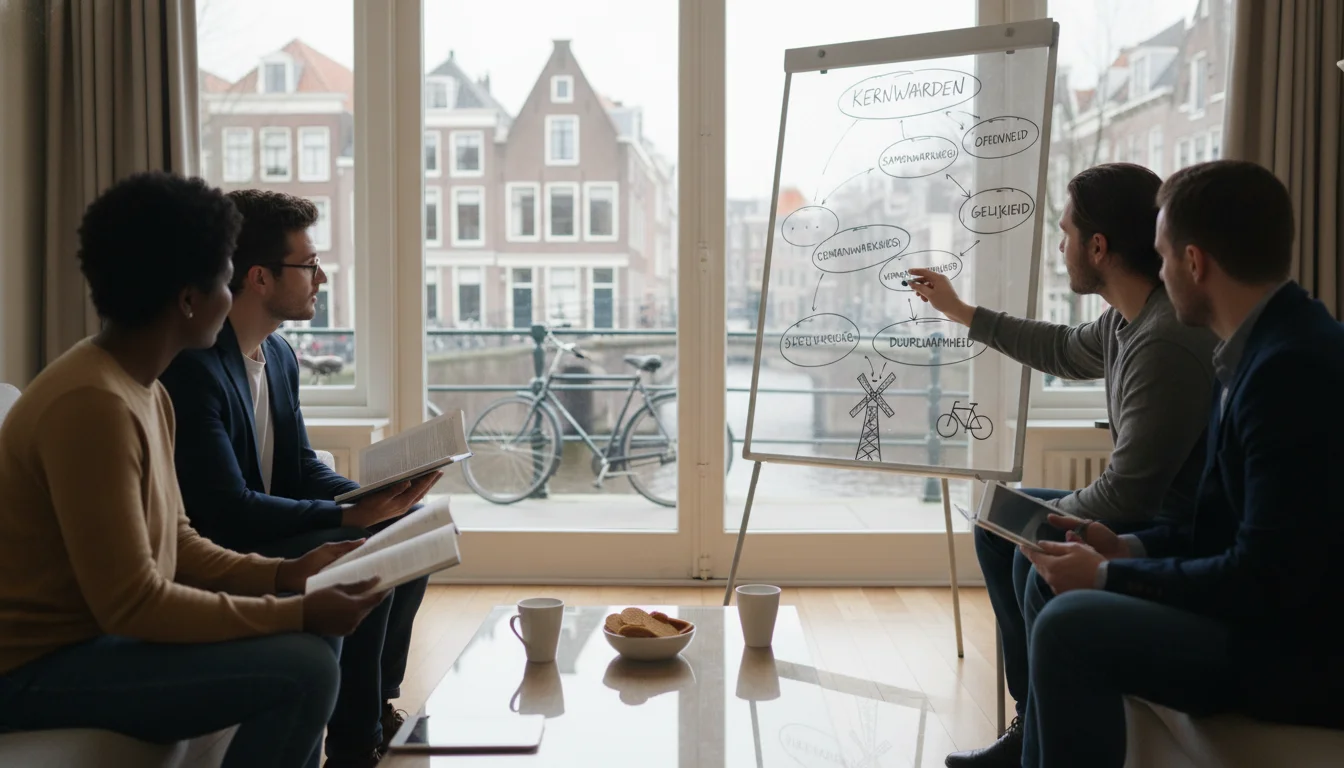
Just like understanding the Dutch value system and cultural expectations is crucial for passing your KNM (Kennis van de Nederlandse Samenleving) exam, demonstrating an understanding of workplace norms like flat hierarchies, direct feedback, and consensus-building (polderen) is essential here.
Common questions:
While the ONA interview is not a formal grammar test, you must be able to express yourself clearly at an A2 level. If you struggle to form basic sentences, or if you cannot understand the examiners' questions, you risk failing the interview.
To prepare effectively, you should focus on two main areas: speaking confidence and listening comprehension.
You will need to talk about your past work experience (using the perfectum and imperfectum tenses) and your future career plans (using the future tense or verbs like willen and gaan). Reviewing essential Dutch grammar concepts will help you structure your thoughts logically and avoid common mistakes that might confuse the examiners.
The examiners will speak clearly, but they will not use simplified "baby" Dutch. They will use professional terminology related to job hunting and work. Spending time improving your Dutch listening skills beforehand will ensure you can follow the conversation smoothly without needing the examiners to repeat themselves constantly.
One of the best ways to build confidence is to practice speaking in a realistic environment. This is where the StroopTaal app can be a game-changer. Using StroopTaal's real-life Dutch conversation practice with AI, you can simulate mock interview scenarios. You can talk about your career goals, describe your past work experience, and get instant pronunciation training with real-time feedback. This interactive practice helps lower your anxiety and makes speaking Dutch feel like second nature by the time your exam date arrives.
To ensure everything runs smoothly on the day of your ONA Resultaatgesprek, follow this practical checklist:
Once the interview is over, the examiners will deliberate. In most cases, you will not receive your results immediately in the room. Instead, DUO will process the evaluation, and you will see your results in your online Mijn Inburgering portal within a few days (though officially it can take up to 8 weeks).
If you pass, the ONA component of your integration is fully completed! If you do not pass, don't despair. You will receive feedback on which parts of the conversation did not meet the requirements, and you can schedule a retake (though you will have to pay the exam fee again).
The ONA Resultaatgesprek is more than just a hurdle to clear for your Dutch passport or permanent residency—it is an opportunity to reflect on your career path and build the linguistic confidence you need to thrive in the Dutch workplace. By thoroughly reviewing your portfolio, practicing typical questions, and sharpening your communication skills, you will set yourself up for absolute success.
Ready to start practicing for your interview? Download the StroopTaal app today. With personalized learning plans, interactive dialogue games, and advanced pronunciation training, StroopTaal is the ultimate tool to help you transition from language student to confident professional. Veel succes met je voorbereiding!
Share this article:
Moving to the Netherlands is an exciting adventure filled with scenic canals, cycling paths, and the promise of a high quality of life. However, for...
Read moreIntroduction: Why Dutch Values Matter for Your Integration Moving to the Netherlands is an exciting adventure filled with cycling along historic...
Read moreIntroduction: The Gateway to Your Dutch Integration Preparing for the Dutch integration exam (Inburgeringsexamen) can feel like navigating a maze of...
Read more