Financial Planning for Inburgering: 2026 Budget Guide
Navigating the Financial Realities of Dutch Integration in 2026 Moving to the Netherlands is a thrilling adventure filled with picturesque canals,...
Read more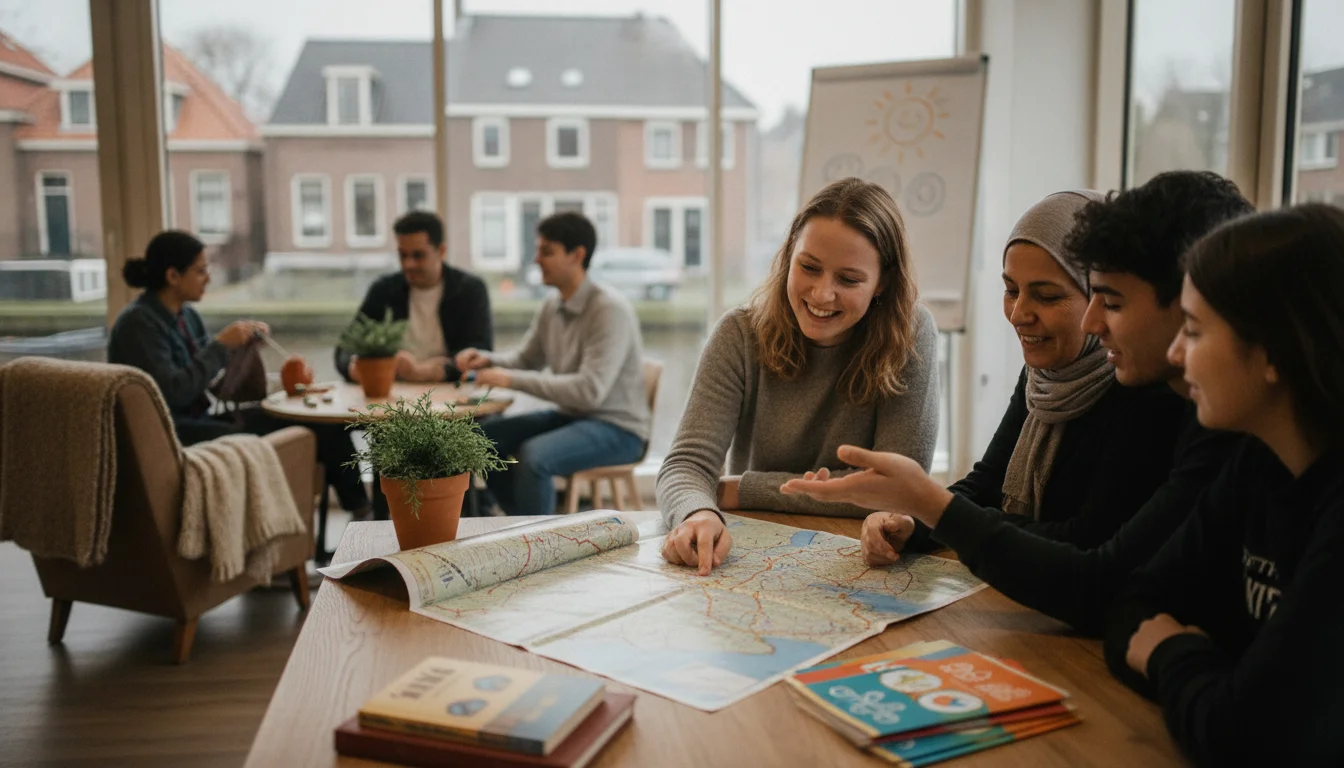
Moving to the Netherlands is an exciting adventure filled with scenic canals, cycling paths, and the promise of a high quality of life. However, for many expats, internationals, and newcomers, the initial honeymoon phase is quickly followed by the daunting reality of integration. The official inburgering (integration) process, managed by the Dutch government, sets out a clear checklist of language and cultural exams. While passing these exams is essential for your residency or citizenship, true integration goes far deeper than a series of test scores.
To truly feel at home, understand the local nuances, and speak the language with confidence, you need to step outside the classroom. This is where vrijwilligerswerk (volunteer work) comes in. In the Netherlands, volunteering is not just a charitable act; it is a fundamental pillar of society and one of the most powerful, organic ways to integrate. In this comprehensive guide, we will explore how volunteer work can transform your integration journey, accelerate your language acquisition, and help you build a meaningful life in the Netherlands.
To understand why volunteering is so impactful, it helps to understand the Dutch mindset. Civic participation is deeply woven into the fabric of Dutch society. From local sports clubs (sportverenigingen) and community centers (buurthuizen) to environmental initiatives and food banks, millions of Dutch citizens actively participate in volunteer work every year.
According to official statistics from the Dutch Government, nearly half of the population aged 15 and older engages in some form of voluntary activity at least once a year. This widespread participation creates a unique social environment where hierarchy is minimized, and people from all walks of life connect over shared goals. For a newcomer, entering this space provides an immediate, warm introduction to the local community that is incredibly difficult to replicate in professional or commercial settings.
Standard language courses are excellent for establishing a grammatical foundation, but they often lack the spontaneity of real-world interactions. In a classroom, you interact with other non-native speakers and a teacher who is trained to speak slowly and clearly. In the real world, the Dutch language is fast, idiomatic, and diverse.
When you volunteer, you are thrown into natural, unscripted environments. You might find yourself helping elderly residents at a care home, painting a community center, or organizing a local neighborhood festival. In these settings, you will hear authentic regional accents, colloquial expressions, and the natural rhythm of Dutch conversations. This immersion is vital for mastering Dutch listening in fast-paced conversations, helping your brain transition from translating word-for-word to naturally absorbing the language.
Volunteering also forces you to use functional language. Instead of memorizing abstract vocabulary lists, you learn words because you need them to complete a task. Whether you are asking for a specific tool (schroevendraaier), discussing a schedule (rooster), or offering someone a cup of coffee (bakkie doen?), these words become anchored in your memory through physical action and emotional connection.
While volunteering is a rewarding social activity, it also has direct, practical benefits for your official integration requirements. The inburgering process includes exams that test your knowledge of Dutch society (KNM) and your readiness for the Dutch labor market (ONA).
The Oriëntatie op de Nederlandse Arbeidsmarkt (ONA) component requires you to demonstrate that you understand how the Dutch job market works and that you are actively building a professional network. For many expats, this can be a major hurdle, especially if they do not yet have local work experience.
Volunteering counts as valuable local experience. It shows potential employers—and the integration examiners—that you are proactive, understand Dutch workplace culture, and can work in a team. When it comes to preparing for the ONA Resultaatgesprek, having a real-life volunteer role gives you concrete stories, experiences, and professional contacts to discuss confidently with your interviewer.
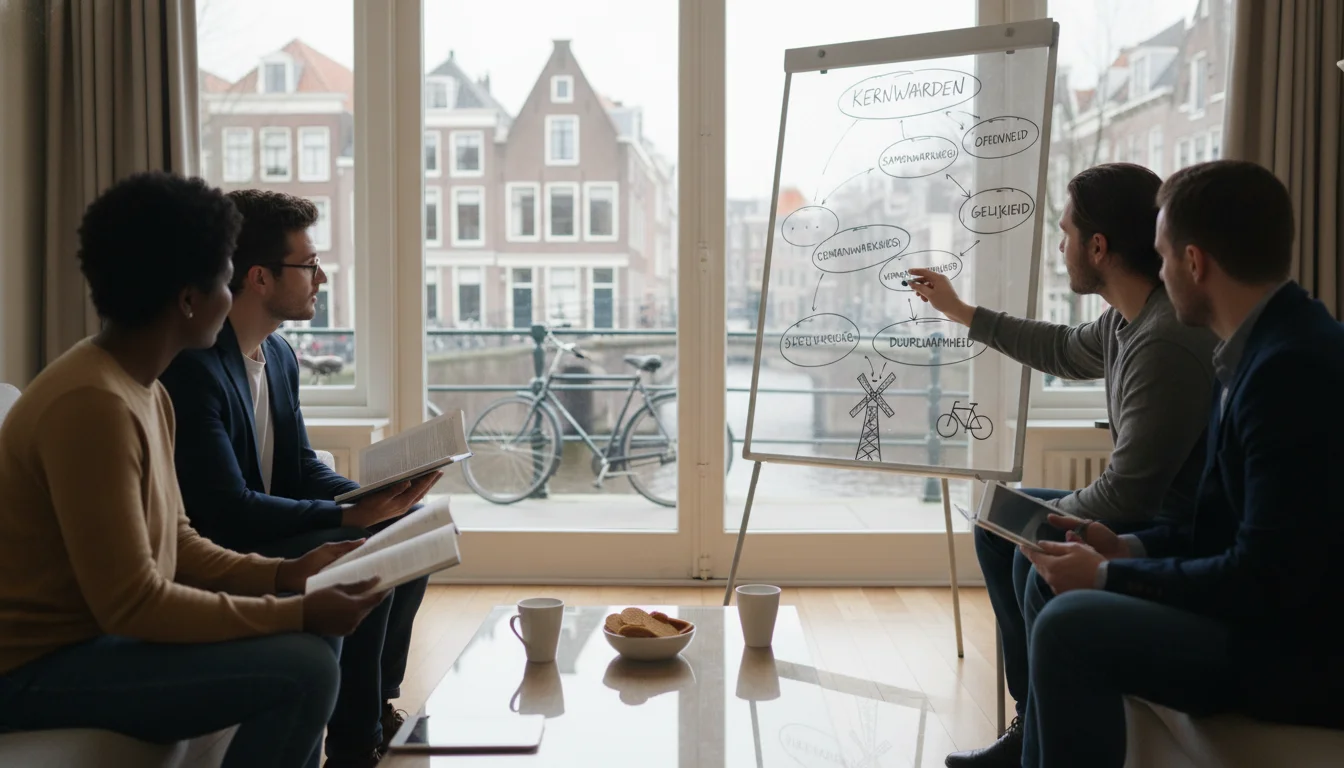
The Kennis van de Nederlandse Samenleving (KNM) exam tests your understanding of Dutch values, history, laws, and social systems. Studying these concepts from a textbook can feel dry and abstract. However, by volunteering, you experience these values firsthand. You will see how the Dutch approach consensus-making (polderen), witness the high value placed on equality, and understand how local municipalities (gemeenten) support their citizens. Experiencing these dynamics in real life makes understanding the Dutch value system intuitive and memorable, making the KNM exam significantly easier to pass.
Ready to take the plunge? The Dutch volunteering ecosystem is highly organized, making it easy for internationals to find suitable roles, even with limited Dutch language skills. Here are the best ways to find opportunities:
Do not wait until your Dutch is perfect to start volunteering. In fact, volunteering is how you make your Dutch perfect! If you are an absolute beginner (A0-A1), look for hands-on roles where communication is simple, such as gardening, animal care, or logistics. As you progress to A2 and B1, challenge yourself with more interactive roles, such as hosting at a community café, helping at a local library, or assisting in senior care centers.
While volunteering provides the perfect arena for real-world practice, you can maximize your progress by combining your hands-on experience with structured learning. This is where the StroopTaal app becomes your ultimate integration companion.
Before you head out to your volunteer shift, you can use StroopTaal to prepare yourself mentally and linguistically. For instance, you can practice real-life Dutch conversations with StroopTaal's advanced AI, simulating the exact interactions you might have with your fellow volunteers or supervisors. If you are worried about your pronunciation when asking for directions or instructions, StroopTaal's pronunciation training offers instant feedback, giving you the confidence to speak up clearly. By pairing the app's personalized learning plans with your real-world volunteering, you create a powerful learning loop: learn the vocabulary and grammar on StroopTaal, apply it at your volunteer gig, and watch your fluency skyrocket.
To get the absolute most out of your volunteering experience, keep these practical tips in mind:
Integration is about more than just legal compliance; it is about finding your voice, building a community, and feeling like an active participant in your new home. Volunteering breaks down the invisible barriers between expats and locals, offering a bridge built on mutual respect, shared interests, and community spirit. It supercharges your language skills, demystifies Dutch culture, and gives you invaluable material for your integration exams.
So, why wait? Step out of the classroom and into your local community. Find a volunteer project that ignites your passion, and let the real-world learning begin. To give yourself the ultimate linguistic head start, download the StroopTaal app today, start practicing your conversational Dutch, and step into your first volunteer shift with absolute confidence!
Share this article:
Navigating the Financial Realities of Dutch Integration in 2026 Moving to the Netherlands is a thrilling adventure filled with picturesque canals,...
Read moreIntroduction: You Passed the Portfolio Stage, Now What? Getting the notification from the Dienst Uitvoering Onderwijs (DUO) that your ONA...
Read moreIntroduction: Why Dutch Values Matter for Your Integration Moving to the Netherlands is an exciting adventure filled with cycling along historic...
Read more