Preparing for the ONA Resultaatgesprek: What Happens Next?
Introduction: You Passed the Portfolio Stage, Now What? Getting the notification from the Dienst Uitvoering Onderwijs (DUO) that your ONA...
Read more
This article was drafted by AI and edited by a person before it was published.
AI can get things wrong. For anything official, check the source it points to.
AI-generated image
Moving to the Netherlands is an exciting adventure filled with cycling along historic canals, tasting delicious stroopwafels, and adjusting to a vibrant, multicultural society. However, becoming a true part of Dutch society involves more than just finding a flat and learning how to navigate the local supermarket. If you are planning to make the Netherlands your permanent home, you will likely need to pass the civic integration exam (inburgeringsexamen). A critical component of this process is the Kennis van de Nederlandse Samenleving (KNM) exam, which translates to "Knowledge of Dutch Society."
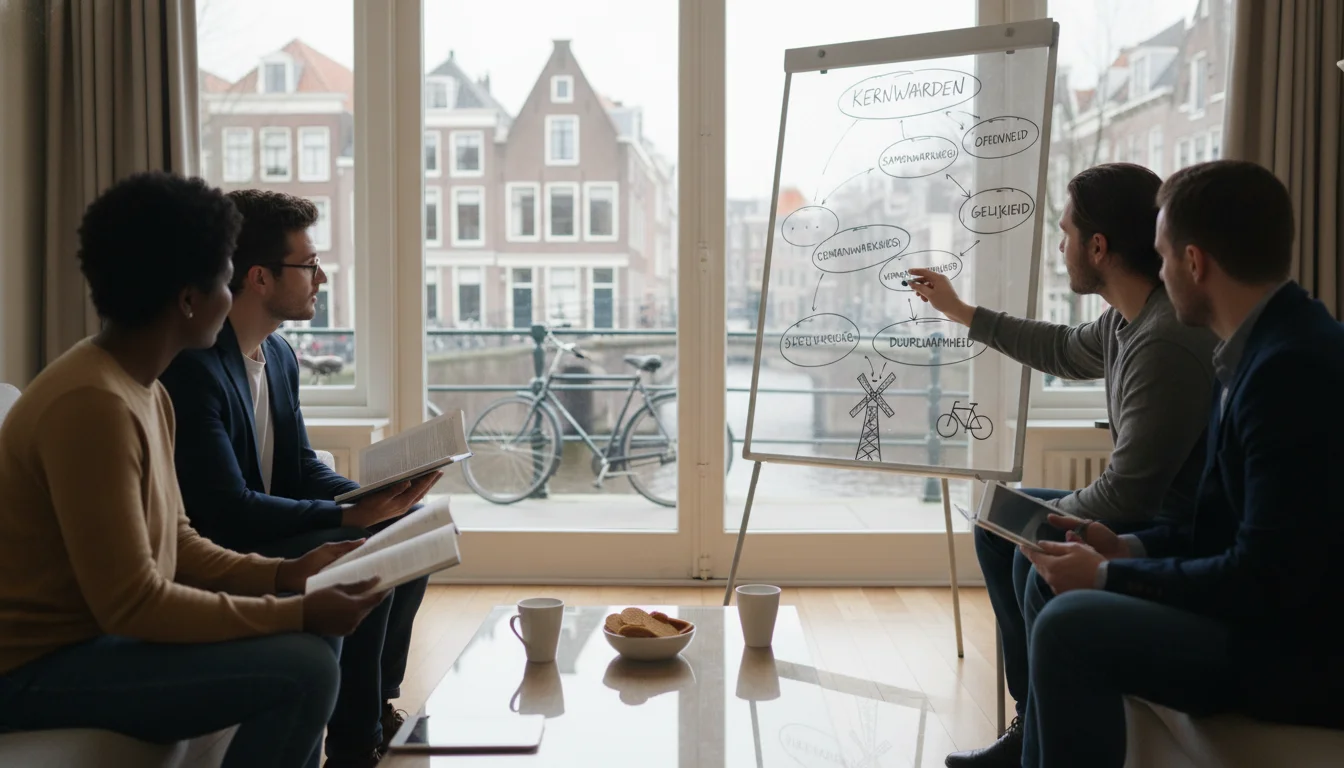
The KNM exam does not just test your knowledge of historical dates or geographical facts; it deeply assesses your understanding of the Dutch value system. The Dutch government wants to ensure that new residents understand how the society functions, what social norms are expected, and how fundamental rights protect everyone living in the country. From equality and individual freedom to the famous consensus-driven "polder model," these values form the bedrock of daily life in the Netherlands.
In this comprehensive guide, we will break down the essential cultural concepts, social expectations, and core values you must master to pass your KNM exam with confidence. We will also share practical tips on how to prepare, including how to leverage modern tools like StroopTaal to accelerate your learning journey.
The KNM exam is a standardized, computer-based test that forms a mandatory part of the integration process for most non-EU expats and immigrants. According to the official guidelines from the Immigration and Naturalisation Service (IND), passing this exam is a prerequisite for obtaining a permanent residence permit or Dutch citizenship.
The exam consists of multiple-choice questions based on short video clips and written scenarios. These scenarios depict common, real-life situations in Dutch society, such as visiting a doctor, attending a parent-teacher meeting, resolving a dispute with a neighbor, or applying for a job. To answer these questions correctly, you must look past your own cultural assumptions and understand how a typical Dutch citizen would act, react, and resolve conflicts based on shared national values.
To succeed in the KNM exam, you must familiarize yourself with the four central values that the Dutch government explicitly highlights as the foundation of their democratic state. These values are enshrined in the Dutch Constitution (Grondwet) and are expected to be respected by everyone who lives in the Netherlands.
Equality is perhaps the most fiercely protected value in the Netherlands. Article 1 of the Dutch Constitution explicitly forbids discrimination on the grounds of religion, belief, political opinion, race, gender, sexual orientation, or any other status. In daily life, this manifests in several ways that are heavily tested on the KNM exam:
The concept of individual freedom is deeply woven into the historical fabric of the Netherlands. The Dutch value the right to live their lives as they see fit, provided it does not harm others. Key aspects of freedom tested on the exam include:
While individual freedom is paramount, it is balanced by a strong sense of collective responsibility. The Dutch believe that society should support its most vulnerable members. This solidarity is organized through a robust welfare state:
To maintain a strong and cohesive society, the Dutch government expects all residents to actively participate. This means learning the language, finding employment, paying taxes, and engaging with the local community. On the KNM exam, you will encounter questions about your duty to seek work, send your children to school (which is compulsory under leerplicht), and cooperate with municipal integration programs.
Beyond the constitutional pillars, there are several distinct cultural concepts that dictate how Dutch people interact on a day-to-day basis. Recognizing these concepts will help you interpret the social scenarios presented in the KNM exam.
Historically, the Dutch had to work together regardless of their religious or political differences to reclaim land from the sea and prevent flooding. This historical necessity birthed the Poldermodel: a consensus-driven approach to decision-making. In Dutch politics and workplaces, decisions are rarely made through top-down mandates. Instead, all stakeholders sit down, debate, compromise, and reach an agreement that everyone can support. On the exam, if a scenario involves a dispute, the correct answer almost always involves open discussion, compromise, and finding a mutual agreement rather than escalating the conflict immediately to a court or a higher authority.
Dutch directness (directheid) is famous worldwide. To outsiders, it can sometimes feel blunt or even rude. However, in the Dutch value system, honesty and transparency are signs of respect. Being direct saves time and prevents misunderstandings. If a colleague tells you your work needs improvement, they are not attacking you personally; they are simply offering constructive feedback. Understanding this distinction is crucial for workplace-related scenarios on the KNM exam.
The Dutch value their personal time and organization. Spontaneous visits to friends or neighbors are rare. If you want to meet someone, even for a casual coffee, you are expected to schedule it in advance. Privacy is also highly guarded; asking personal questions about salary, relationship status, or religious beliefs during casual workplace conversations is generally discouraged. Respecting boundaries and sticking to schedules are key social expectations you will need to demonstrate on the test.
To give you a clearer picture of how these values translate into exam questions, let us look at some common themes and scenarios you might encounter during your preparation:
In many countries, patients can book appointments directly with specialists. In the Netherlands, the general practitioner (huisarts) acts as the gatekeeper to the entire medical system. You cannot see a specialist without a referral from your GP. Furthermore, Dutch doctors are notoriously conservative with prescribing antibiotics or strong medications, often advising patients to take paracetamol and rest. Understanding and respecting this system—without viewing it as a lack of care—is a common theme in KNM questions.
The Dutch education system is highly structured and offers different pathways starting at age 12 (VMBO, HAVO, VWO). Parents are viewed as equal partners in their children's education. Schools expect parents to attend parent-teacher meetings (tienminutengesprekken) and participate in school activities. If a child is struggling, the school and parents work together to find the best path forward. If you are preparing for the broader integration exams, understanding how to discuss these school pathways is vital. You can learn more about upgrading your language skills to discuss these complex topics in our guide on transitioning from A2 to B1 Dutch grammar.
Workplace scenarios on the KNM exam often focus on safety regulations, calling in sick (you must notify your employer directly, usually before a specific time in the morning), and resolving conflicts. For instance, if you disagree with your boss, the expected behavior is to schedule a meeting and politely but directly discuss your perspective, rather than staying silent out of fear of authority.
Studying for the KNM exam requires a mix of factual knowledge, language proficiency, and cultural empathy. Here are some actionable strategies to help you prepare:
Integrating into a new country requires mastering both the language and the cultural nuances simultaneously. This is where StroopTaal can make a massive difference. StroopTaal is an AI-powered Dutch language learning app designed to help you navigate real-life Dutch scenarios with ease.
With StroopTaal's cultural lessons about life and customs, you can study Dutch social norms, values, and history, and its exam practice includes KNM. The app also features exam preparation modules, interactive dialogue games, and real-life Dutch conversation practice with an AI tutor, allowing you to practice responding to typical Dutch scenarios in a safe, supportive environment. By combining language practice with cultural context, StroopTaal ensures you are not just memorizing answers, but genuinely understanding the "why" behind Dutch behavior.
Passing the KNM exam is more than just a bureaucratic box to tick on your way to permanent residency or citizenship. It is an opportunity to deeply understand the mindset, history, and social structure of the people around you. By embracing core values like equality, individual freedom, and consensus-building, you will find it much easier to build meaningful relationships, navigate the workplace, and truly feel at home in the Netherlands.
Are you ready to take the next step in your integration journey? Start practicing today, stay curious, and let StroopTaal help you unlock both the language and the culture of your new home. Veel succes!
Share this article:
Introduction: You Passed the Portfolio Stage, Now What? Getting the notification from the Dienst Uitvoering Onderwijs (DUO) that your ONA...
Read moreIntroduction: The Gateway to Your Dutch Integration Preparing for the Dutch integration exam (Inburgeringsexamen) can feel like navigating a maze of...
Read moreThe Inburgering Journey: From Overwhelmed to On Track Embarking on the Dutch civic integration process, or inburgering, can feel like standing at the...
Read more