
Wo in Dutch: Meaning, Usage, and Example Sentences
Wo in Dutch: Meaning, Usage, and Example Sentences In Dutch, wo means “where” and is used to ask about a location, place, or position. You will...
Read more
This article was written by AI and published by StroopTaal.
AI can get things wrong. For anything official, check the source it points to.
AI-generated image
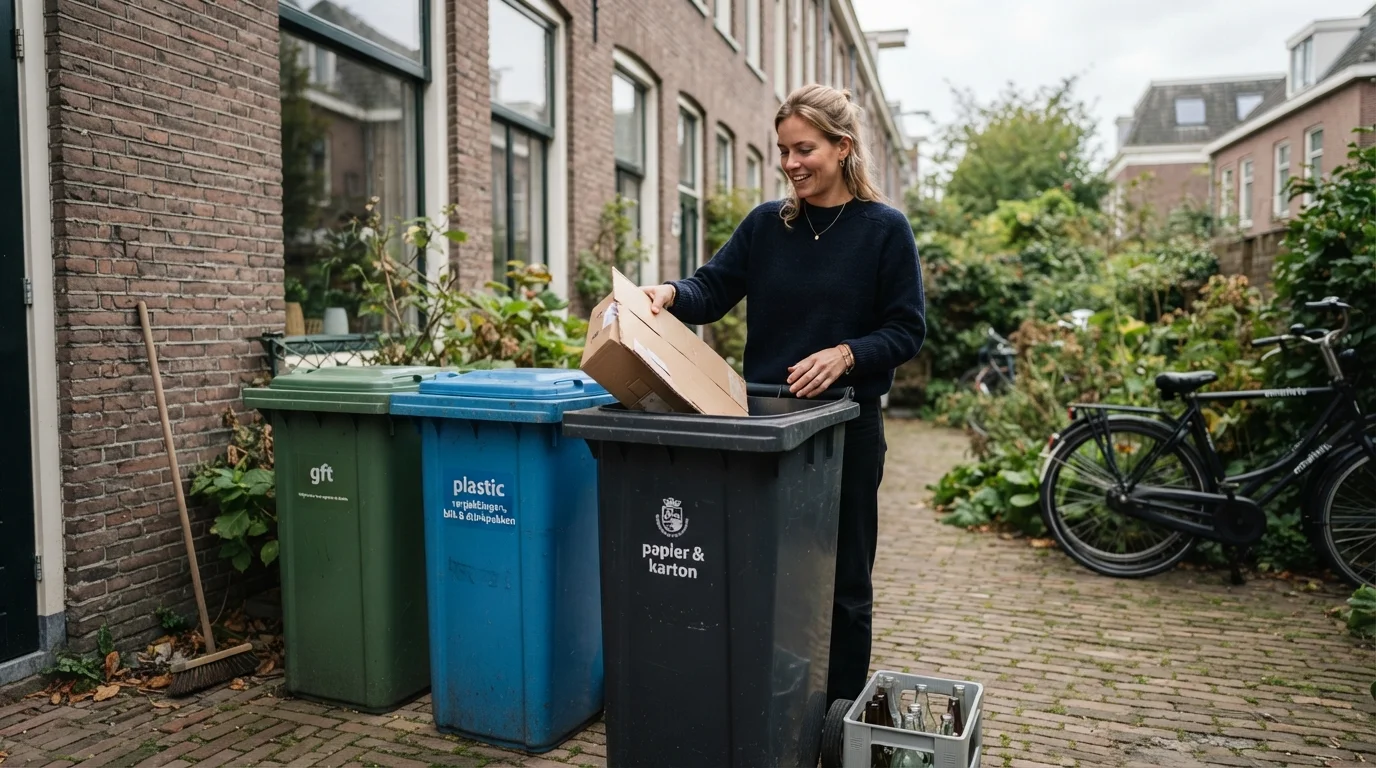
Moving to the Netherlands often means learning a new vocabulary for everyday life: gemeente, belastingaanslag, afvalstoffenheffing, and rioolheffing. These words may appear on a municipal tax bill shortly after you register at your Dutch address. Although the amounts and rules vary by municipality, understanding what you are paying—and why—makes Dutch administration much less intimidating.
This guide explains Dutch municipal taxes in clear English, with practical Dutch vocabulary for expats, language learners, and people preparing for the integration exam. You will learn how afvalstoffenheffing and rioolheffing work, who pays them, how the amount is calculated, what to do when you receive an assessment, and where to get help if you cannot afford the bill.
Dutch municipalities, or gemeenten, provide local services such as waste collection, sewage management, public spaces, roads, and local administration. To help pay for these services, they charge residents and property owners various local taxes. The exact taxes depend on your municipality and personal situation.
Most people receive a yearly gemeentelijke belastingaanslag, meaning municipal tax assessment. This may arrive as a letter, through your municipality’s online portal, or via the MijnOverheid message box connected to your DigiD. If you are still learning how to manage Dutch digital administration, this guide to using the DigiD app can help you access official messages securely.
A municipal tax assessment may include several separate charges:
Not every household pays every charge. For example, a tenant normally does not pay the owner’s property tax, while a homeowner may receive both municipal and water board assessments. Always read the description beside each amount rather than assuming that one bill has one purpose.
Afvalstoffenheffing is the Dutch household waste collection charge. Your municipality uses this money to organise the collection, transport, sorting, recycling, and processing of domestic waste. It is not a payment for a specific bag or bin; it is generally a contribution toward the local waste system.
In principle, households that produce or could produce domestic waste are liable for this charge. This usually means that people registered at a residential address must pay it, even if they are away for part of the year or produce very little rubbish. The municipality may charge a fixed amount or use a system that depends on the household’s size or waste disposal behaviour.
The calculation differs significantly between municipalities. Common systems include:
Your municipality’s website will usually explain the local method under terms such as afvalstoffenheffing tarieven, afvalpas, or tarieven afvalinzameling. The rules may also distinguish between residual waste, organic waste, paper, glass, textiles, and bulky waste.
Do not confuse the tax with the practical rules for putting rubbish outside. The collection schedule, recycling categories, container locations, and rules for large items are separate matters. For a useful overview of sorting and collection vocabulary, read this Dutch waste guide for expats.
Rioolheffing is the municipal sewer charge. It helps fund the construction, maintenance, and management of the public sewer system and related water tasks. These tasks can include transporting wastewater, removing rainwater, preventing flooding, and managing groundwater levels.
The word riool means sewer, while heffing means levy or charge. Rioolheffing is therefore not a fee based only on how often you flush a toilet. It supports a wider public infrastructure system that protects homes, streets, and the environment.
The liable person depends on the municipality’s local rules. Some municipalities charge the person who uses a property, such as a tenant or resident. Others divide the charge between:
Some municipalities use one combined sewer levy, while others separate the user and owner portions. The assessment should state whether you are being charged as an eigenaar, an gebruiker, or both.
Common calculation methods include a fixed amount per property, a charge based on the property’s value, or a rate linked to water consumption. Some municipalities use thresholds, meaning that water use below a certain level falls into one category and higher use into another. Commercial properties may face different rules from private homes.
Because local systems vary, searching for a nationwide standard amount can be misleading. The correct rate is the one published by your municipality for the relevant tax year. Search for your municipality followed by rioolheffing 2026 or rioolheffing tarieven, and check that the information applies to your address and year.
Municipal tax assessments are often sent early in the year, but timing varies. You may receive an assessment after registering at a new address, moving into a municipality, buying a home, or becoming liable for a service during the year. The bill may cover the whole year or be adjusted for the period in which you were registered or responsible.
Look carefully at these terms:
The assessment may also mention the waarderingskamer or WOZ-waarde. WOZ value is the official estimated value of a property and may be relevant to some charges, but it is not the same thing as afvalstoffenheffing or rioolheffing. If you own a home, you may receive a separate WOZ decision.
Your bill should explain the available payment methods. Many municipalities allow payment by bank transfer, direct debit, or online payment through a municipal portal. If you choose direct debit, check whether the municipality collects the full amount at once or divides it into monthly instalments.
When paying manually, copy the correct betalingskenmerk exactly. A wrong reference can delay the processing of your payment. Keep the confirmation, especially if you pay from a foreign bank account or after moving to a new address.
If the bill is difficult to pay, contact the municipality before the deadline. Possible options can include a payment arrangement or an application for kwijtschelding. Low-income households may qualify for full or partial remission, depending on income, assets, household circumstances, and local policy. Eligibility is not automatic, so apply through the municipality and provide the requested documents.
Check the assessment as soon as you receive it. Common problems include an incorrect number of registered residents, an old address, duplicate assessments, or a charge that should have been assigned to another person. If you moved during the year, verify the dates used in the calculation.
If you disagree with a decision, you can generally bezwaar maken. The objection deadline is commonly six weeks from the date on the decision, but you must confirm the exact deadline on your assessment. Submit the objection using the municipality’s official instructions and clearly explain what you believe is incorrect. Attach supporting documents such as a rental contract, registration evidence, or proof of a move.
An objection is not the same as simply refusing to pay. Ask the municipality whether payment can be postponed while your objection is considered. Otherwise, an unpaid amount may lead to reminders, additional costs, or collection action.
If you rent your home, first check your rental contract. A landlord may include certain service costs in the monthly rent, but that does not automatically mean the landlord is responsible for every municipal tax. Ask the municipality or a recognised tenants’ advice organisation if you are unsure who is legally liable.
Administrative Dutch can look more difficult than it is because several words are combined into one. Break them into parts: afval plus stoffen plus heffing refers to a waste levy, while riool plus heffing refers to a sewer levy. This word-building skill is useful for the civic integration exam and daily life.
Save municipal assessments, payment confirmations, objection letters, and registration documents in one digital or paper folder. Use filenames such as Gemeentebelasting-2026. This makes it easier to prove payment or answer questions later.
When you move, register your new address with the municipality and check whether your old municipality has adjusted its assessment. Address registration also affects many other services and benefits. For example, families settling into a new area may need both municipal registration and practical information about enrolling a child in a Dutch primary school.
Rates and deadlines are local, so rely on your municipality’s website and the assessment itself. For general information about government services and responsibilities, consult the Dutch government’s information about municipalities. Avoid paying through links in unexpected emails; open the official website yourself or use MijnOverheid.
You may need to call a municipal tax office and explain a problem in Dutch. Practise phrases such as Ik heb een vraag over mijn belastingaanslag meaning “I have a question about my tax assessment,” and Kan ik in termijnen betalen? meaning “Can I pay in instalments?” StroopTaal can support this kind of preparation through real-life AI conversation practice, personalised learning plans, and pronunciation feedback, so administrative conversations become more comfortable.
These are not national income taxes. Afvalstoffenheffing and rioolheffing are local charges connected to municipal services. They are separate from income tax, health insurance contributions, and water board taxes.
Tenants can still receive municipal bills. Renting a property does not automatically exempt you from local charges. The crucial question is whether the charge concerns the user, the owner, or both.
Recycling does not always eliminate the waste charge. Even households that separate waste carefully normally remain part of the municipal waste collection system. In a variable-rate municipality, sorting may reduce residual waste costs, but it may not remove the basic charge.
The amount is not identical across the Netherlands. Two neighbouring municipalities can use different systems and rates. Always check the municipality where you were registered during the relevant tax period.
Afvalstoffenheffing and rioolheffing are ordinary parts of life in the Netherlands, but unfamiliar Dutch terminology can make them seem complicated. In short, afvalstoffenheffing supports household waste services, while rioolheffing supports sewer and water infrastructure. The person liable and the amount depend on your municipality, household, property, and local calculation method.
Read every assessment carefully, note the payment or objection deadline, keep your documents, and contact the municipality early if something is unclear or unaffordable. As you build your Dutch skills, practise the vocabulary in real administrative situations instead of memorising isolated words. With the right preparation—and tools such as StroopTaal’s vocabulary practice, grammar lessons from A0 to C1, and interactive dialogue games—you can handle municipal correspondence with greater confidence.
Start by learning the key terms today, then check your municipality’s official website for the current rates and rules. Understanding one Dutch tax bill is a practical step toward feeling at home in the Netherlands.
Share this article:
Wo in Dutch: Meaning, Usage, and Example Sentences In Dutch, wo means “where” and is used to ask about a location, place, or position. You will...
Read moreMoving to the Netherlands with children can feel exciting, but enrolling your child in a Dutch primary school in August requires planning. You may...
Read moreMoving to a new country involves a long checklist of administrative to-dos. Once you have unpacked your boxes, set up your utilities, and sorted out...
Read more