Moving Within the Netherlands: How to Report Your Address Change
Relocating to a new home is an exciting milestone, whether you are upgrading to a spacious apartment in Utrecht, moving closer to work in Amsterdam,...
Read more
This article was written by AI and published by StroopTaal.
AI can get things wrong. For anything official, check the source it points to.
AI-generated image
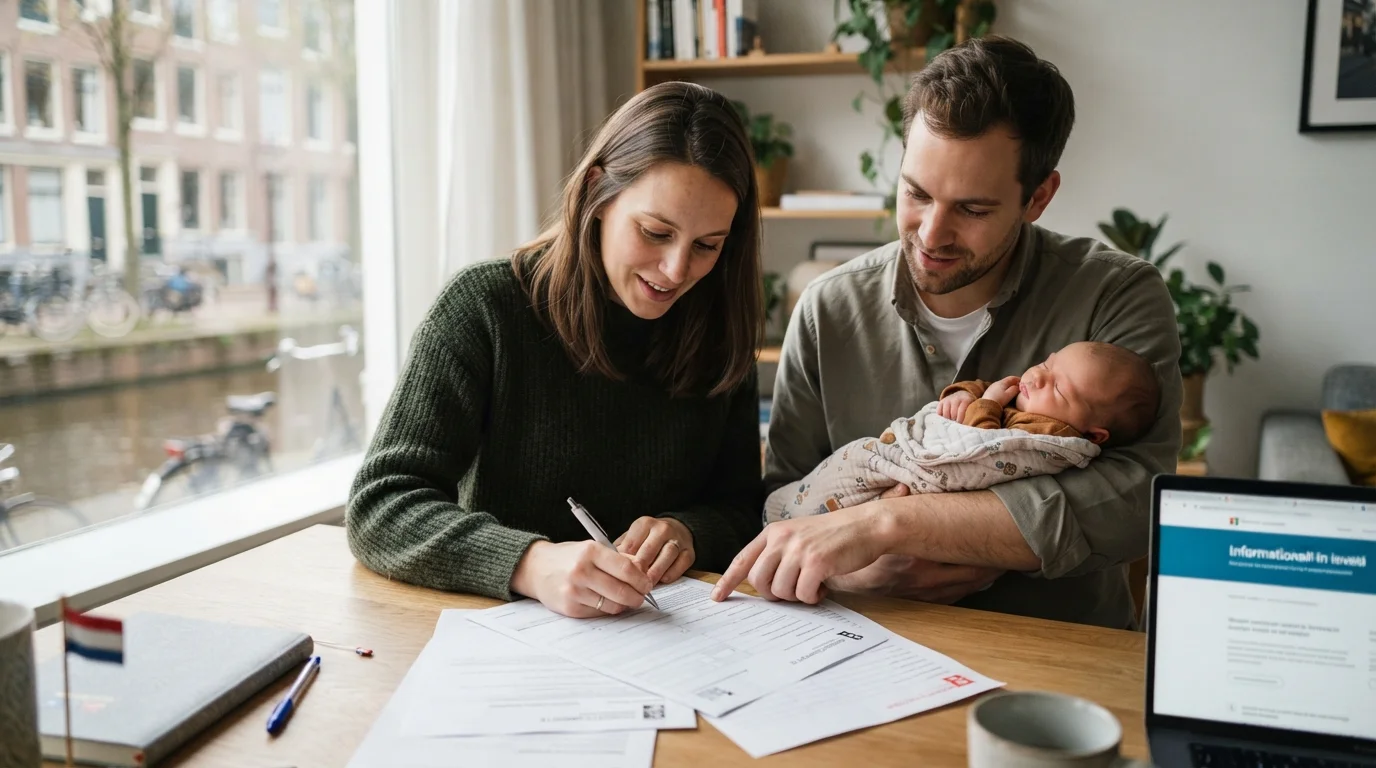
Becoming a parent is one of life's most exciting milestones, but navigating maternity care and administrative procedures in a foreign country can feel overwhelming. If you are an expat living in the Netherlands, welcoming a newborn involves navigating unique cultural practices—such as home births, post-natal care assistants (kraamzorg), and celebratory anise-seeded sprinkles (beschuit met muisjes). Beyond the baby blankets and care visits, however, lies an essential legal requirement: registering your baby with the Dutch authorities.
The official birth registration process, known in Dutch as geboorteaangifte, is a mandatory administrative step. It establishes your child's legal existence in the Netherlands, issues their Citizen Service Number (Burgerservicenummer or BSN), and triggers entitlement to healthcare coverage and family benefits. Navigating this bureaucratic process requires understanding strict deadlines, specific documentation, and local regulations. This comprehensive guide walks you through every step of registering a birth in the Netherlands as an expat parent.
In the Netherlands, time is of the essence when a baby is born. By law, you must register your child's birth within three working days (drie werkdagen) following the day of birth. The day the child is born does not count toward the three-day limit, but weekends and official Dutch public holidays can impact the timeline.
To help you understand how working days are calculated, consider these scenarios:
If you fail to register the birth within the mandatory three-day window without a valid emergency, the civil registrar (ambtenaar van de burgerlijke stand) is legally obligated to inform the Public Prosecution Service (Openbaar Ministerie), which can result in a fine. Therefore, prioritizing this task during your baby's first few days is vital.
A common misconception among expats is that you register the baby at your local home municipality (woongemeente). However, Dutch law requires that you register the birth at the municipality office (gemeentehuis or stadskantoor) of the location where the child was physically born. For example, if you live in Utrecht but deliver your baby in a hospital located in Amsterdam, you must register the birth with the Municipality of Amsterdam.
If you delivered at home or in a birth center located in your home city, you simply register at your local city hall. If you've recently moved to the Netherlands and are still settling in, managing local government tasks alongside navigating services like accessing Dutch healthcare after hours will quickly make you familiar with the Dutch public administration ecosystem.
Dutch law dictates a strict hierarchy regarding who is authorized to carry out the birth registration:
Before heading to the municipal office, ensure you have gathered all necessary paperwork. Missing documents can delay the registration and cause unnecessary stress during your baby's first week. You can double-check legal guidelines directly on the official Government.nl birth registration portal.
Here is your essential document checklist:
Most Dutch municipalities no longer accept walk-ins for birth registrations. Visit the municipal website of the city where your child was born and look for the option labeled Geboorteaangifte doen. Many cities now offer digital pre-registration online if both parents hold a Dutch digital identity (DigiD), though expats without DigiD or with non-Dutch civil certificates will generally need an in-person appointment.
Arrive promptly with your documents. During the appointment, the civil status officer will review your identification, verify the hospital statement, and record the details in the official Register of Births (Geboorteregister). You will verify the child's full names, birth date, time, and parent details.
Once registered, you will receive an official extract of the birth certificate (geboorteakte). An international extract (internationaal uittreksel) in multiple languages can usually be requested for an additional fee—this is highly recommended for expat families who will need to register their child's birth with their home country's embassy.
Within a few days to two weeks after registration, your home municipality will automatically mail you your baby's official BSN (Burgerservicenummer). This number is required for setting up pediatric healthcare, insurance, and tax accounts.
When registering a birth in the Netherlands, you must declare your child's first name(s) (voornamen) and surname (achternaam). Dutch civil law gives parents considerable freedom, but there are specific regulations to keep in mind.
You can choose multiple first names for your baby. However, the registrar can reject a name if it is deemed inappropriate, offensive, or identical to an existing surname (unless that surname is also a recognized given name). If a proposed name is rejected and parents refuse to choose an alternative, the civil servant has the authority to select a name for the child.
Historically, children in the Netherlands automatically took the father's surname if the parents were married, or the mother's surname if unmarried. However, recent legal changes (effective January 1, 2024) introduced greater flexibility. Parents can now choose:
Note: For your first child, both parents must actively choose the surname together (often formally done before birth via an akte van naamskeuze). All subsequent children from the same parents will automatically receive the exact same surname.
Communicating with civil servants, midwives, and healthcare workers during this period is much smoother when you know key Dutch terms. If you are working toward mastering the language or preparing for integration, learning practical administrative vocabulary is invaluable.
Here are essential terms you will encounter during birth registration:
Communicating confidently in these real-world situations becomes much simpler when you practice Dutch conversations in advance. Using tools like StroopTaal, you can use real-life Dutch conversation practice with AI to practice dialogs for municipal appointments, doctor visits, and everyday administrative tasks in the Netherlands.
Completing the birth registration at the municipality is a major step, but expat parents have a few additional responsibilities to cross off their checklist:
In the Netherlands, children under 18 are covered for healthcare free of charge, but they must be formally added to one parent's health insurance policy within four months of birth. Once you receive your child's BSN, contact your insurance provider to add them to your account. Coverage will apply retroactively from the day of birth.
If you hold non-EU/EEA nationality, your newborn does not automatically acquire Dutch citizenship by being born on Dutch soil. You must apply for a residence permit for your child through the official IND (Immigration and Naturalisation Service). The type of permit will generally match the residence status of the primary sponsor parent.
All legal residents in the Netherlands raising children are entitled to quarterly child benefit payments (kinderbijslag) administered by the SVB (Sociale Verzekeringsbank). Once your child is registered at your home address, the SVB will typically contact you automatically via PostNL or your DigiD inbox to finalize your claim.
To obtain a passport for your foreign nationality, you must register your baby's birth with your national embassy or consulate in the Netherlands. You will usually need to present an legalized international extract of the Dutch birth certificate (internationaal uittreksel uit de geboorteakte).
As your family settles into Dutch life, you will encounter other routine local responsibilities, such as understanding local waste and municipal fees detailed in our guide to Dutch municipal taxes (Afvalstoffenheffing). Additionally, because waiting lists for childcare and schools can be long in Dutch cities, it is never too early to learn about how to enroll your child in a Dutch primary school.
Navigating doctors, midwives, municipal offices, and daycares in a new country can feel intimidating when you don't speak the native language fluently. Learning functional Dutch empowers you to advocate for your family, connect with local communities, and comfortably handle everyday parental administration.
With StroopTaal, you get access to AI-powered personalized learning plans, vocabulary building modules with spaced repetition, and practical grammar lessons tailored from A0 all the way to C1. Whether you need to discuss your child's health at the consultatiebureau or chat with teachers at school, interactive learning makes language mastery flexible and accessible for busy new parents.
Registering a birth in the Netherlands is a straightforward administrative procedure once you understand the core rules: register within 3 working days, visit the municipality where the birth occurred, bring your required IDs and birth declarations, and follow up on health insurance and residence permits. By taking care of these details early, you can relax and focus on enjoying your new bundle of joy!
Share this article:
Relocating to a new home is an exciting milestone, whether you are upgrading to a spacious apartment in Utrecht, moving closer to work in Amsterdam,...
Read moreWelcome to Utrecht: The Gem of the Netherlands With its picturesque wharf cellars along the Oudegracht, soaring Dom Tower, and bustling bicycle...
Read moreIt is 8:00 PM on a Friday evening in Amsterdam, Utrecht, or Rotterdam. You suddenly develop a high fever, a severe allergic reaction, or acute pain...
Read more