How to Register a Birth in the Netherlands: Expat Parent Guide
Introduction: Bringing New Life into the Netherlands Becoming a parent is one of life's most exciting milestones, but navigating maternity care and...
Read more
This article was written by AI and published by StroopTaal.
AI can get things wrong. For anything official, check the source it points to.
AI-generated image
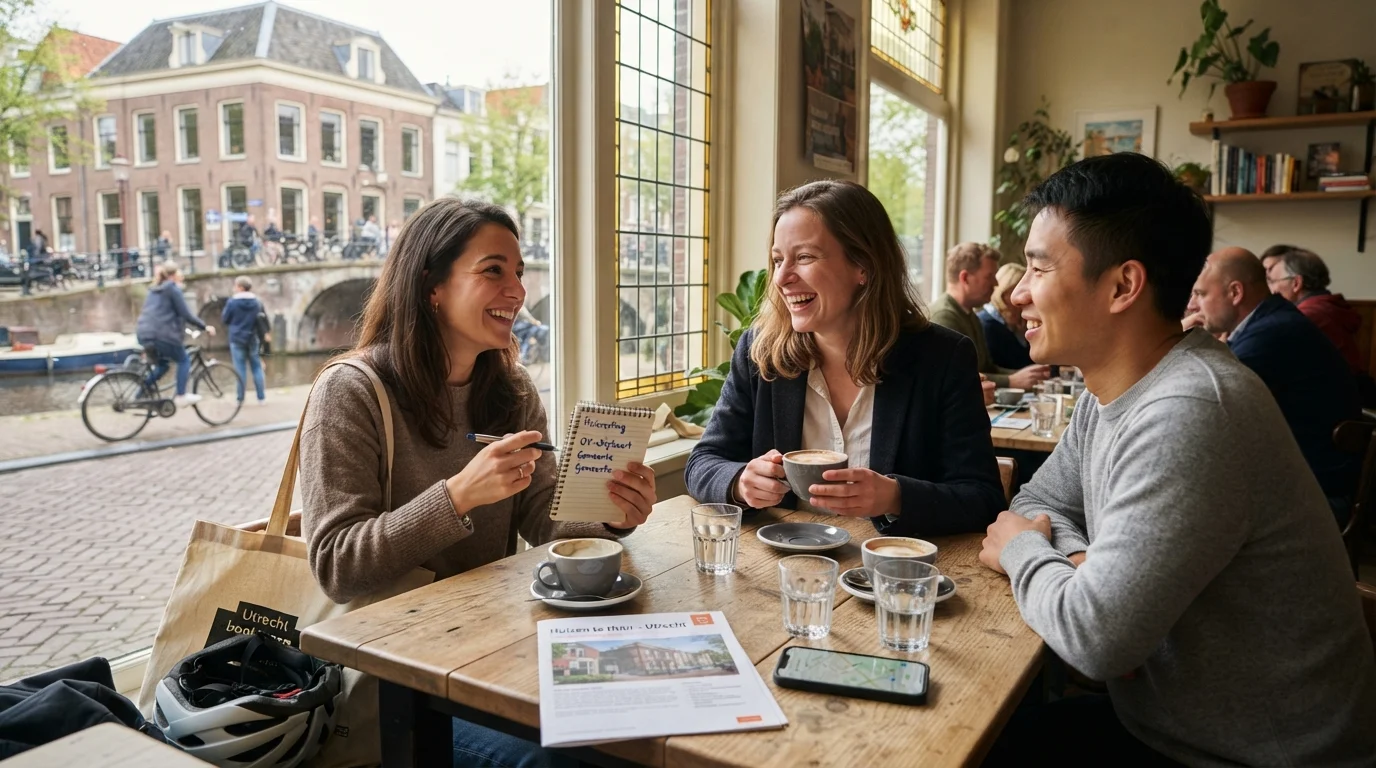
With its picturesque wharf cellars along the Oudegracht, soaring Dom Tower, and bustling bicycle paths, Utrecht is often considered one of the most charm-filled and livable cities in the Netherlands. Located in the very center of the country, Utrecht offers the rich culture and vibrant vibe of Amsterdam, but with a friendlier, more manageable scale. It is no wonder that thousands of international professionals, researchers, and students choose to call Utrecht home each year.
However, relocating to a new country always comes with a steep learning curve. From navigating a fiercely competitive property market to finding your social circle and conquering the complex Dutch language, the transition requires strategy and preparation. This comprehensive guide walks you through everything you need to know about settling in as an expat in Utrecht—including finding housing, building a strong community, and mastering Dutch through language schools and modern tools.
Finding accommodation in Utrecht is notoriously challenging. Due to a national housing shortage and high demand from both local students and international expats, rental properties move remarkably fast. However, with the right approach and clear expectations, you can secure a wonderful place to live.
Utrecht is made up of diverse neighborhoods, each offering a distinct atmosphere:
To maximize your chances of finding housing, utilize popular Dutch real estate portals such as Funda, Pararius, and Kamernet. Working with a verified local real estate agent (aankoopmakelaar or verhuurmakelaar) can also give you an edge, as they often receive property listings before they hit public websites.
Due to high demand, rental fraud is a risk for newcomers unfamiliar with standard Dutch real estate practices. Make sure you read our detailed article on learning how to avoid housing scams before sending deposits or signing contracts remotely.
Depending on your income and rental contract, you may qualify for government subsidies to offset living costs. If you reside in an independent housing unit, consider applying for rent benefit (huurtoeslag) to lower your monthly expenses.
Once you secure housing, registering with the local municipality is mandatory. You must schedule an appointment at the Gemeente Utrecht city hall to register your address in the BRP (Personal Records Database) and obtain your citizen service number (BSN).
After registering your address, you will become subject to local administrative obligations. Understanding these early helps avoid unexpected bills during your first year in Utrecht.
Municipalities in the Netherlands levy local taxes to maintain public infrastructure, water sanitation, and waste collection. In Utrecht, property occupants receive annual tax assessments for waste management and water treatment. To avoid surprises, read up on understanding Dutch municipal taxes like afvalstoffenheffing so you can budget accurately for city charges.
Additionally, make sure to handle official immigration requirements through the IND (Immigration and Naturalisation Service) if you are moving from outside the EU/EEA.
Moving to a new city can feel isolating at first, but Utrecht has an active, warm, and highly social community. Whether you prefer formal networking events or casual sports clubs, opportunities to meet people are everywhere.
Connecting with fellow international residents is one of the fastest ways to build a support network:
Dutch culture highly values neighborhood connection. Simple gestures like greeting neighbors with a friendly "Goedemorgen" or attending local street block parties (buurtfeest) go a long way. Joining local community centers (buurtcentra) or volunteering for local environment initiatives can instantly expand your social circle beyond the expat bubble.
While almost everyone in Utrecht speaks fluent English, speaking Dutch is the ultimate key to feeling at home, forging deeper friendships, and excelling professionally. Knowing Dutch enables you to understand local humor, read news, participate in community meetings, and comfortably pass civic integration exams (Inburgeringsexamen).
Utrecht hosts several reputed language institutes offering classroom-based learning:
While attending traditional classes once or twice a week is useful, real fluency comes from daily immersion and continuous practice. Modern expat learners often struggle with the gap between classroom grammar rules and fast-paced daily spoken Dutch.
This is where innovative digital tools like StroopTaal make a significant impact. Designed specifically for expats in the Netherlands, StroopTaal uses AI-powered real-life Dutch conversation practice to simulate practical scenarios you encounter every day in Utrecht—like ordering at a Markt café, chatting with neighbors, or speaking with a landlord. With instant feedback on your pronunciation and interactive dialogue games, you can build speaking confidence in a private environment before testing your skills out on the street.
Learning a language is an active process. Here are practical strategies to build fluency while living in Utrecht:
Moving to Utrecht marks the start of an exciting new chapter. By taking systematic steps to navigate the housing market, actively building connections, and making Dutch language learning a daily habit, you will quickly transform this historic canal city from an unfamiliar destination into your true home.
Ready to jumpstart your Dutch language journey before your next language meetup or class in Utrecht? Try StroopTaal today to access AI-powered personalized learning plans, interactive conversation practice, and grammar lessons designed to take you from beginner to fluent with confidence!
Share this article:
Introduction: Bringing New Life into the Netherlands Becoming a parent is one of life's most exciting milestones, but navigating maternity care and...
Read moreIt is 8:00 PM on a Friday evening in Amsterdam, Utrecht, or Rotterdam. You suddenly develop a high fever, a severe allergic reaction, or acute pain...
Read moreIntroduction: Why You Need a Dutch SIM Card Right Away Touching down in the Netherlands as an international student, working professional, or digital...
Read more