Dutch Doctor's Visit: Your Guide to a Huisarts Appointment
Feeling Under the Weather in the Netherlands? Your Guide to the Huisarts Moving to the Netherlands is an incredible adventure, filled with...
Read more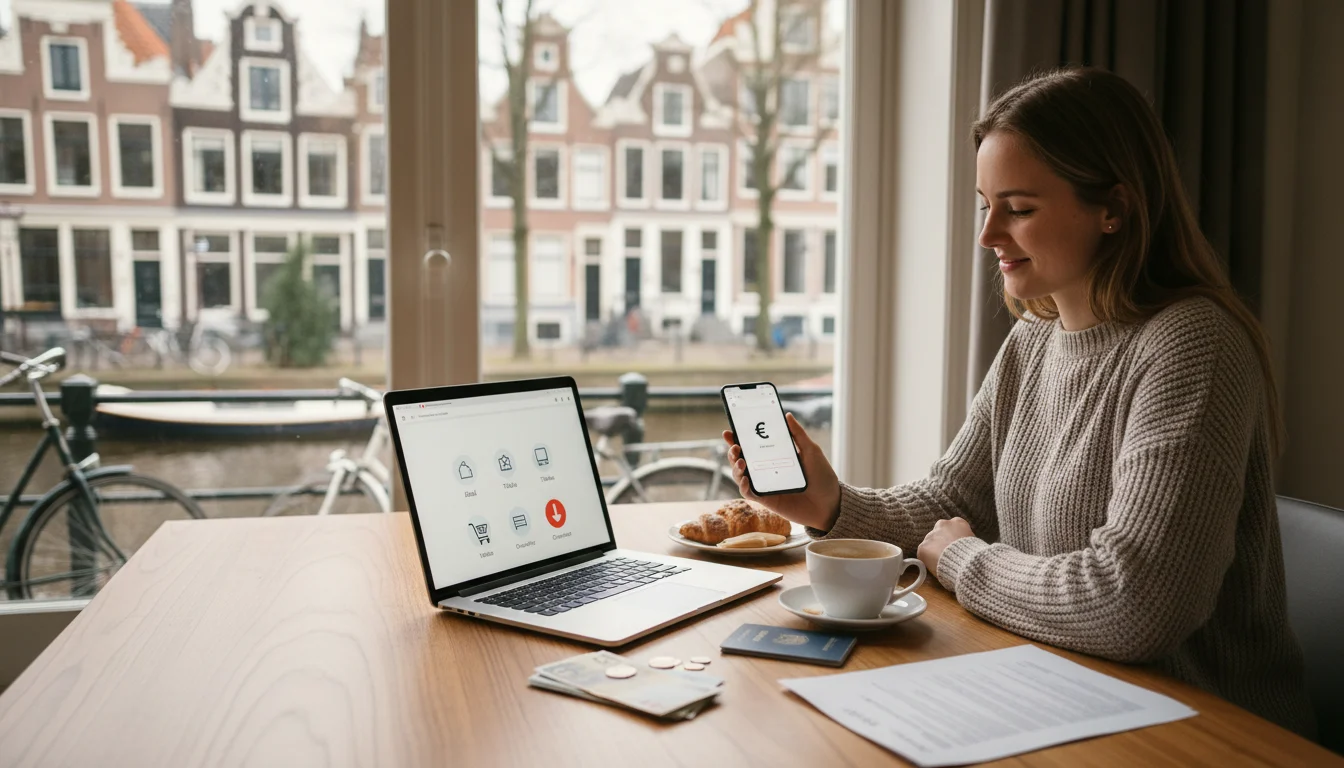
You’ve done it. You’ve navigated the bureaucracy, secured your BSN (Burgerservicenummer), and finally hold a crisp new Dutch debit card – your pinpas. You feel a sense of accomplishment, a key milestone in setting up your new life in the Netherlands. But then you try to buy something online and the only payment option is something called 'iDeal'. Your friend pays you back for coffee by saying, "Ik stuur je een Tikkie." Your first bank statement arrives, filled with words like afschrijving, bijschrijving, and a tempting offer for rood staan.
Suddenly, it becomes clear: Dutch banking is its own unique ecosystem. While efficient and highly digitized, it can be confusing for newcomers. Don't worry. This guide will demystify the essential Dutch banking terms and systems, turning financial confusion into confidence. We'll break down everything from the ubiquitous iDeal to the social phenomenon of Tikkie, and the critical concept of an overdraft (rood staan).
Before we dive into the terminology, let's quickly cover the foundation: your Dutch bank account, or bankrekening. To open one, you'll typically need:
Most banks like ABN AMRO, ING, and Rabobank offer streamlined online application processes for expats. The primary account you'll get is a betaalrekening (a current or checking account). This account, along with its associated pinpas (debit card), is your gateway to the Dutch financial world. It's a crucial part of setting up your new life as an expat in the Netherlands.
If you want to understand how money moves in the Netherlands, you need to understand these three concepts. They are central to daily economic life, from e-commerce to splitting a dinner bill.
Forget entering your credit card details on every website. In the Netherlands, iDeal is king. It’s not a payment provider like PayPal or a credit card company like Visa. Instead, iDeal is a secure payment method that connects you directly to your own bank's online portal to approve a transaction.
How does it work?
Because it uses the bank's own security, iDeal is considered extremely safe and is trusted by virtually all Dutch consumers and businesses. It's a system developed by Dutch banks that has become the de facto standard for online payments.
"Can you pay for my coffee? I'll send you a Tikkie." This is a phrase you'll hear constantly. Tikkie is a mobile app (originally created by ABN AMRO but usable by anyone with a Dutch bank account) that allows you to send payment requests via a simple link, most often through WhatsApp.
It’s used for everything:
The Dutch value for efficiency and directness is perfectly embodied in Tikkie. It removes the awkwardness of asking for small amounts of money back. When someone says, "Ik stuur je een Tikkie," it simply means, "I'll send you a payment link." Clicking the link takes you to an iDeal page where you can pay the requested amount instantly.
The term betaalverzoek literally translates to "payment request." While Tikkie is a specific brand, nearly every Dutch bank has integrated a betaalverzoek feature directly into its own mobile banking app. Functionally, it's identical to Tikkie: you generate a payment link for a specific amount and share it. So, if your friend with Rabobank sends you a payment request, it might not be a "Tikkie" by brand, but it's a betaalverzoek that works the same way.
Your bank statements and online portal will be filled with Dutch words. Here’s a glossary of the most important ones to help you feel in control of your finances.
Rood staan literally means "to stand in the red." It's the Dutch term for having an overdraft facility on your current account, allowing you to spend more money than you have, up to a certain limit. While it can be a useful safety net, it comes with significant strings attached.
Our advice: Avoid using your overdraft unless it's a true emergency. It's better to build a small savings buffer for unexpected costs.
Feeling overwhelmed by all this new vocabulary? Don't worry. Using a tool like StroopTaal can help you master these financial terms quickly. Its spaced repetition system ensures words like afschrijving and rood staan stick in your memory.
Understanding the terms is one thing; using them is another. Here’s how this knowledge applies to daily life.
The Dutch banking system, with its reliance on iDeal, the social nature of Tikkie, and specific terms like rood staan, can feel like a private club at first. But once you master these core concepts, you'll unlock a system that is remarkably efficient, secure, and integrated into the fabric of daily life.
By understanding iDeal, you can shop online with ease. By embracing Tikkie, you can navigate social situations smoothly. And by knowing the implications of rood staan, you can manage your finances wisely. This knowledge is more than just practical; it's an empowering step towards feeling truly at home in the Netherlands.
Ready to take your Dutch to the next level and master the language of daily life? Download the StroopTaal app today and start building practical skills with personalized lessons, AI conversation practice, and vocabulary trainers designed for your success.
Share this article:
Feeling Under the Weather in the Netherlands? Your Guide to the Huisarts Moving to the Netherlands is an incredible adventure, filled with...
Read moreThe Dutch Digital Nomad Dream: Is It Possible? Picture this: you're sipping a koffie verkeerd in a cozy Amsterdam café, your laptop open, working on...
Read moreTired of the Expat Bubble? The Secret to Making Dutch Friends is Joining a 'Vereniging' You've moved to the Netherlands. You've navigated the...
Read more