Managing Finances in NL: Your Expat Budgeting Guide
Welcome to the Netherlands! Now, Let's Talk About Money Moving to the Netherlands is an exhilarating adventure. You're picturing picturesque canals,...
Read more
This article was drafted by AI and edited by a person before it was published.
AI can get things wrong. For anything official, check the source it points to.
AI-generated image
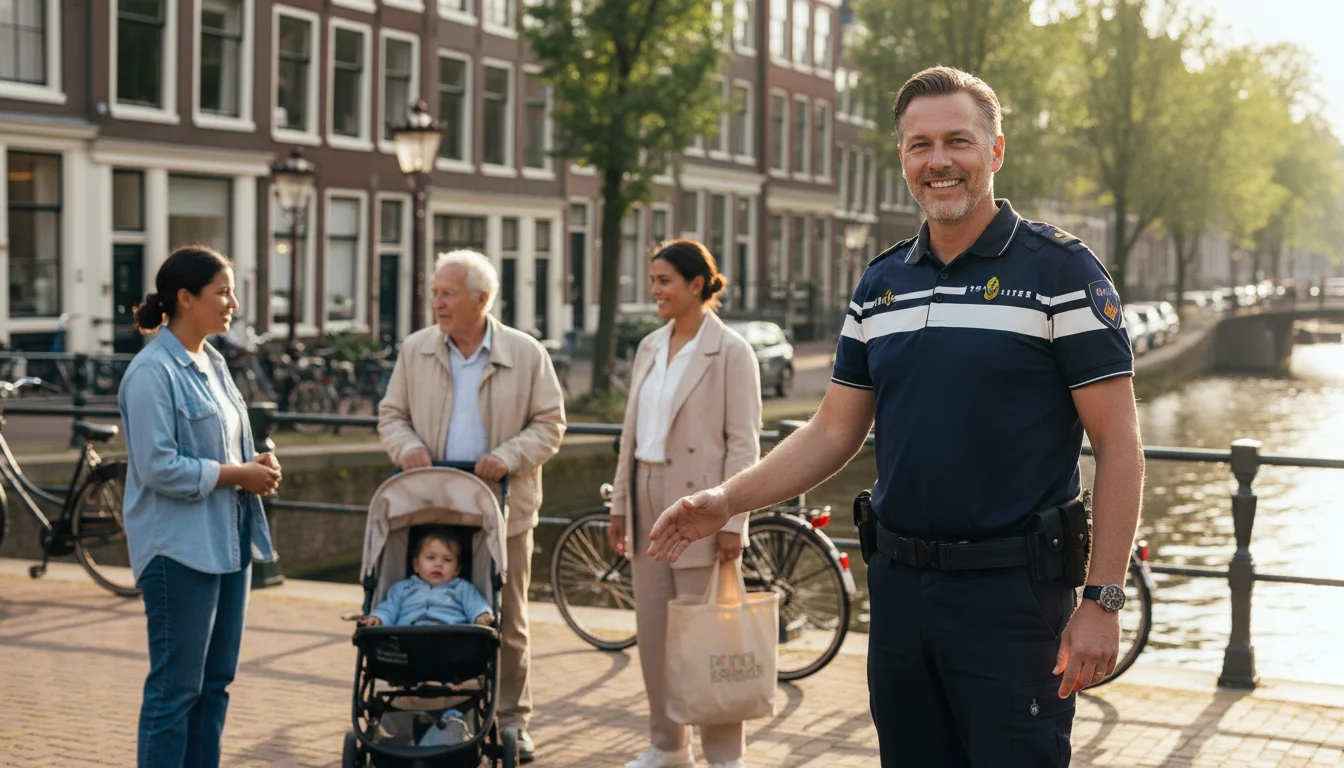
You’ve just moved into your new Dutch neighborhood. You’re learning to navigate the bike lanes, decipher the recycling schedule, and you’re finally getting the hang of saying 'goeiemorgen'. Then, you see a police officer casually cycling down your street, stopping to chat with a neighbor. There are no flashing lights, no sense of urgency. For many expats, this can be a confusing sight. Is something wrong? Who is this officer?
Welcome to the world of the wijkagent (pronounced 'vike-ah-gent'), the Dutch community police officer. This figure is a cornerstone of neighborhood life in the Netherlands and understanding their role is key to feeling safe, integrated, and truly at home. They are far more than just a law enforcer; they are a community connector, a problem-solver, and your first point of contact for non-urgent local issues. This guide will explain everything you, as an expat, need to know about the wijkagent.
In many countries, police interaction is reserved for emergencies or reporting a crime. The Dutch approach is fundamentally different, emphasizing prevention and community engagement. The wijkagent is the living embodiment of this philosophy.
A wijkagent is a police officer assigned to a specific neighborhood (a wijk). They are not a detective or a member of a special unit; their entire focus is the well-being and safety of their designated area. Think of them less as a patrol car waiting for a 112 call and more as a neighborhood safety manager. Their goal is to know the area, its residents, its challenges, and its strengths inside and out.
This proactive approach means you’ll often see them on foot or by bicycle, making them highly visible and approachable. They attend community meetings, speak with local shop owners, visit schools, and build relationships. This deep local knowledge allows them to identify potential problems—like a poorly lit park attracting anti-social behavior or rising tensions between neighbors—before they escalate into serious crimes.
The wijkagent’s duties are broad and centered on the principle of 'kennen en gekend worden' (to know and be known). While they are fully sworn police officers, their day-to-day tasks focus on quality-of-life issues within the community. Here’s a breakdown of their primary roles:
Understanding the right channel for police contact is crucial. Using the wrong one can waste time and resources. Here’s a simple breakdown:
Finding your wijkagent is straightforward. The official Dutch police website, politie.nl, has a dedicated section. Simply enter your postal code (postcode), and you’ll see the name, photo, and contact information for the officer(s) assigned to your area. They often have their own page with a contact form or may be active on social media platforms like X (formerly Twitter).
Remember, the wijkagent is not a 24/7 service. For immediate issues, always use 0900-8844 or 112. When you do reach out, communicating your concerns clearly in Dutch can build rapport and ensure you're understood correctly. If you're nervous about speaking with an official, practicing common scenarios like reporting a nuisance in the StroopTaal app's AI conversation practice can build your confidence immensely.
The role of the wijkagent is deeply intertwined with core Dutch cultural values. It’s a reflection of a society that prizes consensus, collaboration, and community responsibility.
The famous Dutch 'Polder Model' refers to a consensus-based approach to decision-making. The wijkagent embodies this by not just enforcing laws from on high, but by working *with* residents, housing corporations, and the municipality to find solutions that everyone can agree on. It’s about dialogue and collaboration, not just authority.
The Dutch are known for their directness, and this extends to their interactions with authority figures. The wijkagent is meant to be approached. Don't hesitate to say hello on the street or ask a question. This level of accessibility can be surprising for expats from countries with a more formal or hierarchical police culture. This approachability is a key part of what makes settling into one of the many welcoming Dutch cities a positive experience.
The emphasis on the wijk is central to Dutch life. People feel a sense of belonging and responsibility for their immediate environment. The wijkagent reinforces this by empowering residents to take an active role in their own safety, fostering a sense of collective ownership that makes neighborhoods safer and more pleasant for everyone. Truly getting involved in your local community is one of the best ways to integrate, and knowing your wijkagent is part of that process.
The wijkagent is one of the most unique and valuable aspects of daily life in the Netherlands. They are not a distant authority figure but an accessible, knowledgeable partner dedicated to the safety and livability of your neighborhood. For expats, taking the time to understand their role and identify who your local officer is can make a significant difference in feeling secure and connected.
Don’t wait until you have a problem. Look up your wijkagent today. Knowing who they are and how they can help is a simple but powerful step toward making your Dutch house feel like a true home.
Ready to build the confidence to speak with your neighbors, shopkeepers, and even your wijkagent? Download the StroopTaal app and start your personalized Dutch learning journey. Our AI-powered tools help you practice for real-life conversations!
Share this article:
Welcome to the Netherlands! Now, Let's Talk About Money Moving to the Netherlands is an exhilarating adventure. You're picturing picturesque canals,...
Read moreWelcome to the Netherlands! Now, About That Blue Envelope... You’ve done it. You’ve moved to the land of windmills, canals, and stroopwafels....
Read moreWelcome to The Hague! Now, Let's Find You a Home So, you're moving to The Hague! Congratulations. You've chosen a city that beautifully blends royal...
Read more