Expats in Utrecht: Guide to Housing, Community & Language
Welcome to Utrecht: The Gem of the Netherlands With its picturesque wharf cellars along the Oudegracht, soaring Dom Tower, and bustling bicycle...
Read more
This article was written by AI and published by StroopTaal.
AI can get things wrong. For anything official, check the source it points to.
AI-generated image
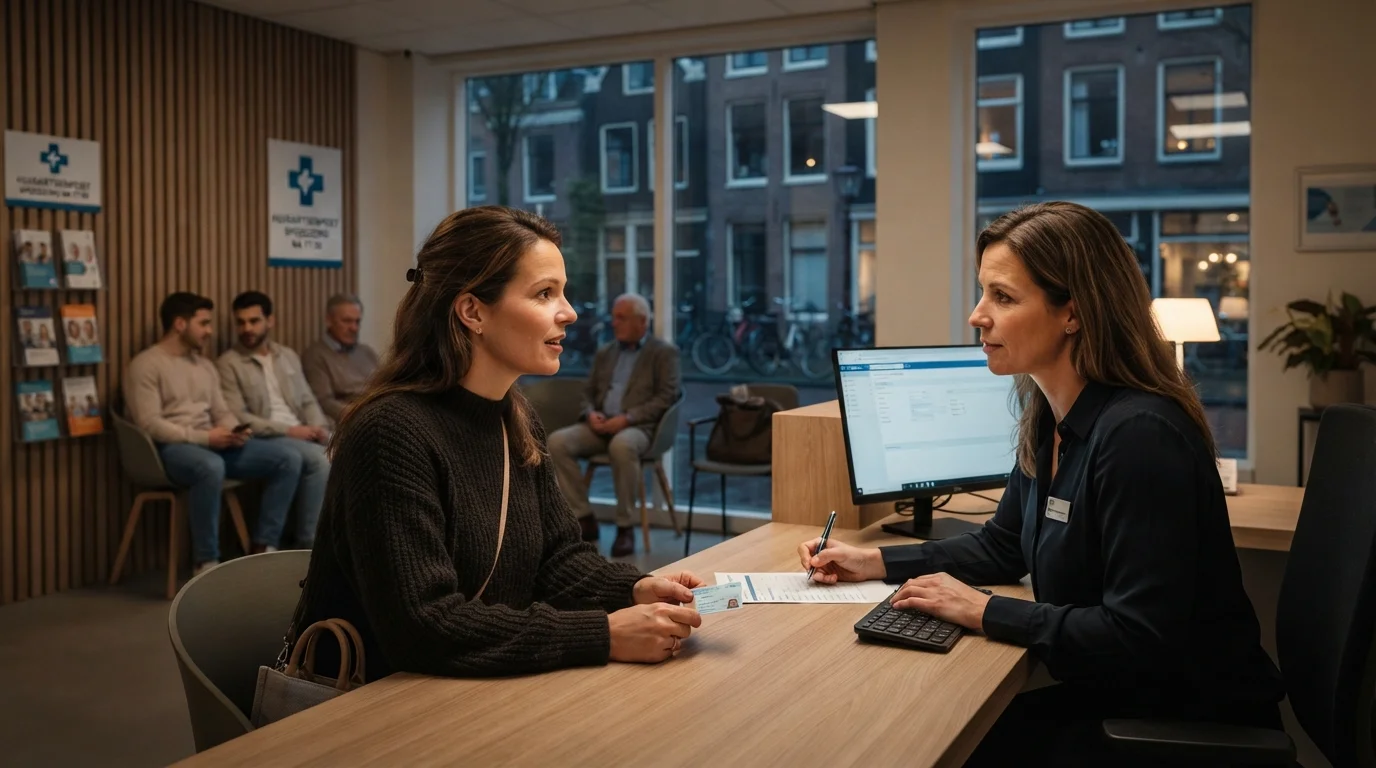
It is 8:00 PM on a Friday evening in Amsterdam, Utrecht, or Rotterdam. You suddenly develop a high fever, a severe allergic reaction, or acute pain that seems too intense to wait out until Monday morning. In many countries, your immediate reaction might be to jump into a taxi and head directly to the nearest hospital emergency room. However, in the Netherlands, doing so without prior authorization will likely leave you sitting in a waiting room or sent away back home.
Navigating healthcare in a foreign country can be intimidating, especially when you feel unwell and need urgent assistance outside regular office hours. Fortunately, the Dutch healthcare system has a highly organized, efficient system specifically designed for evening, night, and weekend medical emergencies: the Huisartsenpost (often abbreviated as HAP).
In this ultimate guide, we will break down everything you need to know about accessing after-hours medical care in the Netherlands, understanding Dutch medical triage, speaking with healthcare staff in Dutch, and avoiding unexpected medical bills.
To understand the Huisartsenpost, you first need to understand the central role of the general practitioner—known as the huisarts—in Dutch society. In the Netherlands, the huisarts acts as the gatekeeper to the entire medical system. You cannot simply book an appointment with a cardiologist, dermatologist, or hospital specialist without a official referral (verwijzing) from your GP.
Standard GP practices (huisartsenpraktijken) operate strictly during business hours, usually Monday through Friday from 8:00 AM to 5:00 PM. But what happens when you need urgent medical care outside these hours?
The Dutch emergency care network is divided into three primary levels:
Understanding this distinction is vital. If you show up at the Spoedeisende Hulp with an issue that could have been treated by a GP, you may face long delays or be directed to contact the Huisartsenpost instead.
The golden rule of the Huisartsenpost is simple: Always call first. You cannot walk in without an appointment.
Before dialing, evaluate your condition to ensure you are selecting the appropriate service. The Dutch medical system places heavy emphasis on self-care and sensible evaluation before seeking clinical intervention.
You should contact the Huisartsenpost if your symptoms suddenly worsen outside office hours and waiting until the next business day poses a risk to your health. Common valid reasons include:
Do not call the Huisartsenpost if someone's life is in immediate danger. Dial the national emergency number 112 right away if you suspect:
If your condition is unpleasant but stable—such as a persistent mild cough for three weeks, a long-standing skin rash, a routine prescription renewal, or general tiredness—you must wait until Monday morning to contact your regular huisarts.
If you determine that your condition requires urgent evening or weekend medical attention, follow these steps to secure care smoothly.
Huisartsenposten are organized regionally. There is no single nationwide phone number for all after-hours care. To find your local number:
Ensure you have a functioning mobile connection ready before calling; if you recently moved to the country, make sure you are set up properly with options from our Dutch SIM card guide for expats so you do not run out of calling credit during an emergency.
Before making the call, have the following details clearly written down in front of you:
When your call is answered, you will speak with a trained medical professional called a triagist (triage nurse). The triagist works under the direct supervision of an on-duty GP and follows standardized national protocols to assess the severity of your situation.
During the call, the triagist will ask detailed questions about your symptoms. Based on this conversation, three outcomes are possible:
While many medical professionals in the Netherlands speak fluent English, explain your health conditions under stress can be daunting. Communicating key symptoms in Dutch ensures your situation is understood quickly and accurately by the triagist.
Here is a reference table of essential medical vocabulary:
| Dutch Term | Pronunciation / Meaning | English Meaning |
|---|---|---|
| Huisartsenpost (HAP) | house-arts-en-post | After-hours GP medical center |
| Spoedgeval | spooche-fahl | Emergency case |
| Pijn | pハリn | Pain |
| Koorts | koh-rts | Fever |
| Misselijk | miss-uh-luk | Nauseous |
| Benauwd | buh-nowt | Short of breath / chest tightness |
| Bloeden | blue-dun | To bleed |
| Uitslag | out-slach | Rash / skin eruption |
| Medicijnen | meh-dee-sigh-nun | Medications |
| Dienstapotheek | deenst-ah-poh-tayk | After-hours emergency pharmacy |
If you want to feel completely confident handling medical conversations, administrative calls, or everyday life scenario dialogues in Dutch, practicing realistic audio scenarios is essential. Using apps like StroopTaal allows you to build real-world confidence with AI-powered conversation practice and interactive dialogue games tailored specifically to realistic everyday situations—including talking to doctors, scheduling appointments, and explaining symptoms clearly.
One of the great advantages of living in the Netherlands is the structure of its universal healthcare system. However, understanding how costs and billing work for after-hours care will help you avoid unexpected expenses.
Yes. Care provided by a Huisartsenpost is 100% covered by basic Dutch health insurance (basisverzekering). Furthermore, unlike visits to a hospital specialist or emergency room, consultation at a Huisartsenpost is exempt from your deductible (eigen risico). This means you will not pay anything out-of-pocket for calling or visiting the HAP if you hold standard Dutch health coverage.
If you are a tourist or visitor holding a European Health Insurance Card (EHIC) or private international insurance, present your card and passport upon arrival. Non-resident visitors without valid insurance may be asked to pay an upfront fee (usually ranging from €40 to €150 depending on whether it is a phone consultation or physical examination) and claim it back later from their provider.
If the GP at the Huisartsenpost prescribes medication during your visit—such as antibiotics, strong pain relief, or specialized respiratory treatment—you won't have to wait until regular stores open. Every regional Huisartsenpost works directly with an emergency pharmacy called a dienstapotheek, located either inside or directly adjacent to the medical facility.
Keep the following points in mind regarding the dienstapotheek:
Getting comfortable with health facilities like the Huisartsenpost is an essential milestone in settling into life in the Netherlands. Whether you are studying, working, or raising a family, mastering practical societal systems makes expat life seamless.
While organizing your health essentials, remember to secure long-term preventive care by checking our comprehensive guide on registering with a Dutch dentist. Additionally, if you have settled in with children, ensure you are familiar with health and routine obligations when enrolling your child in a Dutch primary school.
Bookmark this quick emergency action plan for future reference:
By keeping calm, knowing the rights steps, and building your functional Dutch vocabulary with tools like StroopTaal—featuring AI-powered personalized learning plans and grammar modules from A0 to C1—you can confidently navigate any healthcare situation in the Netherlands with complete ease!
Share this article:
Welcome to Utrecht: The Gem of the Netherlands With its picturesque wharf cellars along the Oudegracht, soaring Dom Tower, and bustling bicycle...
Read moreIntroduction: Why You Need a Dutch SIM Card Right Away Touching down in the Netherlands as an international student, working professional, or digital...
Read moreNavigating Dutch Housing Allowances as an Expat Finding an apartment in the Netherlands can feel like winning the lottery. Once you have secured a...
Read more