Dutch Pancake Day & Pannenkoeken Culture: Recipes & Traditions
Introduction to the Beloved Dutch Pannenkoek When you think of the Netherlands, your mind might immediately wander to windmills, tulips, bicycles,...
Read more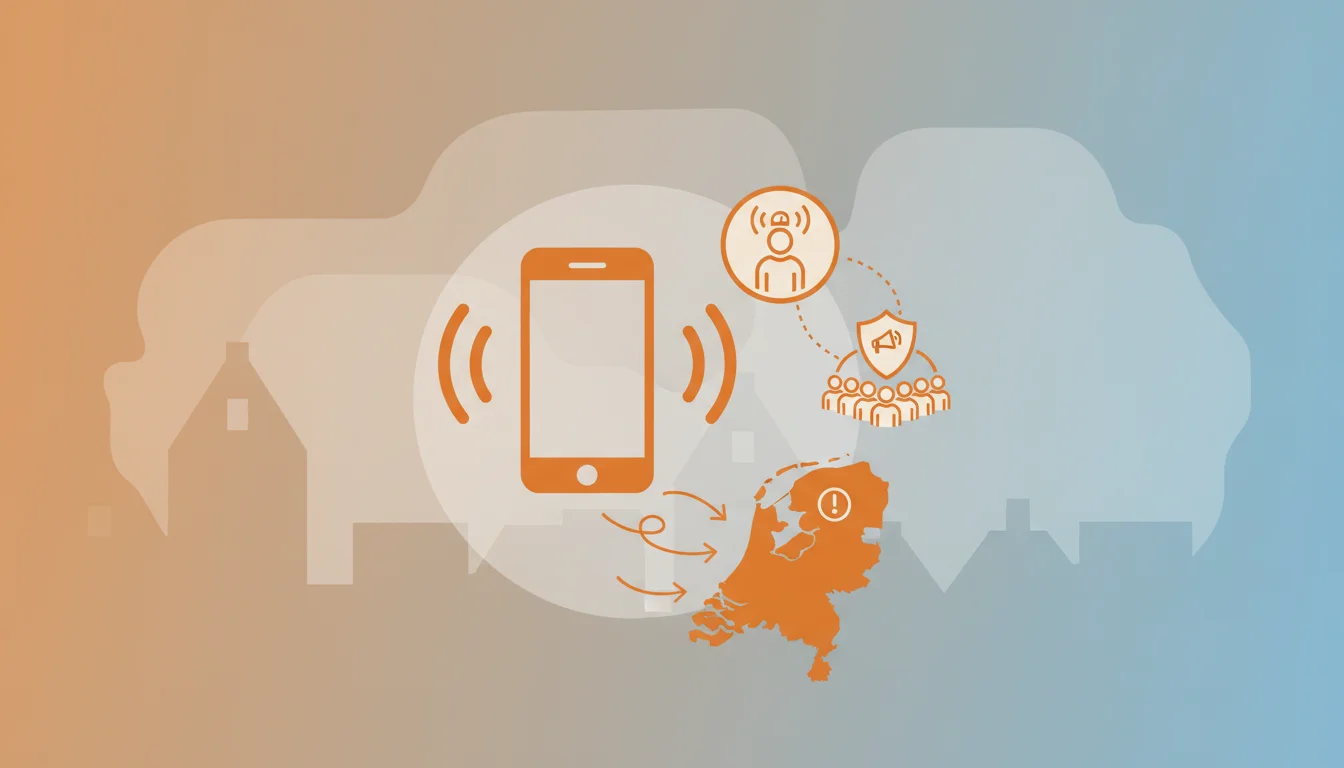
Imagine this: You have just moved to the Netherlands. It is a beautiful Monday afternoon. You are sitting in your living room, enjoying a quiet cup of coffee and perhaps a slice of gouda cheese. Suddenly, at exactly 12:00 PM, a deafening, apocalyptic wail echoes through the streets. Panic sets in. You rush to the window, expecting to see people fleeing in terror. Instead, you see a completely normal scene: a mother cycling with three kids on a bakfiets, a postman delivering mail, and a neighbor casually sweeping their front step. Welcome to the Netherlands, and congratulations on experiencing your very first Luchtalarm (air raid siren) test!
For almost every expat, international student, and newly arrived resident, the monthly Dutch emergency drill is a shocking rite of passage. It violently interrupts the peaceful, heartwarming coziness that usually defines Dutch daily life. But what exactly is this siren? Why does it go off so regularly? And more importantly, how do you know when it is an actual emergency? In this comprehensive guide, we will dive into everything expats need to know about the Dutch emergency warning systems, including the traditional sirens and the modern digital NL-Alert system.
The system responsible for that heart-stopping midday noise is officially known as the Waarschuwings- en Alarmeringssysteem (WAS), which translates to the Warning and Alarm System. Currently, there are around 4,278 of these sirens mounted on tall poles and buildings across the entire country. The system was originally designed during the Cold War era to warn the population of an impending air raid or military attack. Today, however, the sirens serve a much broader purpose. They are designed to alert the public to acute, life-threatening local emergencies, such as a massive chemical fire at an industrial plant, a severe release of toxic gases, or extreme flooding.
The Dutch government tests the entire network of sirens on the first Monday of every month at exactly 12:00 PM (noon). There are a few exceptions: if the first Monday of the month happens to fall on a national holiday, religious holiday, or Remembrance Day, the test is skipped for that month to avoid confusion and maintain respect for the occasion.
This monthly testing serves two primary purposes:
While the monthly test might seem annoying at first, it quickly becomes an amusing quirk of Dutch life. In fact, bonding over the shared panic of your first siren experience is a fantastic icebreaker when building relationships with your Dutch neighbors.
So, you know the drill for the first Monday of the month. But what happens if you hear the siren on a Tuesday at 3:00 PM, or a Thursday night? If the siren sounds at any time other than the scheduled test time, or if it sounds multiple times in a row, it means there is a real, immediate danger in your area. You must act quickly.
If the alarm sounds for a real emergency, the Dutch government advises everyone to immediately follow these three vital steps:
While the physical sirens are iconic, we live in a digital world. Enter NL-Alert, the modern counterpart to the Luchtalarm. NL-Alert is the Dutch government's emergency alert system for mobile phones. It uses Cell Broadcast technology to send a loud, vibrating push notification directly to every mobile phone connected to a cell tower in a specific danger zone.
Unlike standard text messages (SMS), NL-Alerts do not rely on your phone number, and they do not get delayed by network congestion. If you are physically located in an area where an emergency is happening, your phone will receive the alert, even if the mobile network is overloaded. The message will clearly state:
Just like the physical sirens, NL-Alert needs to be tested to ensure the infrastructure is working and to remind citizens of how it functions. The government broadcasts a national test message twice a year: on the first Monday of June and the first Monday of December, right around 12:00 PM, coinciding with the siren test. When this happens, millions of phones across the Netherlands will simultaneously vibrate and emit a loud, distinct alarm tone. Do not be alarmed—the message will clearly state in Dutch (and often in English) that it is a test (Controlebericht).
The best part about NL-Alert is that you do not need to download an app or sign up for a service. It is built directly into the operating system of all modern smartphones (iOS and Android). However, to ensure you receive them, you must have "Emergency Alerts" or "Government Alerts" enabled in your phone's notification settings. For detailed, step-by-step instructions on checking your phone settings, you can visit the official Dutch government website on NL-Alert.
An emergency alert in the Netherlands is an automated government broadcast sent via cell broadcast technology or local sirens to notify citizens of immediate health, safety, or environmental hazards in their area. Known locally as an NL-Alert when delivered to mobile devices, this public safety tool alerts people within a specific geographical cell tower range without requiring prior registration or collecting personal telephone numbers. Whether you are at home, traveling across the country, or attending late summer Dutch festivals, any active phone in the impacted district will trigger a loud alarm sound and display clear instructions on screen.
Unlike standard text messages that can suffer from network congestion during large-scale incidents, an emergency alert utilizes dedicated channels that bypass normal traffic queues. This ensures that critical instructions—such as staying indoors during an industrial gas leak, seeking shelter from severe squalls during the Dutch summer holiday season, or evacuating rising floodwaters—reach every phone user in seconds. The broadcast includes details on the nature of the crisis, the precise location affected, and concrete advice on how to remain safe until local authorities give the all-clear signal.
The Dutch government reserves the emergency alert system for situations where public safety is actively threatened and rapid response is essential. Understanding what triggers these notifications helps reduce panic when your phone suddenly emits the distinct warning siren.
International visitors and expats using non-Dutch SIM cards or foreign mobile handsets will still receive an emergency alert as long as their phone is connected to a Dutch mobile network tower and emergency broadcasts are enabled in device settings. Most modern iOS and Android systems handle these cell broadcasts automatically in the regional language, though many alerts in tourist areas or major urban centers include key advice in both Dutch and English.
During a crisis, information is usually broadcast rapidly in Dutch. While many emergency services speak excellent English, understanding key Dutch vocabulary can save you precious time. Here is a survival glossary for Dutch emergencies:
Memorizing this vocabulary is crucial for your safety and confidence as an expat. If you are looking to master these terms and more, the StroopTaal app is your perfect companion. With our AI-powered personalized learning plans, you can practice real-life Dutch conversation scenarios, including interactive dialogue games that simulate calling the emergency services or asking a neighbor for help. The app uses spaced repetition to ensure critical vocabulary like brandweer and noodsituatie sticks in your long-term memory.
In your home country, you might be used to dialing 911 or 999. In the Netherlands, the emergency numbers are different, and the Dutch make a strict distinction between life-threatening emergencies and non-urgent situations. Knowing which number to call is a key part of living here.
Dial 112 only for acute, life-threatening situations, or if you witness a crime in progress. This includes severe medical emergencies, major fires, or witnessing a burglary. When you call 112, the operator will ask you three things: which service you need (Police, Fire, or Ambulance), the town you are in, and the exact address. The operators speak fluent English, so do not hesitate to call if you cannot speak Dutch yet.
The Dutch have a famous slogan: "Geen spoed, wel politie" (No rush, but police). Dial 0900-8844 if you need the police but there is no immediate danger to life or property. Examples include reporting a stolen bicycle (after the fact), a minor traffic accident with no injuries, or an ongoing noise complaint. Calling 112 for these issues ties up critical lines and is highly frowned upon.
If you are planning to stay in the Netherlands long-term, you will likely need to pass the Inburgering (Civic Integration) exams. One of the core components of these exams is the Knowledge of Dutch Society (KNM) test. A significant portion of the KNM exam focuses on health, safety, and interacting with Dutch authorities.
You will be expected to know the difference between 112 and 0900-8844, understand what the first Monday of the month siren means, and know how to react to an NL-Alert. You must also demonstrate an understanding of how the healthcare system works, such as visiting a huisarts (general practitioner) before going to the hospital for non-emergencies.
This is where structured learning makes all the difference. If you are preparing for your civic integration exams, the StroopTaal app offers dedicated Inburgering exam preparation modules alongside its grammar lessons from A0 to C1 level. Our cultural lessons dive deep into Dutch life and customs, ensuring you don't just memorize facts, but truly understand how Dutch society functions. Plus, our pronunciation training with instant feedback helps you work on speaking clearly, so you are better prepared when you need to speak Dutch in a high-pressure situation.
Technology is constantly evolving, and so is the Dutch approach to public safety. For several years, the Dutch government has been debating the phase-out of the physical Luchtalarm network. The argument is that maintaining the aging mechanical sirens is incredibly expensive, and the digital NL-Alert system has proven to be vastly more effective, reaching over 90% of the population within seconds, including providing specific instructions rather than just a loud noise.
Originally, the sirens were scheduled to be decommissioned in 2020. However, this date has been pushed back multiple times due to concerns about reaching the elderly, people without smartphones, and areas with poor mobile reception. Currently, the government plans to keep the sirens active until at least the end of 2025, while continuing to improve the reach and reliability of NL-Alert. Until then, you can expect the familiar midday wail to continue marking the beginning of every new month.
Hearing the air raid sirens for the first time is a rite of passage for every expat in the Netherlands. But once you understand the history behind the Luchtalarm, the functionality of the NL-Alert system, and the practical steps to take during a real emergency, that monthly noise transforms from a source of panic into a reassuring reminder that the Dutch emergency infrastructure is active and well-maintained.
Remember the golden rules: if you hear the siren outside of the monthly test, go inside, close your windows and doors, and check the regional news. Ensure your phone is set up to receive NL-Alerts, and take the time to memorize vital emergency vocabulary. By preparing yourself, you can enjoy your life in the Netherlands with peace of mind, knowing exactly what to do when the unexpected happens.
Ready to feel more confident navigating daily life in the Netherlands? Download the StroopTaal app today to start mastering Dutch vocabulary, perfecting your pronunciation, and preparing for your Inburgering exams with our engaging, AI-powered lessons!
Share this article:
Introduction to the Beloved Dutch Pannenkoek When you think of the Netherlands, your mind might immediately wander to windmills, tulips, bicycles,...
Read moreIntroduction If you have recently moved to the Netherlands, or are in the thick of preparing for your inburgering exam, the spring season can be a...
Read moreMoving to the Netherlands is an exhilarating adventure. You have sorted out your BSN, navigated the housing market, and finally unpacked your boxes....
Read more