The Dutch Poldermodel: Consensus in Culture and Work
Introduction to the Dutch Consensus Culture If you have recently moved to the Netherlands or started working for a Dutch company, you might have...
Read more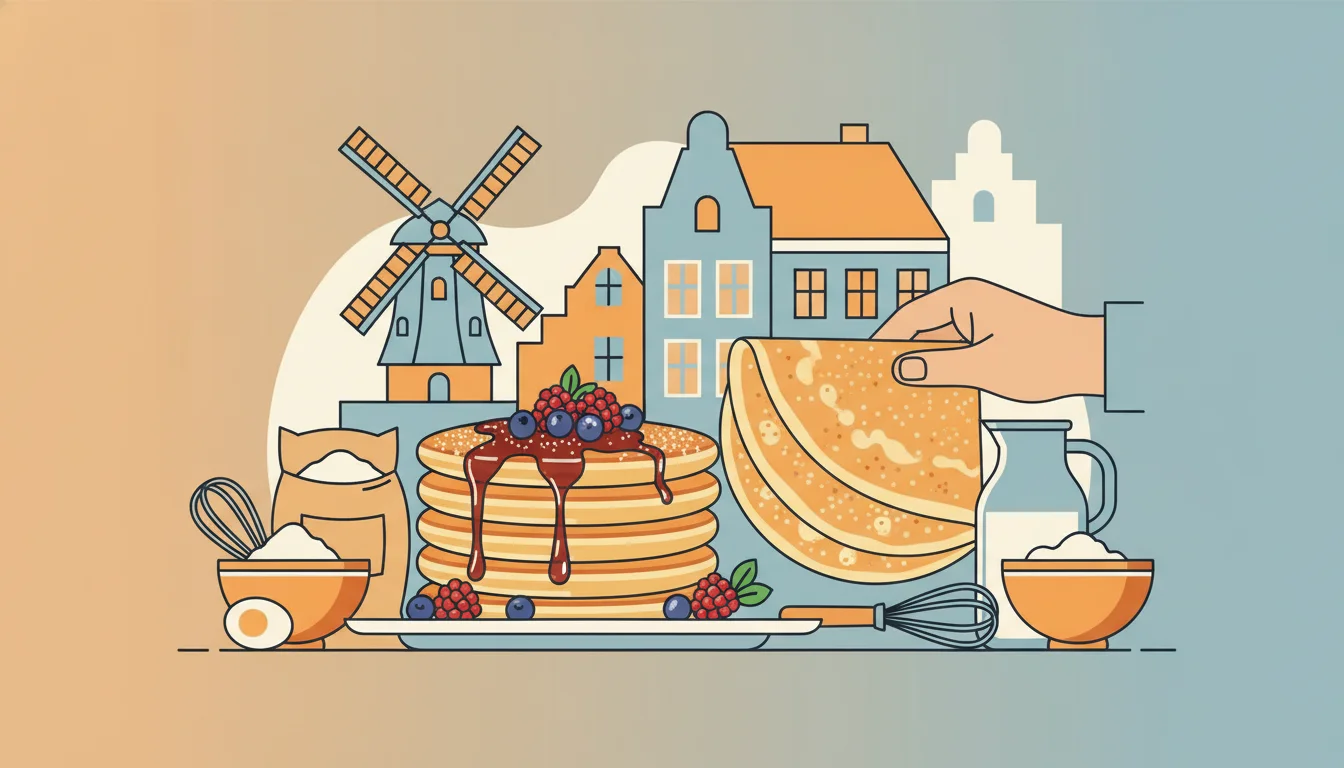
When you think of the Netherlands, your mind might immediately wander to windmills, tulips, bicycles, and perhaps a wedge of Gouda cheese. But if you ask any Dutch local or seasoned expat about the true culinary heartbeat of the country, they will undoubtedly point you toward the glorious, plate-sized marvel known as the pannenkoek. In the Netherlands, pancakes are not just a quick breakfast option; they are a cultural institution, a beloved dinner meal, and the centerpiece of countless family outings.
For expats, international students, and anyone learning the Dutch language, understanding pannenkoeken culture is a delicious rite of passage. It is a topic that bridges the gap between simple gastronomy and deep-rooted societal traditions. Whether you are aiming to pass your Inburgering exam or simply want to feel more at home in your new Dutch neighborhood, diving into the world of Dutch pancakes is an excellent place to start. In this comprehensive guide, we will explore the history of the Dutch pancake, the heartwarming traditions of National Pancake Day, how to bake your own at home, and the essential Dutch vocabulary you need to order like a true local.
While many countries celebrate a variation of Pancake Tuesday (Shrove Tuesday), the Netherlands has carved out its own unique celebration: Nationale Pannenkoekdag (National Pancake Day). Typically held on a Friday in March, this day is far more than just a marketing gimmick or an excuse to eat sweets. It is a heartwarming social initiative that beautifully encapsulates the Dutch spirit of community care.
The tradition began in 2007, sponsored by major Dutch food and cookware brands, with a very specific and touching goal: connecting generations. On Nationale Pannenkoekdag, primary school children across the country tie on their aprons, mix massive bowls of batter, and bake thousands of pancakes for the elderly in their communities. Schools partner with local nursing homes and care centers, transforming cafeterias into bustling pancake restaurants.
For the elderly residents, it is a day of joy, lively conversation, and a break from the routine. For the children, it teaches respect, community service, and, of course, practical cooking skills. This intergenerational mingling is a perfect example of understanding the true meaning of gezelligheid—that warm, cozy, and socially connected feeling that defines Dutch culture. If you have children attending a Dutch primary school, you will likely hear all about their preparations for this special day!
If you are accustomed to thick, fluffy American pancakes stacked high and drenched in maple syrup, or paper-thin French crêpes folded delicately on a plate, the Dutch pannenkoek will be a delightful new experience. So, what exactly makes a pancake uniquely Dutch?
A traditional Dutch pancake is massive. It is cooked in a large frying pan and usually hangs slightly over the edges of a standard dinner plate. In terms of thickness, it sits comfortably right in the middle—thicker and heartier than a crêpe, but significantly thinner than an American pancake because it does not use rising agents like baking powder or baking soda.
Historically, the batter was made using a blend of wheat flour and buckwheat flour (boekweitmeel). Buckwheat grows well in the poor, sandy soils of the Netherlands, making it a historical staple. Today, many traditional recipes for the pannenkoek still call for this half-and-half mixture, which gives the pancake a slightly nutty flavor, a darker color, and a beautifully crisp edge when fried in generous amounts of butter.
In the Netherlands, pancakes are predominantly eaten for dinner (avondeten), which explains the popularity of savory toppings. While you can certainly order a simple pancake with powdered sugar (poedersuiker), the real magic happens when ingredients are baked directly into the batter. Some classic combinations include:
And we cannot talk about Dutch pancakes without mentioning schenkstroop. Unlike North American maple syrup, Dutch syrup is made from sugar beets. It is dark, thick, slightly molasses-flavored, and absolutely essential for an authentic experience.
While making pancakes at home is common, going out to a pannenkoekenhuis (pancake house) is a cherished family tradition. These restaurants are often located in picturesque settings—deep in the woods (in het bos), on the edge of national parks, or housed in historic, thatched-roof farmhouses. They feature rustic decor, checkered tablecloths, and a highly family-friendly atmosphere.
A visit to a pancake house is the classic reward after a long Sunday afternoon walk in the forest or a strenuous bicycle ride across the dunes. It fits perfectly into the pantheon of hearty, warming meals, much like the traditional Dutch winter comfort foods that locals rely on to refuel.
For a truly unique experience, you can even dine on a Pannenkoekenboot (Pancake Boat). Operating in cities like Amsterdam, Rotterdam, and Nijmegen, these cruise ships offer all-you-can-eat pancakes while you sail along the Dutch waterways. It is a fantastic, albeit touristy, way to experience the culture.
Integrating into the Netherlands means learning the language, and what better way to practice than with food? Before you head out to a local pancake house, you might want to brush up on your ordering skills. With StroopTaal, our AI-powered Dutch language learning app, you can use the interactive dialogue games for practical scenarios to practice ordering food in a restaurant setting. It is a fantastic way to build confidence before interacting with real waiters!
Here is some essential vocabulary to get you started:
Notice how we use "het" for beslag and "de" for koekenpan? Mastering Dutch articles can be tricky, but the De/Het article mastery games in the StroopTaal app make it intuitive and fun through daily practice.
Ready to bring the taste of the Netherlands into your own kitchen? Baking Dutch pancakes is incredibly straightforward. Here is a foolproof, traditional recipe that yields about 4 to 5 large pancakes.
No guide to Dutch pancake culture would be complete without mentioning the adorable, bite-sized cousins of the pannenkoek: poffertjes. While pannenkoeken are large and flat, poffertjes are small, puffy, and incredibly light.
The secret to their fluffy texture lies in the batter, which is made with yeast (unlike the standard pannenkoek batter) and allowed to rise. They are cooked in a special cast-iron pan called a poffertjespan, which features dozens of shallow, round indentations.
Poffertjes are deeply ingrained in Dutch street food culture. You will find poffertjes stands (poffertjeskramen) at winter markets, fairs, and during national celebrations. In fact, if you are navigating major Dutch holidays like King's Day, grabbing a paper tray of piping hot poffertjes is practically mandatory. They are traditionally served with a massive lump of butter melting over the top and a heavy dusting of powdered sugar. You eat them with a small wooden fork, and they melt in your mouth.
You might wonder why a language learning blog is spending so much time talking about pancakes. The truth is, language and culture are inextricably linked. You cannot truly master Dutch without understanding the traditions, the daily habits, and the foods that shape the lives of the people who speak it.
Understanding local food customs is a surprisingly important part of your integration journey. In fact, if you are preparing for your exams, the cultural lessons about Dutch life and customs inside the StroopTaal app provide excellent context for the KNM (Knowledge of Dutch Society) exams, alongside our comprehensive Inburgering exam preparation modules. Knowing about Nationale Pannenkoekdag, the history of buckwheat, and the social etiquette of dining out gives you a profound advantage in both your exams and your everyday life in the Netherlands.
Food is the ultimate icebreaker. Knowing how to bake a traditional Dutch pancake or knowing the best local pannenkoekenhuis to recommend is a fantastic way to connect with your Dutch colleagues and neighbors.
The Dutch pannenkoek is a symbol of warmth, community, and culinary comfort. From the heartwarming initiatives of Nationale Pannenkoekdag to the cozy, rustic interiors of the local pancake houses, this simple dish holds a special place in the heart of the Netherlands. Whether you prefer yours drowning in dark sugar beet syrup, loaded with savory bacon and cheese, or baked with sweet cinnamon apples, experiencing a true Dutch pancake is a joy every expat should embrace.
Are you ready to take your Dutch integration to the next level? Download the StroopTaal app today! With our AI-powered personalized learning plans, pronunciation training with instant feedback, and rich cultural lessons, you can practice ordering your pannenkoek met spek en stroop in Dutch. Eet smakelijk! (Enjoy your meal!)
Share this article:
Introduction to the Dutch Consensus Culture If you have recently moved to the Netherlands or started working for a Dutch company, you might have...
Read moreThe Expat Rite of Passage: Surviving Your First Dutch Siren Imagine this: You have just moved to the Netherlands. It is a beautiful Monday afternoon....
Read moreIntroduction If you have recently moved to the Netherlands, or are in the thick of preparing for your inburgering exam, the spring season can be a...
Read more