Celebrating NL-Alert and Dutch Emergency Drills: What Expats Need to Know
The Expat Rite of Passage: Surviving Your First Dutch Siren Imagine this: You have just moved to the Netherlands. It is a beautiful Monday afternoon....
Read more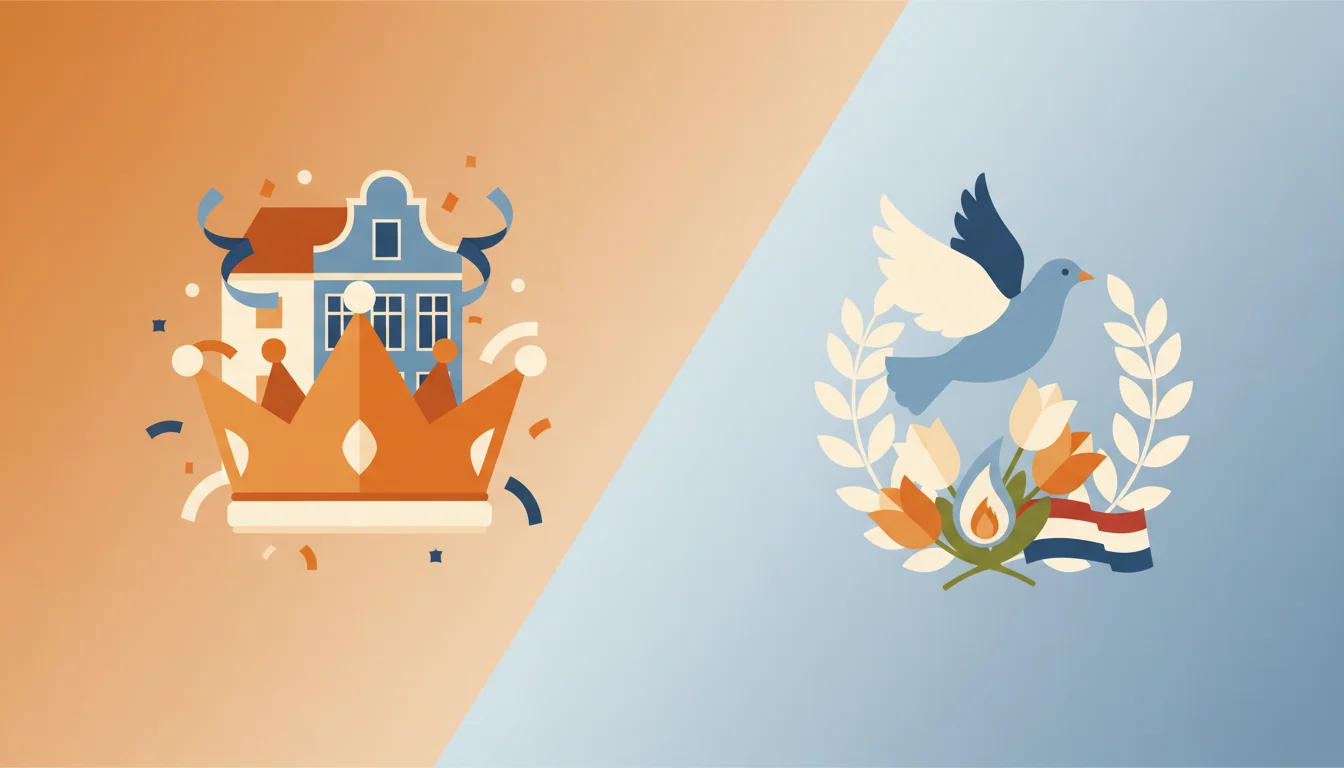
If you have recently moved to the Netherlands, or are in the thick of preparing for your inburgering exam, the spring season can be a whirlwind of confusion, orange clothing, and solemn silence. Within the span of just over a week, the Dutch celebrate their most boisterous party of the year and observe their most solemn moment of remembrance.
Understanding the difference between King's Day (Koningsdag), Remembrance Day (Dodenherdenking), and Liberation Day (Bevrijdingsdag) is essential for anyone looking to integrate into Dutch society. It is not just about knowing when to take a day off work; it is about grasping the cultural heartbeat of the nation.
In this guide, we will break down the history, traditions, and etiquette of these major national holidays so you can celebrate (and commemorate) like a true local.
Date: April 27th
If you walk outside on April 27th wearing anything other than orange, you will immediately stand out. King's Day is the birthday celebration of King Willem-Alexander. It is a national holiday characterized by Oranjegekte (Orange craze).
For decades, this holiday was known as Koninginnedag (Queen's Day) and was celebrated on April 30th. Even today, you will spot tourists wandering around Amsterdam with orange hats on April 30th, wondering where the party is. Don't be that person! When King Willem-Alexander ascended the throne in 2013, the date shifted to his actual birthday, April 27th.
Aside from the festivals and boat parties, the most charming tradition is the vrijmarkt (free market). On this day, the government lifts permit requirements for street trading. This turns the entire country into one massive flea market. Children play violin for change, neighbors sell homemade cookies, and you can buy second-hand furniture for a bargain.
Pro Tip: Carry small change (cash) if you want to buy trinkets or play games at the vrijmarkt. Tikkie (mobile payment) is popular, but coins are king on the street.
Date: May 4th
Before the celebrations of Liberation Day begin, the Dutch take a moment to pause. May 4th is not a public holiday in terms of time off, but it is a culturally significant day. It is dedicated to remembering all Dutch civilians and soldiers who have died in the Kingdom of the Netherlands or elsewhere in the world since the outbreak of World War II, in war situations and peacekeeping operations.
The main ceremony takes place at Dam Square in Amsterdam, attended by the King and Queen. However, the most poignant moment happens nationwide at 20:00 (8:00 PM).
For two minutes, the entire country goes silent. Trains stop running, cars pull over on the highway, and conversations cease in living rooms and bars alike. It is a powerful demonstration of collective respect.
Cultural Note: If you are at a restaurant or walking on the street at 7:58 PM on May 4th, stop what you are doing. Being loud during these two minutes is considered very disrespectful.
Date: May 5th
Once the clock strikes midnight after Remembrance Day, the mood shifts from mourning to celebration. May 5th marks the end of the Nazi occupation in World War II. It is a day to celebrate freedom, democracy, and human rights.
Fourteen large Bevrijdingsfestivals (Liberation Festivals) are held across the country. These are free music festivals featuring top Dutch and international artists. The government even appoints "Ambassadors of Freedom" (usually famous Dutch singers) who fly by helicopter from city to city to perform.
This is the most common question expats ask. Unlike King's Day, Liberation Day is not automatically a paid day off for everyone. It is a national holiday, but whether you have the day off depends on your employment contract and industry (CAO). For civil servants, it is usually a day off every year. For many private sectors, it is a paid holiday only once every five years (2025, 2030, etc.). Always check with your HR department!
To truly immerse yourself, you need to speak the language. Here are some key terms you will encounter:
Building your vocabulary is crucial for feeling at home in the Netherlands. StroopTaal makes this easier by using spaced repetition to help you memorize these seasonal terms just in time for the holidays. Plus, our cultural lessons dive deeper into the context of these words, which is perfect if you are preparing for the Kennis van de Nederlandse Maatschappij (KNM) part of your civic integration exam.
Navigating these holidays can be intimidating if your Dutch skills are still at the A0 or A1 level. You might want to haggle at the flea market on King's Day or discuss the meaning of freedom with Dutch friends on May 5th.
Here is how you can prepare:
King's Day and Liberation Day represent two sides of the Dutch coin: the ability to party wildly and the capacity to reflect deeply. By understanding the difference between April 27th, May 4th, and May 5th, you move one step closer to feeling like a true Nederlander.
Don't let the language barrier stop you from joining the festivities. Whether you are negotiating for an old lamp on a rug in Amsterdam or listening to a speech on Dam Square, knowing the right words makes all the difference. If you need to express polite wishes or requests during these events, mastering zouden can be incredibly helpful for your social interactions. For more information on official holiday dates and regulations, you can visit the official website of the Dutch government.
Ready to boost your Dutch before the holidays? Download StroopTaal today to start your personalized learning plan and master the language of the Low Countries!
Share this article:
The Expat Rite of Passage: Surviving Your First Dutch Siren Imagine this: You have just moved to the Netherlands. It is a beautiful Monday afternoon....
Read moreMoving to the Netherlands is an exhilarating adventure. You have sorted out your BSN, navigated the housing market, and finally unpacked your boxes....
Read moreSurviving the Dutch Winter with Gezelligheid and Calories If you have spent more than a few days in the Netherlands during the winter months, you...
Read more