The Dutch 'Borrel' Etiquette: What to Expect at a Friday Afternoon Drink
It is Friday afternoon at 16:45. Keyboard clicking slows down, laptops begin to snap shut, and someone across the open-plan office calls out the...
Read more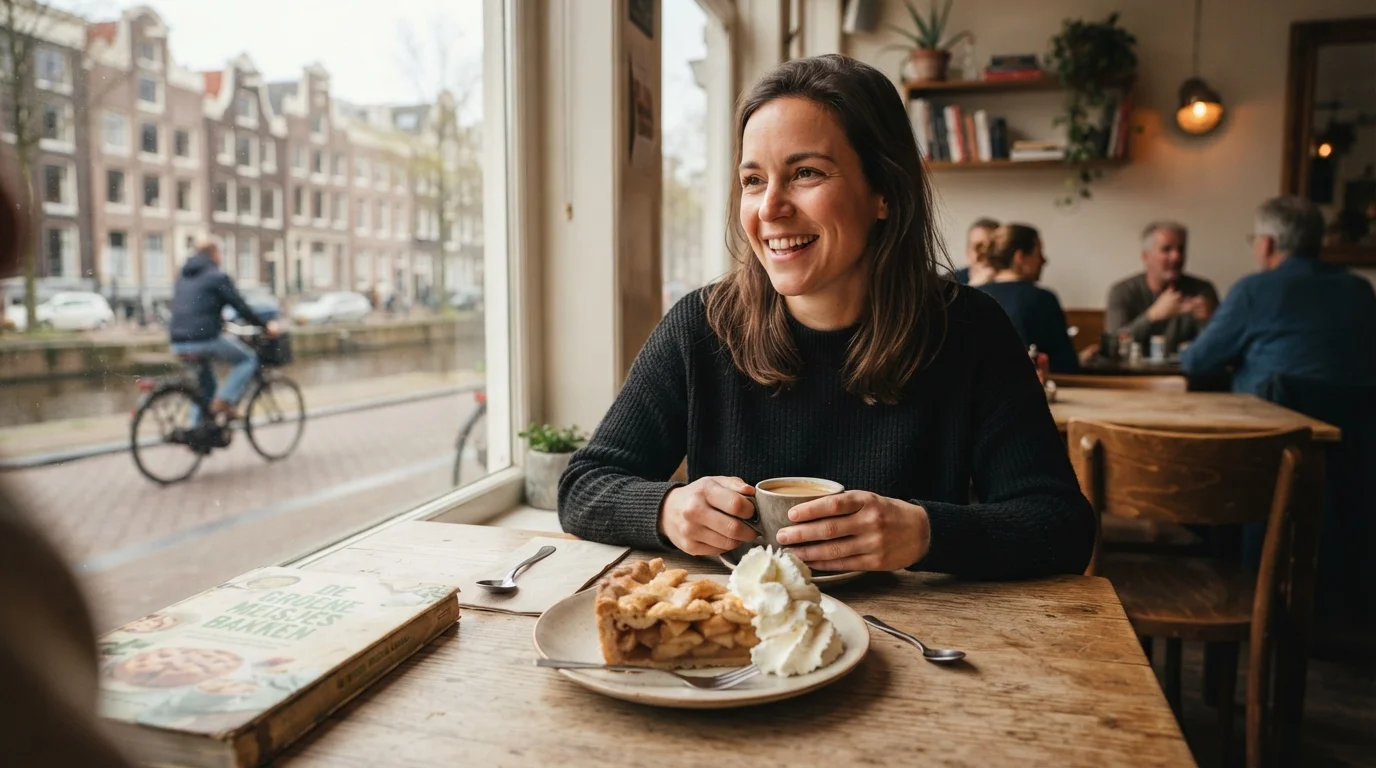
Step into any traditional Dutch café on a brisk afternoon, and you will almost certainly be greeted by a familiar, intoxicating aroma: warm cinnamon, caramelized butter, and stewed apples. Within moments, you will spot a glass display case proudly housing an enormous, deep-dish pie with a golden lattice crust, crowned with a mountain of freshly whipped cream. This is Nederlandse appeltaart (Dutch apple pie)—an iconic pillar of Dutch culinary life.
For expats, travelers, and Dutch language learners, discovering appeltaart is practically a rite of passage. It is not just a dessert; it is an institution woven into birthdays, Sunday family visits, café work breaks, and rainy bike rides. But how did a humble pie become the quintessential Dutch comfort food, and why do locals hold it in such high regard? Let us dive into the history, cultural rituals, essential vocabulary, and secret baking traditions behind this national obsession.
While apple pies are enjoyed across the globe, the Dutch version is among the oldest continuously baked varieties in European culinary history. The earliest known printed recipe for Dutch apple pie dates back to 1514, found in a seminal cookbook titled Een notabel boecxken van cokeryen ("A Notable Little Cookery Book"), printed in Antwerp.
This early sixteenth-century recipe was surprisingly sophisticated. It called for a standard pastry crust filled with sliced, soft-cooked apples, enriched with aromatic spices like cardamom, ginger, cinnamon, nutmeg, and clove, along with sugar and raisins. The pie was topped with a decorative pastry lattice—a visual trademark that remains essential to this day.
During the Dutch Golden Age in the 17th century, the Netherlands became a global hub of maritime trade. The Dutch East India Company (VOC) imported exotic spices in abundance, making cinnamon and nutmeg accessible to Dutch domestic kitchens. Paired with the thriving orchards of regions like the Betuwe (famed for its rich fruit farming soil along the Rhine and Waal rivers), the classic spiced apple pie transformed from an aristocratic indulgence into a widespread household staple. To explore more about the historical roots of traditional Dutch cuisine, take a look at our guide to traditional Dutch autumn recipes.
If you come from North America or Britain, you might wonder: isn't apple pie basically the same everywhere? Not quite. Traditional Dutch appeltaart stands distinctively apart from French tarte tatin, American double-crust apple pie, or British apple crumbles.
According to historical records on Dutch apple pie, these defining characteristics have remained remarkably consistent for centuries.
You cannot understand the Dutch love for appeltaart without understanding the concept of gezelligheid. Appeltaart is the edible embodiment of warmth, comfort, and togetherness. Whether you are seeking shelter from a gray drizzle or gathering around a living room table, a freshly sliced pie sets the mood instantly. For more on this mindset, read our guide to understanding Dutch gezelligheid in autumn.
In the Netherlands, ordering coffee at a terrace or café almost always prompts the waiter to ask if you would like something sweet on the side. The default, undisputed champion is appeltaart. It is consumed at nearly any hour—as an elevenses treat around 10:30 AM, an afternoon pick-me-up around 3:30 PM, or a casual weekend reward after a long bike ride.
If you are invited to a traditional Dutch birthday party (where guests famously sit in a circle to congratulate everyone in the room), you will almost certainly be offered coffee and homemade appeltaart right after arriving. Baking a pie from scratch is seen as the ultimate gesture of hospitable, no-nonsense hospitality (gastvrijheid).
When you order appeltaart in the Netherlands, you will immediately hear the follow-up question: "Met of zonder slagroom?" (With or without whipped cream?). Unless dietary restrictions prevent it, the culturally authentic answer is always: "Met slagroom, alstublieft!" Dutch whipped cream is lightly sweetened, airy, and served in an abundant, fluffy dollop right beside or on top of the slice.
Practicing your Dutch in practical everyday scenarios is one of the most rewarding parts of language learning. Here is a curated vocabulary list and sample dialogue to help you order with confidence at any Dutch bakery or café:
| Dutch Term | English Meaning |
|---|---|
| De appeltaart | The apple pie / apple tart |
| Een puntje / stukje taart | A slice / piece of pie |
| De slagroom | Whipped cream |
| Het kaneel | Cinnamon |
| De rozijnen | Raisins |
| Ambachtelijk | Artisanal / traditional craft |
| Versgebakken | Freshly baked |
| Lauw / Warm | Lukewarm / Warm |
Ober (Waiter): Goedemiddag! Wat mag het voor u zijn? (Good afternoon! What can I get for you?)
Jij (You): Goedemiddag! Mag ik een cappuccino en een stukje appeltaart, alstublieft? (Good afternoon! May I have a cappuccino and a slice of apple pie, please?)
Ober: Natuurlijk. Wilt u daar slagroom bij? (Of course. Would you like whipped cream with that?)
Jij: Ja graag, met slagroom! Is de taart warm? (Yes please, with whipped cream! Is the pie warm?)
Ober: We kunnen hem even voor u opwarmen als u wilt. (We can warm it up for you if you like.)
Jij: Heerlijk, dank u wel! (Wonderful, thank you!)
If you want to practice real-life conversational scenarios like ordering food, navigating bakeries, or chatting with neighbors, the StroopTaal app offers AI-powered conversation practice and instant pronunciation feedback. It enables you to master real-world Dutch dialogues with confidence before you step up to the café counter.
Baking your own appeltaart is surprisingly straightforward and will make your home smell incredible. You can pick up all the essential baking supplies during your routine trip to Albert Heijn or Jumbo—for tips on navigating local grocers, check out our guide to saving money at Dutch supermarkets.
While almost every café serves a respectable slice, a few historic establishments have achieved legendary status for their pies:
Mastering a new language goes far beyond memorizing grammar rules and verb conjugations—it is about connecting with the lived experiences, flavors, and rituals of the people who speak it. Understanding why the Dutch cherish appeltaart gives you an immediate conversation starter with colleagues, neighbors, and locals.
With StroopTaal, you can explore cultural lessons alongside bite-sized grammar modules, vocabulary flashcards with spaced repetition, and real-life dialogue games. Whether you are prepping for your Inburgeringsexamen or simply want to feel at home in your local neighborhood café, learning Dutch through culture makes every step of the journey richer.
Appeltaart is far more than apples and pastry—it is a warm invitation into Dutch social life, a testament to centuries of trading history, and the ultimate symbol of daily gezelligheid. The next time you find yourself at a Dutch café, skip the standard pastry options, order een puntje appeltaart met slagroom, and savor a slice of genuine Dutch heritage.
Ready to boost your Dutch skills so you can order, chat, and connect like a true local? Download StroopTaal today to start your personalized learning journey with interactive dialogues, pronunciation practice, and cultural insights!
Share this article:
It is Friday afternoon at 16:45. Keyboard clicking slows down, laptops begin to snap shut, and someone across the open-plan office calls out the...
Read moreMoving to the Netherlands as an expat or international resident comes with plenty of cultural discoveries—from navigating bike lanes in the pouring...
Read moreAs the golden days of late summer begin to fade across the Netherlands, a quiet but profound transformation takes place. The canal terraces pack away...
Read more