The Dutch 'Borrel' Etiquette: What to Expect at a Friday Afternoon Drink
It is Friday afternoon at 16:45. Keyboard clicking slows down, laptops begin to snap shut, and someone across the open-plan office calls out the...
Read more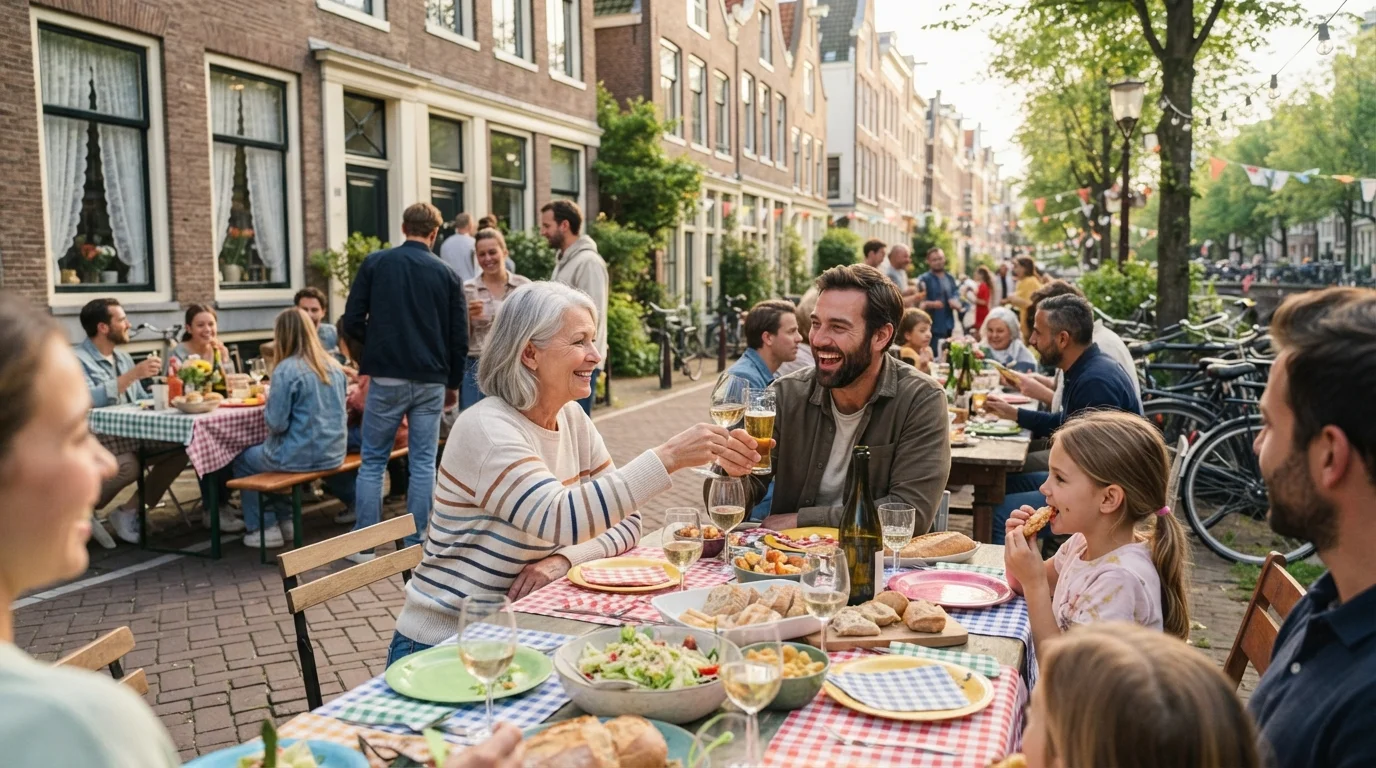
Moving to the Netherlands as an expat or international resident comes with plenty of cultural discoveries—from navigating bike lanes in the pouring rain to deciphering the intricate rules of calendar etiquette. But if there is one annual event that bridges the gap between arriving as a newcomer and genuinely feeling at home in your local neighborhood, it is Burenfeest (officially celebrated nationwide as Burendag, or Neighbour's Day).
Held annually on the fourth Saturday of September, this nationwide celebration transforms quiet residential streets, canal-side courtyards, and apartment complexes into hubs of lively conversation, shared food, and community activities. For expats, participating in your local Burenfeest is one of the most effective and heartwarming ways to break the ice, practice your conversational Dutch, and experience true community spirit.
In this comprehensive guide, we will explore the history of Burendag, explain what to expect on the day, offer practical etiquette tips on what to bring, and provide essential Dutch phrases to help you connect effortlessly with your buren (neighbors).
While street parties (straatfeesten) have long been a fixture of Dutch life, the modern institutional tradition of Burendag was established in 2006. It began as a joint initiative between the famous Dutch coffee brand Douwe Egberts and the Oranje Fonds (the Dutch royal charity fund dedicated to social cohesion). The core philosophy was simple: strong neighborhoods start with people sitting down together over a warm cup of coffee (een bakkie doen).
Over the years, the initiative exploded in popularity. Today, tens of thousands of neighborhoods across the Netherlands register their events each September. Streets are decorated with bunting, communal benches (picknicktafels) appear out of nowhere, and neighbors of all generations come together to garden, tidy up shared spaces, play games, or simply share drinks and snacks.
For anyone striving to understand the Dutch concept of gezelligheid in autumn, Burendag is living proof that neighborliness in the Netherlands is both deliberate and deeply cherished.
Dutch people are known for being friendly yet polite and protective of their personal privacy. You might exchange a brisk "Hallo!" or "Goedemorgen!" at the front door, but turning casual acquaintances into meaningful relationships often requires a dedicated occasion. Burenfeest is precisely that occasion.
Depending on whether you live in a bustling apartment building in Amsterdam, a family-friendly nieuwbouwwijk (new development) in Utrecht, or a village in Gelderland, Burendag can take several forms:
Many neighborhoods use the morning hours productively. Neighbors might band together to paint communal fences, plant flower bulbs for spring, weed communal planters, or organize a street sweep. Joining in with a pair of gardening gloves is an instant icebreaker.
Around 10:30 or 11:00 AM, the work gives way to a coffee break. Big thermoses of filter coffee, tea, and an assortment of baked goods appear on communal tables. This is often the prime time for older residents and young families to mingle.
By late afternoon, the mood transitions into a relaxed social gathering. Children play street games like stoepranden (curb ball) or bouncy castles, while adults enjoy a classic neighborhood drink. Understanding Dutch borrel culture and etiquette will make you feel right at home as beer, wine, cheese cubes, and bitterballen circulate.
If you receive an invitation in your letterbox (or via the neighborhood WhatsApp group), you might wonder: What should I contribute? Here are the golden rules of Burenfeest hospitality:
You do not need fluent Dutch to make a great impression, but opening with a few friendly, well-timed Dutch phrases will instantly warm hearts. Here is your Burenfeest cheat sheet:
If you feel nervous about having spontaneous conversations in Dutch, you don't have to wing it unprepared. Using StroopTaal, you can engage in realistic AI-powered conversation practice and dialogue scenarios designed specifically for Dutch neighborhood gatherings, social parties, and daily interactions. You will gain instant feedback on your pronunciation and build the confidence to chat with your buren smoothly.
What if your street doesn't seem to have anything planned yet? You can easily take the initiative yourself:
Living abroad is about more than just finding an apartment and registering at the municipality; it is about establishing roots and feeling connected where you live. Burenfeest offers a welcoming, low-pressure gateway into Dutch community life.
So when September arrives, step outside, grab a cup of coffee, introduce yourself to your neighbors, and enjoy the communal warmth. To sharpen your conversational skills and vocabulary before the big day, download StroopTaal and explore personalized lessons and cultural guides crafted to help you master real-life Dutch effortlessly.
Share this article:
It is Friday afternoon at 16:45. Keyboard clicking slows down, laptops begin to snap shut, and someone across the open-plan office calls out the...
Read moreStep into any traditional Dutch café on a brisk afternoon, and you will almost certainly be greeted by a familiar, intoxicating aroma: warm...
Read moreAs the golden days of late summer begin to fade across the Netherlands, a quiet but profound transformation takes place. The canal terraces pack away...
Read more