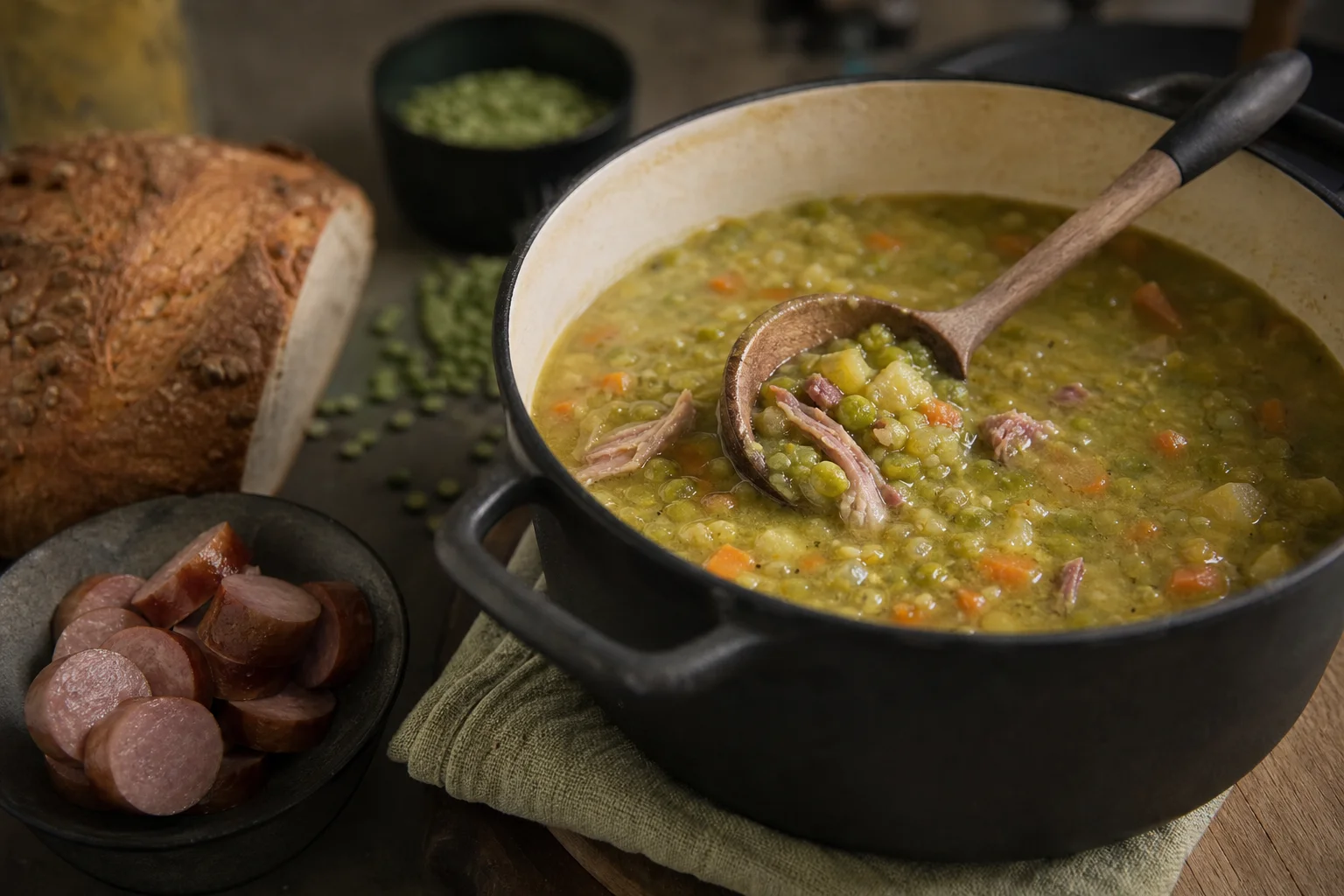
Dutch Winter Comfort Foods: How to Make Classic Erwtensoep (Snert)
When November rolls in and the Netherlands transforms into a canvas of overcast skies, misty mornings, and persistent rain, the Dutch embrace a...
Read more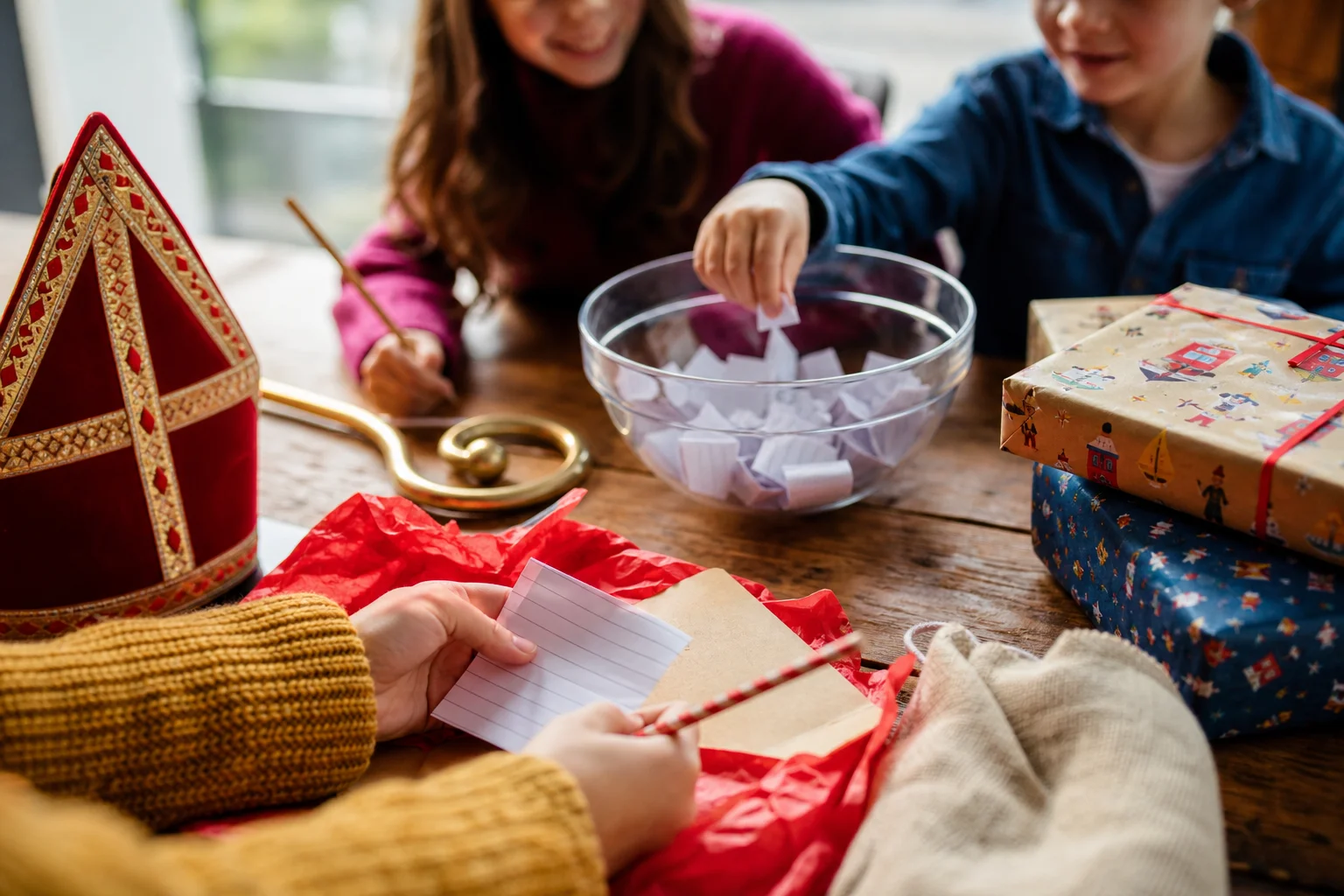
Late November has arrived in the Netherlands. The shop windows are stacked high with speculaas and chocolate letters, bakery shelves display fresh banketstaven, and the festive buzz following the arrival of Sinterklaas is in full swing. Then, out of nowhere, an email lands in your inbox or a Dutch friend turns to you with a grin and asks the question that strikes quiet terror into many newcomers: "Zullen we lootjes trekken dit jaar?" (Shall we draw lots this year?)
If you did not grow up in the Netherlands, this annual ritual can seem bewildering. What might initially look like a standard Secret Santa gift exchange quickly turns out to be something far more creative, theatrical, and personal. Participating in a Dutch Sinterklaas celebration typically involves three core elements: a modest present, an elaborate handcrafted disguise known as a surprise (pronounced in the French manner: sur-pree-zuh), and a custom rhyming poem that playfully roasts the recipient in front of everyone present.
Whether you are celebrating with Dutch colleagues, your housemates, or your partner's family, understanding the rules, tone, and humor behind lootjes trekken is an essential rite of passage. In this guide, we break down how the tradition works, why the Dutch embrace it with such dedication, and how you can craft your very own Dutch Sinterklaas poem without breaking into a cold sweat.
Literally translated, lootjes trekken means "drawing lots" or "pulling slips of paper." Traditionally, families and friends would write everyone's name on small scraps of paper, fold them up, place them in a hat or bowl, and take turns drawing a name. The golden rule, of course, is that if you draw your own name, everyone has to put their papers back and start over.
In modern times, most groups organize this digitally through websites and apps, where each participant receives an email containing their drawn recipient along with a wish list (verlanglijstje). However, unlike a conventional international gift exchange where the primary focus is buying an expensive present, the Dutch approach centers on creativity, wit, and shared laughter.
Before jumping in, the group always establishes a few house rules:
In Dutch culture, a surprise is not merely a gift wrapped in decorative paper. It is an elaborate, often absurd handicraft built specifically to conceal the actual present. The goal is to create something that reflects the recipient's personality, a hobby, an unusual passion, or—best of all—an embarrassing blunder from the past year.
For weeks leading up to December 5, Dutch households are strewn with cardboard boxes, newspaper strips, wallpaper paste, and tubes of paint. If your colleague bought a broken second-hand car that broke down on their first commute, their surprise might be a papier-mâché replica of a smoking car wreck. If a friend spends hours locked in the bathroom applying hair products, their surprise might take the shape of an enormous shampoo bottle.
Unwrapping a surprise is intentionally messy and challenging. Gifts are routinely buried inside layers of duct tape, buried deep within hollowed-out pumpkins, or hidden inside buckets of slimy oatmeal or wood shavings. Watching the recipient struggle to extract their present while getting covered in flour or paint is part of the collective fun, embodying quintessential Dutch gezelligheid.
The beating heart of Pakjesavond is the Sinterklaasgedicht (Sinterklaas poem). Long before the packaging is opened, the recipient is handed an envelope and must stand up or sit in the middle of the room to read the poem aloud to the entire group.
The poem is written from the perspective of Sinterklaas (or his helpers), who has been observing the recipient over the past twelve months from his residence in Spain. This allows the author to break through ordinary social filters. In everyday Dutch life, directness is already valued, but during Sinterklaas, it is amplified into an art form.
A good Sinterklaas poem contains:
According to cultural historians, this tradition dates back centuries to when rhyming verses were used to deliver moral lessons or lighthearted community critiques during festive winter gatherings (read more about the origins of the holiday on Wikipedia's Sinterklaas article).
Writing poetry in a language you are still learning can feel daunting, but you do not need to be a literary master. Sinterklaas verse follows a predictable formula, and Dutch native speakers deeply appreciate the effort when an expat joins in.
Most traditional poems begin with the legendary cliché line that every Dutch person knows by heart:
"Sint zat te denken, wat hij [Naam] dit jaar zou schenken..."
(Sint was thinking about what he should gift [Name] this year...)
While some seasoned writers try to avoid this line because it is so famous, for a non-native speaker it is the perfect launchpad. It instantly establishes the genre and brings a smile to the room.
Think about one or two specific things about the person you drew:
Dutch rhymes work best with clear, simple phonetic endings. Here are some of the most reliable rhyming pairs used on Pakjesavond:
Here is an accessible, authentic 8-line template you can adapt for your own celebration:
Sint zat te denken,
Wat hij jou dit jaar zou schenken.
Jij werkt hard en bent altijd druk,
Maar met dit weer heb je weinig geluk.
De regen waait weer tegen de ruit,
Maar jij gaat toch dapper naar buitenuit.
Maak nu dit pakje maar snel open,
Sint hoopt dat je er blij mee bent gaan lopen!
If you want to verify that your Dutch grammar and word order are correct before reading your poem out loud, tools designed for Dutch learners can save the day. For instance, in StroopTaal, the Sentence Check feature (available with Premium) allows you to enter sentences you have written, corrects any structural mistakes, and explains the grammar behind them. You can also build up your active vocabulary in the Words tab with spaced-repetition reviews, ensuring you never run short of descriptive Dutch adjectives.
To navigate the evening like a local, keep these unwritten cultural norms in mind:
When it is your turn to read a poem you received, do not skim it silently. Read it out loud, slowly and with dramatic flair. When the author drops a joke or tease at your expense, laugh along! Taking yourself too seriously during Sinterklaas is considered bad form.
Even after the poem is read and the surprise is torn to pieces, you never openly announce that you were the author or the gift-giver. Everything is signed simply: "Groeten van Sint en Piet". If someone directly asks you, a subtle wink or a polite shrug is the customary response.
A bowl of pepernoten, kruidnoten, and schuimpjes is always present on the coffee table. These are communal snacks: grab a handful, share them around, and enjoy the tea or warm spiced drinks that accompany the festivities.
If you are currently preparing for the Dutch integration process (inburgering), understanding traditions like Sinterklaas and lootjes trekken is not just helpful for your social life—it directly reinforces the Knowledge of Dutch Society component (Kennis van de Nederlandse Maatschappij, or KNM).
The KNM curriculum tests your understanding of Dutch social norms, holiday customs, workplace interactions, and daily life in the Netherlands. For example, knowing how coworkers celebrate holidays or how informal social agreements work in a neighborhood or school setting frequently appears in scenario-based questions.
Under current rules set by DUO (checked on 9 November 2026), under the Wet inburgering 2021, each of the five core exam components—Lezen, Luisteren, Schrijven, Spreken, and KNM—costs €50, totaling €250 for all five. You can verify the latest registration details directly on the official integration portal at inburgeren.nl. To see how comfortable you are with everyday Dutch customs and societal questions before scheduling your official sitting, you can test your knowledge with a free KNM practice test.
Here are the key Dutch terms you will hear throughout late November and early December:
Practicing these words aloud can dramatically improve your confidence. With StroopTaal's AI conversation partner, Taalmaatje, you can even talk through typical Dutch holiday conversations out loud from your phone, getting immediate pronunciation feedback before stepping into a room full of Dutch speakers on December 5.
Receiving an invitation to lootjes trekken might feel like extra homework at first, but it is one of the most heartwarming windows into Dutch domestic culture. It strips away commercial pressure and replaces it with creativity, communal storytelling, and good-humored laughter.
Cut some cardboard, grab some glue, find a couple of simple rhyming words, and join in the fun. When Pakjesavond arrives, you will experience first-hand why this cozy winter tradition remains beloved across the Netherlands.
Rules, fees and dates change. Check the current version on the official pages before you act.
Share this article:
When November rolls in and the Netherlands transforms into a canvas of overcast skies, misty mornings, and persistent rain, the Dutch embrace a...
Read moreIf you have recently moved to the Netherlands, mid-November brings a sudden, unmistakable shift to city streets, canal bridges, and supermarket...
Read moreAs the autumn chill settles over the Netherlands in early November, Dutch neighbourhoods prepare for one of the most charming folk traditions of the...
Read more