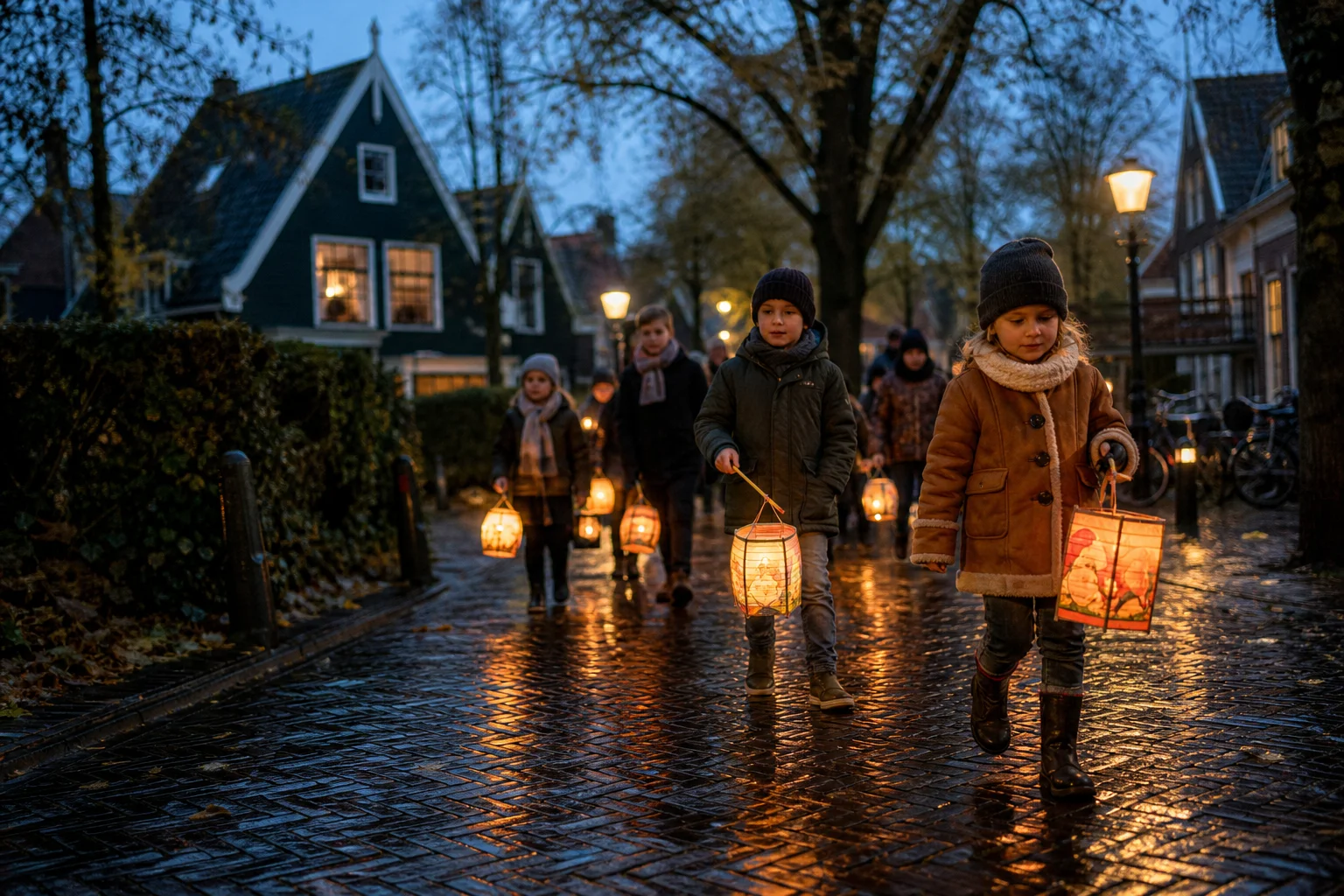
Celebrating Sint-Maarten on November 11: Lantern Traditions and Songs in NL
As the autumn chill settles over the Netherlands in early November, Dutch neighbourhoods prepare for one of the most charming folk traditions of the...
Read more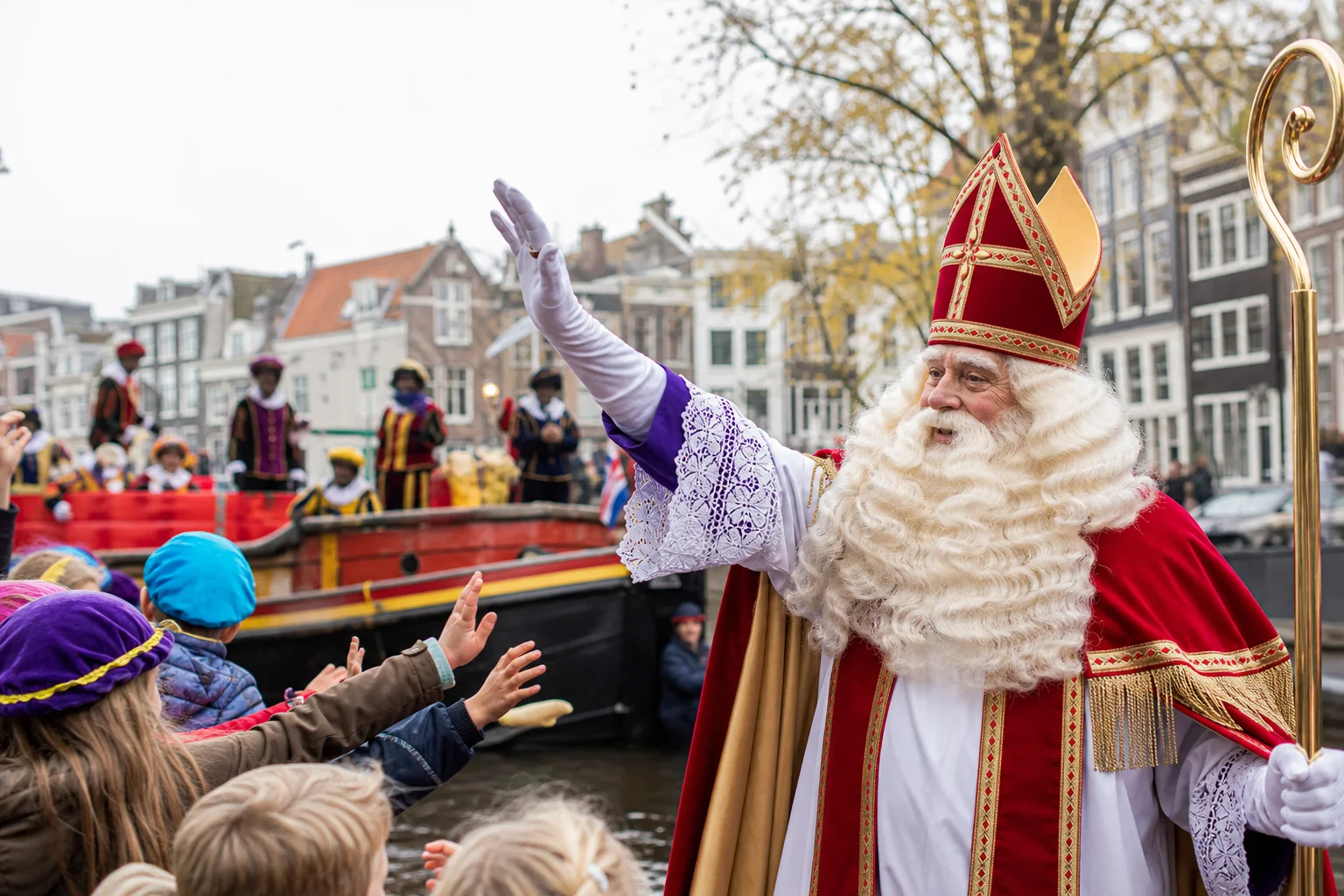
If you have recently moved to the Netherlands, mid-November brings a sudden, unmistakable shift to city streets, canal bridges, and supermarket aisles. Brightly decorated shop windows display chocolate letters, bakeries smell heavily of cinnamon and nutmeg, and municipal squares begin assembling stages beside harbors. If you have just navigated the lanterns of early November—as explored in our Halloween vs Sint-Maarten Dutch autumn etiquette guide—you are about to witness the largest children's festival in the low countries: the arrival of Sinterklaas, known locally as the intocht.
For newcomers, the festival can initially seem surreal. A stately, bearded figure wearing bishop's vestments arrives by steamboat from Spain, surrounded by energetic helpers handing out spiced biscuits to throngs of singing families. Yet beneath the spectacle lies an essential cornerstone of Dutch social life. Understanding the intocht is not merely a fun cultural observation; it is a vital window into Dutch community rituals, conversational etiquette, and civic traditions tested in the civic integration (inburgering) syllabus.
The intocht marks the official ceremonial arrival of Sinterklaas (Saint Nicholas) in the Netherlands. By long-standing tradition, the patron saint arrives each year on the first Saturday after Saint Martin's Day (11 November). He travels from his mythical residence in Spain aboard a classic steamship called Pakjesboot 12, accompanied by his white horse and his helpers, the Pieten.
The tradition operates on two levels across the country:
Following the water landing, Sinterklaas mounts his noble steed—historically named Amerigo, and in recent television storylines named Ozosnel—and parades through the town center flanked by brass bands, local sports clubs, and council dignitaries.
One of the first things you will experience during the intocht is having small biscuits gently tossed toward you or pressed into your hands. This practice is called strooien (scattering), carried out by helpers bearing sacks filled with strooigoed (scattering sweets).
As an expat, mastering the culinary vocabulary of mid-November will earn you instant credibility with Dutch colleagues and neighbors:
Attending an intocht provides an immersive environment to observe local community interactions. If you are learning the language to understand spoken Dutch in real situations, here are the key terms you will hear shouted from quaysides, sung by school choirs, and printed on local municipal flyers:
Attending your first intocht is a delightful spectacle, but navigating the crowds requires some preparation. Here is practical advice for enjoying the festivities smoothly:
Municipalities typically publish exact route maps and mooring times on their official websites or community notices a week before the event. The boat usually docks between 10:00 and 13:00, followed by a 90-minute pedestrian parade toward the main market square (Grote Markt), concluding with a short address by the local mayor.
Mid-November in the Netherlands is notoriously damp and brisk. Standing along a stone quay for two hours waiting for a boat requires windproof jackets, thermal layers, and water-resistant footwear. If you have small children, bring warm gloves and consider ear defenders; marching bands playing snare drums along narrow canal facades can be loud.
Dutch children often dress up in miniature capes and berets carrying fabric bags for collecting treats. The atmosphere is generally friendly, but quaysides become tightly packed. Keep toddlers close or in carriers, as safety barriers along canals vary by municipality.
The Saturday of the intocht signals the official start of the festive season. From this evening until the main celebration on 5 December (Pakjesavond), children in the Netherlands are permitted to leave their shoe out once or twice a week—a ritual known as schoentje zetten.
The ritual follows charming guidelines:
If you work in a Dutch office, do not be surprised if this tradition creeps into your workplace. Many companies place miniature wooden clogs or decorated paper boots on desks in mid-to-late November, encouraging colleagues to drop anonymous chocolate treats into each other's shoes.
Expats moving to the Netherlands often read international commentary about the historical portrayal of Sinterklaas's helper, Zwarte Piet. Over the past decade, Dutch society has undertaken a significant and widespread transformation of this figure.
Today, national television broadcasts, major municipalities, and primary schools across the country predominantly feature Roetveegpieten (Chimney Soot Pieten). In this modern representation, helpers have natural skin tones marked with smudges of soot, reflecting the legendary explanation that they deliver presents by sliding down dusty chimneys. This transition reflects modern Dutch values of inclusivity while maintaining the warmth and excitement of the children's narrative.
For adult immigrants, the Sinterklaas season is more than neighborhood entertainment. The traditions, public etiquette, and calendar customs associated with autumn holidays are recurring topics in civic education and Dutch language studies.
If you are preparing for the Kennis van de Nederlandse Maatschappij (KNM) exam as part of your civic integration pathway, Dutch holiday customs form an established part of the curriculum. The exam assesses your understanding of daily societal life, typical community events, school routines, and family structures. You can check your familiarity with Dutch social life and institutions with a free KNM practice test to assess where your cultural knowledge stands.
Official information about integration exams and civic obligations under the Dutch integration acts can be found directly via inburgeren.nl. Engaging directly with seasonal events helps contextualize the cultural questions you encounter on formal exam papers.
Taking part in community moments like the intocht highlights how language and culture are intertwined. While reading textbooks teaches grammatical structures, following a live town announcement, understanding a parent's comment beside a canal, or deciphering seasonal shop notices requires practical, everyday Dutch.
This is where StroopTaal bridges the gap. Designed specifically to teach the Dutch of daily life, work, and exams from A0 to C1, the app uses short, structured lessons that follow real-life situations in the Netherlands. Its interactive listening scenes recreate authentic audio environments—such as train station broadcasts, telephone queries, and public market encounters—allowing you to answer questions, practice dictation, and save new terms to your personal dictionary.
With StroopTaal's spaced repetition reviews, the seasonal words you save—from speculaas to stadhuis—reappear at the exact moment your memory needs reinforcement. If you upgrade to Premium, you can even snap a photo of a holiday bakery sign or a municipal parade flyer to extract and study new words instantly, or converse with the AI conversation partner, Taalmaatje, to practice talking comfortably about your weekend plans in Dutch.
Ready to jump into the festivities? Here is a simple checklist to get the most out of mid-November in the Netherlands:
The Sinterklaas intocht kicks off three weeks of cozy autumn sociability leading up to Pakjesavond on December 5th. By learning the vocabulary, stepping out to your local canal, and embracing the quirkiness of the arrival, you will find yourself feeling less like an observer and more like an active participant in Dutch life.
Rules, fees and dates change. Check the current version on the official pages before you act.
Share this article:
As the autumn chill settles over the Netherlands in early November, Dutch neighbourhoods prepare for one of the most charming folk traditions of the...
Read morePicture this scenario: it is the evening of 31 October. You have stocked your hallway with giant bags of candy, carved an intricate jack-o'-lantern...
Read moreAs October arrives in the Netherlands, the countryside transforms into a mosaic of amber and crimson, the wind off the North Sea takes on a crisp...
Read more