Expat Guide to the Dutch Sinterklaas Arrival (Intocht)
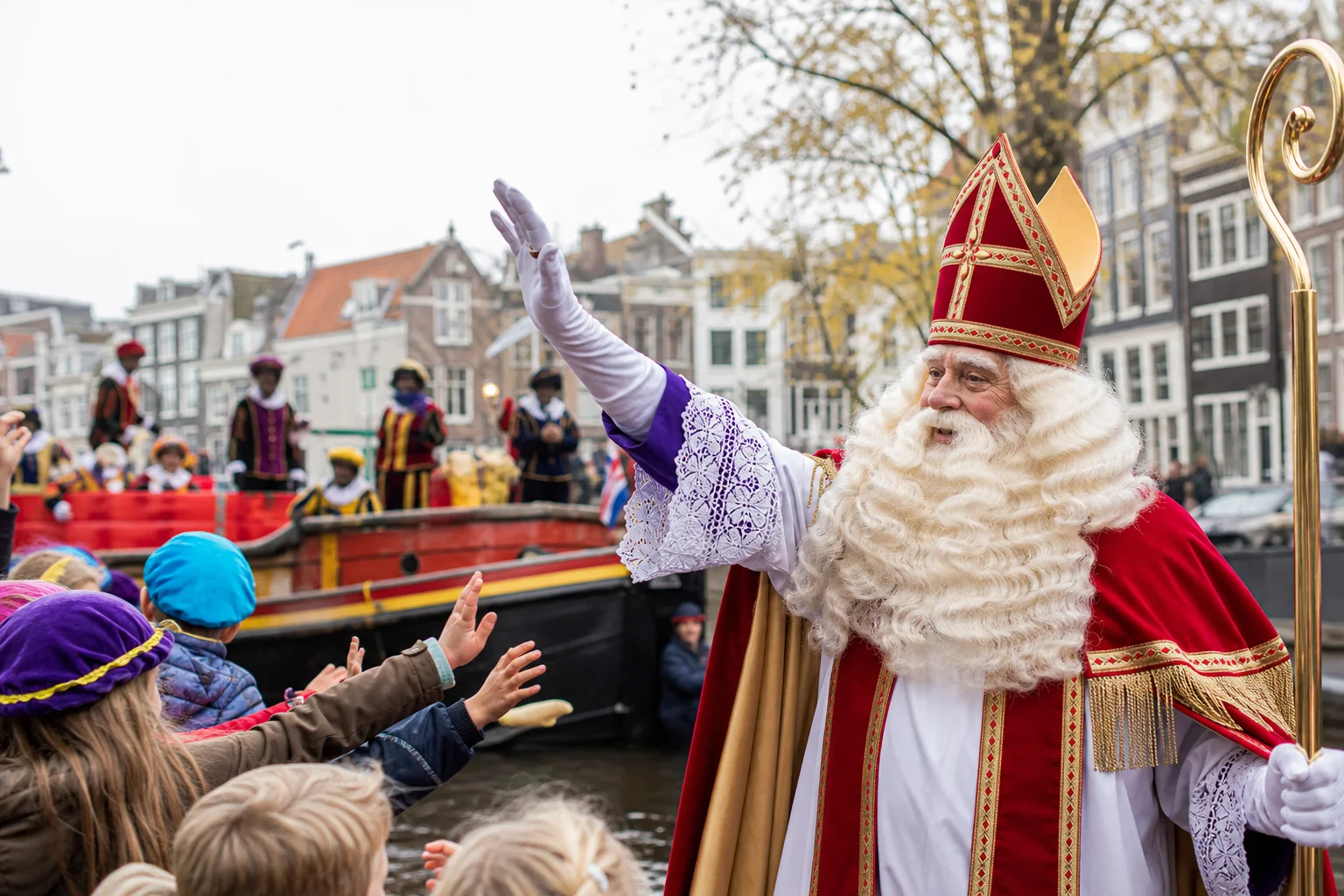
If you have recently moved to the Netherlands, mid-November brings a sudden, unmistakable shift to city streets, canal bridges, and supermarket...
Read more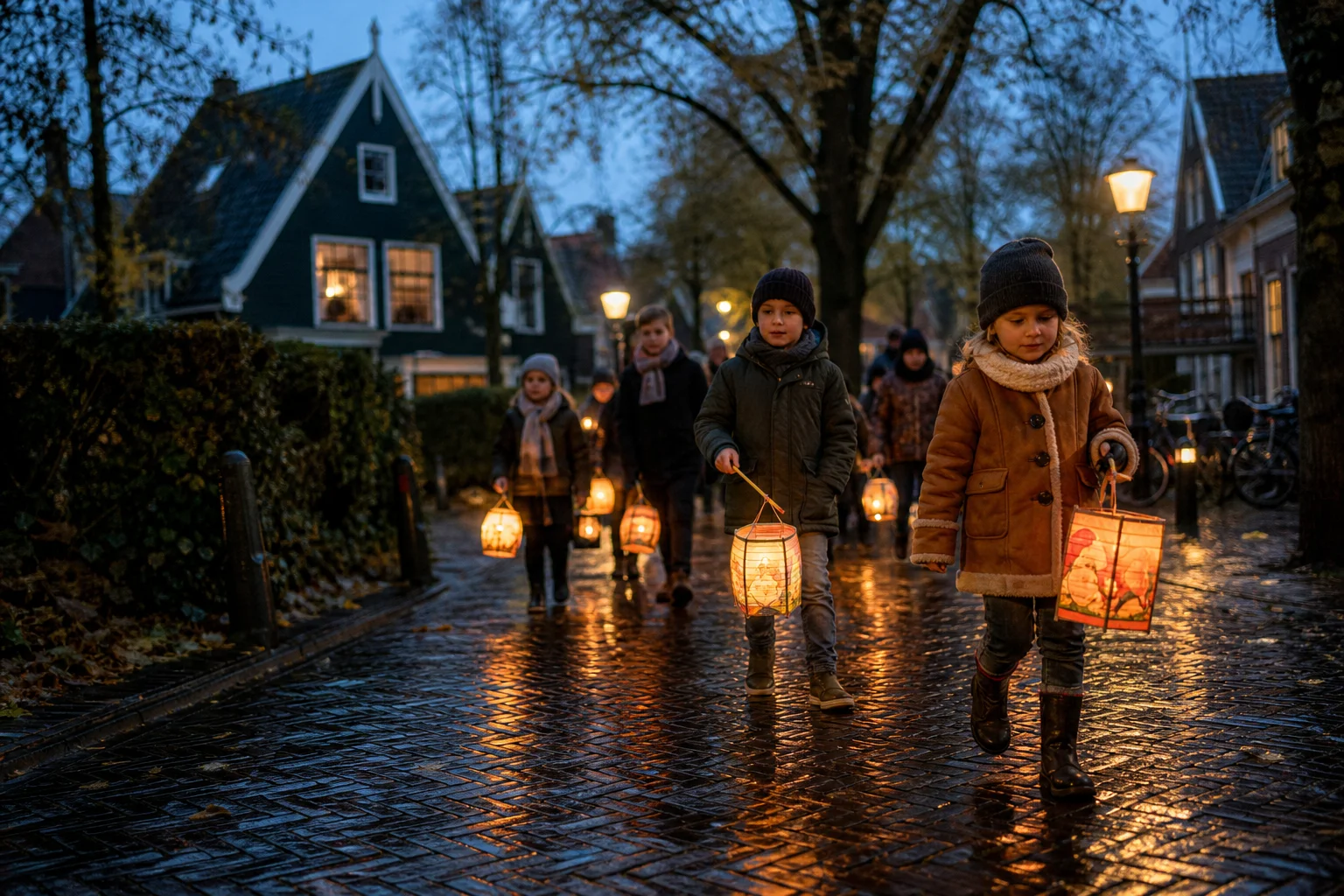
As the autumn chill settles over the Netherlands in early November, Dutch neighbourhoods prepare for one of the most charming folk traditions of the year: Sint-Maarten (St. Martin's Day). Celebrated annually on the evening of November 11, this festival turns dark Dutch streets into glowing trails of colourful paper lanterns held by singing children.
For expats, international residents, and language learners, Sint-Maarten can be both delightful and slightly bewildering. If you are not prepared, you might wonder why groups of toddlers and primary school children are ringing your doorbell at 18:00, clutching glowing sticks and singing rhythmic Dutch rhymes in exchange for treats. Understanding this festival offers an intimate look into Dutch community life, neighbourhood customs, and seasonal celebrations. It also serves as an excellent window into authentic cultural vocabulary that frequently surfaces in daily conversations and the Dutch integration exams.
Sint-Maarten commemorates Saint Martin of Tours, a fourth-century Roman soldier who later became a Christian bishop. According to popular tradition, Martin encountered a shivering, impoverished beggar at the gates of the city of Amiens during a harsh winter storm. Having no money on hand, Martin drew his sword, cut his heavy military cloak (his mantel) in half, and gave one half to the freezing beggar.
Over the centuries, this tale of selfless sharing transformed into an autumn charity feast across Northwestern Europe. Historically, November 11 marked the end of the agricultural harvest year, the beginning of winter, and the eve of the traditional pre-Christmas fast (Saint Martin's Lent). Farm hands were paid their seasonal wages, geese were roasted, and impoverished children visited wealthier houses carrying hollowed-out sugar beets or turnips lit with small candles to ask for scraps of food or small coins.
Today, the hollowed-out root vegetables have been replaced by colourful paper and cardboard lanterns (lampions) illuminated with battery-powered LED sticks, and children sing for sweets or fruit rather than winter sustenance. Yet the core theme of the festival—generosity, community solidarity, and sharing warmth in the dark autumn months—remains fully intact.
One of the first things newcomers discover about the Netherlands is that not all traditions are observed uniformly across every province. Sint-Maarten has distinct regional strongholds:
In Limburg, the celebration often combines the lantern walk with a massive public bonfire (Sint-Maartensvuur), where a local actor dressed as Saint Martin on horseback reenacts the slicing of his red cloak. In urban areas, celebrations are primarily door-to-door neighbourhood events. If you are comparing this holiday to modern American-style customs, take a look at our Halloween vs Sint-Maarten: Dutch Autumn Etiquette Guide to see how the two autumn festivities coexist in the Netherlands.
If you live in a neighbourhood with young families, you will likely receive visits between 17:30 and 19:30 on the evening of November 11. Knowing the unwritten rules helps ensure a smooth, enjoyable evening for both you and your young visitors.
Dutch etiquette dictates that children only ring bells at welcoming houses. To signal that you have treats ready, place a burning candle, a lantern, or an outdoor light on your front doorstep, porch, or windowsill. If your lights are completely off and your front garden is dark, children will usually skip your door.
Children carry paper bags, fabric totes, or small buckets to collect their haul. You do not need expensive gifts. Dutch households typically offer:
Having a mix of fruit and small sweets in a large bowl next to your door is the standard approach. Let each child select one or two items from the bowl.
When the doorbell rings, open the door and listen attentively. The children will hold up their glowing lanterns and sing one or two songs—either as an ensemble or individually. Wait until they finish their song before handing out treats; it is considered bad form to interrupt their singing by thrusting candy into their hands immediately. Once they conclude, compliment their lanterns ("Wat een mooie lampion!") and their singing, then hold out your treat bowl.
Children spend days in school or daycare (kinderopvang) crafting lanterns and memorizing traditional rhymes. When listening to them on your doorstep, recognizing these songs will make the interaction far more rewarding. Learning the lyrics is also an engaging way to understand spoken Dutch as it is actually articulated by native speakers.
This is arguably the most widespread rhyme across the country:
Sinte Sinte Maarten,
De koeien hebben staarten.
De meisjes hebben rokjes aan,
Daar komt Sinte Maarten aan.
English translation:
"Saint, Saint Martin,
The cows have tails.
The girls are wearing skirts,
Here comes Saint Martin."
While the lyrics sound like playful nonsense, rhyming animal tails and skirts has been a nursery staple for over a century simply because it bounces along in an easy meter for small children.
Another universal favourite that explicitly mentions the date and the light ritual:
Elf november is de dag,
Dat mijn lampje, dat mijn lampje.
Elf november is de dag,
Dat mijn lampje branden mag.
English translation:
"November eleventh is the day,
That my little light, that my little light.
November eleventh is the day,
That my little light may shine."
Older children sometimes sing cheeky variants, especially when they reach a door that takes too long to open, or when someone gives out fruit instead of chocolate:
Sint-Maarten, Sint-Maarten, de koeien hebben staarten...
Hier woont een rijke man, die ons wel wat geven kan.
Veel zal hij geven, lang zal hij leven!
("Here lives a rich man who can give us something. Much will he give, long shall he live!")
And if a household refuses to open the door, children traditionally joked with:
Hier woont een kikker, die is een vrekker! or Hier woont meneer Van Veen, die heeft een hart van steen! ("Here lives Mr. Van Veen, who has a heart of stone!"). Fortunately, this is rarely heard in modern suburban streets!
Participating in local holidays is one of the quickest ways to build conversational confidence. Here is a curated list of vocabulary related to Sint-Maarten:
If you are currently preparing for the civic integration exams (inburgeringsexamen), learning about calendar customs like Sint-Maarten, Sinterklaas, and Koningsdag is not just an entertaining hobby—it is directly relevant to the Kennis van de Nederlandse Maatschappij (KNM) exam.
The KNM component tests your understanding of practical life, norms, values, and traditions in the Netherlands. Official sources such as inburgeren.nl outline the core topics expected of candidates. Questions frequently touch upon seasonal festivals, neighbourhood norms, how Dutch schools engage children in cultural activities, and how neighbours interact with one another. Knowing what happens when small children ring your bell in November reflects the practical community knowledge expected of future permanent residents and citizens.
To evaluate your current knowledge of Dutch societal customs, civic procedures, and daily conventions, test yourself with our free KNM practice test. It requires no registration and provides realistic questions matching integration standards.
Memorizing lists of customs in a textbook only goes so far. Becoming comfortable in Dutch daily life requires learning words in context, hearing how native speakers talk in real situations, and building active conversational habits.
This is where StroopTaal comes in. Designed to teach the Dutch of daily life, work, and the exams from complete beginner (A0) up to C1, StroopTaal structures its curriculum around life in the Netherlands. Each level follows a clear path of bite-sized lessons covering grammar tips, fill-in-the-blank exercises, sentence construction, and listening tasks. You will encounter real-life Dutch situations—such as chatting with neighbours, answering the door, or attending school events—with immediate feedback explaining why an answer is right or wrong.
For listening comprehension, StroopTaal offers audio scenes that simulate real conversations at service counters, announcements, and phone calls, followed by comprehension questions. With the Words tab, you can look up new seasonal terms, review past mistakes through spaced repetition, and practise flashcards to cement your vocabulary. When you want to practise speaking Dutch out loud, StroopTaal Premium includes Taalmaatje, an AI conversation partner that lets you role-play everyday dialogues and scores your pronunciation, helping you build practical speaking skills for life in the Netherlands.
Sint-Maarten is a warm, community-centred holiday that illuminates the darkest stretch of the Dutch autumn. Whether you participate by crafting lanterns with your own children or simply keeping a bowl of mandarins and chocolates beside your front door on November 11, it is a wonderful opportunity to connect with your neighbours and practice your conversational Dutch.
Next time the doorbell chimes on an early November evening, open the door with a warm "Goedenavond!", listen to the children's song, and enjoy one of the Netherlands' most enduring folk customs.
Rules, fees and dates change. Check the current version on the official pages before you act.
Share this article:
If you have recently moved to the Netherlands, mid-November brings a sudden, unmistakable shift to city streets, canal bridges, and supermarket...
Read morePicture this scenario: it is the evening of 31 October. You have stocked your hallway with giant bags of candy, carved an intricate jack-o'-lantern...
Read moreAs October arrives in the Netherlands, the countryside transforms into a mosaic of amber and crimson, the wind off the North Sea takes on a crisp...
Read more